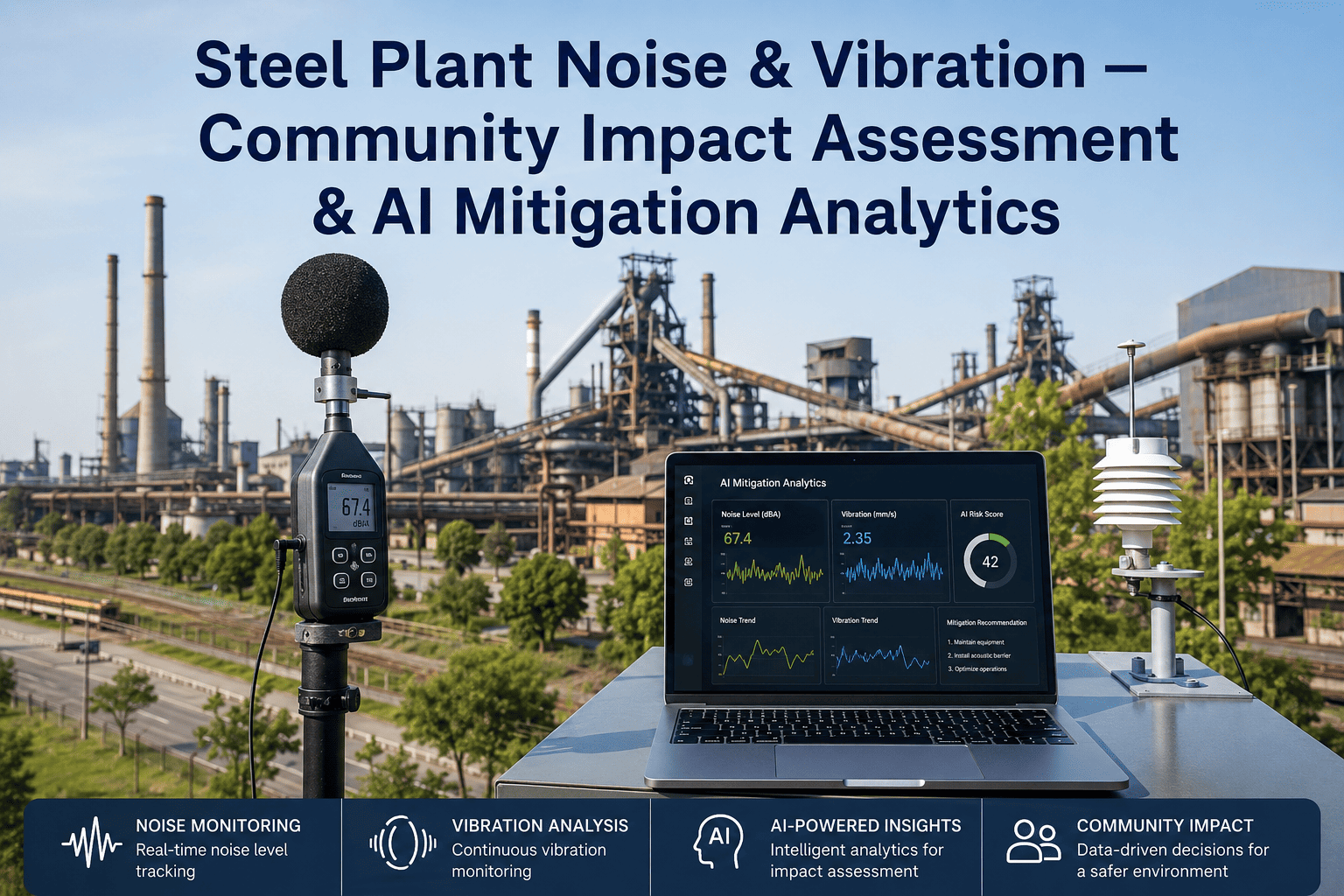
A steel plant operating well within every internal safety threshold can still generate the noise complaint that ends up on a city council agenda. EAF tapping, rolling mill operation, and material handling each produce distinct acoustic signatures that travel differently depending on wind, layout, and time of day — and most plants only find out which source is driving a complaint after the fact, from a resident's phone call. AI noise and vibration analytics identifies the dominant source before it becomes a community relations issue, and you can walk through how that mapping works on a short call.
The Complaint Comes First. The Source Shouldn't Be a Mystery.
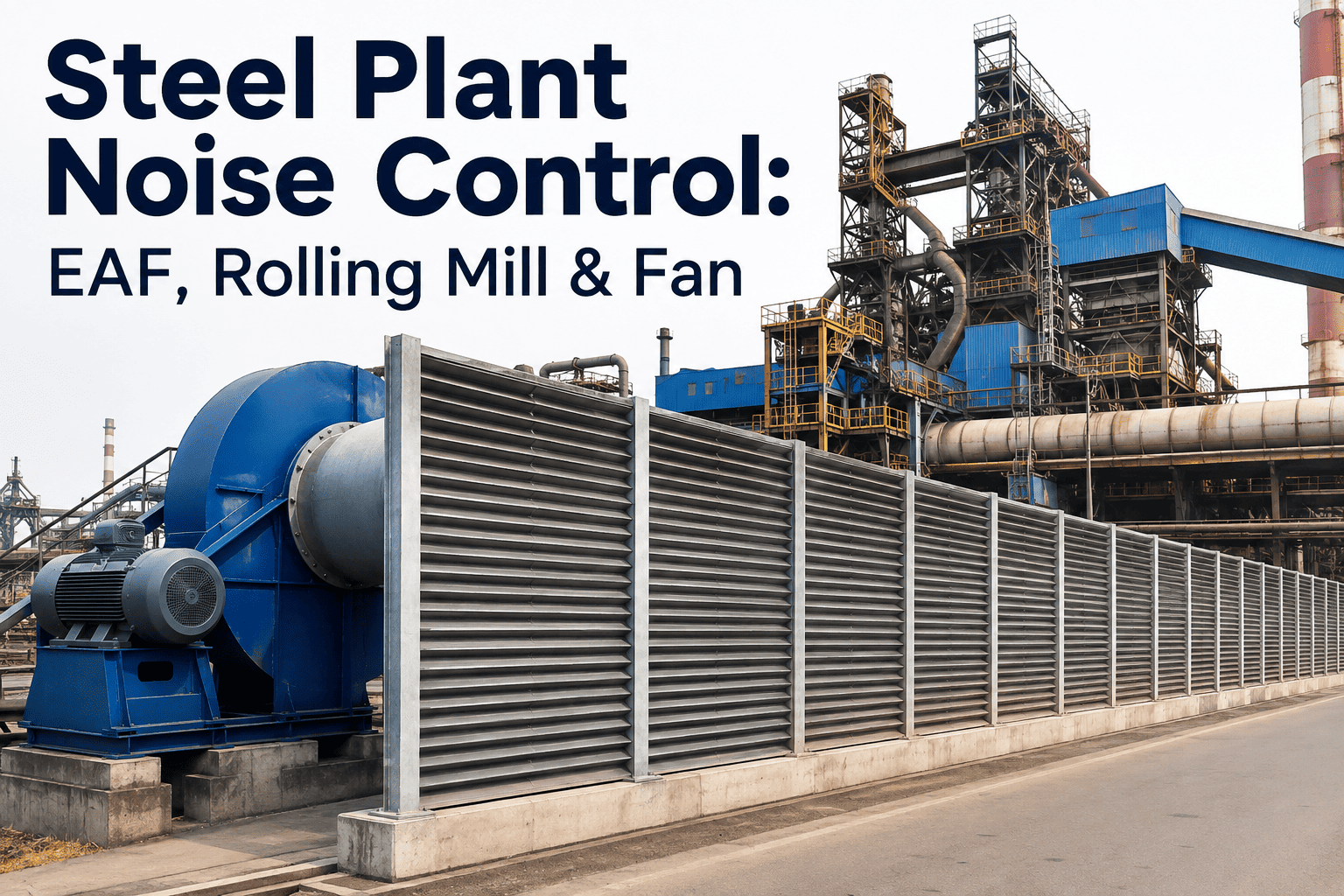
EAF operations, rolling mills, and material handling each contribute differently to community noise impact. AI analytics identifies the dominant source so mitigation targets the right equipment, not a guess.
Three Sources, Three Acoustic Signatures
Community noise isn't one problem — it's several distinct problems that happen to arrive at the same property line.
EAF Operations
Charging, melting, and tapping produce sharp, high-intensity bursts rather than continuous noise, making them among the most commonly reported sources despite short duration.
Rolling Mills
Sustained mechanical noise from stands, motors, and cooling systems creates a steady background level that shifts with production rate and mix.
Material Handling
Cranes, conveyors, and scrap handling generate irregular noise and vibration tied directly to logistics schedules rather than production cycles.
How AI Separates Signal From Noise, Literally
Each source is monitored independently so an alert points to a specific piece of equipment, not the plant as a whole.
Perimeter and source-level sensors capture continuous acoustic and vibration data across the plant boundary.
AI separates the combined signal into individual source contributions based on frequency and timing signatures.
Dominant sources are ranked against community-facing thresholds, flagging which equipment drives most impact.
Mitigation planning targets the specific equipment identified, rather than a plant-wide blanket response.
Know Which Source Is Driving the Complaint Before the Next Call
iFactory's AI noise and vibration analytics separates EAF, rolling mill, and material handling contributions in real time, giving your team the evidence to target mitigation where it actually matters.
Why Perimeter-Only Monitoring Falls Short
A single perimeter sound level meter tells you a threshold was exceeded — it rarely tells you why.
| Capability | Perimeter-Only | Source-Level AI Monitoring |
|---|---|---|
| Source attribution | Not possible | Identified per equipment |
| Response to a complaint | Reactive investigation | Data already available |
| Mitigation targeting | Broad, unfocused | Targeted at dominant source |
| Regulatory documentation | Threshold events only | Full source-level history |
Getting Source-Level Monitoring Live
Deployment starts at the sources most frequently associated with community complaints before expanding plant-wide.
Review Complaint History
Analyze past community complaints by time, location, and description to prioritize the highest-impact sources first.
Deploy Source and Perimeter Sensors
Install acoustic and vibration sensors both at the equipment source and along the plant boundary for comparison.
Train Source Separation Models
Build frequency and timing signatures for each major source so contributions can be separated from combined perimeter readings.
Establish Mitigation Priorities
Rank sources by community impact contribution to guide targeted mitigation investment and scheduling adjustments.
Noise and Vibration Impact Monitoring — Questions Answered
What process engineers and community relations teams ask most before scoping a monitoring program.
Q: Can this system really tell the difference between EAF, rolling mill, and material handling noise?
Yes, each source produces a distinct acoustic and vibration signature based on its frequency profile and timing pattern, and the AI model is trained to recognize those differences even when multiple sources overlap. EAF tapping produces short, high-intensity bursts distinct from the continuous mechanical noise of a rolling mill, and material handling activity follows its own irregular timing tied to logistics rather than production. This separation is what allows a specific equipment source to be identified rather than a generic plant-wide reading. A demo can walk through source separation examples from comparable facilities.
Q: How does source-level monitoring help if we already have a perimeter sound level meter?
A perimeter meter confirms whether a threshold was exceeded, but it combines every source into a single reading, leaving your team to guess which piece of equipment was responsible during an investigation. Source-level monitoring adds the missing layer: sensors positioned at or near the dominant equipment, correlated against the perimeter reading, so a specific source can be identified and targeted for mitigation rather than treating the entire plant as the problem.
Q: Can this data be used to respond to a specific community complaint after the fact?
Yes, because source-level data is continuously logged, a specific complaint tied to a particular time and date can be cross-referenced against which equipment was the dominant contributor at that moment. This turns a reactive investigation that might otherwise take days into a documented answer available within the existing monitoring history. Many facilities also use this history proactively to identify recurring patterns before they generate repeated complaints.
Q: Does adding source-level sensors require shutting down or modifying the monitored equipment?
No, acoustic and vibration sensors used for this kind of monitoring are typically mounted externally near the equipment or along common noise paths, without requiring modification to the EAF, rolling mill, or material handling equipment itself. Installation is generally scheduled around existing maintenance windows to avoid any production disruption. Our support team can review your specific equipment layout to confirm installation approach.
Q: How long does it take to build reliable source separation for a specific plant?
Building an accurate source separation model typically requires several weeks of data capturing normal variation across production schedules, since each source's signature needs to be learned against real operating conditions rather than a single snapshot. Plants with more overlapping sources or more variable production schedules take somewhat longer to reach full separation accuracy. Early single-source identification, such as isolating EAF tapping events, is often available sooner than full multi-source separation.
Know the Source Before the Next Complaint Arrives
A perimeter threshold exceedance tells you something happened — not what caused it. iFactory's AI noise and vibration analytics separates every source in real time, so your mitigation plan targets the right equipment from the start.

.png)