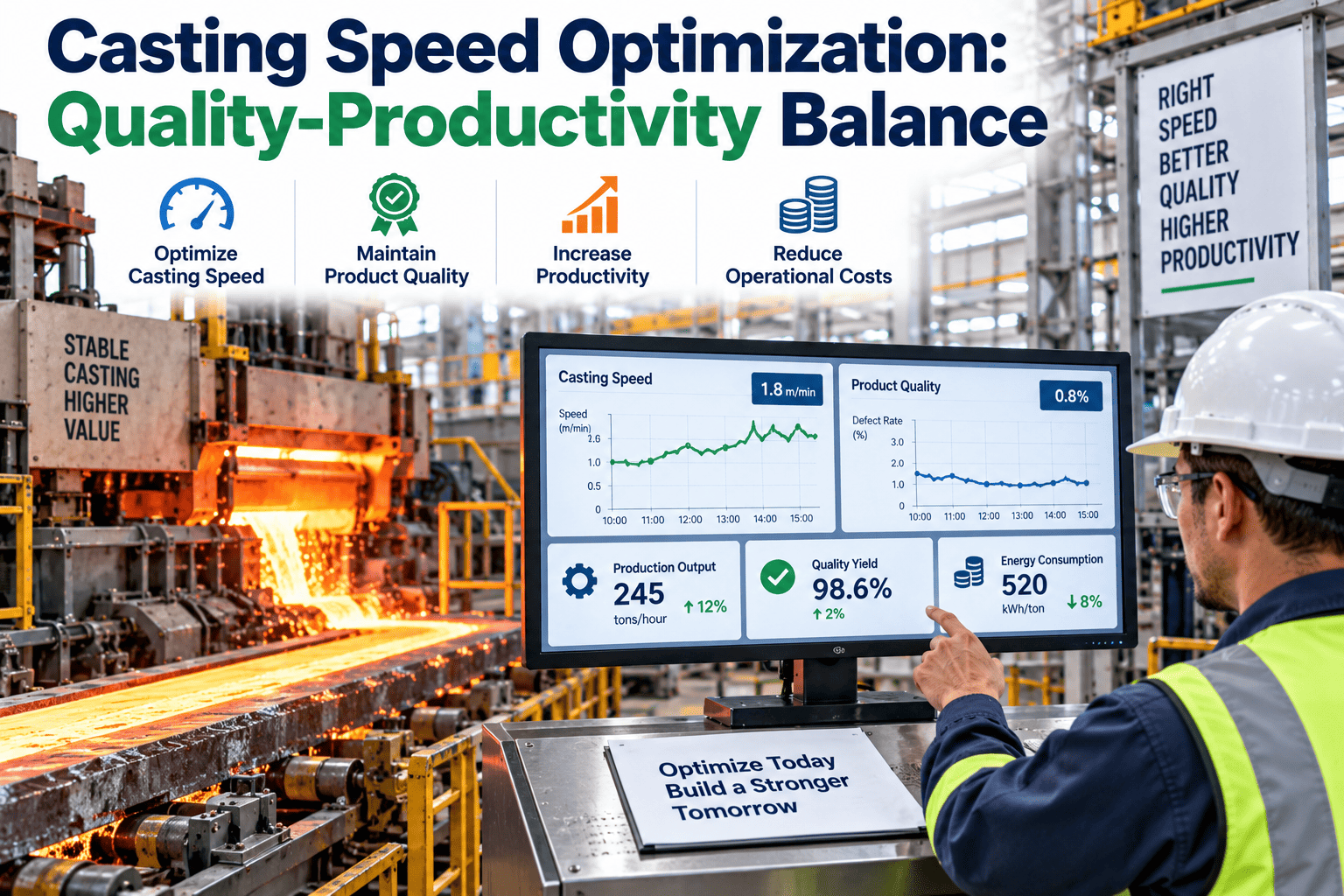
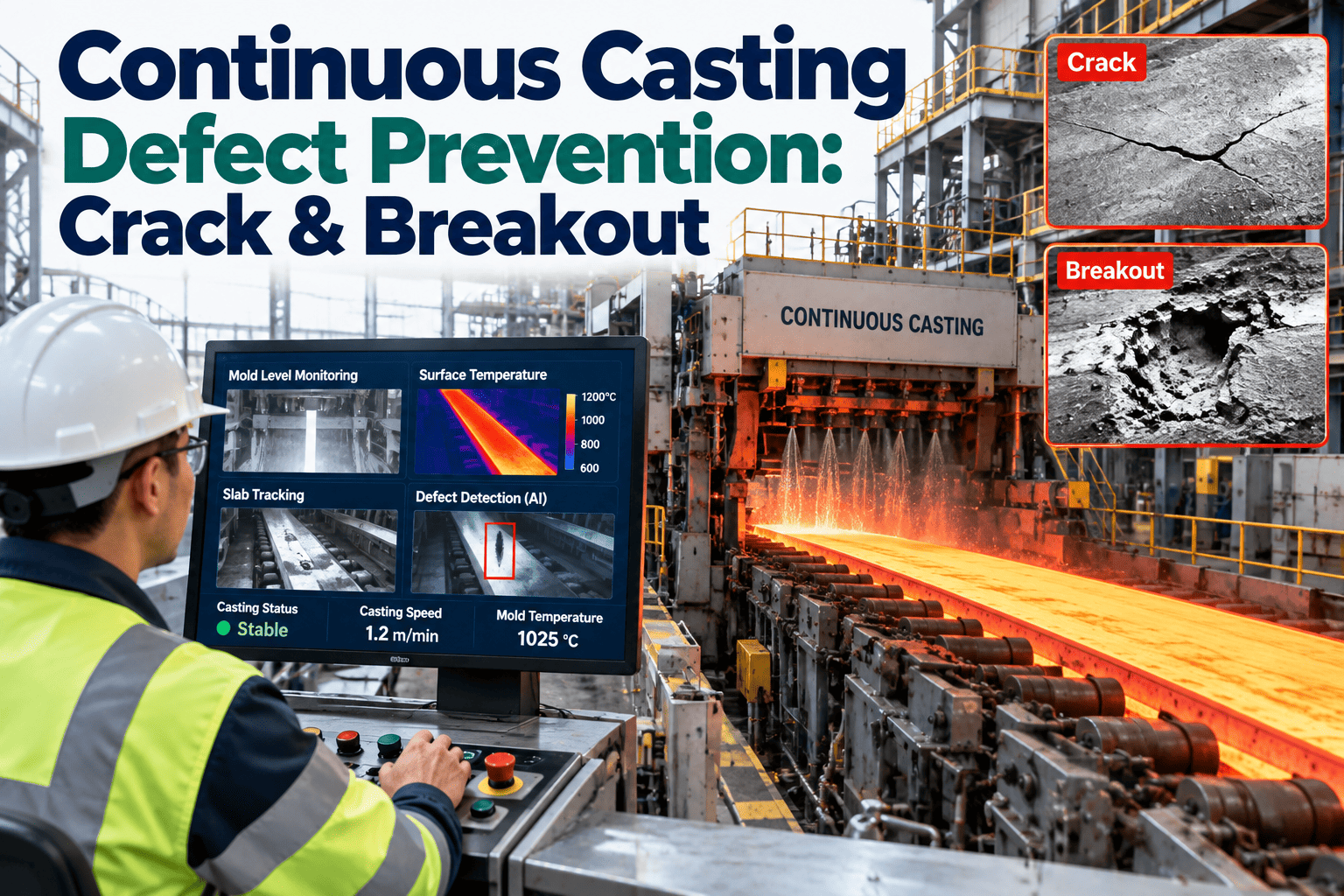
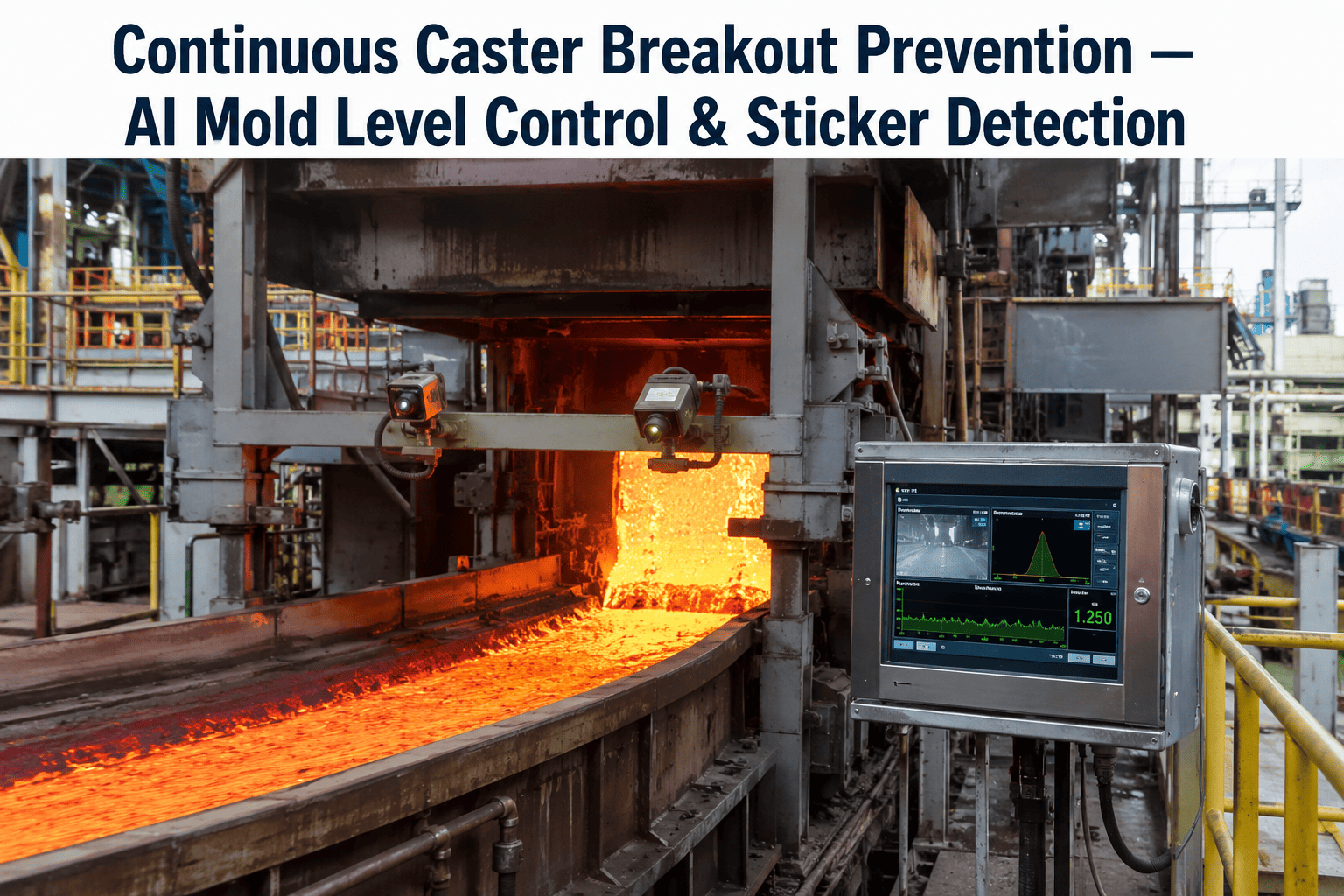
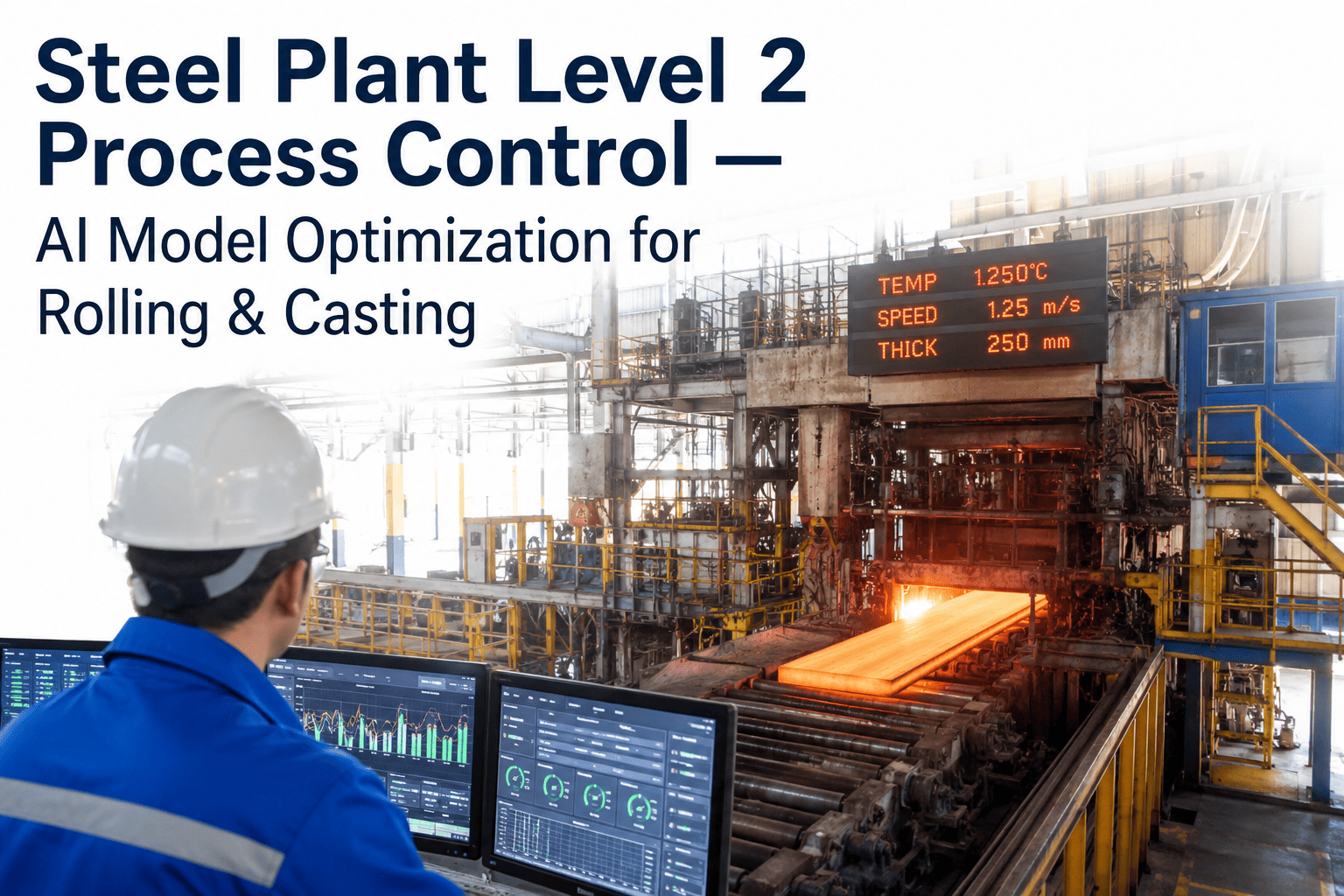
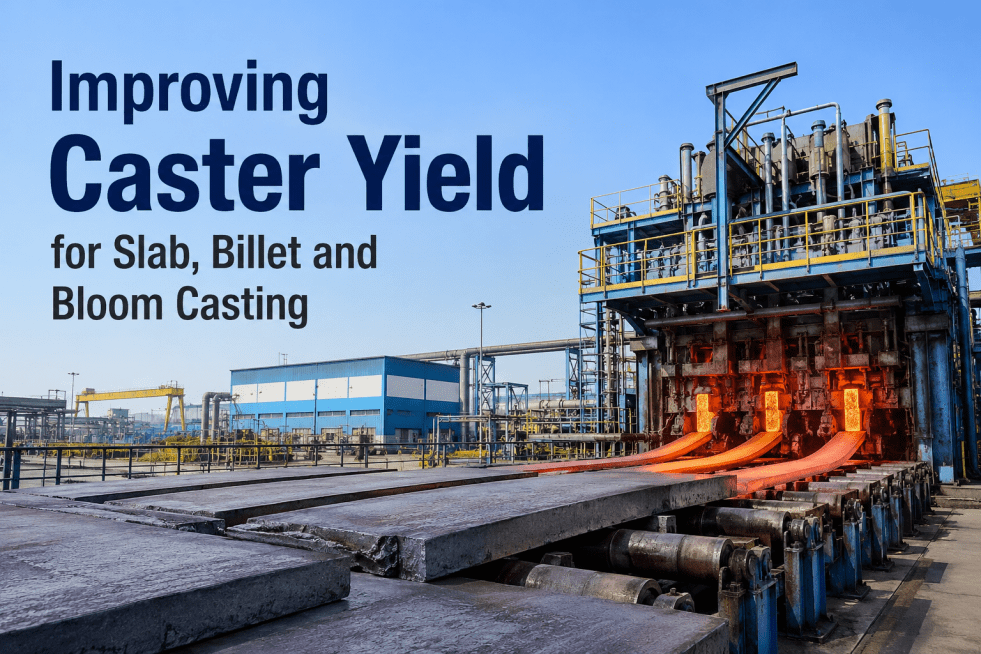
Continuous casting is the productivity bottleneck of every integrated steel mill and mini-mill — a single breakout event stops production for 4-12 hours, destroys caster equipment, and generates tens of thousands of dollars in scrap and repair cost. AI-driven breakout prediction, mold level control, and secondary cooling optimization transform caster operation from a reactive process dependent on operator vigilance into a predictive, closed-loop system that prevents defects before they form. iFactory's Caster Process AI platform integrates mold thermocouple data, level sensor readings, and spray cooling parameters into a unified real-time analytics layer purpose-built for slab, bloom, and billet casting operations. Book a Demo to see iFactory's continuous caster AI platform configured for your caster machine type and product mix.
Deploy AI-Driven Breakout Prevention and Quality Optimization for Your Caster
iFactory's Caster Process AI connects mold thermocouple arrays, level sensors, and spray cooling systems into a single real-time analytics platform — delivering breakout prediction, surface quality optimization, and casting speed improvement in a turnkey AI appliance.
Why Continuous Casting Breakouts Are Predictable — and Why Most Casters Still Miss the Signals
Sticker breakouts account for 60-75% of all breakout events on slab, bloom, and billet casters. The failure mechanism is well understood: a localized rupture of the solidifying shell in the mold sticks to the copper mold wall, creating a tensile force that propagates downward until the shell separates and liquid steel pours out below the mold. Mold thermocouple arrays detect this propagating sticker as a characteristic downward-moving hot spot pattern — a temperature rise that typically precedes the actual liquid steel breakout by 30-90 seconds. Despite this predictable thermal signature, most casters still rely on operator visual monitoring of thermocouple strip charts or basic threshold-based alarm systems that generate excessive false alarms, leading operator to disable or ignore breakout detection systems over time. Book a Demo to learn how iFactory's AI-driven breakout prediction achieves 95%+ detection accuracy with less than one false alarm per 100 heats.
| Caster Type | Primary Quality Challenge | Breakout Rate (Industry Avg) | Primary Defect Type | iFactory AI Detection Lead Time |
|---|---|---|---|---|
| Slab Caster | Longitudinal facial cracking, sticker breakouts | 3-7 per 100,000 tons | Sticker breakout (65%), crack breakout (20%) | 30-90 seconds |
| Bloom Caster | Rhomboidity, internal cracking | 2-5 per 100,000 tons | Sticker breakout (55%), bulging breakout (25%) | 20-60 seconds |
| Billet Caster | Oscillation mark depth, off-corner cracking | 4-8 per 100,000 tons | Sticker breakout (70%), break-out through oscillation marks (15%) | 15-45 seconds |
| Thin Slab Caster | Surface quality, mold flux entrapment | 5-10 per 100,000 tons | Sticker breakout (60%), depressions (25%) | 20-50 seconds |
| Round Bloom Caster | Off-roundness, subsurface cracks | 3-6 per 100,000 tons | Sticker breakout (50%), crack breakout (30%) | 25-55 seconds |
4 Root Causes of Continuous Caster Breakouts and Quality Defects
Casters that experience recurring breakout events and surface quality issues above industry benchmarks typically share a common set of root causes spanning mold thermal conditions, liquid steel flow, cooling uniformity, and machine alignment. These are not random failure events — they are predictable degradation and process deviation patterns that AI analytics can detect and prevent in real time.
Mold Shell Sticking and Sticker Formation
Sticker breakouts occur when the solidifying steel shell ruptures locally and welds to the copper mold wall. The sticking point propagates downward as the shell withdraws, creating a characteristic V-shaped hot spot pattern in the mold thermocouple array. iFactory's AI analyzes all thermocouple rows simultaneously, detecting the downward-propagating temperature rise pattern with 95%+ accuracy at 30-90 seconds lead time — compared to 70-85% accuracy for conventional threshold-based detection.
Mold Level Fluctuation and Surface Defects
Mold level instability is the primary cause of surface quality defects — oscillation mark depth variation, slag entrapment, and surface cracks. Level fluctuations of ±3mm or more produce measurable surface quality degradation. AI-driven mold level control uses predictive models to anticipate level disturbances from SEN clogging, stopper rod wear, and flow variation, adjusting stopper position proactively rather than reactively to maintain level within ±1.5mm.
Secondary Cooling Non-Uniformity
Non-uniform secondary cooling causes thermal stress that generates internal cracks, midway cracks, and segregation banding. Spray nozzle blockage, nozzle wear, and strand misalignment create localized cooling variations that AI analytics detect through surface temperature profile analysis using pyrometers and thermal cameras. AI-optimized spray zone flow control adjusts water flow distribution across the strand to maintain uniform cooling within ±5°C of the target surface temperature profile.
Mold Oscillation and Lubrication Disturbances
Mold oscillation stroke and frequency deviations, combined with non-uniform mold flux feeding, create oscillation mark defects and increase breakout risk. AI analytics correlate oscillation parameters with mold thermal data and casting speed to optimize the oscillation profile for current casting conditions. Automated mold flux feeding monitoring detects flux level variations that would otherwise go unnoticed until surface defects appear on the cut product.
AI-Powered Continuous Caster Optimization Technology Stack
Effective caster AI requires going beyond basic breakout detection algorithms to a comprehensive technology stack that integrates mold thermal analysis, level control, spray cooling optimization, and quality prediction into a unified real-time platform. The monitoring stack must detect the specific failure precursors with enough lead time for automated intervention — not just operator alerts.
iFactory's breakout prediction AI analyzes all mold thermocouple rows simultaneously using deep learning models trained on thousands of breakout and near-breakout events. The AI distinguishes genuine sticker patterns from thermal noise, SEN depth changes, and casting speed variations that trigger false alarms in conventional systems. Detection accuracy exceeds 95% with less than one false alarm per 100 heats — compared to 70-85% accuracy for traditional threshold-based breakout detection systems.
- Multi-row thermocouple pattern recognition with downward-propagating hot spot tracking
- Sticker classification by severity — thermal event, developing sticker, imminent breakout
- Automated casting speed reduction initiation when breakout probability exceeds configurable threshold
- Breakout location prediction within ±50mm of actual sticker location on mold face
- Continuous model improvement through outcome feedback after each detected thermal event
Mold level control in conventional systems is reactive — the level measurement deviates from setpoint before the control loop responds. iFactory's AI predicts level disturbances 1-3 seconds before they occur by analyzing stopper rod position trends, SEN wear patterns, and upstream tundish weight signals. Predictive feedforward control reduces level fluctuations from ±3mm to ±1.5mm under steady-state conditions and from ±5mm to ±2.5mm during SEN changes and ladle turret rotations.
- Predictive feedforward control based on stopper rod wear and SEN condition models
- Real-time mold level fluctuation tracking with ±1.5mm standard deviation target
- Disturbance anticipation during tundish weight changes and ladle exchange sequences
- Automated detection of SEN port clogging and stopper rod tip wear progression
- Integration with mold thermal data to correlate level stability with shell growth uniformity
Secondary cooling optimization is the highest-impact lever for both breakout prevention and internal quality improvement. iFactory's AI adjusts spray zone water flow distribution in real time based on casting speed, steel grade, surface temperature measurements, and strand width. The AI model predicts the optimal cooling profile for each 100mm segment of the strand, maintaining surface temperature within ±5°C of the target profile and preventing reheat-driven internal cracking.
- Dynamic spray zone flow control with 500mm spatial resolution along the strand
- Surface temperature feedback from pyrometer and thermal camera arrays
- Grade-specific cooling curves with AI adjustment for actual casting conditions
- Nozzle blockage detection through flow deviation and temperature profile analysis
- Strand condition monitoring for bulging and rhomboidity detection during cooling
iFactory's quality prediction AI combines mold thermal data, level control performance, secondary cooling parameters, and caster condition data to predict final product quality in real time — while the strand is still in the caster. The model predicts surface defect probability, internal crack index, and segregation band severity for each 500mm segment of cast product, enabling corrective action during casting rather than after inspection and scarfing.
- Surface defect probability prediction for longitudinal cracks, transverse cracks, and slag spots
- Internal quality index for centerline segregation, midway cracks, and porosity
- Real-time quality alerts with segment-specific location tracking for downstream processing
- Integration with torch cut optimization to divert predicted defect zones to scarfing or downgrade
- Quality model continuous training using surface inspection and ultrasonic testing results
The 5-Step Framework for Continuous Caster AI Deployment
Deploying AI-driven caster optimization follows a structured progression that builds from existing sensor infrastructure to full closed-loop control. Each step targets a specific performance gap and delivers measurable improvement within a single operating campaign. iFactory's deployment methodology has been validated across slab, bloom, and billet casters in integrated steel mills and mini-mills globally.
Measurable Caster Performance Improvement from AI Optimization
Steel mills that deploy AI-driven caster optimization consistently report measurable performance improvements within the first 90 days of operation. The metrics below represent the range of outcomes documented across slab, bloom, and billet casters using iFactory's Caster Process AI platform.
From Reactive Breakout Response to Predictive Caster Intelligence
Continuous casting is the highest-stakes operation in the steelmaking process — a single undetected sticker breakout costs $150,000 to $400,000 in direct repairs, lost production, and downstream schedule disruption. Yet the thermal signals that precede every sticker breakout have been present in mold thermocouple data for decades, waiting for analytics capable of distinguishing the genuine failure signature from the noise of normal caster operation.
AI-driven caster optimization closes this detection gap permanently. By deploying deep learning models trained on thousands of breakout events, predictive mold level control that anticipates disturbances before they occur, and dynamic secondary cooling that maintains uniform strand temperature profiles, iFactory enables caster operations to move from reactive breakout response to predictive prevention. The platform pays for itself with the first avoided breakout event and delivers continuous value through improved quality, increased casting speed, and reduced operating costs. For steelmaking operations ready to eliminate breakout uncertainty from their caster, book a demonstration with iFactory's caster process AI engineering team to see live caster data from operating steel mills.
Continuous Caster AI — Frequently Asked Questions
Deploy AI-Driven Continuous Caster Optimization with iFactory
iFactory's Caster Process AI connects mold thermocouple arrays, level sensors, and spray cooling systems into a unified real-time analytics platform — purpose-built for slab, bloom, and billet casting operations. Turnkey AI appliance delivered as rack-and-run hardware with full deployment support.