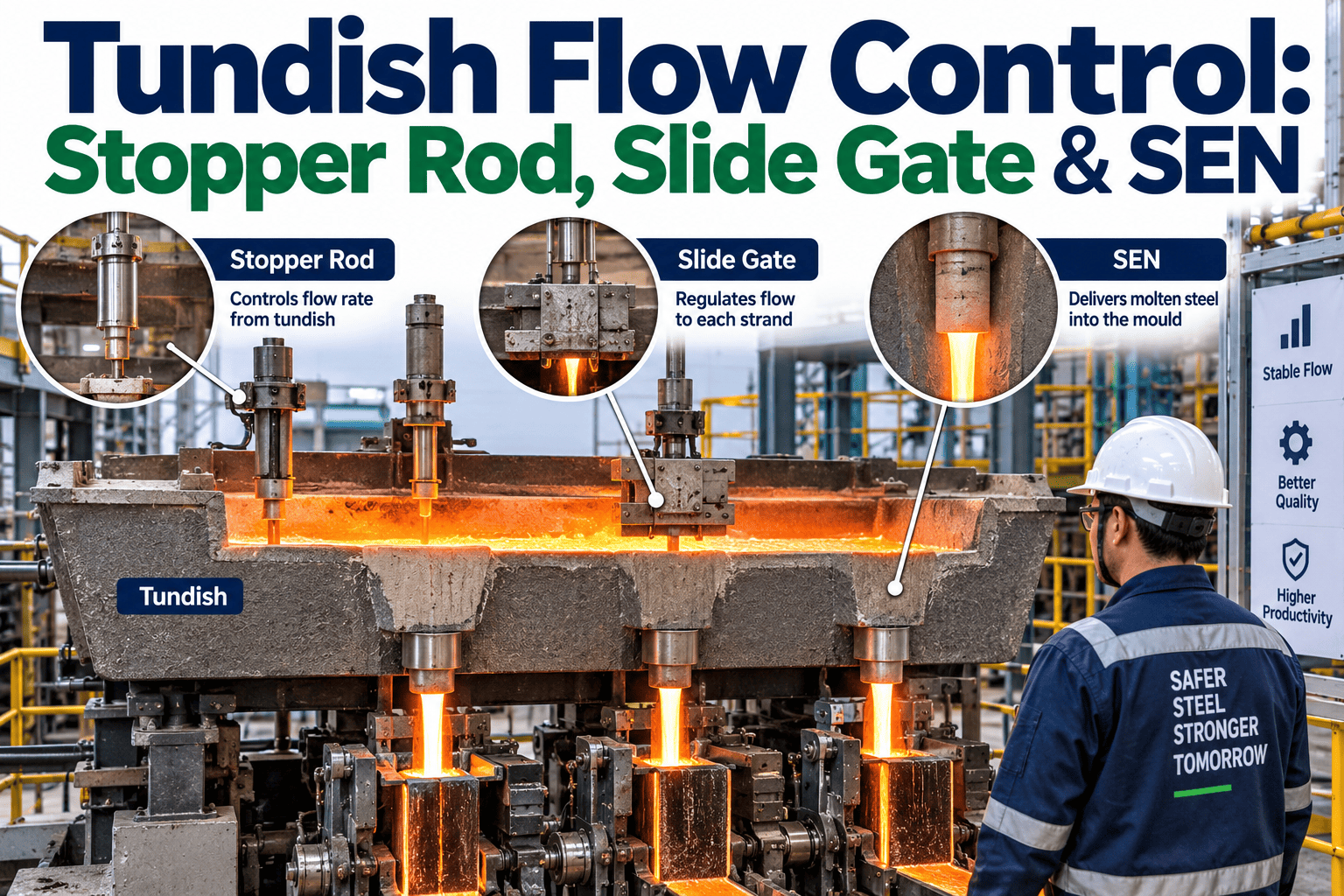
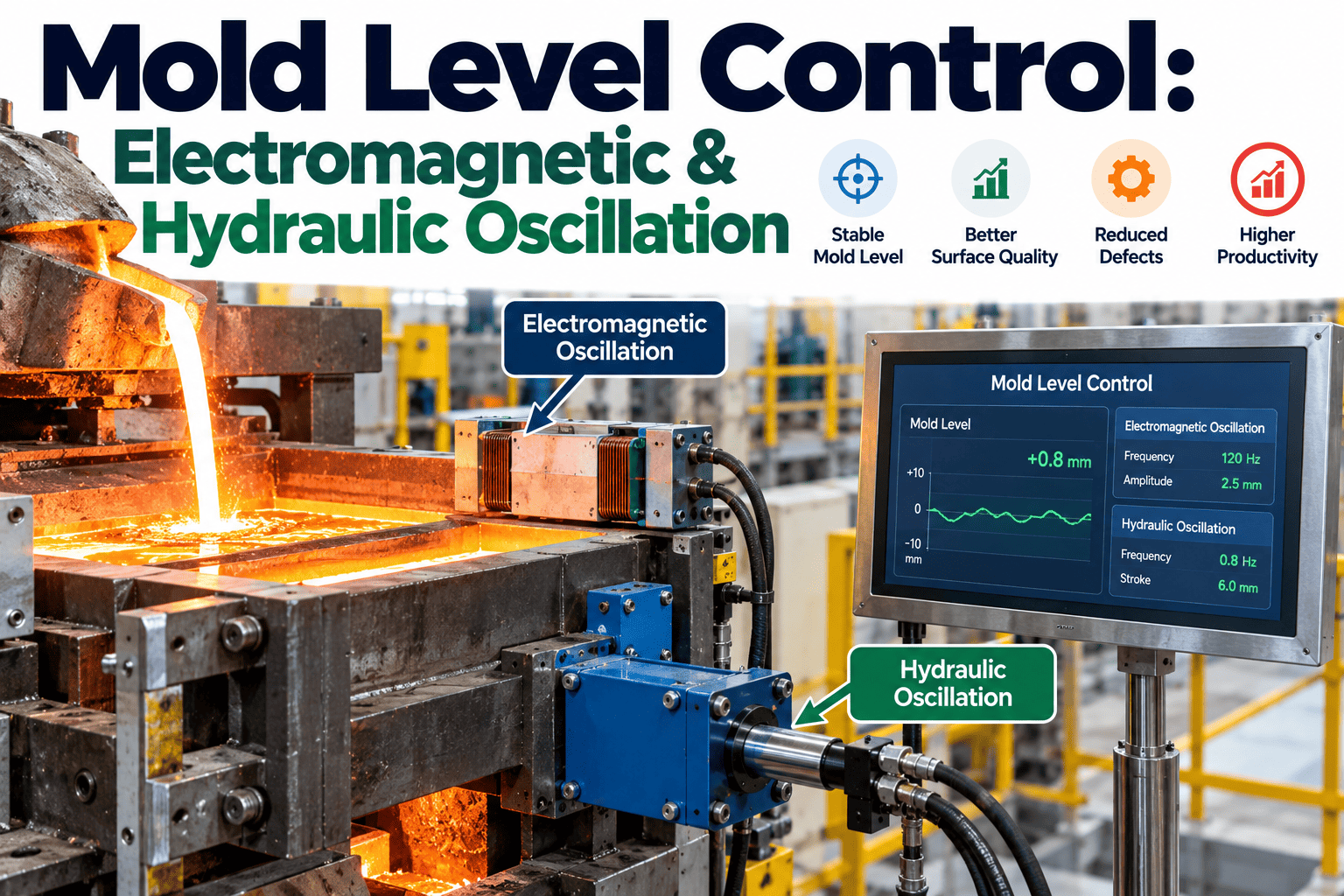
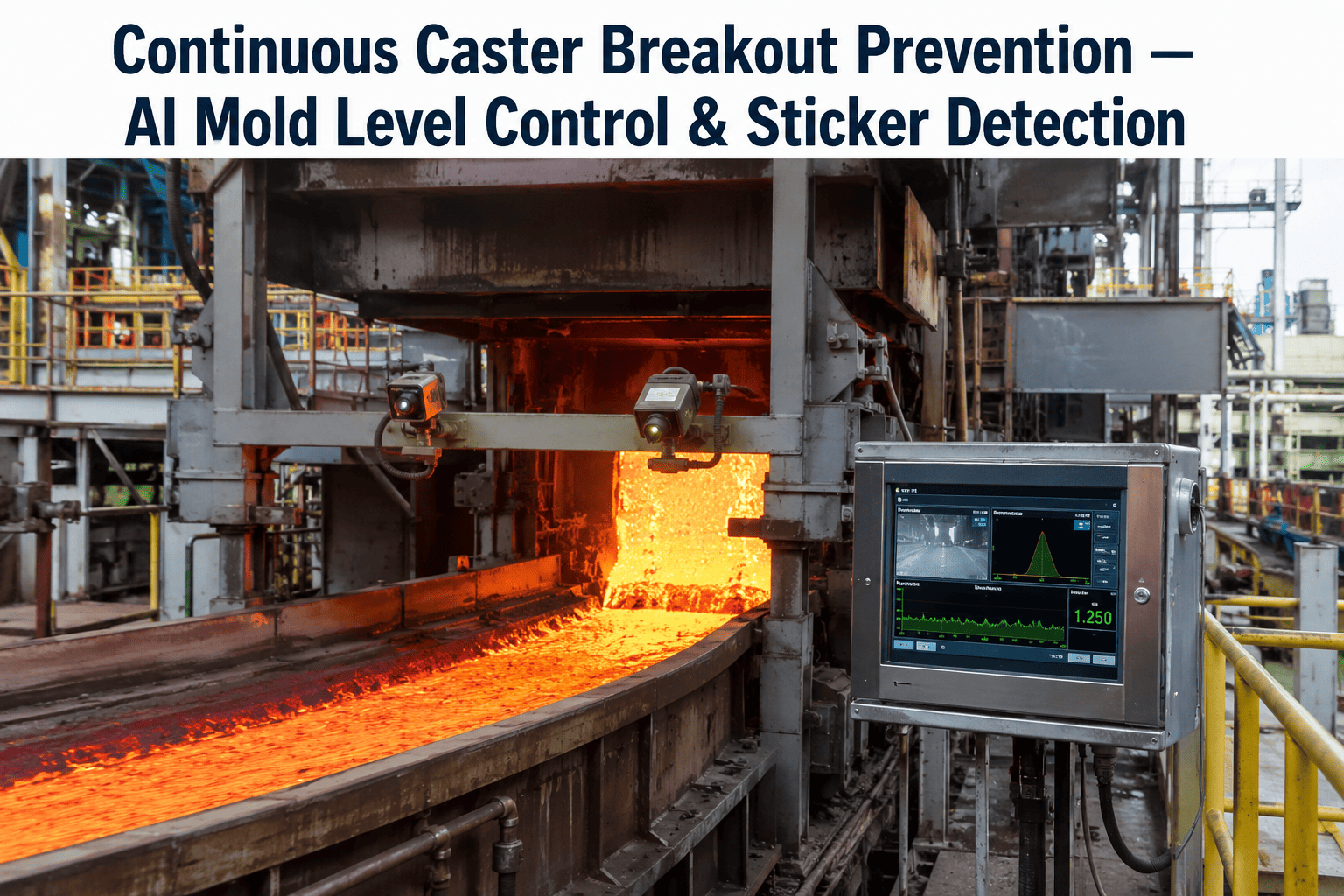
Mold level control looks like a solved problem on paper — a PI or PID loop holding a setpoint against a radiometric or eddy-current sensor — until you look at what actually happens on a real casting floor. Slide gate hunting, slag rim buildup, and argon bubble interference all push the level around in ways a standard control loop reacts to rather than anticipates, and every fluctuation shows up later as a surface defect, a longitudinal crack, or in the worst case a breakout risk. Slab surface quality claims tied back to mold level instability are one of the most common and most preventable defect categories in continuous casting. iFactory's mold level module was built to get ahead of the disturbance instead of just reacting to it.
Your PID loop reacts to mold level swings. iFactory predicts them before they happen
iFactory layers predictive control on top of your existing mold level system, tightening level stability beyond what PI/PID alone can achieve for cleaner, more consistent slab surface quality.
The disturbances that beat a reactive control loop
A standard PI or PID controller adjusts slide gate or stopper rod position based on the current level error. That works well for smooth, predictable disturbances, but several common casting conditions create disturbances that are already happening by the time the loop reacts.
Slide gate hunting
Gate wear and flow variation cause the actuator to hunt around setpoint, and pure reactive control can amplify rather than dampen the oscillation.
Slag rim buildup
Slag rim forming near the gate changes effective flow characteristics gradually, and PID gains tuned for clean-gate conditions drift out of optimal range.
Argon bubble interference
Argon injected to prevent nozzle clogging creates level sensor noise that reactive loops can mistake for a real level disturbance.
Casting speed changes
Every speed change during startup, tail-out, or grade transition disturbs level, and standard loops need time to recover after each transition.
| Control behavior | PI/PID alone | iFactory-enhanced control |
|---|---|---|
| Response to disturbance | Reacts after level error is measured | Anticipates disturbance from gate wear, speed change, and flow pattern trends |
| Slag rim compensation | Requires manual gain retuning | Adjusts control response automatically as rim conditions change |
| Argon noise handling | Filtered generically, can mask real disturbances | Distinguishes argon-related sensor noise from genuine level movement |
| Speed transition recovery | Level settles over several seconds post-transition | Pre-compensates ahead of scheduled speed changes |
| Tuning maintenance | Manual retuning needed as conditions drift | Continuously self-adjusts based on live performance data |
Most casters have never seen how much of their mold level variance is actually preventable, because it's hidden inside "normal" PID performance. Book a walkthrough and we'll show you the gap on your own strand data.
Surface quality tolerances have tightened faster than most control systems have
Automotive exposed-panel steel and other cosmetic-grade applications have pushed surface quality requirements well beyond what was standard even ten years ago, and mold level stability is one of the most direct process levers connected to surface defect rate. A control system tuned to "acceptable" performance by an earlier generation's surface quality standard often isn't tight enough for what today's highest-value grades require, even though the PID loop itself hasn't changed and appears to be performing normally by its original design criteria.
The economics have shifted too. As casters run a wider mix of grades on the same strand, with more frequent grade and speed transitions to match smaller, more specialized order sizes, the number of transition events where level instability is most likely has increased across most shops' production schedules. A control approach that only handles steady-state casting well is covering a shrinking share of actual operating time compared to a decade ago.
There's also a data value angle that's easy to overlook. Once mold level performance is tracked continuously and linked to surface defect outcomes, that dataset becomes a powerful tool for root-cause investigation on quality claims that would otherwise take a metallurgist days of manual data correlation to trace back to a specific casting event.
What the mold level module adds
Predictive disturbance modeling
Anticipates level disturbances from scheduled speed changes and known gate wear patterns before they occur.
Adaptive gain adjustment
Continuously tunes control response to match current slag rim and gate conditions instead of relying on static gains.
Sensor noise discrimination
Separates genuine level movement from argon bubble interference, reducing false correction commands.
Surface quality correlation reporting
Links level stability performance to downstream surface defect rates, closing the loop between control performance and product quality.
What casters see within one quarter
What a mold level pilot includes
Layers on existing control hardware
Works alongside your current PLC and level sensor without requiring a control system replacement.
On-premise deployment
Runs on plant-network hardware with no cloud dependency for real-time control data.
6–9 week pilot
Includes performance baseline capture and shadow-mode validation before live control integration.
Radiometric and eddy-current compatible
Works with either common mold level sensor type already installed on your caster.
Strand-by-strand rollout
Start with your highest-defect-rate strand and expand coverage as performance is validated.
24x7 managed monitoring
iFactory's operations team monitors control performance and flags any drift in real time.
Mold level control AI, explained plainly
See how much of your level variance is actually preventable
iFactory shows you the gap between your current PID performance and what predictive control can achieve. Book a demo on your own strand data.