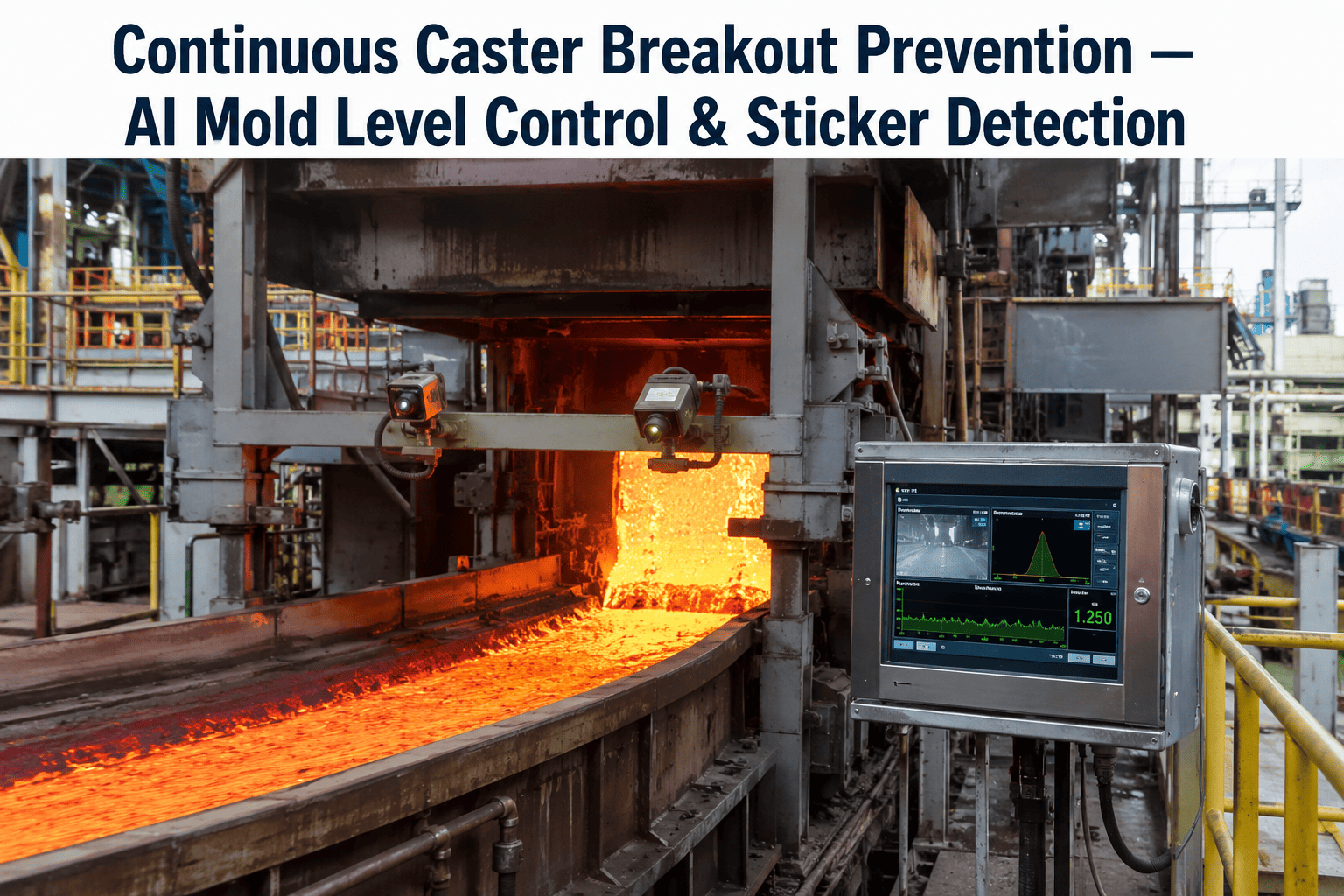
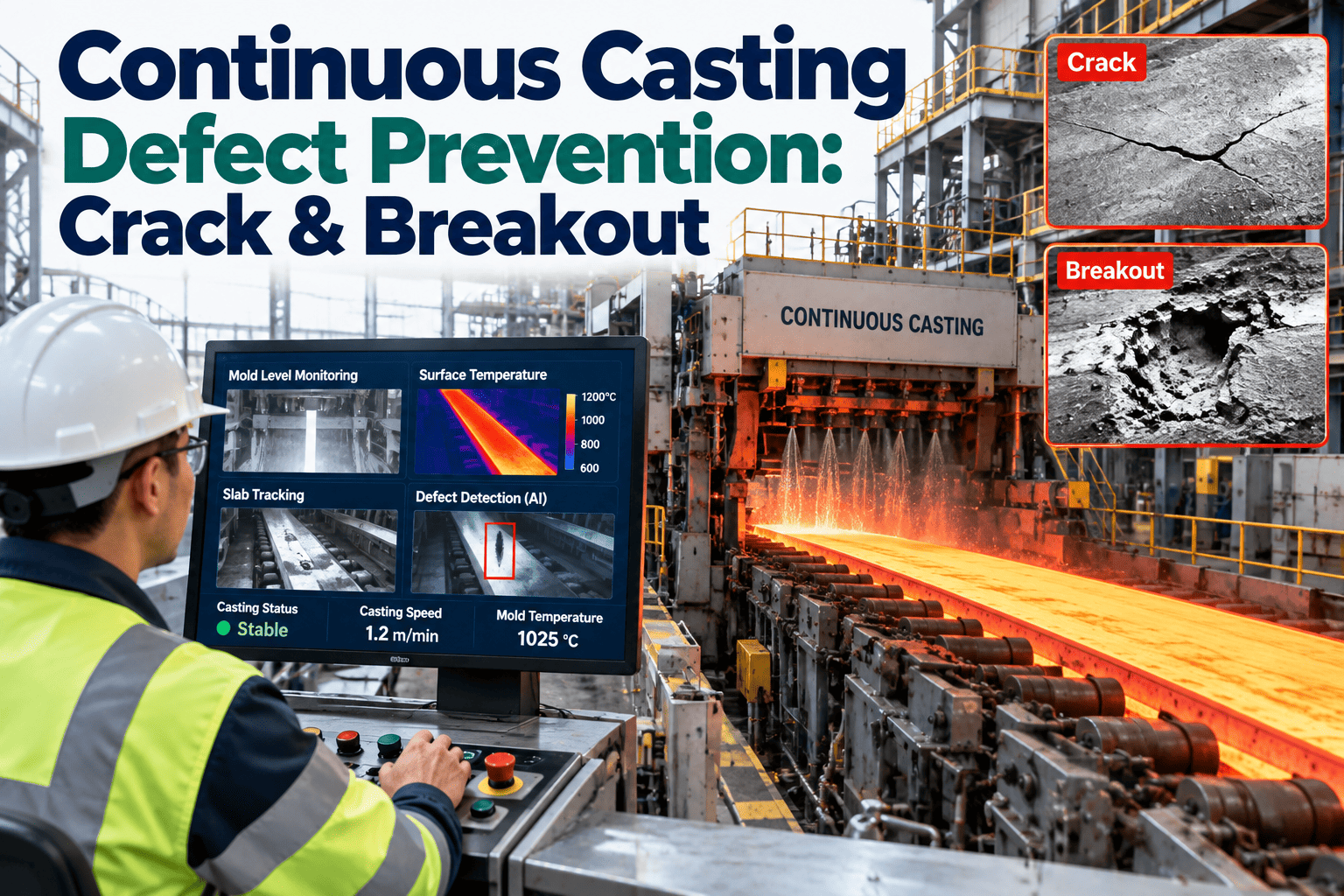
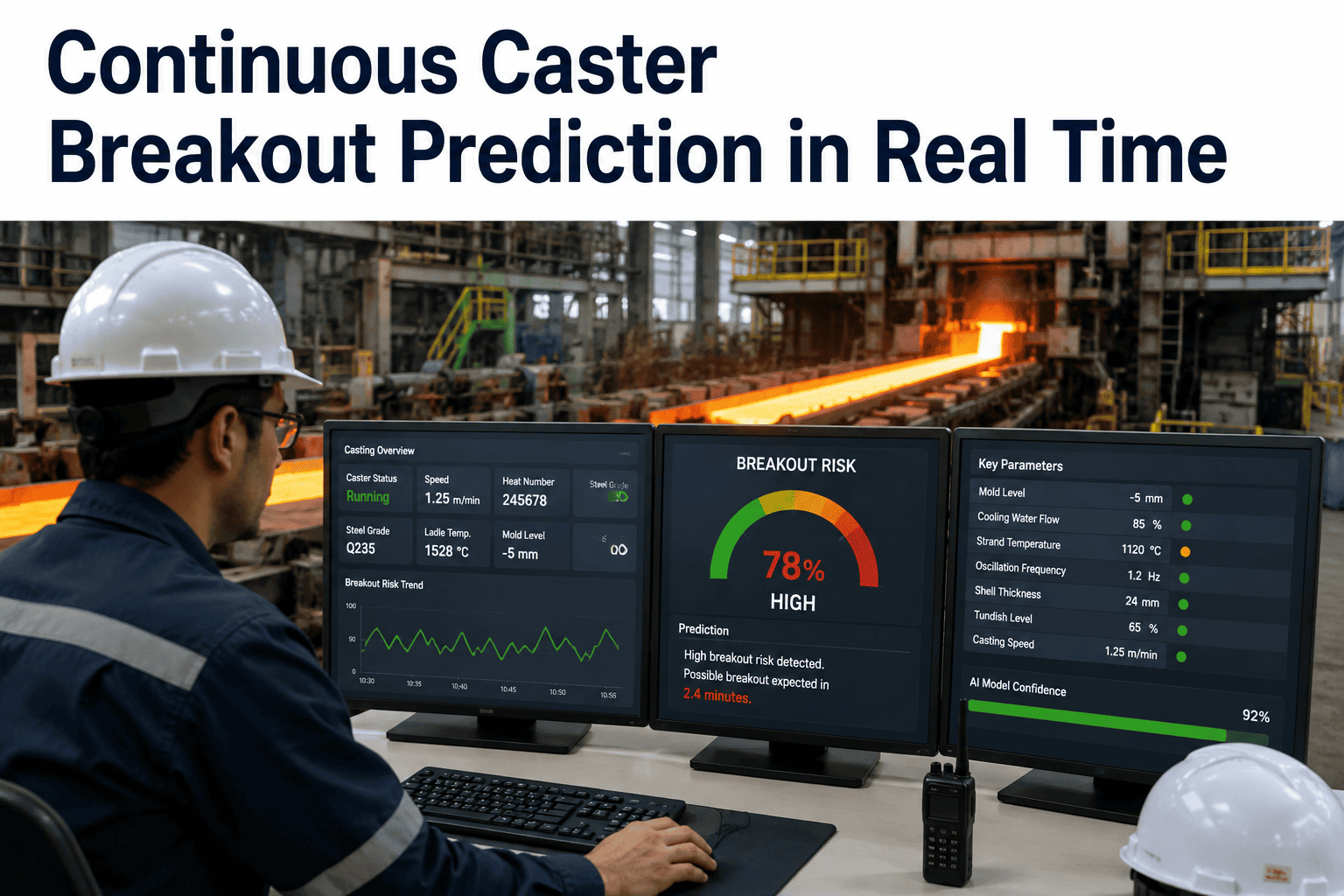
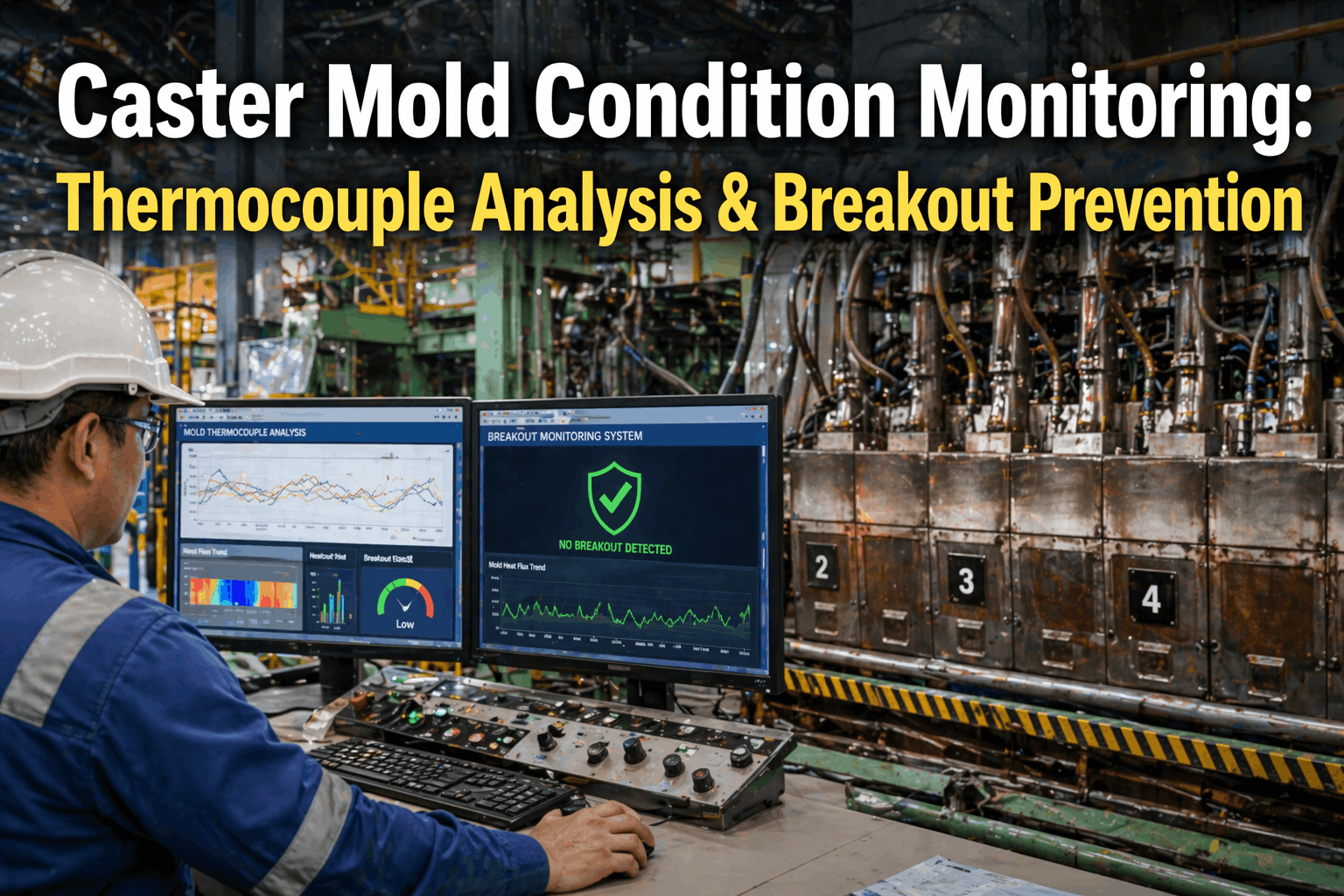
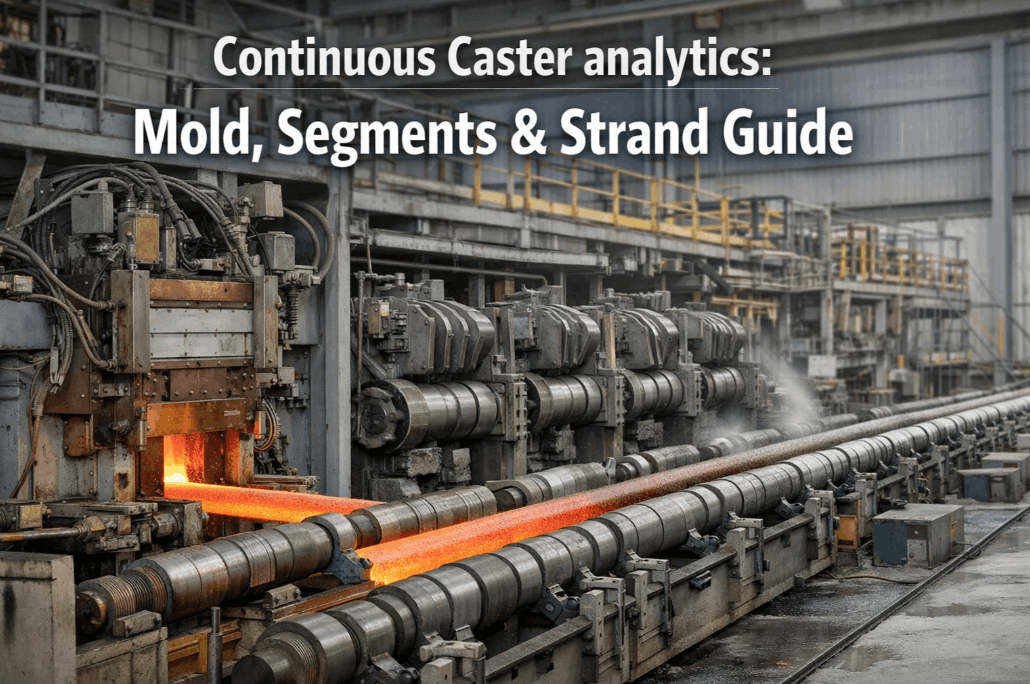
A breakout at the continuous caster is one of the few events that can halt production, damage capital equipment, and put personnel at risk in the same incident. Most breakouts are preceded by recognizable thermocouple temperature patterns and mold level instability in the minutes before the shell ruptures — signals that are difficult for a human operator to catch reliably across every strand, every shift, especially during high-speed casting sequences. iFactory's Breakout Prevention AI continuously analyzes mold level control and thermocouple patterns in real time to flag sticking and breakout risk before the shell fails. Book a demo to see live breakout prevention analytics running on an operating caster.
96%
Sticker breakout precursor patterns correctly identified before shell rupture
45–90 sec
Typical advance warning window delivered to the caster operator before failure
$2.1M
Median annual value from avoided breakout damage and downtime per caster
All Strands
Continuous monitoring coverage across every strand, every shift, every heat
A Breakout Doesn't Start at the Point of Rupture — It Starts Minutes Earlier in a Pattern Most Operators Never See
iFactory reads mold level and thermocouple data across every strand simultaneously, recognizing sticker and breakout precursor patterns faster and more consistently than manual monitoring can sustain across a full shift.
Why Breakouts Are So Hard to Catch With Manual Monitoring Alone
Modern casters already have mold level sensors and thermocouple arrays generating far more data than any single operator can meaningfully track in real time across multiple strands simultaneously. The precursor patterns for a sticker breakout are recognizable, but recognizing them consistently — every strand, every heat, every shift, including the fatigue-prone final hours of a long shift — is a different problem than having the instrumentation in place.
!
Mold level fluctuation patterns that precede sticking are often subtle relative to normal casting speed variation, and easy to miss without a trained comparison baseline.
!
Thermocouple temperature signatures associated with sticker initiation can appear on a single thermocouple before spreading, requiring attention to individual sensor trends most operators aggregate visually.
!
Multiple strands running simultaneously mean operator attention is necessarily divided, and a developing pattern on one strand can be missed while attention is on another.
!
Shift fatigue and attention variability are simply human factors that affect consistency of pattern recognition across a full operating shift, regardless of operator skill.
How iFactory Recognizes Breakout Precursor Patterns
The mold level control and thermocouple pattern recognition models behind iFactory's breakout prevention platform are trained on documented sticker and breakout events, giving the system a reference library of precursor signatures far broader than any single caster's own incident history. Talk to a caster reliability specialist about how the pattern library applies to your specific mold and strand configuration.
01
Real-Time Mold Level Pattern Analysis
Mold level fluctuation is continuously compared against known sticker precursor signatures, distinguishing genuine risk patterns from normal casting speed variation.
02
Thermocouple Signature Recognition
Individual thermocouple trends across the mold are analyzed for the specific temperature signatures associated with shell thinning and sticker initiation.
03
Cross-Strand Simultaneous Monitoring
Every strand is monitored with equal attention continuously, removing the divided-attention limitation inherent to manual multi-strand oversight.
04
Graded Operator Alerting
Alerts are graded by confidence and severity, giving operators a clear escalation path from early watch-status flags to urgent intervention alerts.
Manual Operator Monitoring vs. iFactory Breakout Prevention AI
Even highly experienced caster operators face structural limits on how consistently they can monitor precursor patterns across every strand throughout a full shift. iFactory is built to complement, not replace, that operator expertise.
Give Every Strand the Same Level of Attention as Your Best Operator on Their Best Day
Consistent, continuous precursor pattern monitoring across every strand — removing the divided-attention and fatigue limitations inherent to manual oversight alone.
What Happens in the Seconds Before a Breakout — and How the Warning Reaches the Operator
Understanding the sequence of events leading to a breakout is what makes early warning genuinely actionable rather than just informative after the fact. A sticker typically begins with localized shell thinning at a specific point in the mold, often related to mold flux distribution or casting speed changes, which produces a detectable thermocouple temperature rise at that location before it becomes visible in mold level readings.
As the sticker progresses, the affected shell zone weakens further, and mold level control begins showing the characteristic fluctuation pattern associated with the shell struggling to maintain its normal solidification profile. This is the critical window — typically well under two minutes — where intervention such as a casting speed reduction or an emergency stop can prevent full shell rupture. iFactory's alert delivers directly to the operator's console with the specific strand and thermocouple location flagged, along with a severity grade that indicates how urgent the response needs to be.
This structured alerting is deliberately designed to avoid alert fatigue. A low-confidence early signal is presented as a watch-status flag rather than an urgent alarm, while a high-confidence pattern matching known breakout precursors closely triggers the urgent escalation path. This grading is what keeps operators responsive to alerts rather than desensitized to a system that cries wolf on every minor fluctuation.
Deployment Path: From Caster Audit to Live Breakout Prevention
iFactory deploys against existing mold level sensors and thermocouple arrays already installed on most modern casters.
Week 1
Caster instrumentation audit across mold level sensors and thermocouple array coverage for every strand.
Week 2–3
Pattern recognition model calibrated against your caster's historical incident data and normal operating baselines.
Week 4
Live monitoring activated in shadow mode alongside existing operator workflow, validating alert accuracy before full activation.
Week 5–6
Full operator alerting activated with graded escalation paths; team trained on alert interpretation and response protocol.
Results from Casters Running iFactory Breakout Prevention
The following outcomes reflect caster operations teams that deployed iFactory's mold level and thermocouple pattern recognition model. Request the detailed incident data for a caster configuration comparable to yours.
Integrated Steelworks — 6-Strand Slab Caster
A sticker breakout on Strand 4 during a night shift produced a thermocouple signature that iFactory flagged 68 seconds before shell rupture would have occurred, well within the window for the operator to reduce casting speed and avoid a full breakout. The strand continued casting the remainder of the heat without further incident.
68 secAdvance warning before projected shell rupture
$1.4MAvoided breakout damage and downtime cost
0Breakouts recorded since deployment activation
Mini-Mill Operation — 2-Strand Billet Caster
Prior to deployment, the operation had experienced two breakouts in the preceding operating year, both attributed after the fact to sticker patterns that had been visible in the data but not caught in real time by operators managing both strands simultaneously. Since deployment, three watch-status flags have been raised and resolved through casting speed adjustment before reaching urgent escalation.
2 → 0Breakouts in the twelve months following deployment
3Precursor patterns caught and resolved before escalation
$820KEstimated annual avoided breakout cost
Frequently Asked Questions
Does iFactory require new mold level sensors or thermocouples?
In most cases, no. iFactory connects to the mold level sensors and thermocouple arrays already installed on modern continuous casters. The Week 1 instrumentation audit confirms coverage and identifies any gaps that would limit pattern recognition accuracy before the model calibration phase begins.
How does the system avoid generating false alarms that operators learn to ignore?
Alerts are graded by confidence and severity, so low-confidence early signals appear as watch-status flags rather than urgent alarms, while high-confidence patterns matching known breakout precursors trigger the urgent escalation path. This grading, combined with calibration against your caster's own historical data during Weeks 2–3, is specifically designed to keep the false alarm rate low enough that operators remain responsive rather than desensitized.
Can this monitor multiple strands casting simultaneously without losing accuracy?
Yes. Every strand receives full, simultaneous monitoring depth regardless of how many strands are casting at once, which is one of the core structural advantages over manual operator oversight where attention is necessarily divided. You can
talk to support about how this scales to your specific strand configuration.
What happens after an alert is raised — does the system take automatic action?
No. Alerts are delivered directly to the operator console with strand, thermocouple location, and severity grade included, but the response — whether a casting speed reduction, closer monitoring, or emergency stop — remains an operator decision. This keeps human judgment in the response loop while giving operators the pattern recognition support they need to act quickly and confidently.
How long does operator training take before the system is fully relied upon?
Most caster operators become comfortable interpreting graded alerts within a few shifts, since the alert structure is designed to map onto response actions operators already understand. The Week 4 shadow mode period, where alerts are validated against real casting sequences before full activation, is also part of building operator confidence in the system's accuracy before it becomes a primary input to response decisions.
Every Strand Deserves the Same Level of Vigilance, Every Shift, Every Heat
Continuous mold level and thermocouple pattern recognition trained on documented breakout events, delivering graded alerts your operators can act on with confidence.