-procedures-for-steel-plant-equipment-digital-management-system.png)
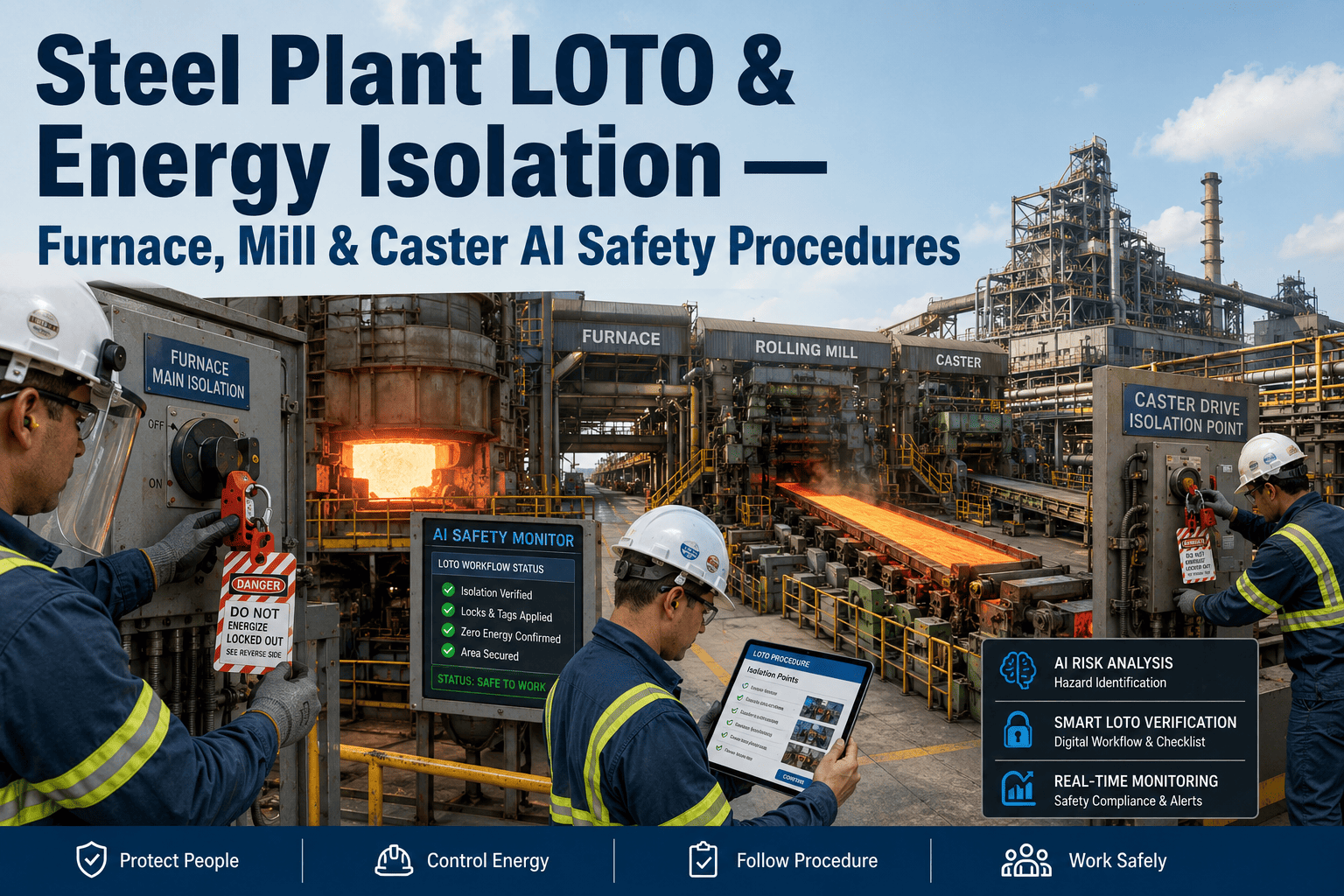
In steel manufacturing, the hazardous energy density is unlike any other industrial environment. A single Electric Arc Furnace can hold multiple simultaneous energy sources — 33kV electrical supply on the transformer, 3,000 PSI hydraulic tilt cylinders, residual thermal energy exceeding 1,400°C in the ladle, and pneumatic lance pressure — all co-existing within the same maintenance zone. Without a machine-specific, digitally verified LockOut/TagOut (LOTO) procedure, a maintenance technician can face all six hazardous energy types simultaneously. OSHA cited LOTO (29 CFR 1910.147) 2,443 times in FY2024 alone — making it a perennial top-5 citation. iFactory's digital LOTO management system replaces paper-based, generic LOTO programs with machine-specific digital workflows, real-time verification checklists, and automatic compliance documentation. Book a Digital LOTO Demo today.
LockOut/TagOut Procedures for Steel Plants: Complete Digital Management System & Compliance Checklist
OSHA requires machine-specific LOTO procedures for every piece of equipment. iFactory digitizes every step — from energy source identification to zero-state verification — eliminating the #1 cause of LOTO citations.
Steel Plant Energy Source Risk Heat Map — Know Your Exposure
Every piece of major steel plant equipment carries multiple simultaneous energy types. This heat map shows severity level for each equipment-energy intersection — the exact starting point for machine-specific LOTO procedure writing. iFactory auto-generates this map from your asset register. Get your plant's risk map.
33kV
3000 PSI
150 PSI
1600°C
Tilt
Fumes
11kV
Doors
Burners
1250°C
Fuel Gas
11kV Motors
Descaler
Guards
Residual
Roll Chocks
Bus
Brakes
Ladle Heat
Suspended
Drives
Cooling H2O
Mould Osc.
Liquid Steel
Segments
Mould Flux
Motors
5000 PSI
Pilots
Ram Drop
The Complete LOTO Procedure Checklist — All 8 OSHA-Required Steps
OSHA 1910.147 requires documented, machine-specific procedures — not generic policies. iFactory converts this 8-step sequence into a digital workflow that authorized employees complete on mobile, with each step verified and timestamped in real time.
Preparation — Identify All Energy Sources
Step 1 · Pre-WorkNotify Affected Employees
Step 2 · CommunicationShut Down Equipment — Documented Sequence
Step 3 · ShutdownIsolate All Energy Sources
Step 4 · Isolation · CRITICALApply Locks & Tags to All Isolation Points
Step 5 · Lockout · CRITICALRelease / Restrain All Stored Energy
Step 6 · Stored Energy · CRITICALVerify Zero Energy State — Attempt to Start
Step 7 · Verification · MANDATORYRestoration — Safe Re-Energization Sequence
Step 8 · RestorationPaper-Based LOTO vs iFactory Digital LOTO — Side-by-Side Comparison
The #1 LOTO citation cause is "No Machine-Specific Written Procedure" — a documentation failure, not a physical hardware failure. See exactly how iFactory closes every documentation gap that paper-based systems leave open.
| Compliance Requirement | Paper-Based LOTO | iFactory Digital LOTO | OSHA § 1910.147 |
|---|---|---|---|
| Machine-specific written procedures | Generic binders, often outdated | Per-asset digital procedure, always current | (c)(4) |
| Annual periodic inspection | Frequently missed, no reminder system | Auto-scheduled, escallated if missed | (c)(6) |
| Employee training documentation | Paper sign-sheets, easily lost | Digital cert. per employee, auto-renew alerts | (c)(7) |
| Group LOTO / contractor coordination | Verbal coordination, no audit trail | Digital group permit with individual lock tracking | (f)(3) |
| Stored energy verification | Often skipped — assumed, not confirmed | Mandatory digital sign-off by type — cannot skip | (d)(5) |
| OSHA audit documentation retrieval | Hours/days of manual searching | Complete package generated in < 60 seconds | All |
| Citation risk level | CRITICAL — up to $165,514/violation | ZERO citations at client plants | (a)(1) |
Why LOTO Citations Happen — Violation Breakdown by Root Cause
Of the 2,443 LOTO citations issued in FY2024, the overwhelming majority were documentation failures — not equipment failures. Understanding the root cause distribution is the first step to eliminating your risk.
Citations
iFactory Digital LOTO — Under the Hood
Machine-Specific Procedure Library
iFactory maintains a digital LOTO procedure for every asset in your register. Procedures are linked to equipment make/model, updated after every modification, and version-controlled — eliminating the #1 citation cause permanently.
Hardware-Linked Digital Lock Tracking
Each physical lock is assigned a unique QR/NFC tag. iFactory tracks which employee has applied which lock, to which isolation device, on which equipment — providing full group LOTO visibility across multi-trade maintenance crews.
Annual Inspection Auto-Scheduler
OSHA 1910.147(c)(6) requires annual inspections of energy control procedures. iFactory schedules, assigns, and escalates these reviews automatically — with digital evidence storage preventing the 12% of citations from missed inspections.
Real-Time Compliance Audit Trail
Every LOTO event — from permit issuance to lock removal — is timestamped and stored with photo evidence. When OSHA arrives, one click generates a complete, chronological LOTO history for the entire plant.
What a Maintenance Manager Said After Their OSHA LOTO Inspection
"We had 47 active LOTO procedures across our EAF, rolling mill, and continuous caster — all in paper binders that nobody updated after equipment modifications. An OSHA inspector asked to see our machine-specific procedures and annual inspection records. With iFactory, I pulled the complete digital record for every single piece of equipment in under 2 minutes. Zero citations. The inspector couldn't find a single gap."
Frequently Asked Questions — LOTO in Steel Manufacturing
Does OSHA require separate LOTO procedures for each piece of equipment?
Yes. OSHA 1910.147(c)(4) requires documented, machine-specific procedures for every piece of equipment — generic plant-wide LOTO programs do not satisfy this requirement.
This is the single most-cited LOTO violation (38% of all citations) and the easiest to prevent with iFactory's per-asset procedure library.
How often does OSHA require LOTO procedure inspections?
OSHA requires at least one annual inspection of each energy control procedure, conducted by an authorized employee other than the one using it.
iFactory auto-schedules these annual reviews and generates the required certification documentation automatically.
How does group LOTO work for steel plant maintenance crews?
When multiple authorized employees work on the same equipment, each must apply their own personal lock to a group lockout hasp — ensuring no one can re-energize equipment while any worker is still in the hazard zone.
iFactory tracks every lock in a group LOTO event in real time, alerting supervisors if any lock is removed out of sequence.
Can iFactory manage LOTO for outside contractors working in our steel plant?
Yes. iFactory includes a contractor LOTO coordination module where contractors are provisioned as temporary authorized employees for their scope of work.
All contractor LOTO events are documented with the same rigor as employee procedures and are included in the plant's OSHA audit package.
What happens if an authorized employee leaves before removing their lock?
This is covered under OSHA's "employee shift or personnel change" provisions — a trailing-lock protocol that requires documented supervisor authorization to remove an absent employee's lock.
iFactory has a built-in trailing-lock workflow with supervisor countersignature and automatic incident documentation.
Eliminate Every LOTO Citation Risk. Deploy Digital LOTO in 4 Weeks.
Machine-specific procedures, group LOTO tracking, annual inspections and zero-citation documentation — all in one platform.




-procedures-for-steel-plant-equipment-complete-implementation-guide.png)

