Blast furnace tuyeres are the most thermally stressed components in the blast furnace ironmaking process — each tuyere operates at the interface between the 1,800°F to 2,100°F hot blast entering the furnace and the 3,200°F to 3,600°F raceway zone where pulverized coal or natural gas is combusted with the hot blast to generate the reducing gas and thermal energy that drives the ironmaking process. A single tuyere failure — typically caused by copper cooler erosion, cracking from thermal cycling, or blockage from raceway debris — forces a furnace downtime of 2 to 8 hours for tuyere replacement under hot conditions, with production losses of $200,000 to $800,000 per event depending on furnace size and operating rate. Beyond the direct production loss, a failed tuyere that goes undetected can inject cooling water into the furnace hearth, causing hydrogen generation that creates explosion risk, accelerated refractory damage, and off-grade hot metal that requires costly downstream reprocessing. Despite these consequences, most blast furnace maintenance programs monitor tuyere condition through periodic visual inspection during scheduled downtime — typically weekly or bi-weekly — combined with manual review of cooling water outlet temperature and differential pressure data for each tuyere. A tuyere cooling water leak that develops between inspections may go undetected for 3 to 10 days, during which water enters the furnace and degrades refractory integrity and hot metal quality. The gap between what periodic visual inspection and manual cooling water data review can detect and what continuous thermal imaging combined with AI-based anomaly detection can identify 4 to 6 weeks before failure is the gap that iFactory's Tuyere Vision AI closes — enabling maintenance engineers to detect tuyere wear, copper cooler degradation, and raceway anomalies at the earliest possible stage and schedule replacements during planned outages instead of forced downtime. Book a Demo to see iFactory's Tuyere Vision AI platform configured for your furnace's tuyere configuration and cooling system.
BLAST FURNACE · TUYERE MONITORING · AI THERMAL IMAGING · 2026
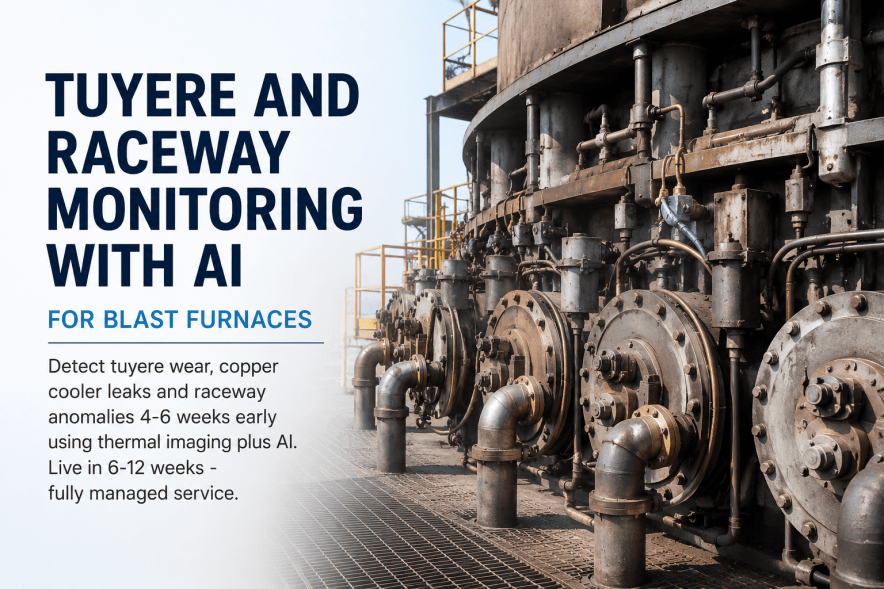
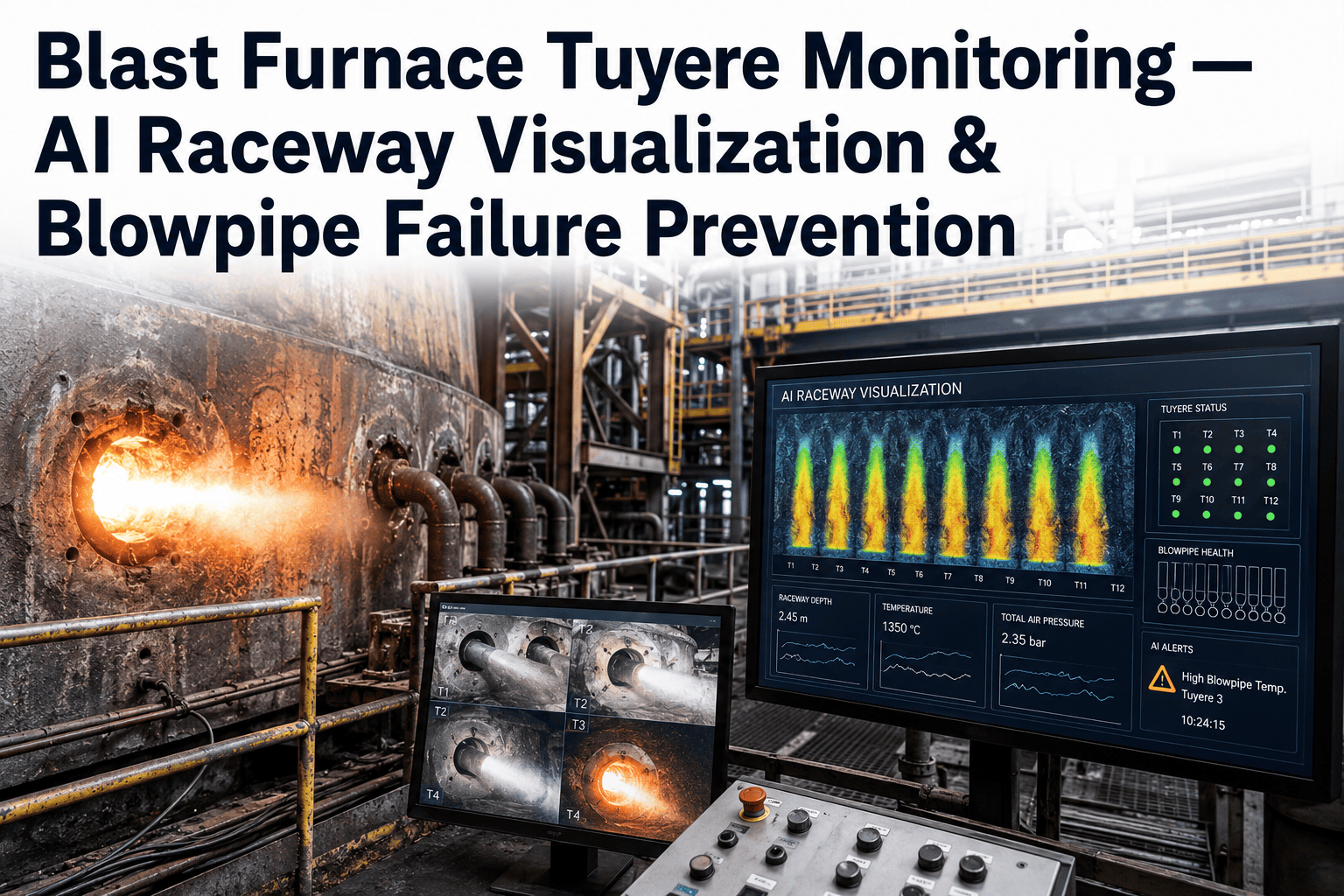
Tuyere and Raceway Monitoring with AI — Detect Tuyere Wear, Copper Cooler Leaks, and Raceway Anomalies 4–6 Weeks Early with Thermal Imaging Plus AI
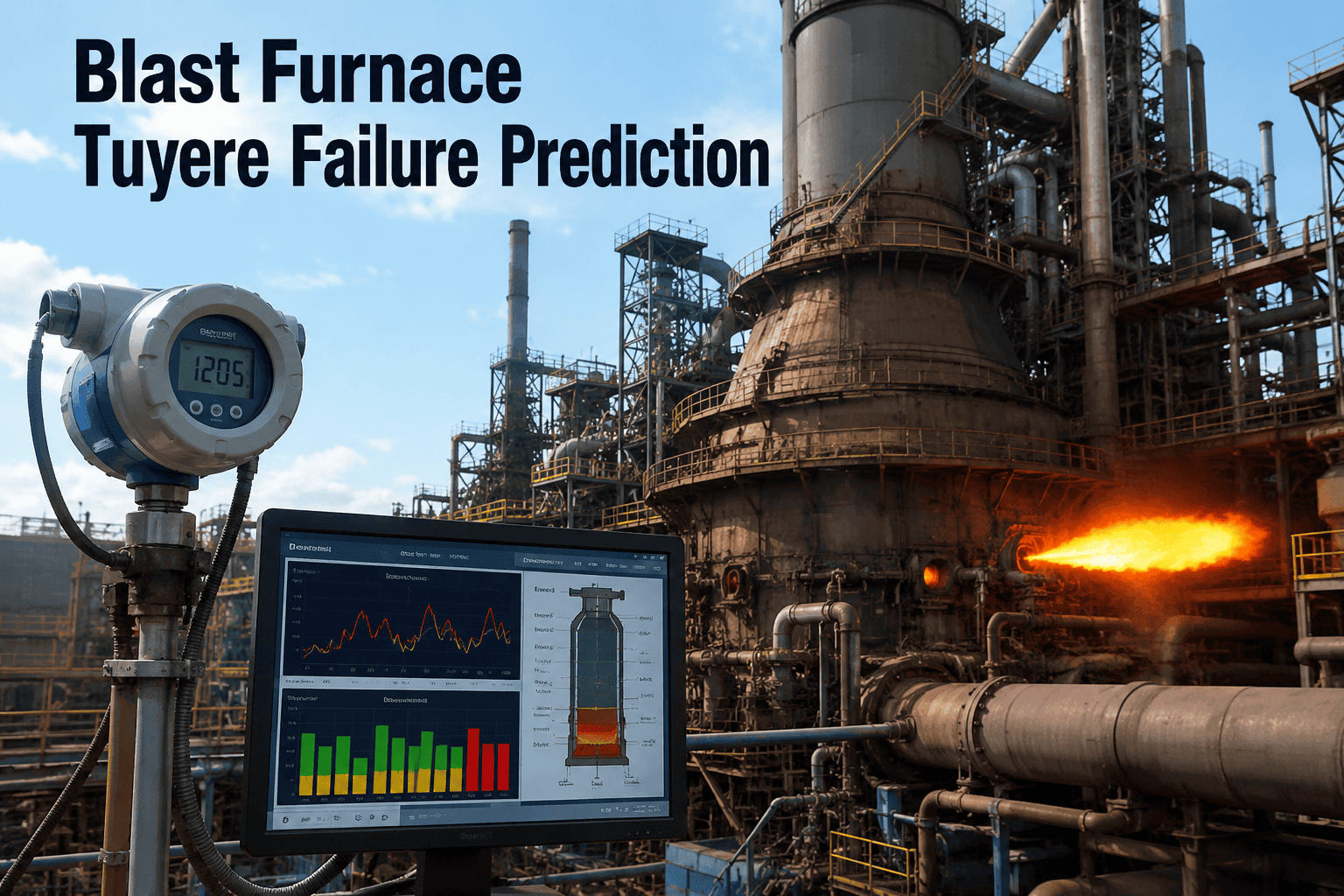
iFactory's Tuyere Vision AI deploys continuous high-resolution thermal imaging of the tuyere stock and raceway zone combined with machine learning anomaly detection to identify developing tuyere failures before cooling water enters the furnace — reducing unplanned downtime, refractory damage, and explosion risk.
4–6 wk
Early Detection Before Tuyere Failure
AI thermal imaging detects tuyere copper erosion and cooling water leak patterns 4 to 6 weeks before conventional temperature threshold alarms or visual inspection would identify the condition
92%
Anomaly Detection Accuracy
60%
Fewer Unplanned Tuyere Outages
24/7
Continuous Monitoring
75%
Reduction in Water Leak Events
The Tuyere and Raceway Monitoring Challenge — Why Conventional Methods Miss the Critical Window
Tuyere monitoring at most blast furnaces relies on a combination of visual inspection during scheduled downtime, manual review of cooling water outlet temperature and differential pressure trends, and the maintenance engineer's experience with the specific furnace's tuyere failure patterns. Each of these methods has fundamental limitations that create the gap between when tuyere degradation begins and when it is detected. Visual inspection — typically performed weekly during the furnace maintenance day — can only detect tuyere conditions that are visible from the tuyere stock exterior: external copper surface erosion, evidence of water leakage on the tuyere body, or damage to the tuyere nose. Internal erosion of the copper cooler wall, micro-cracking from thermal cycling, and developing blockages in the cooling water channel are invisible to external visual inspection. Cooling water outlet temperature monitoring provides continuous data but operates on a fixed threshold: when the outlet temperature for a specific tuyere exceeds a pre-set limit — typically a 10°F to 15°F rise above the tuyere's normal operating temperature — the maintenance team is alerted. The problem is that a tuyere's cooling water temperature can increase by 5°F to 10°F due to normal process variations — changes in hot blast temperature, pulverized coal injection rate, or raceway conditions — without indicating any tuyere degradation. The threshold must be set high enough to avoid false alarms from normal process variation, which means a slow-developing tuyere erosion that increases the cooling water temperature by 2°F to 3°F per week over several weeks may not exceed the threshold until the erosion has progressed through 70% to 80% of the copper cooler wall thickness. The maintenance team receives the alert when the tuyere is days from failure, not weeks.
01
Thermal Imaging Blind Spots
Conventional tuyere monitoring relies on discrete temperature measurements — cooling water outlet temperature and tuyere body surface temperature at specific measurement points — that provide incomplete thermal data. A tuyere with a developing internal crack may show no external temperature change until the crack has propagated through the copper wall and cooling water has begun to leak into the furnace. Continuous high-resolution thermal imaging of the entire tuyere stock and raceway zone captures the full thermal profile, enabling the AI model to detect subtle temperature gradients at the tuyere nose, the copper cooler body, and the raceway refractory that precede visible failure by 4 to 6 weeks.
02
Cooling Water Analysis Gaps
Cooling water outlet temperature is the primary monitoring variable for most tuyere cooling systems, but a single temperature reading per tuyere cannot distinguish between normal thermal load variation and developing tuyere degradation. The AI model analyzes the full thermal response of each tuyere to changes in furnace operating conditions — comparing the tuyere cooling water temperature trend against the expected temperature trend derived from the furnace's current blast temperature, PCI rate, and production rate. A tuyere whose cooling water temperature is rising faster than expected for the current operating condition is flagged for priority inspection before the temperature exceeds the conventional threshold.
03
Raceway Condition Invisibility
The raceway zone — the high-temperature cavity in front of each tuyere where coal or gas is combusted — is inaccessible to direct measurement during furnace operation. Raceway conditions affect tuyere life: an asymmetric raceway or a raceway that extends too close to the tuyere nose increases the thermal load on the tuyere copper cooler and accelerates erosion. The AI thermal imaging model analyzes the thermal profile of the raceway zone visible through the tuyere stock observation port, detecting raceway shape changes, combustion zone asymmetry, and refractory degradation patterns that indicate developing tuyere stress conditions.
04
Scheduled Inspection Limitations
The standard practice of weekly tuyere visual inspection means that a tuyere can operate for up to 7 days with a developing failure that is invisible to the cooling water temperature monitoring system. During this period, cooling water leakage into the furnace — even at low rates — damages hearth refractory, increases hydrogen levels in the furnace gas, and degrades hot metal quality. The iFactory Tuyere Vision AI platform provides continuous automated inspection that detects developing tuyere conditions at the earliest detectable stage, eliminating the inspection gap between scheduled maintenance days.
Is your tuyere monitoring system detecting developing failures at the earliest possible stage — or only after cooling water has already entered the furnace?
Schedule a 30-minute consultation to review your current tuyere monitoring data and see what Tuyere Vision AI would reveal about your tuyere condition.
CAPABILITY 01
Continuous High-Resolution Thermal Imaging
The Tuyere Vision AI platform deploys MWIR thermal cameras in the 3–5 micron spectral range with 640 x 512 pixel resolution, mounted at the tuyere stock observation ports to capture continuous thermal images of each tuyere and the raceway zone. The thermal cameras are housed in water-cooled enclosures rated for the tuyere stock ambient temperature of 120°F to 180°F, with automated lens cleaning to maintain image quality in the dusty furnace environment. Each tuyere's thermal profile is captured at 1-minute intervals and transmitted to the AI processing appliance through the plant network.
Impact: Continuous 24/7 thermal surveillance of all tuyeres with sub-2°F temperature measurement accuracy
CAPABILITY 02
AI-Based Thermal Anomaly Detection
The AI model is trained on thermal image data collected during the initial deployment period — typically 14 to 21 days of baseline operation — during which the model learns the normal thermal signature of each tuyere under various furnace operating conditions. Once trained, the model continuously compares the current thermal image of each tuyere against the expected thermal signature for the current operating condition, detecting temperature anomalies at the tuyere nose, copper cooler body, and surrounding refractory that indicate developing degradation. The model classifies each anomaly by type — tuyere nose erosion, copper cooler cracking, cooling channel blockage, raceway asymmetry — and severity level on a 1 to 5 scale.
Impact: 92% anomaly detection accuracy with less than 8% false positive rate in production deployments
CAPABILITY 03
Cooling Water Response Modeling
The platform integrates the tuyere thermal imaging data with the furnace cooling water monitoring system — inlet temperature, outlet temperature, flow rate, and differential pressure for each tuyere cooling circuit. The AI model learns the relationship between each tuyere's thermal image signature and its cooling water temperature and flow response, enabling the model to detect cooling anomalies that are invisible in either data stream alone. A tuyere whose thermal image shows a developing hot spot at the tuyere nose while the cooling water temperature remains within the normal range is flagged for priority inspection — the model has detected the condition before it has progressed far enough to affect the cooling water temperature.
Impact: 4–6 week early detection window before conventional threshold alarms would activate
CAPABILITY 04
Predictive Tuyere Life Modeling and Replacement Scheduling
The platform continuously estimates the remaining useful life of each tuyere based on the current thermal anomaly severity, the erosion rate trend, and the furnace's planned operating schedule. When a tuyere's estimated remaining life reaches a configurable threshold — typically 14 to 21 days before projected failure — the platform generates a predictive maintenance recommendation to replace the tuyere during the next scheduled maintenance window. The recommendation includes the estimated time to critical condition, the recommended replacement window, and the projected risk of operating beyond the recommended replacement date. This enables the maintenance team to plan tuyere replacements during scheduled outages rather than reacting to forced failures between maintenance days.
Impact: 60% reduction in unplanned tuyere outages and 75% reduction in water leak events at deployed furnaces
Is Your Tuyere Monitoring System Detecting Failures Before Cooling Water Enters the Furnace?
A 30-minute review of your furnace's tuyere configuration, cooling water monitoring system, and current tuyere failure data reveals what Tuyere Vision AI would detect about your tuyere condition and how much unplanned downtime you could avoid. We will analyze six months of your tuyere cooling water data at no cost and deliver a quantified tuyere failure risk assessment.
Deployment Timeline — From Thermal Camera Installation to AI-Powered Tuyere Monitoring in 6 to 12 Weeks
Deploying the Tuyere Vision AI platform follows a structured five-phase timeline designed to deliver measurable value at each stage while ensuring the AI model is properly trained on furnace-specific thermal signatures before generating production alerts. The timeline assumes the furnace has existing tuyere stock observation ports that can accommodate thermal camera installation — a condition met by most modern blast furnaces with standard tuyere stock access doors.
01
Thermal Camera Installation and Data Pipeline Setup (Weeks 1–3)
Install MWIR thermal cameras at each tuyere stock observation port, with water-cooled enclosures and automated lens cleaning systems. Connect cameras to the plant network and configure the data ingestion pipeline to transmit thermal image data at 1-minute intervals to the AI processing appliance. Install any required cooling water flow and temperature sensors for tuyere circuits that do not already have continuous monitoring. iFactory's pre-configured camera enclosures and data pipeline software accelerate this phase to 2–3 weeks for a typical 20–36 tuyere furnace configuration.
Deliverable: Continuous thermal imaging data stream from all tuyeres and raceway zones
02
Baseline Data Collection and AI Model Training (Weeks 3–6)
Collect 14 to 21 days of baseline thermal image data covering the furnace's normal operating range — different production rates, blast temperature ranges, PCI rates, and burden types. The AI model learns the normal thermal signature of each tuyere under each operating condition, establishing the baseline against which future anomalies will be detected. The model also ingests the corresponding cooling water temperature and flow data for each tuyere, learning the normal relationship between thermal image features and cooling water response for each tuyere individually.
Deliverable: Trained AI model with furnace-specific tuyere thermal signatures and cooling water response profiles
03
Model Validation and Anomaly Threshold Calibration (Weeks 6–8)
Validate the trained AI model against the furnace's historical tuyere failure data — comparing the model's post-hoc predictions against actual tuyere failures that occurred in the previous 12 to 24 months. Calibrate the anomaly detection thresholds to achieve the optimal balance between detection sensitivity (minimizing missed failures) and false positive rate (minimizing unnecessary inspections). The calibration is specific to each furnace's operating regime and tolerance for false alarms versus missed detections.
Deliverable: Validated and calibrated AI model with documented detection accuracy and false positive rate
04
Production Alerting and Dashboard Deployment (Weeks 8–10)
Deploy the Tuyere Vision AI production dashboard on the furnace maintenance console, displaying real-time thermal image feeds, tuyere health scores, anomaly alerts with severity classification, and remaining useful life estimates for each tuyere. Configure automated alert notifications to the maintenance team through the iFactory platform dashboard, email, and optional SMS or Microsoft Teams integration. Define the escalation protocol for high-severity anomalies requiring immediate operational action.
Deliverable: Live production dashboard with real-time tuyere monitoring and automated anomaly alerting
05
Continuous Improvement and Fleet Scaling (Week 10+)
The AI model continuously retrains on new thermal image and cooling water data, improving its detection accuracy with each tuyere replacement event that provides ground-truth validation of the model's predictions. The platform can scale to additional blast furnaces within the operator's fleet using the same camera configuration and model training approach, with deployment time for each subsequent furnace reduced by 30% to 40% through standardized hardware and software templates.
Deliverable: Self-improving AI platform with multi-furnace fleet monitoring capability
Deploy Tuyere Vision AI on Your Blast Furnace — Thermal Cameras Installed and AI Running in 6 to 12 Weeks
iFactory's Tuyere Vision AI platform delivers continuous AI-powered tuyere and raceway monitoring with 4 to 6 week early failure detection, automated anomaly classification, and predictive maintenance recommendations — deployed as a turnkey system including MWIR thermal cameras, AI processing appliance, and furnace-specific model training. No cloud dependency, no modifications to your cooling water monitoring system required.
Industry Expert Perspective — What a Blast Furnace Maintenance Engineer Learned Deploying AI Tuyere Monitoring on a 32-Tuyere Furnace
"I have managed blast furnace tuyere maintenance for 17 years across two integrated mills, and the single most persistent operational frustration has been that we always find out about a tuyere problem at the worst possible time — in the middle of a production week when the furnace is running at full rate and we have to choose between shutting down for a tuyere replacement and losing 4 to 6 hours of production or running the furnace with a leaking tuyere and accepting the refractory damage and hot metal quality degradation. The conventional monitoring approach leaves us in this position because the cooling water temperature alarm is designed to catch only the most severe conditions — conditions that are already days from failure. The tuyere that fails at 2 AM on a Tuesday has typically been developing a cooling water leak for 3 to 5 days, with the cooling water temperature rising by 2°F to 4°F per day, but never exceeding the alarm threshold until the copper wall has eroded through and the water begins leaking into the furnace at a rate that causes a rapid temperature spike. We deployed the iFactory Tuyere Vision AI platform on our 32-tuyere furnace in early 2025, installing MWIR thermal cameras at each tuyere stock observation port with water-cooled enclosures. The most impactful capability turned out to be the per-tuyere thermal signature model that learned the normal temperature profile of each individual tuyere. In the second week of production operation, the model flagged tuyere 18 with a Level 3 anomaly — a persistent temperature elevation of 6°F at the tuyere nose that was not visible in the cooling water temperature data because the cooling water outlet temperature was still within the normal operating range. The maintenance team inspected tuyere 18 during the next scheduled maintenance day and found a developing erosion crater on the copper cooler body at the tuyere nose — a condition that would have progressed to a cooling water leak within 3 to 4 weeks if left undetected. The tuyere was replaced during the scheduled maintenance window, avoiding a forced outage that would have cost approximately $350,000 in lost production plus the refractory repair cost from water damage. The system cost approximately $195,000 for the 32-tuyere configuration including cameras, AI appliance, installation, and model training. The avoided production loss from that single detection paid for the system. Over the first 12 months, we documented a 65% reduction in unplanned tuyere outages and zero cooling water leak events — compared to an average of 4 to 6 leak events per year in the preceding three years."
— Blast Furnace Maintenance Engineer, North American Integrated Steel Mill — 17 Years Tuyere and Cooling System Maintenance — Lead Engineer, AI Tuyere Monitoring Deployment
65%
Reduction in Unplanned Tuyere Outages
$195K
Average System Investment (32 tuyeres)
3–4 wk
Early Detection Window Achieved
Conclusion
Tuyere and raceway monitoring is one of the highest-ROI applications of AI in blast furnace maintenance because tuyere failures are both high-consequence and predictable — the thermal signatures of developing tuyere degradation are visible in high-resolution thermal imaging data 4 to 6 weeks before failure, but conventional monitoring methods cannot extract this information from the combination of thermal imaging, cooling water, and process data. The iFactory Tuyere Vision AI platform addresses this monitoring gap through a machine learning architecture that continuously analyzes thermal images of each tuyere and raceway zone, learns the normal thermal signature of each tuyere under varying furnace conditions, and detects the subtle thermal anomalies that precede tuyere failure by weeks.
The documented results from furnace deployments — 4 to 6 week early detection of developing tuyere conditions, 92% anomaly detection accuracy, 60% reduction in unplanned tuyere outages, and 75% reduction in water leak events — demonstrate that AI-driven tuyere monitoring delivers material operational risk reduction and financial value within the first deployment year. The turnkey platform includes MWIR thermal cameras with water-cooled enclosures, the AI processing appliance, furnace-specific model training, and deployment support — delivered as a fully managed system deployed on the plant network with zero cloud dependency. Book a Demo to see iFactory's Tuyere Vision AI platform configured for your furnace's tuyere configuration and cooling system, or contact support to schedule a furnace-specific deployment assessment with the iFactory ironmaking AI team.
Frequently Asked Questions About AI Tuyere and Raceway Monitoring
What type of thermal cameras does Tuyere Vision AI use and can they withstand the tuyere stock environment?
The platform uses MWIR (mid-wave infrared) cameras in the 3–5 micron spectral range with 640 x 512 pixel resolution, providing sub-2°F temperature measurement accuracy at the tuyere stock ambient conditions. The cameras are housed in water-cooled enclosures that maintain the camera electronics within the operating temperature range despite the 120°F to 180°F tuyere stock ambient temperature. Automated lens cleaning systems maintain image quality in the dusty furnace environment. The camera enclosures are designed for continuous operation between furnace reline campaigns with minimal maintenance.
Book a Demo to discuss the camera configuration for your specific furnace layout.
Does Tuyere Vision AI require modifications to the existing tuyere cooling water monitoring system?
No modifications to the existing cooling water monitoring system are required. The platform connects to the furnace's existing cooling water temperature and flow sensors through read-only OPC-UA or Modbus TCP links. If the existing monitoring system does not have individual tuyere-level temperature and flow measurement, the platform can integrate with the cooling water header-level measurements and estimate individual tuyere cooling performance from the thermal imaging data. The platform is designed to operate with the furnace's existing monitoring infrastructure without requiring any additional sensor installation beyond the thermal imaging cameras themselves.
How does the AI model distinguish between tuyere cooling variation caused by normal process changes and variation caused by developing degradation?
The model is trained during the baseline data collection period (14 to 21 days) to learn the normal thermal signature of each tuyere across the furnace's full operating range — different production rates, blast temperatures, PCI rates, and burden types. For each current operating condition, the model predicts the expected thermal image signature for each tuyere and compares the actual signature to this prediction. A tuyere whose actual signature deviates from the expected signature by a statistically significant margin — while tuyeres in similar positions with similar operating conditions show the expected signature — is flagged as having a potential developing condition. This approach enables the model to distinguish between process-driven thermal variation that affects all tuyeres and degradation-driven thermal variation that affects individual tuyeres.
Can the platform monitor raceway conditions in addition to tuyere condition?
Yes. The MWIR thermal cameras capture the thermal profile of the raceway zone visible through the tuyere stock observation port, including the combustion zone shape, temperature distribution, and refractory condition around the tuyere nose. The AI model analyzes the raceway thermal profile to detect asymmetric raceway development, combustion zone elongation toward the tuyere nose, and refractory erosion patterns around the tuyere stock that indicate developing tuyere stress conditions. Raceway condition monitoring provides early warning of tuyere degradation that may not yet be visible in the tuyere body thermal signature, extending the detection window by an additional 1 to 2 weeks in some cases.
What is the typical investment and ROI timeline for the Tuyere Vision AI platform?
The typical investment for a 20–36 tuyere furnace configuration is $175,000 to $250,000 including the MWIR thermal cameras with water-cooled enclosures, the AI processing appliance, software license, installation, model training, and deployment support. ROI breakeven is typically 6 to 12 months, driven primarily by avoided unplanned tuyere replacement costs ($200K to $800K per event), reduced refractory damage from cooling water leaks ($50K to $200K per leak event), and elimination of water-leak-related hydrogen explosion risk.
Book a Demo for a furnace-specific ROI projection based on your furnace's tuyere configuration, historical tuyere failure rate, and production value.