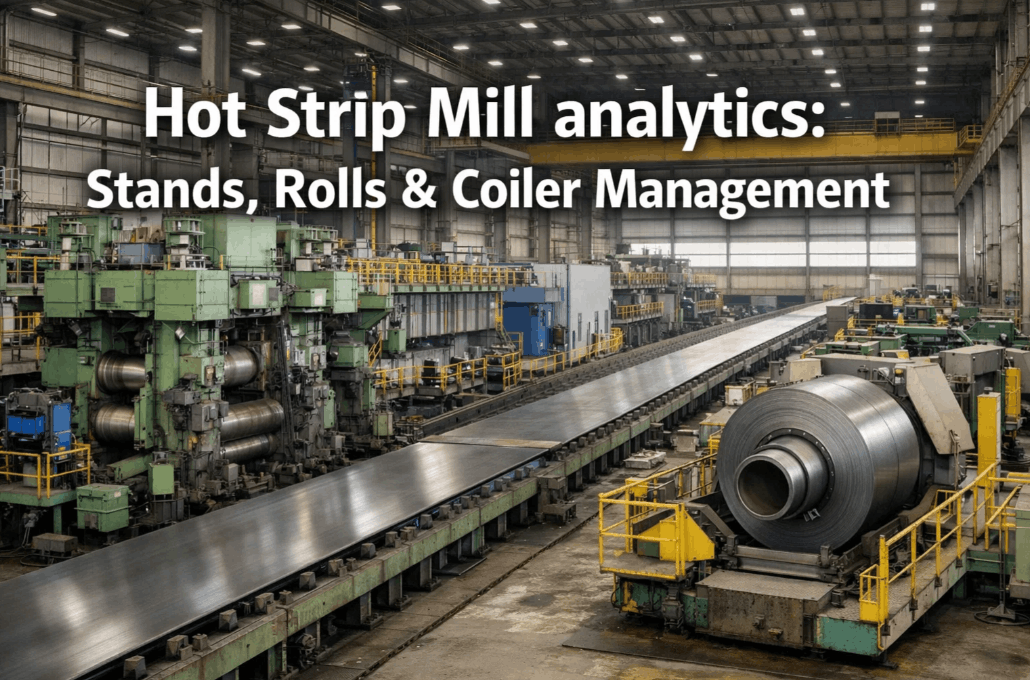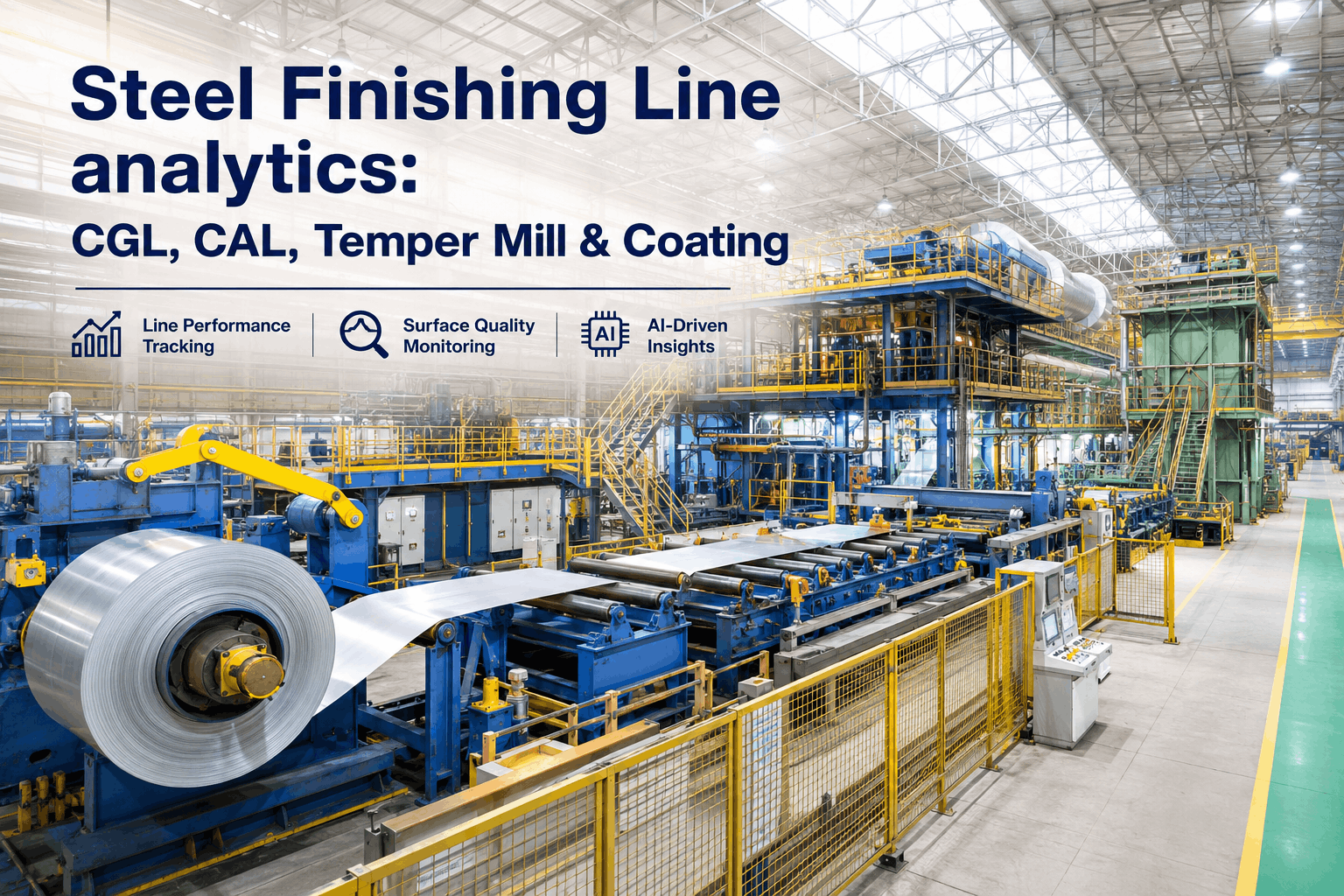
In the global steel industry, the **Finishing Line** is where the final product value is solidified—or lost. Whether operating a **Continuous Galvanizing Line (CGL)** or a **Continuous Annealing Line (CAL)**, the margin for error is razor-thin. Fluctuating zinc prices, strict metallurgical properties, and the constant threat of strip breaks make finishing the most high-stakes stage of production. iFactory’s **Finishing Line Analytics** suite eliminates the uncertainty of manual setpoints and reactive adjustments. By deploying a multi-layered "Digital Twin" that spans from the entry tension reel to the final inspection station, we empower mills to optimize coating weights, stabilize thermal cycles, and predict mechanical failures before they occur. Schedule a finishing line performance audit to recover thousands in wasted zinc and ensure your coils meet the most stringent automotive and appliance standards.
What Is AI-Driven Finishing Line Analytics?
Steel finishing line analytics is the integration of real-time sensor data, metallurgical models, and machine learning to optimize the final processing of steel strips. Unlike standard PLC controls that react to deviations after they occur, iFactory’s AI **predicts** the optimal parameters for every inch of the strip. For CGLs, this means dynamically adjusting air knife pressures based on strip speed and live coating weight feedback to minimize over-coating. For CALs, it involves the precise orchestration of heating and rapid cooling cycles to achieve the exact mechanical properties required by the grade recipe.
Our platform doesn't just monitor—it optimizes. We correlate drive torque harmonics with strip tension data to identify the early signatures of roll bearing failure or strip misalignment. By treating the entire finishing line as a single, interconnected ecosystem, iFactory provides a level of operational foresight that traditional Level-2 systems cannot match. This isn't just about automation; it’s about "Precision Finishing"—ensuring that every coil is a "Prime" coil while minimizing the specific consumption of energy and raw materials.
Solving the "Blind Spots" in CGL & CAL Operations
The transition zones and high-temperature reactors of a finishing line are notoriously difficult to monitor. iFactory uses advanced data harvesting to illuminate the three most critical "Blind Spots" that lead to quality rejections and downtime:
Zinc Pot & Dross Management AI
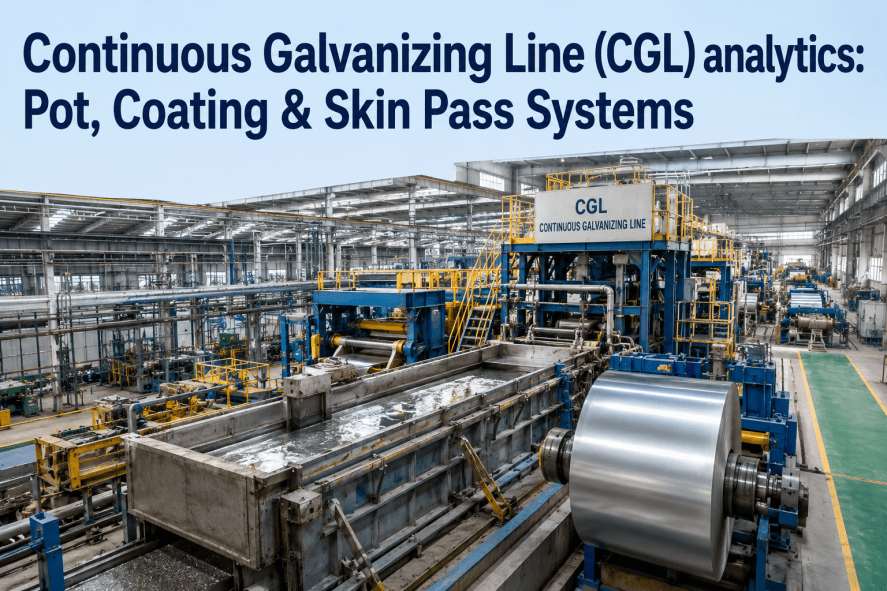
Monitoring dross accumulation is critical for surface quality. iFactory analyzes induction heating patterns and pot temperature stability to predict dross formation cycles. This allows for proactive dross removal schedules that minimize "Zinc Dings" and surface defects on high-finish coils.
Strip Tension & Looper Harmonics
Strip breaks often start as subtle vibrations or tension oscillations in the looper cars or furnace sections. iFactory monitors drive torque and tension meters at high frequency, alerting operators to "Neck-down" risks or mechanical misalignments minutes before they trigger a catastrophic strip break.
Temper Mill Elongation AI
Achieving the precise elongation percentage is vital for the mechanical properties of deep-drawing steel. Our AI correlates roll force, strip speed, and skin-pass tension to maintain elongation stability within ±0.05%, even during speed changes or gauge transitions. Book a yield recovery audit to optimize your skin-pass performance.
Coating Weight Optimization: The Margin Recovery Engine
For galvanizing lines, zinc is often the single most expensive consumable. Over-coating by even a few grams per square meter across a million tons of production can result in millions of dollars in wasted capital. iFactory’s **Air Knife AI** module solves the "Lag Time" problem of traditional X-ray gauges. By modeling the relationship between knife pressure, gap distance, strip speed, and molten zinc viscosity, we provide real-time setpoint recommendations that keep coating weights significantly closer to the lower tolerance limit without risking bare spots. This "Tight-Tolerance Coating" not only saves zinc but also ensures a more uniform surface for downstream painting and automotive stamping.
Performance Benchmarks: Steel Finishing ROI
The following benchmarks represent the average performance improvements achieved by iFactory users across diverse finishing line configurations. These results are driven by our **Closed-Loop Optimization Models**, which integrate with your existing Level-1 and Level-2 systems to provide continuous, high-fidelity control recommendations.
Frequently Asked Questions: Finishing Line Analytics
How does iFactory improve air knife coating weight control?
Traditional systems suffer from a feedback loop delay as the strip moves from the pot to the X-ray gauge. iFactory uses a physics-informed predictive model that calculates coating weight in real-time based on live pot temperature, strip speed, and air knife pressure, allowing for proactive adjustments that minimize over-coating.
Can the system predict strip breaks in the CAL furnace?
Yes. Most strip breaks are preceded by subtle tension oscillations or misalignment signatures in the furnace rolls. iFactory monitors drive motor currents and tension meter data at high frequencies to detect these "Mechanical Harmonics," providing operators with a 5-10 minute warning before a break occurs.
How does the platform handle dross management in the zinc pot?
We model the solubility of aluminum and iron in the molten zinc based on temperature and production throughput. By predicting the concentration levels that lead to dross precipitation, the AI recommends optimal pot temperature adjustments and dross removal schedules to prevent surface defects.
What is the impact on Temper Mill performance?
The iFactory Temper Mill module stabilizes elongation by dynamically adjusting roll force and tension setpoints. This ensures consistent mechanical properties and surface roughness (RPc) across the entire coil, which is critical for downstream stamping and paint adhesion.
Is the platform compatible with older legacy Level-2 systems?
Absolutely. iFactory is designed to sit atop existing Level-1 and Level-2 automation. We use standard industrial protocols (OPC-UA, MQTT, or direct DB integration) to ingest data, meaning no expensive hardware rip-and-replace is required to begin realizing ROI.
How does AI improve the annealing thermal cycle?
The AI optimizes the furnace firing patterns and cooling rates based on the specific metallurgical grade and strip gauge. This ensures that the strip reaches the precise soaking temperature and cooling gradient required for the target mechanical properties, reducing energy waste and preventing over-annealing.
Can it help with surface quality monitoring?
Yes. While we can integrate with existing Automatic Surface Inspection Systems (ASIS), iFactory also provides "Predictive Quality" by correlating process deviations (like roll vibration or temperature spikes) with known defect patterns, allowing you to flag potential quality issues before they reach the inspection station.
What is the expected ROI for a CGL or CAL deployment?
Most mills achieve full ROI within **6–9 months**. The primary drivers are zinc savings (for CGL), reduced downtime from strip breaks, and higher prime-coil yield. For a large-scale line, this typically translates to $800k–$1.5M in annual bottom-line improvement.


-&-finishing-line-analytics.png)