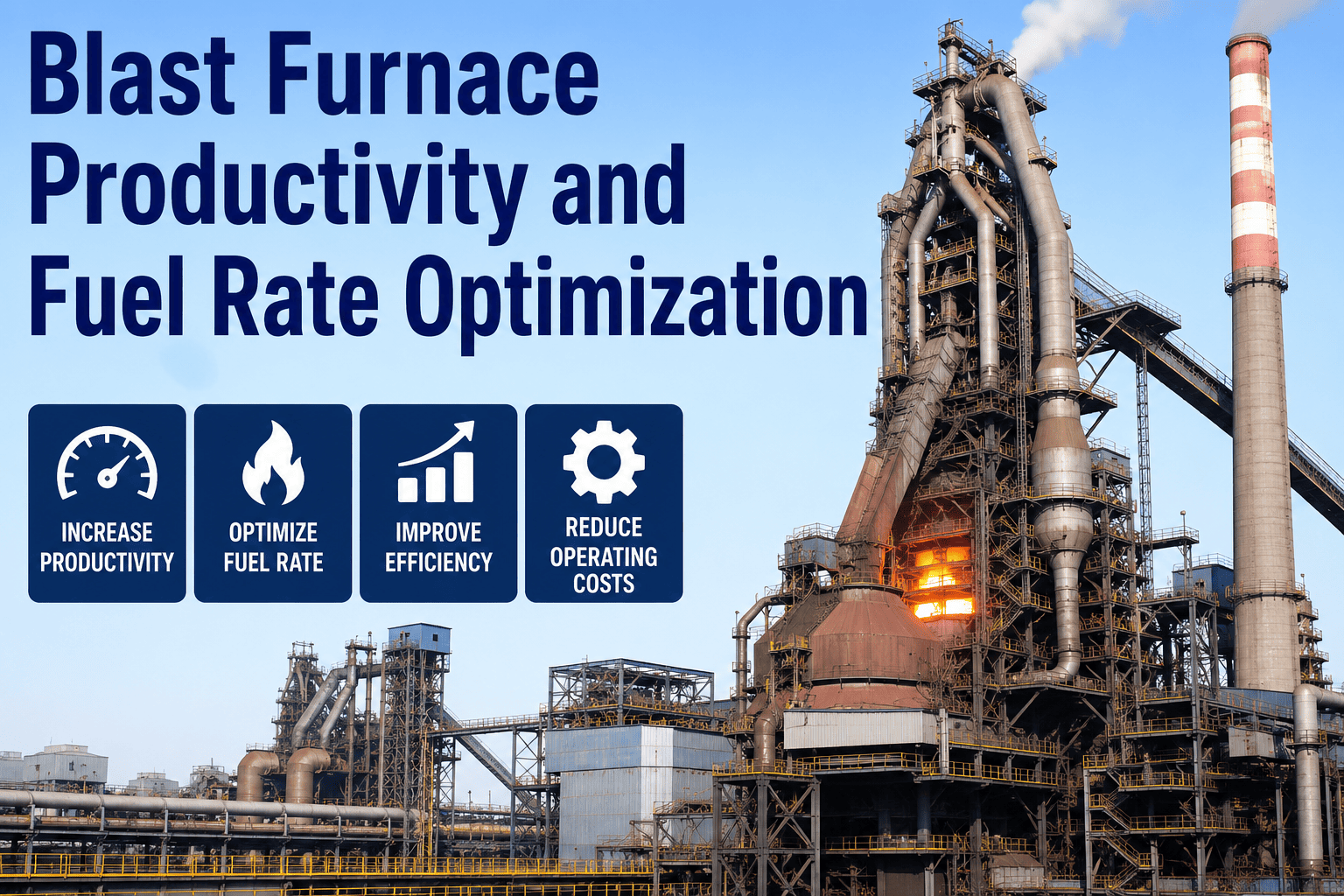
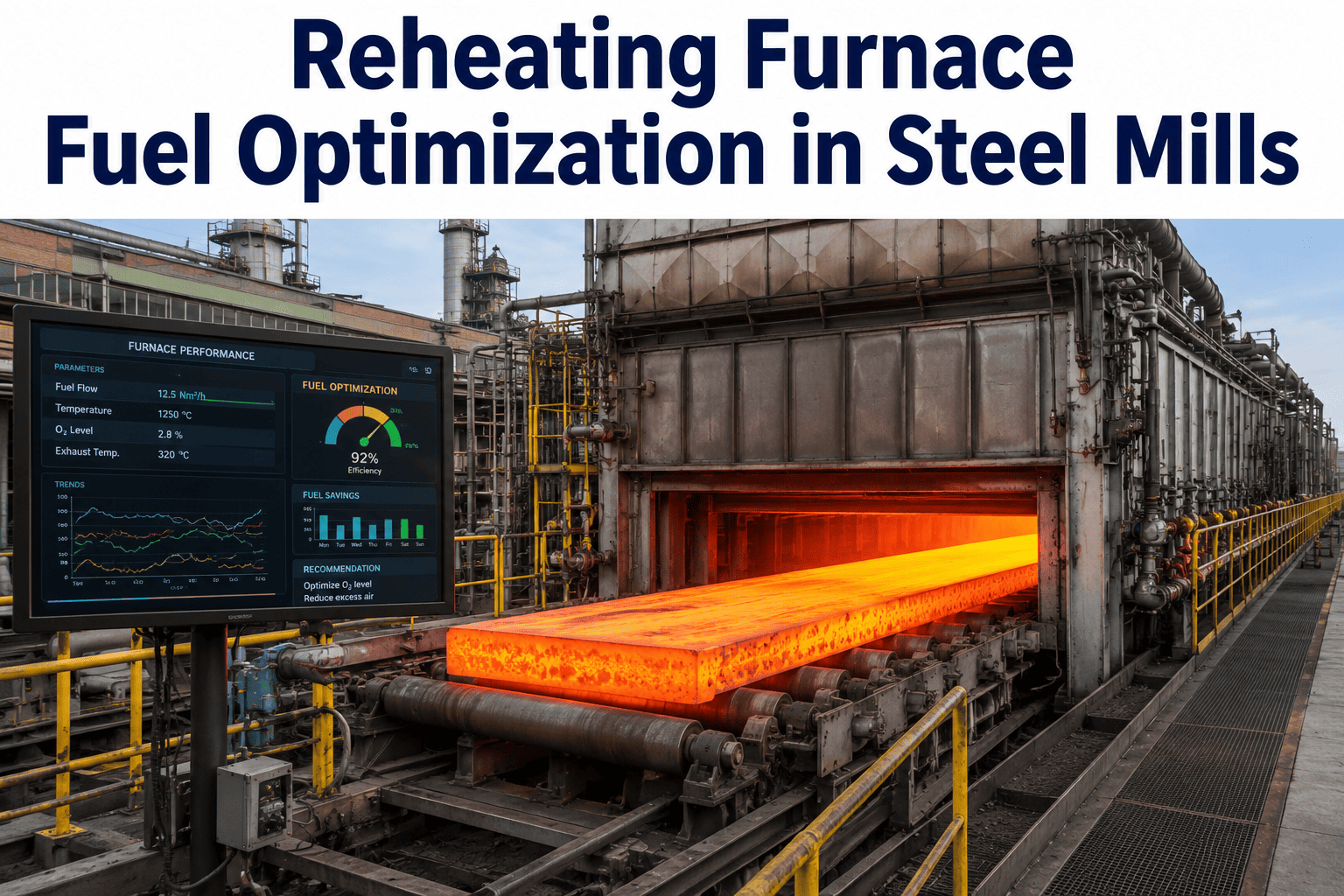
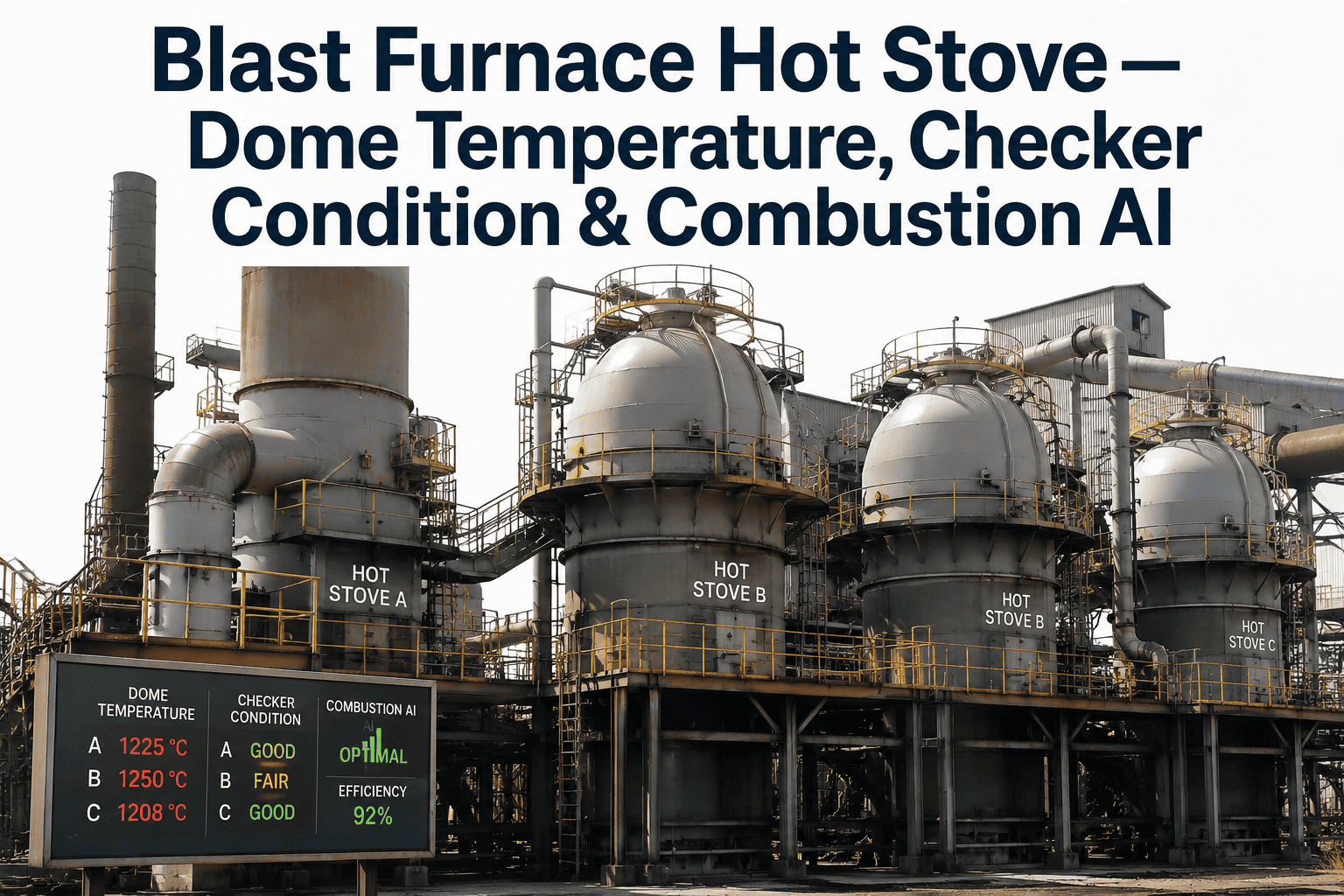
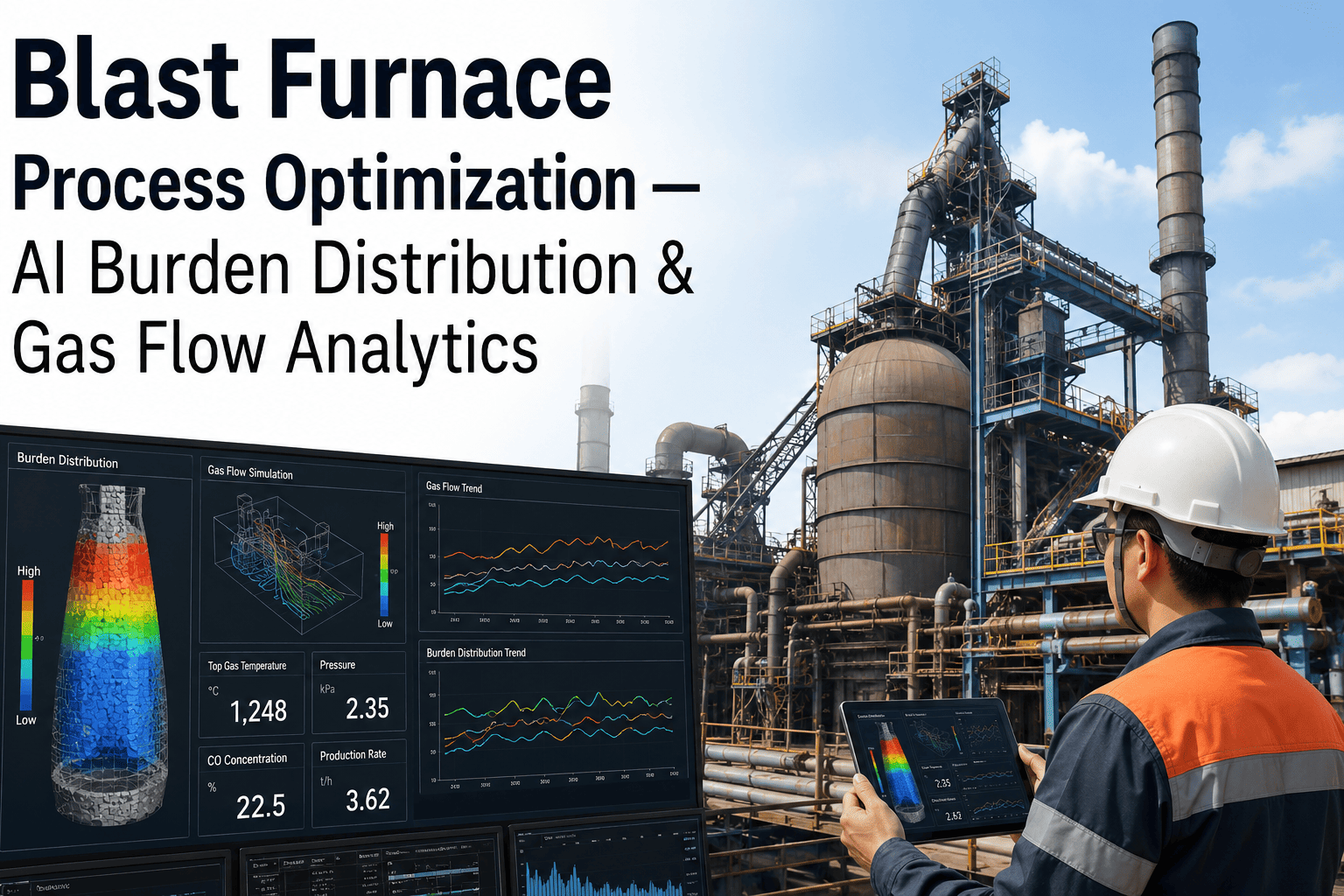
Hot blast stoves are the primary energy consumer in the blast furnace ironmaking process, consuming 25% to 35% of the total fuel energy input to produce the 900°C to 1,250°C blast air that drives the furnace thermal balance, reduction kinetics, and hearth activity. A typical three-stove or four-stove battery serving a 10,000-ton-per-day blast furnace cycles through heating (on-gas) and blowing (on-blast) periods that repeat every 45 to 90 minutes, with the stove dome temperature, flue gas temperature, and refractory thermal storage level determining how much cold blast air can be heated to the target temperature before the stove requires reheat. The thermodynamic efficiency of this cycle — measured as the ratio of heat transferred to the blast to the fuel consumed in the combustion chamber — typically operates at 72% to 82% in conventionally managed stoves, with the remaining 18% to 28% of fuel energy lost to flue gas exit temperature, combustion inefficiency, and refractory heat losses. Every 10°C increase in hot blast temperature at the bustle pipe reduces the blast furnace coke rate by approximately 4 to 6 kg per ton of hot metal, making stove efficiency optimization one of the highest-return energy investments available in integrated steel production. iFactory's Hot Stove Optimizer delivers AI-driven dome temperature prediction, combustion cycle optimization, regenerator health monitoring, and automated fuel rate control that increases hot blast temperature by 15°C to 30°C and reduces stove fuel consumption by 8 to 15 kg per ton of hot metal. Book a Demo to see the platform configured for your stove battery instrumentation and operating parameters.
Is Your Stove Battery Operating at Peak Thermal Efficiency?
iFactory's Hot Stove Optimizer connects to your stove battery PLC, combustion control system, and bustle pipe instrumentation to deliver AI-driven dome temperature prediction, automated cycle optimization, and real-time fuel rate control — deployed on a pre-configured NVIDIA edge server with zero process control system modifications.
Why Conventional Stove Control Cannot Maximize Thermal Efficiency
Hot blast stove operation presents a thermodynamic optimization problem that conventional control systems — typically PLC-based fixed-cycle timers with threshold-based dome temperature limits — cannot solve optimally because the stove's thermal behavior changes continuously with blast demand, ambient conditions, refractory condition, and combustion gas composition. The stove battery must deliver a minimum blast temperature at all times to maintain furnace thermal stability, but the target blast temperature, the allowable dome temperature limit, and the fuel consumption rate are interdependent variables that shift with every operating cycle. Conventional control uses conservative fixed setpoints — a dome temperature limit of 1,250°C, a blast temperature target of 1,100°C, a fixed on-gas time of 60 minutes — that are set to ensure safe operation under worst-case conditions rather than optimized for the actual thermal state of the stove battery at any given moment. This conservatism costs the steel mill 8 to 15 kg of fuel per ton of hot metal in avoidable energy consumption, reduced blast temperature, and shortened refractory life from unnecessary thermal cycling.
Four AI Capabilities That Transform Hot Blast Stove Efficiency and Reliability
iFactory's Hot Stove Optimizer delivers four integrated AI capabilities purpose-built for the operating dynamics of blast furnace stove batteries — covering the full cycle from combustion optimization through regenerator health monitoring and automated fuel rate control. Each capability operates on real-time PLC data and delivers actionable outputs to the stove operator console without modifying existing control system logic.
AI Dome Temperature Prediction
Machine learning models trained on stove thermal history predict dome temperature trajectory 15 to 30 minutes ahead of the current cycle position, enabling the combustion controller to adjust the fuel-air ratio and combustion chamber pressure to hit the target dome temperature at the precise moment the stove switches from on-gas to on-blast — maximizing thermal storage without exceeding refractory limits.
Combustion Cycle Optimization
The AI determines the optimal on-gas time for each stove based on current dome temperature, flue gas exit temperature, cold blast flow rate, and target blast temperature. Stoves with higher remaining thermal storage receive shorter on-gas times; colder stoves receive longer heating cycles — eliminating the fuel waste from fixed-time cycling.
Regenerator Health Monitoring
Continuous analysis of flue gas exit temperature profiles, stove pressure drop across the regenerator, and thermal recovery rate identifies checker brick fouling, plugging, and structural degradation 4 to 8 weeks before conventional monitoring detects performance loss. Predictive maintenance alerts are integrated with CMMS for automated work order generation.
Automated Fuel Rate and Air-Fuel Ratio Control
AI models calculate the optimal fuel gas flow rate and combustion air flow rate for each stove cycle based on the predicted dome temperature trajectory, combustion chamber pressure, and oxygen content in the flue gas. Fuel rate is modulated continuously during the on-gas cycle to maintain target heating conditions while minimizing excess oxygen and combustible losses in the flue gas.
Manual Stove Control Versus AI-Driven Thermal Optimization: The Performance Gap
The performance gap between conventionally managed hot blast stoves and AI-optimized operation is measurable across every dimension of thermal efficiency, fuel consumption, and refractory life. The comparison below maps the structural differences between PLC-based fixed-cycle control and iFactory's AI-driven Hot Stove Optimizer. Book a Demo to benchmark your stove battery against iFactory's optimization framework.
| Operational Domain | Conventional PLC Control | AI-Optimized (iFactory Hot Stove Optimizer) | Performance Improvement | Impact Level |
|---|---|---|---|---|
| Dome Temperature Control | Fixed limit threshold + manual adjustment | AI predictive trajectory 15–30 min ahead of current cycle | +15°C to +30°C blast temperature at same dome limit | High |
| On-Gas (Heating) Cycle Time | Fixed timer per stove based on battery average | Dynamic per-stove optimization based on actual thermal state | 8–15 kg/t fuel rate reduction | High |
| Fuel-Air Ratio Control | Fixed setpoint with manual oxygen trim | Continuous AI modulation based on dome temp trajectory and flue gas O2 | 2–4% combustion efficiency improvement | High |
| Stove Switching Logic | Pressure-based or fixed-timer sequencing | AI sequencing balancing thermal storage across all stoves | Eliminates blast temperature dips during stove changeover | Medium |
| Refractory Health Monitoring | Semi-annual visual inspection + thermocouple trend review | Continuous AI analysis of flue gas exit temp and pressure drop | Degradation detected 6–8 weeks earlier | Medium |
| Energy Consumption Reporting | Manual shift-log recording with daily fuel total | Per-cycle fuel consumption tracking with efficiency KPIs | Real-time energy intensity visibility | Low |
See How Much Fuel Your Stove Battery Is Wasting — We Will Analyze One Month of Your Operating Data at No Cost
iFactory's Hot Stove Optimizer delivers measurable fuel rate reduction of 8 to 15 kg/THM from the first deployment cycle. Schedule a 30-minute consultation to see the AI platform configured for your stove battery instrumentation and operating parameters.
6-Phase AI Deployment Roadmap for Hot Blast Stove Battery Optimization
Deploying AI optimization on a blast furnace stove battery requires a phased approach that connects existing stove instrumentation, validates model accuracy against actual thermal performance, and builds operator confidence before automated fuel rate control is enabled. The roadmap below reflects the deployment sequence iFactory uses with integrated steel mill clients to deliver measurable fuel savings within the first 90 days of operation.
Stove Instrumentation and Data Pipeline Audit
Inventory all existing stove instrumentation — dome thermocouples, flue gas temperature sensors, combustion air flow meters, fuel gas flow meters, bustle pipe pressure and temperature sensors, and stove switching PLC data tags. Identify coverage gaps and establish data ingestion from the stove PLC through read-only OPC-UA connection. Typical duration: 2 to 4 weeks.
Historical Data Ingestion and Model Pre-Training
Ingest 12 to 24 months of stove operating data — dome temperature, flue gas temperature, fuel gas flow, combustion air flow, blast temperature, blast pressure, and stove switching records — into iFactory's AI training pipeline. Pre-train dome temperature prediction and cycle optimization models on historical data before connecting to live feeds, establishing baseline accuracy benchmarks against known operating outcomes.
Live Model Validation and Operator Dashboard Go-Live
Connect trained models to live stove data and display predictions — dome temperature trajectory, optimal on-gas time, recommended fuel rate — on a dedicated operator console operated in advisory mode. Operators compare AI predictions against actual stove performance for a minimum of 100 complete stove cycles before the system moves to advisory recommendations.
Advisory Fuel Rate and Cycle Time Recommendations
AI recommendations for fuel gas flow rate adjustment, combustion air trim, and on-gas time are displayed to the stove operator with confidence indicators. Operators implement recommendations through the existing stove PLC control interface. Fuel consumption tracking against baseline begins to quantify savings.
Regenerator Health Model Integration
Deploy AI regenerator health monitoring using flue gas exit temperature profile analysis, stove pressure drop trends across 50+ cycles, and thermal recovery rate calculation. Establish baseline checker condition metrics and configure automated alerts for degradation detection. Integrated with CMMS for predictive maintenance work order generation.
Full Optimization and Continuous Retraining
AI models operating in full advisory mode with automated fuel rate recommendations, dynamic on-gas time optimization, and regenerator health monitoring. Models retrained weekly on latest 90 days of stove operating data. Monthly efficiency reports tracking fuel rate reduction, blast temperature improvement, and regenerator condition trends against pre-deployment baseline.
Measurable ROI: What AI Hot Blast Stove Optimization Delivers to Integrated Steel Operations
The financial case for AI stove optimization is grounded in quantifiable fuel cost reduction, blast temperature improvement, and avoided refractory repair events. The impact framework below maps AI capabilities to the financial and operational outcomes that matter to plant managers, energy engineers, and capital allocation decision-makers in integrated steel production.
Energy Cost Reduction
- Stove fuel gas consumption reduced 8–15 kg/THM through AI cycle optimization
- Combustion efficiency improved 2–4% via continuous air-fuel ratio modulation
- Hot blast temperature increased 15°C–30°C without additional fuel input
- Annual fuel cost savings of $400,000–$1,200,000 at a 10,000 THM/day furnace
Refractory Life and Reliability
- Checker brick degradation detected 6–8 weeks earlier via flue gas analysis
- Predictive maintenance prevents unplanned stove outages during BF operation
- Thermal cycling reduced through optimized on-gas and on-blast sequencing
- Refractory campaign life extended 12–18 months on dome and checker system
BF Performance Improvement
- Coke rate reduction of 6–12 kg/THM from higher and more consistent blast temperature
- Elimination of blast temperature dips during stove changeover events
- Consistent blast conditions for silicon prediction and burden distribution models
- Improved furnace permeability index through stable thermal profile at tuyere level
What a Steel Plant Energy Engineer Learned Deploying AI Stove Optimization on a 10,000-THM Blast Furnace
Based on iFactory's deployments across blast furnace stove batteries serving 8,000 to 12,000 THM/day furnaces at U.S. integrated steel mills, the following operational outcomes consistently emerge when AI stove optimization is implemented with proper data infrastructure and phased deployment discipline.
The First Optimization Gains Come from Fuel-Air Ratio Control, Not Cycle Time Adjustment
Most plant managers expect the largest fuel savings to come from extending on-gas times or reducing cycle frequency. In practice, the fastest measurable improvement comes from optimizing the combustion air-fuel ratio during the on-gas cycle. Most stove batteries operate with 3% to 6% excess oxygen in the flue gas — indicating that the combustion air setpoint is higher than optimal. The AI's continuous fuel-air ratio modulation based on dome temperature trajectory and flue gas O2 content reduces excess oxygen to the 1.5% to 2.5% target range within the first week of advisory recommendations, delivering a 2% to 4% fuel consumption reduction that is immediately visible in the fuel gas totalizer before any cycle timing changes are implemented.
Dome Temperature Prediction Accuracy Is the Rate-Limiting Factor for Full Optimization
The ceiling on AI stove optimization value is set by the accuracy of the dome temperature prediction model, not by the optimization algorithm complexity. Stoves with consistent fuel gas quality, stable blast demand patterns, and well-maintained dome thermocouples achieve prediction accuracy of 3°C to 5°C at a 30-minute forecast horizon — enabling aggressive cycle optimization. Stoves with variable fuel gas composition (BF gas mixed with COG or NG), frequent blast demand changes from furnace operations, or degraded thermocouple response achieve 5°C to 10°C prediction accuracy, requiring more conservative optimization limits and reducing the total fuel savings by 20% to 30% relative to the maximum achievable.
Regenerator Health Monitoring Delivers the Second Wave of Value After Fuel Optimization
Once the fuel rate and cycle time optimization gains are captured — typically within the first 60 to 90 days — the next significant value driver is regenerator health monitoring. Checker brick fouling from dust carryover, silica scaling, and thermal fatigue degradation reduces stove thermal efficiency by 0.5% to 1.5% per year of operation, but the decline is so gradual that it is invisible to conventional monitoring until the stove cannot maintain target blast temperature on the standard cycle. The AI's continuous analysis of flue gas exit temperature profile, pressure drop per cycle, and thermal recovery slope detects degradation patterns 6 to 8 weeks before blast temperature is affected, enabling proactive maintenance scheduling that restores efficiency without emergency stove outages.
Optimize Every Stove Cycle, Every Combustion Adjustment, Every BTU with AI
iFactory's Hot Stove Optimizer delivers a unified AI platform — dome temperature prediction, combustion cycle optimization, regenerator health monitoring, and automated fuel rate control — that reduces stove fuel consumption by 8 to 15 kg/THM and increases hot blast temperature by 15°C to 30°C. Deployed on a pre-configured NVIDIA edge server with read-only PLC connectivity, no control system modifications required, and a 12 to 20 week deployment timeline.
AI Hot Blast Stove Optimization Is Deployable Today — With Documented Fuel Savings and Blast Temperature Improvement
The case for AI-driven hot blast stove optimization is built on documented operating results from U.S. integrated steel producers who have deployed machine learning models on their stove battery process data. Stove fuel rate reduction of 8 to 15 kg per ton of hot metal, hot blast temperature increase of 15°C to 30°C, regenerator degradation detection 6 to 8 weeks before conventional monitoring, and combustion efficiency improvement of 2% to 4% — these are not theoretical projections from simulation models. They are documented outcomes from AI models trained on 12 to 24 months of actual stove battery operating data and deployed on production stoves feeding blast furnaces at U.S. integrated steel mills.
The technology infrastructure required for deployment is the stove battery's existing instrumentation — dome thermocouples, flue gas temperature sensors, fuel gas and combustion air flow meters, and the stove switching PLC that are already installed and generating data at every integrated mill. iFactory's Hot Stove Optimizer connects to these systems through read-only data links, trains site-specific models on the battery's own operating history, and delivers predictions and advisory recommendations on an operator console that does not write back to any control system component. No cloud data transmission required. No modifications to the stove PLC or DCS control logic. No additional sensors required beyond what the stove battery already has installed. Book a Demo to see the iFactory Hot Stove Optimizer configured for your stove battery instrumentation and operating parameters, or contact support to schedule a battery-specific deployment assessment.
Hot Blast Stoves AI Optimization — Frequently Asked Questions
How does AI dome temperature prediction improve stove efficiency compared to conventional control?
Conventional dome temperature control uses a fixed upper limit — typically 1,200°C to 1,300°C — and the combustion controller reduces fuel rate when the thermocouple approaches the limit, often resulting in premature cycle termination or conservative fuel rates that fail to maximize thermal storage. The AI model predicts the dome temperature trajectory 15 to 30 minutes ahead based on current fuel rate, combustion air flow, combustion chamber pressure, and the stove's thermal history from previous cycles, enabling the combustion controller to maintain optimal fuel rate until the predicted dome temperature reaches the desired target at the precise moment of stove changeover — maximizing heat stored in the checker brick without exceeding refractory limits.
What data infrastructure is required to deploy AI optimization on a blast furnace stove battery?
The platform connects to existing stove instrumentation through read-only data links to the stove switching PLC, fuel gas flow meters, combustion air flow meters, dome thermocouples, flue gas temperature sensors, bustle pipe temperature and pressure transmitters, and hot blast flow meters. Standard connectivity protocols include OPC-UA, Modbus TCP, and API-based data ingestion. No additional sensors are required beyond the instrumentation already installed on the stove battery. The NVIDIA edge server is deployed on the plant network with all data processing contained on-premise and no cloud data transmission.
How does the AI handle stove changeover events and blast demand changes from the blast furnace?
The AI model receives real-time signals from the stove switching PLC indicating the current stove configuration and the planned changeover sequence. When the blast furnace reduces blast demand during casting or operational events, the AI recalculates the optimal on-gas time and fuel rate for each stove based on the updated blast flow requirement, preventing the common problem of overfiring stoves during low-demand periods. The model also predicts the temperature drop in the bustle pipe during changeover events and recommends preemptive adjustments to the incoming stove's combustion parameters to minimize the temperature dip that occurs when a cold stove comes online.
Does iFactory's Hot Stove Optimizer require modifications to the stove PLC or combustion control system?
No modifications to the stove PLC, DCS, or combustion control system are required. The AI platform connects through read-only data links to the stove PLC and instrumentation systems. Dome temperature predictions, fuel rate recommendations, and cycle time optimization are displayed on a dedicated operator console that does not write data or commands back to any control system component. The platform operates as an advisory decision-support tool that the stove operator uses to adjust fuel gas flow rate setpoints and cycle timing through the existing stove PLC control interface.
What is the typical investment and payback period for AI hot blast stove optimization at a U.S. integrated steel plant?
Documented ROI from comparable AI stove optimization deployments shows full platform payback within 6 to 12 months at a typical 10,000 THM/day blast furnace with a three-stove or four-stove battery. Primary ROI drivers include stove fuel rate reduction of 8 to 15 kg/THM ($400,000 to $1,200,000 annual savings at current fuel gas prices), BF coke rate reduction of 6 to 12 kg/THM from higher blast temperature, and avoided refractory repair costs of $250,000 to $750,000 per event from early regenerator degradation detection. The platform investment is $175,000 to $325,000 based on battery size and instrumentation complexity.