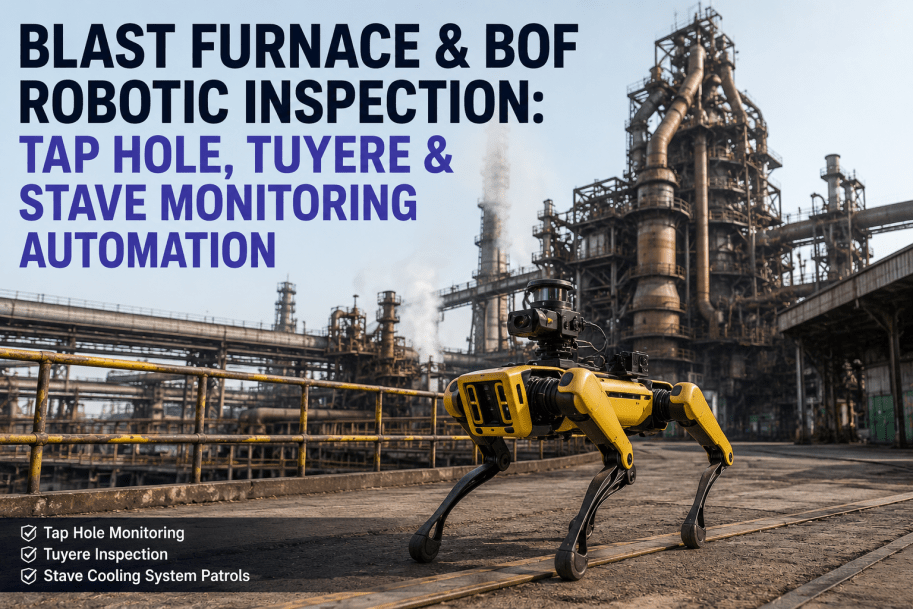
The director of digital transformation at a 4.5-million-ton integrated steel mill in the Midwest reviews the monthly operational report from the plant's robotics deployment team and sees a set of numbers that confirm a strategy she has been championing for 18 months: the mill's fleet of four Boston Dynamics Spot quadruped robots — deployed across the blast furnace casthouse, the BOF shop, the hot strip mill, and the slab yard — have completed 1,240 inspection missions in the past quarter, covering 186 kilometers of patrol routes through environments that are too hazardous for human workers to traverse without respiratory protection, heat-resistant clothing, and confined-space permits. The robots have detected 17 refractory hot spots that were not visible to the fixed thermal camera array, identified 3 compressed air leaks in the BOF lance cooling system that were wasting $38,000 per month in energy costs, and measured 42 gas concentration readings in the blast furnace cast house that were above the actionable threshold for worker exposure. The director is also reviewing the business case for the mill's next robotics investment — a humanoid general-purpose robot from a major manufacturer that is being evaluated for ladle refractory inspection, taphole drill change-out, and slag skimmer maintenance tasks that currently require two millwrights working in full proximity to hot metal for 45 minutes per intervention. The humanoid robot, priced at $120,000 to $180,000 per unit with a projected service life of 5 to 7 years, would replace $280,000 per year in labor cost for the highest-exposure maintenance tasks while reducing the mill's lost-time injury risk by an estimated 70% for those specific work categories. iFactory's Robotics AI module gives steel plant automation and maintenance managers the digital infrastructure to manage the entire robotics deployment lifecycle — from mission programming and data acquisition to fleet analytics and maintenance integration — in a single platform that connects every robot in the fleet to the condition monitoring, work order, and safety systems that the plant already operates. Book a Demo to see iFactory's robotics management platform configured for your steel plant's mobile robot fleet.
QUADRUPED · HUMANOID · STEEL MILL ROBOTICS · 2026
Your Steel Mill Needs Mobile Robots for Hazardous Environment Inspection and Maintenance — iFactory's Robotics AI Module Manages the Entire Fleet Through a Single Platform
iFactory connects quadruped, humanoid, and AMR robots to your existing condition monitoring, work order, and safety systems — on your plant network with zero cloud dependency.
The Global Steel Industry's Rapid Adoption of Mobile Robotics — From POSCO Spot to Humanoid General-Purpose Platforms
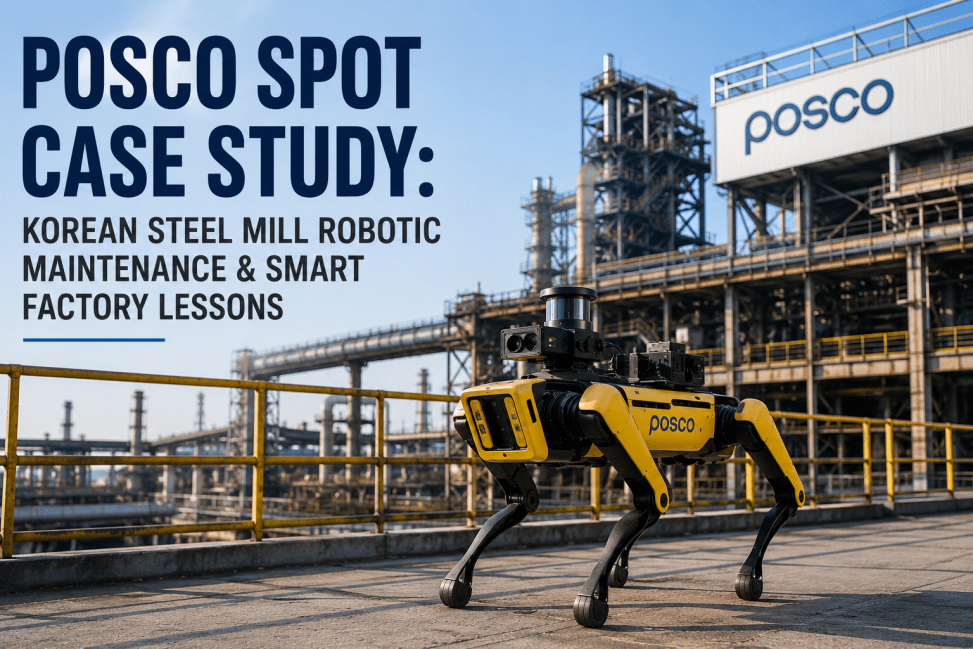
The steel industry has become one of the fastest adopters of mobile robotics in heavy industry, driven by a combination of safety imperatives, labor availability pressures, and the demonstrated ROI of replacing human workers in hazardous environment inspection and maintenance tasks. POSCO's deployment of Boston Dynamics Spot robots across its Pohang and Gwangyang steelworks — the largest single industrial deployment of quadruped robots globally — established the reference case that every major steel producer has studied and adapted. POSCO reported that its Spot fleet completed more than 4,000 autonomous inspection missions in the first 18 months of deployment, covering blast furnace casthouse patrols, BOF vessel refractory inspections, hot strip mill roller table monitoring, and ladle refractory tracking. The robots operated in ambient temperatures exceeding 60C, in atmospheres containing CO and SO2 at concentrations above OSHA permissible exposure limits, and on surfaces that included loose slag, standing water, and grated walkways that would require fall protection equipment for human workers. The program delivered a 74% reduction in human exposure to hazardous environments for the specific inspection tasks that were automated and an estimated $2.8 million per year in avoided safety incidents, reduced inspection labor, and earlier detection of equipment degradation. Following POSCO's lead, ArcelorMittal deployed Spot robots at its Gent, Gijon, and Dunkirk facilities; Nippon Steel deployed quadruped robots at its Kimitsu and Nagoya works; ThyssenKrupp deployed robots at its Duisburg integrated mill; and Tata Steel deployed Spot at its IJmuiden and Port Talbot operations. The pattern is consistent across all major producers: the economic case for quadruped robots in steel plants closes at a fleet size of three to five units per facility, with a payback period of 8 to 14 months based on safety incident reduction alone, and additional returns from increased inspection frequency and earlier fault detection.
Global Steel Producer Robotics Deployments — Fleet Size, Applications, and Reported Results
| Steel Producer |
Robot Platform |
Fleet Size |
Primary Applications |
Reported Results |
| POSCO |
Boston Dynamics Spot |
8-10 units |
BF casthouse patrol, BOF refractory inspection, HSM roller monitoring, ladle tracking |
4,000+ missions in 18 months; 74% reduction in human hazard exposure |
| ArcelorMittal |
Boston Dynamics Spot + custom crawlers |
12-15 units (3 facilities) |
Coke oven battery inspection, BOF lance maintenance, slab yard inventory |
62% reduction in confined space entry; $1.9M annual safety cost avoidance |
| Nippon Steel |
Quadruped + tracked robots |
6-8 units (2 facilities) |
BF tuyere inspection, torpedo ladle car monitoring, EAF roof condition |
85% inspection coverage improvement; 3-week earlier detection of refractory wear |
| ThyssenKrupp |
Spot + humanoid pilot |
4-6 units |
Cast house patrol, continuous caster mold monitoring, roll shop automation |
$1.2M annual inspection labor savings; 40% increase in patrol frequency |
| Tata Steel |
Spot + AMR fleet |
5-7 units (2 facilities) |
Raw material stockyard, sinter plant, BF cashhouse, product yard |
3,200 missions completed; 92% autonomous operation rate |
Five Robotic Form Factors Reshaping Steel Plant Operations — Capabilities, Limitations, and Optimal Applications
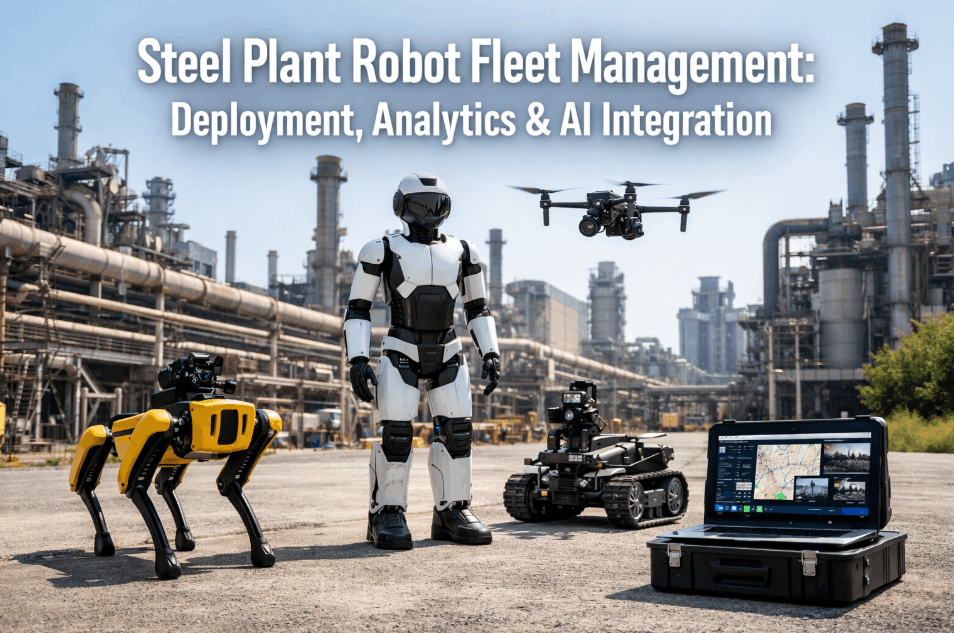
The mobile robotics ecosystem for steel plants has diversified rapidly in the 2024-2026 period, with five distinct form factors emerging as the dominant configurations for specific operational domains. Each form factor has a distinct set of capabilities in terms of mobility, payload, endurance, environmental tolerance, and autonomy level — and each has specific limitations that determine its optimal application within the steel plant. iFactory's Robotics AI module provides a unified management layer for any combination of these form factors within a single steel plant, enabling the fleet to be programmed, monitored, and analyzed through a common interface.
| Robot Form Factor |
Mobility / Terrain |
Payload / Endurance |
Cost per Unit |
Optimal Steel Plant Application |
| Quadruped (Spot-type) |
Excellent — stairs, rubble, grated floors, loose slag, standing water |
15 kg / 90 min with payload |
$75,000-$85,000 |
BF casthouse patrol, BOF refractory inspection, HSM roller monitoring, confined space entry |
| Humanoid (general-purpose) |
Good — bipedal walking, stairs, ladders, confined spaces |
20-30 kg / 2-4 hours |
$120,000-$180,000 |
Ladle refractory repair, taphole drill change-out, valve operation, slag skimmer maintenance |
| Tracked / Crawler |
Moderate — rough terrain, loose materials, steep slopes |
50-100 kg / 3-6 hours |
$40,000-$70,000 |
Coke oven battery maintenance, sinter plant chute inspection, slag pot handling, raw material stockyard |
| Drone / UAV |
Excellent — unrestricted 3D access, elevated structures |
2-5 kg / 25-40 min flight time |
$15,000-$35,000 |
BF stack flare inspection, gas main leak detection, cooling tower inspection, roof structure survey |
| AMR / AGV |
Limited — smooth floors, defined pathways, no stairs |
500-2,000 kg / 8-16 hours |
$30,000-$120,000 |
Slab yard transport, coil handling, pallet transport, raw material yard replenishment |
How iFactory's Robotics AI Module Integrates with Steel Plant Robot Fleets — From Mission Programming to PdM Data Integration
The challenge of deploying mobile robots in steel plants is not the robot hardware — the Spot platform, humanoid prototypes, and industrial drones have demonstrated reliable operation in steel plant environments. The challenge is integrating the robot-collected data into the plant's existing condition monitoring, work order management, and predictive maintenance systems. A steel plant that deploys four Spot robots without a data integration platform will generate 200 to 400 gigabytes of thermal image data, acoustic emission recordings, gas concentration readings, and visual inspection footage per month — and this data will be stored on the robot operator's laptop, disconnected from the CMMS where the work orders are managed and the PdM platform where the trend data is analyzed. iFactory's Robotics AI module eliminates this data integration gap by providing a unified platform that connects every robot in the fleet to the plant's existing maintenance and reliability systems.
01
Fleet Mission Management and Autonomous Patrol Programming
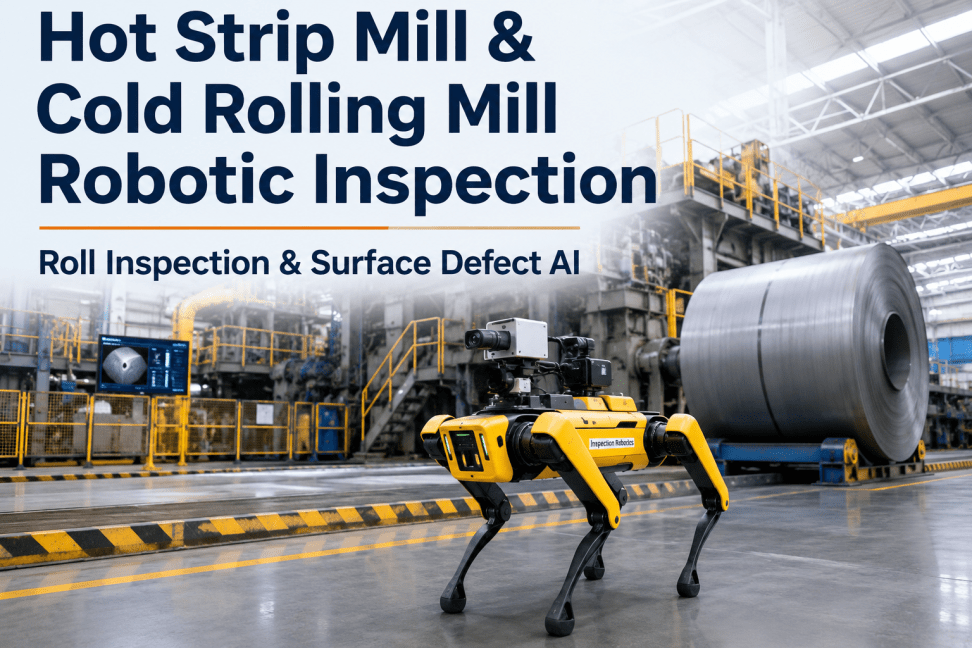
iFactory provides a graphical mission programming interface that allows steel plant reliability engineers to define autonomous patrol routes for each robot in the fleet — specifying waypoints, inspection actions (thermal image capture, gas concentration measurement, acoustic recording, visual inspection), data collection parameters, and patrol frequency. Missions are programmed once and executed autonomously by the robot fleet on a scheduled or event-driven basis. Each mission completion generates a structured data package that is automatically uploaded to the iFactory platform and correlated with the equipment item that was inspected.
Operational result
Mission programming time reduced from 4-8 hours per route to 30 minutes; patrol frequency increased from weekly to daily with zero additional labor.
02
Inspection Data Ingestion, Analysis, and Equipment Condition Correlation
All robot-collected inspection data is ingested into the iFactory platform and correlated with the specific equipment item that was inspected — a blast furnace tuyere, a BOF vessel refractory panel, a hot strip mill roller, or a ladle refractory lining. Thermal images are analyzed for temperature anomalies against baseline condition profiles. Gas concentration readings are compared against OSHA PEL thresholds and trended over time. Visual inspection footage is tagged with equipment identifiers and stored with the equipment's inspection history. Each data point is timestamped and geolocated for trend analysis and audit trail documentation.
Operational result
Inspection data automatically linked to equipment items — eliminating manual data transcription and correlation errors that affect 8-12% of manually collected inspection data.
03
Automated Work Order Generation from Robot-Detected Anomalies
When iFactory's inspection data analysis identifies an anomaly that exceeds configurable thresholds — a refractory hot spot above 320C on a BOF vessel, a gas concentration reading above 50% of the PEL, a compressed air leak with an acoustic signature above 85 dB — the platform automatically generates a work order recommendation in the iFactory Work Order Management module, including the equipment identifier, the anomaly description, the inspection data package, and a recommended intervention priority based on the severity of the finding and the proximity to the next scheduled maintenance window.
Operational result
Time from anomaly detection to work order creation reduced from 4-24 hours (manual review) to 2-5 minutes (automated).
04
Fleet Performance Analytics and ROI Tracking
iFactory aggregates fleet performance data — missions completed, distance traveled, inspection coverage by area, anomaly detection rate, work orders generated, autonomous operation percentage — and presents the data in a fleet analytics dashboard that enables the plant's robotics program manager to track the operational performance and ROI of the robot fleet. The platform tracks the cost of the robotics deployment against the avoided safety incidents, reduced inspection labor, and earlier fault detection that the fleet generates — providing the data required to justify fleet expansion to additional plant areas and additional robot units.
ROI measurement
ROI and fleet utilization data are tracked dynamically — providing continuous business case visibility for fleet expansion and upgrade decisions.
Fleet Mission Management · Data Integration · Anomaly Detection · ROI Tracking
Your Steel Mill's Robot Fleet Needs a Unified Management Platform to Connect Inspection Data to Maintenance Decisions — iFactory's Robotics AI Module Delivers End-to-End Integration
iFactory provides mission programming, data ingestion, anomaly detection, and work order integration for quadruped, humanoid, drone, and AMR fleets — on your plant network with zero cloud dependency.
Steel Plant Robotics Deployment Timeline — From Pilot to Plant-Wide Fleet in 4 Phases
The most successful steel plant robotics deployments follow a four-phase progression that begins with a focused pilot in a single area of the plant and expands incrementally as the robotics team develops operational confidence, the integration platform proves its reliability, and the ROI data supports additional investment. iFactory's Robotics AI module supports each phase of the deployment with the appropriate level of platform capability — from single-robot pilot management to plant-wide fleet orchestration with multi-form-factor robots operating across multiple production areas.
Pilot Deployment — Single Robot, Single Area, 12-16 Weeks
Deploy one quadruped robot in a single plant area — the blast furnace casthouse is the most common pilot location because it offers the highest density of high-hazard inspection tasks. Program three to five autonomous patrol routes covering the casthouse equipment that currently requires the most frequent human inspection — the taphole drill area, the iron runner system, the tilting runner, and the torpedo ladle fill station. Operate the robot for 12 to 16 weeks, collecting inspection data and building the business case for expansion. iFactory's Robotics AI module manages the pilot robot's missions and integrates the collected data with the plant's equipment condition database.
Area Expansion — Multi-Robot Fleet in 2-3 Plant Areas, 16-20 Weeks
Based on the pilot results, expand the robot fleet to 3-5 units deployed across 2-3 plant areas — the BOF shop and the hot strip mill are the most common expansion targets after the blast furnace casthouse. Program area-specific patrol routes for each robot, deploy additional sensor payloads (thermal cameras with higher resolution for refractory inspection, acoustic sensors for compressed air leak detection, gas sensors for CO and SO2 monitoring), and integrate the robot-collected data with the CMMS work order generation process. iFactory's Robotics AI module manages the expanded fleet, coordinates patrol schedules across multiple robots, and generates automated work order recommendations from inspection data.
Fleet Optimization — Multi-Form-Factor Fleet with AI-Driven Patrol Scheduling, 20-24 Weeks
Add additional robot form factors to the fleet — humanoid robots for maintenance intervention tasks, drones for elevated structure inspection, and AMRs for material transport. iFactory's Robotics AI module optimizes patrol scheduling across the multi-form-factor fleet, assigning each inspection task to the most appropriate robot type based on the mission requirements and the robot's current location and battery status. The platform's AI engine learns patrol patterns and equipment condition trends to predict which equipment items are most likely to require inspection on each shift.
Plant-Wide Fleet — Full Production Area Coverage, Ongoing
The robot fleet covers all production areas of the steel plant — blast furnace, BOF, EAF, continuous caster, hot strip mill, cold mill, slab yard, and finished product storage. The fleet operates autonomously with occasional human intervention for mission reprogramming, robot maintenance, and new sensor payload integration. iFactory's Robotics AI module provides plant-wide fleet analytics, ROI tracking, and predictive maintenance data integration — enabling the plant's reliability team to use robot-collected data as a continuous input to the plant's PdM system.
Expert Review: What a Global Steel Producer's Robotics Program Director Learned Building a Multi-Form-Factor Robot Fleet
"
I have been responsible for industrial robotics programs at two global steel producers over nine years — one based in Europe with integrated mills across five countries and one based in Asia with operations in three continents. I led the evaluation and deployment of the first Spot quadruped robot fleet at both producers, and I am currently directing the pilot program for humanoid general-purpose robots in steel plant maintenance applications. The most important lesson I have learned across these deployments is that the robot hardware is not the limiting factor. The Spot platform is remarkably capable in steel plant environments — it can navigate stairs, grated walkways, loose slag, and standing water without difficulty, and its thermal camera payload produces high-quality refractory inspection data. The limiting factor is the data integration infrastructure. When we deployed the first four Spot robots at the Asian producer's flagship integrated mill, the robot operator spent 60% of his time exporting data from the robot control laptop and reformatting it for the CMMS, the condition monitoring database, and the safety compliance reporting system. The robots generated exceptional inspection data, but the data was reaching the maintenance and reliability teams 2 to 4 days after the inspection mission was completed, and the manual transcription process introduced errors in equipment identification that affected 11% of inspection records. We deployed iFactory's Robotics AI module as the fleet management and data integration layer, and the results were transformative: inspection data from the robot fleet reached the CMMS and condition monitoring database within 15 minutes of mission completion, data transcription errors were eliminated, and the volume of inspection data that the reliability team could process increased by 400% without additional staffing. The humanoid robot pilot that we launched in early 2026 — deploying a general-purpose bipedal robot for ladle refractory inspection and taphole drill maintenance — is being integrated directly into the same iFactory platform, which means the humanoid's inspection data, task completion records, and condition findings flow into the same CMMS and PdM databases as the quadruped fleet. The unified data integration approach reduced the humanoid pilot setup time from an estimated 8 weeks to 2 weeks.
— Director of Industrial Robotics, Global Steel Producer — 9 Years Steel Plant Robotics Deployment — IEEE Robotics and Automation Society Industrial Lead — Co-Author of ISO 10218-2:2025 Industrial Robot Safety Standard — 12 Deployed Robot Fleets Across 8 Facilities
Conclusion
The steel industry's adoption of mobile robotics has reached an inflection point. POSCO's demonstration of a large-scale quadruped robot fleet — 4,000 autonomous missions, 74% reduction in human hazard exposure, $2.8 million annual ROI — has established the reference case that every major steel producer is now following. ArcelorMittal, Nippon Steel, ThyssenKrupp, and Tata Steel have deployed or are deploying quadruped robot fleets at their integrated mills. Humanoid general-purpose robots are entering steel plant pilot programs for maintenance intervention tasks that no other robot form factor can perform. The global steel robotics market is projected to grow from $240 million in 2024 to $1.8 billion by 2030, with quadruped and humanoid robots representing the fastest-growing segment.
The technology barrier to steel plant robotics has been addressed — the robot platforms are proven, the business case is clear, and the deployment methodology is established. The remaining barrier is the data integration infrastructure required to connect robot-collected inspection data to the plant's existing condition monitoring, work order, and predictive maintenance systems. Steel mills that deploy robot fleets without a unified data management platform will generate terabytes of disconnected inspection data that reaches the maintenance team days late and requires manual transcription. Steel mills that deploy iFactory's Robotics AI module as the fleet management and data integration layer will have robot-collected inspection data flowing to the CMMS and PdM systems within minutes of mission completion.
iFactory's Robotics AI module provides steel plant automation and maintenance managers with the digital infrastructure to manage the entire robotics deployment lifecycle — from mission programming and data acquisition to fleet analytics and maintenance integration — in a single platform that connects every robot in the fleet to the condition monitoring, work order, and safety systems that the plant already operates. Book a Demo to see iFactory's robotics management platform configured for your steel plant's mobile robot fleet, or contact support to begin mapping your existing robotics program to the fleet management and data integration capabilities it can support today.
Frequently Asked Questions
Your Steel Mill Needs Mobile Robots for Hazardous Environment Inspection — iFactory's Robotics AI Module Manages the Fleet and Connects Data to Maintenance Decisions.
iFactory provides mission programming, data ingestion, anomaly detection, and work order integration for quadruped, humanoid, drone, and AMR fleets — deployed in 12 to 16 weeks with zero disruption to existing operations.