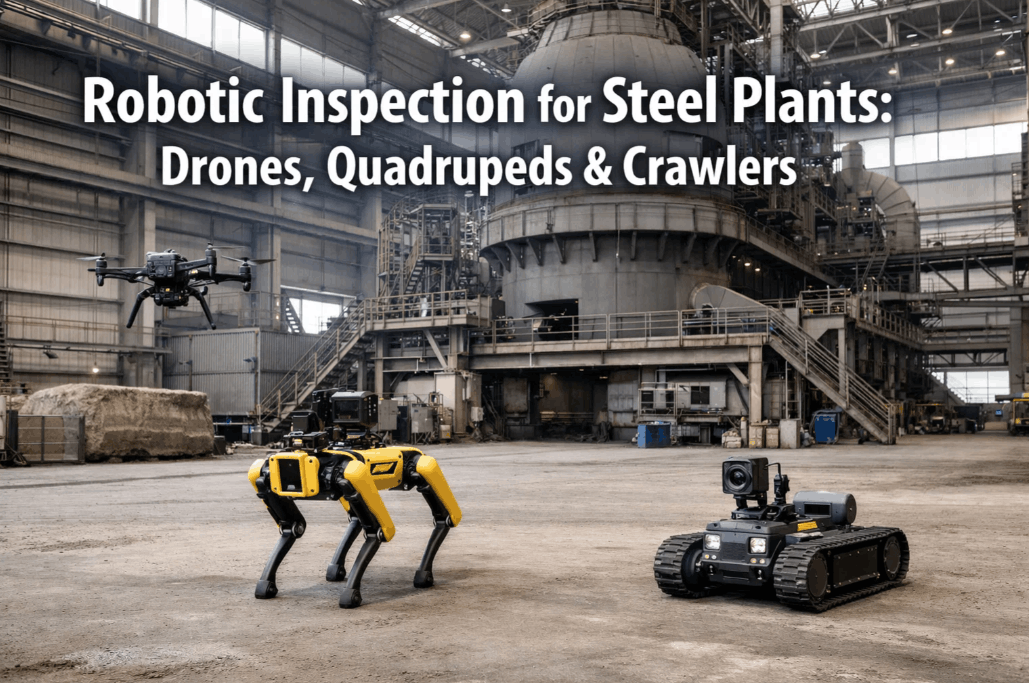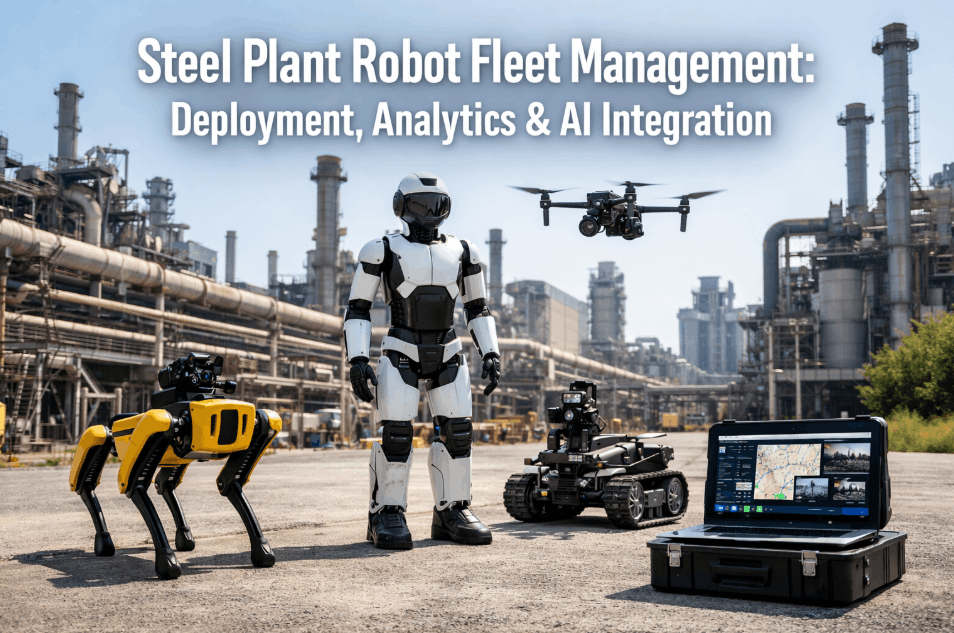
Robotic inspection is reshaping how steel plants access, monitor, and maintain their most hazardous and hard-to-reach assets. Quadruped robots walk blast furnace cast houses, drone fleets inspect reheating furnace roofs and cooling towers, crawler robots enter ladle pits, and fixed thermal patrol robots monitor hot metal bays continuously — all feeding real-time data into iFactory's Robot Fleet Console and AI analytics engine. Where a human inspector can complete 6–8 inspection points per shift in a high-temperature zone, a quadruped robot covers 40–60 points continuously, without PPE constraints, without heat stress exposure, and with far superior sensing — thermal imaging, acoustic emission, gas detection, and 360° visual all simultaneously. iFactory's Robot Fleet Console connects every robot type into a single operational dashboard — managing deployment schedules, mission analytics, AI-detected anomaly alerts, and maintenance health of the robots themselves.
Steel Plant Robot Fleet Management: Deployment, Analytics & AI Integration
Quadruped robots, drone fleets, crawlers & thermal patrol bots — all managed from iFactory's unified Robot Fleet Console with AI anomaly detection and predictive fleet health.
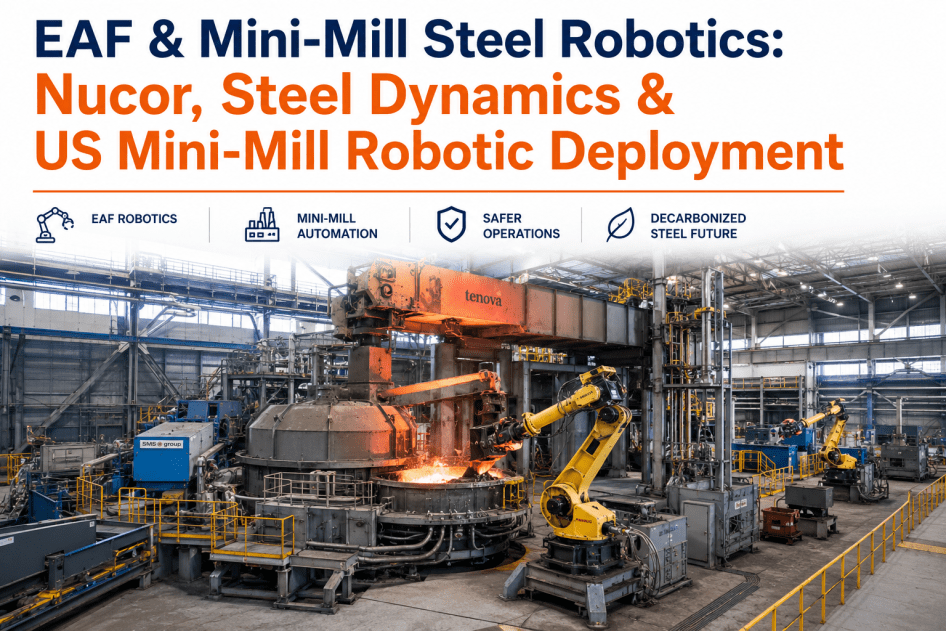
Four Robot Types — Each Designed for Specific Steel Plant Zones
No single robot covers every steel plant environment. iFactory manages a heterogeneous fleet — with each robot type deployed in the zones it is specifically designed to operate in, feeding all sensor data into the unified AI analytics layer. Schedule a robot fleet assessment to see which combination fits your plant's hazard zones.
Boston Dynamics Spot / ANYmal
- Operates at up to 60°C ambient temperature
- Thermal imaging + visual + gas detection simultaneously
- 40–60 inspection points per 2-hour patrol mission
- Autonomous navigation — no human required during patrol
- Integrates directly with iFactory CMMS via Robot Fleet Console
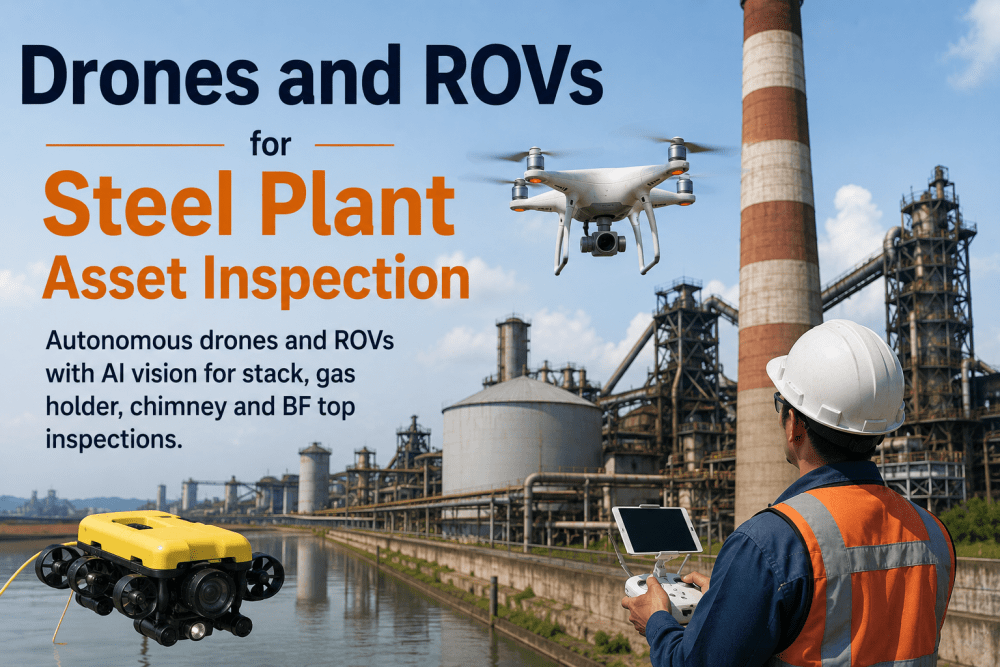
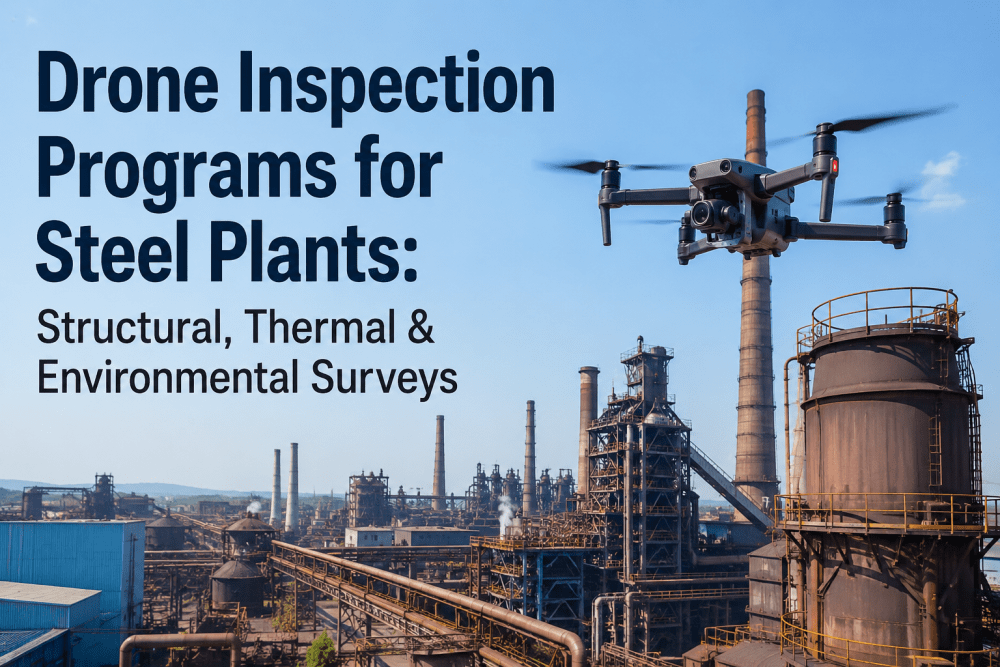
Aerial Inspection Drones
- 4K thermal and visual simultaneously at altitude
- GPS-denied navigation inside enclosed plant structures
- Covers 2km² per 40-minute inspection flight
- Automated flight path from iFactory Robot Fleet Console
- Anomaly-triggered second pass with zoom capture
Confined Space Crawler
- Operates in spaces as narrow as 200mm diameter
- Gas detection: O₂, CO, H₂S, LEL continuously
- Visual and ultrasonic wall thickness measurement
- Tether-based operation for confined space compliance
- Eliminates human confined space entry for inspection tasks
Rail-Mounted Thermal Patrol
- Continuous 24/7 thermal patrol on fixed rail route
- 3°C anomaly threshold triggers immediate supervisor alert
- Arc flash risk detection from safe standoff distance
- Automatic repeat scan on alarm condition
- Historical thermal trend per panel, per motor, per cable section
iFactory Robot Fleet Console — One Dashboard for Every Robot on Your Plant
iFactory's Robot Fleet Console provides a single unified operational view across all robot types — eliminating the need for separate vendor-specific dashboards for each robot brand or type.
Mission Scheduler
Inspection missions scheduled per robot per zone — frequency, route, sensors active, and anomaly threshold per mission type. Automatic re-scheduling on robot unavailability.
Live Sensor Dashboard
Real-time thermal, vibration, gas, and visual feeds from all active robots — tagged by location, equipment, and alert status. AI anomaly overlays on thermal images.
AI Anomaly Engine
ML models trained on steel plant failure signatures — detecting bearing overheating, refractory hotspots, structure deformation, and gas leaks from robot sensor streams in real time.
CMMS Work Order Integration
Robot-detected anomalies auto-generate iFactory CMMS work orders — with sensor data, thermal images, and GPS location attached. SAP PM notification created simultaneously.
Robot Health Monitoring
Battery health, motor temperatures, sensor calibration status, and mission success rate tracked for each robot — predictive maintenance of the robot fleet itself.
Analytics & ROI Reporting
Anomalies detected, failures avoided, human entries eliminated, and cost avoidance estimated — all reported monthly in iFactory's Robot Fleet ROI dashboard for leadership review.
Robot vs Human Inspection — The Performance Gap
The business case for robotic inspection is not just safety — it is systematic coverage superiority. A quadruped robot does not tire, does not skip points when temperatures are high, and simultaneously captures 4 sensor streams that a human inspector would need separate equipment for.
| Inspection Capability | Human Inspector | Quadruped Robot |
|---|---|---|
| Points inspected per shift | 6–8 in high-heat zones | 40–60 per mission |
| Safe operating temperature | Up to 40°C with breaks | Continuous at 60°C |
| Simultaneous sensor streams | 1–2 (visual + IR gun) | 4 (thermal, visual, acoustic, gas) |
| Inspection frequency | Weekly in high-risk zones | Hourly, 24/7 |
| Data record quality | Handwritten + occasional photo | Timestamped sensor log + CMMS push |
| Incident / near-miss risk | PPE + thermal burn risk | Zero human exposure |
What a Plant Reliability Director Said
We were inspecting the BF cast house weekly — maximum frequency our EHS team would approve given the heat conditions. The Spot robot does it every two hours. In the first 90 days, it found 11 anomalies that our human inspection had completely missed. Three of those were developing refractory issues that would have been a tapping emergency within the month. The payback calculation was embarrassingly fast.
Frequently Asked Questions
Does iFactory's Robot Fleet Console work with any robot brand or only specific OEMs?
iFactory's Robot Fleet Console integrates with Boston Dynamics Spot, ANYbotics ANYmal, DJI enterprise drones, Flyability Elios, and major crawler robot brands via ROS (Robot Operating System) and REST API. Custom integration for other platforms is available.
How does the AI anomaly detection know what is normal vs abnormal in a steel plant?
Models are trained on steel-plant-specific thermal signatures — blast furnace tuyere temperatures, ladle shell patterns, motor housing thermal profiles — and calibrated against each plant's baseline during a 4–6 week learning period before anomaly alerting goes live.
What happens when a robot detects an anomaly — what is the workflow?
The AI flags the anomaly, captures a thermal image and sensor log, creates an iFactory CMMS work order with all data attached, sends a mobile push alert to the assigned maintenance engineer, and schedules a follow-up inspection mission at double frequency.
How long does it take to deploy a quadruped robot fleet and go live with iFactory?
Robot delivery, plant mapping, and iFactory Fleet Console integration typically take 8–12 weeks. The AI anomaly models go live in Week 6 with baseline learning, and full anomaly alerting is operational by Week 10–12.
See Robot Fleet Console Live on Your Plant
Demo built around your hazard zones, robot options, and inspection requirements.