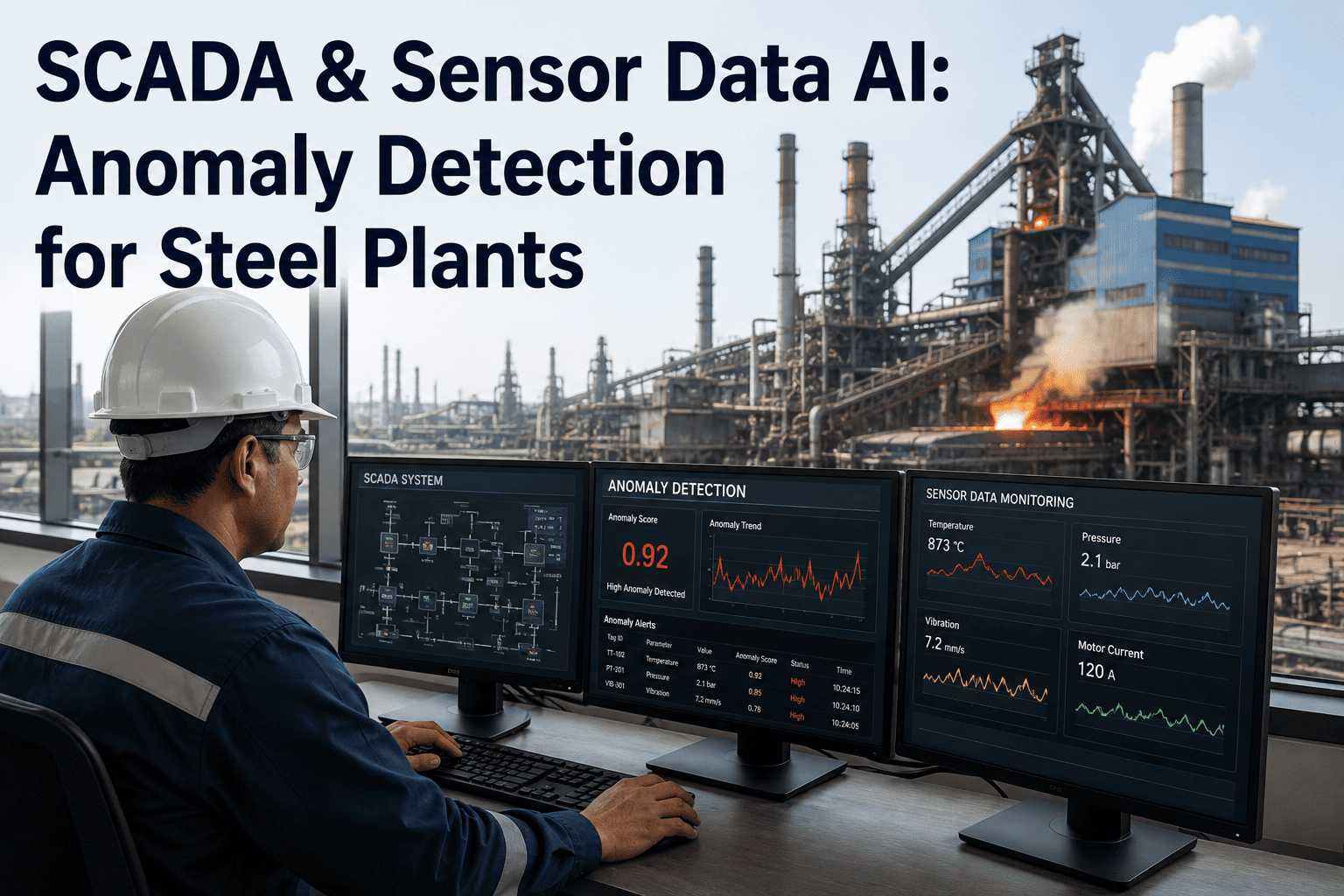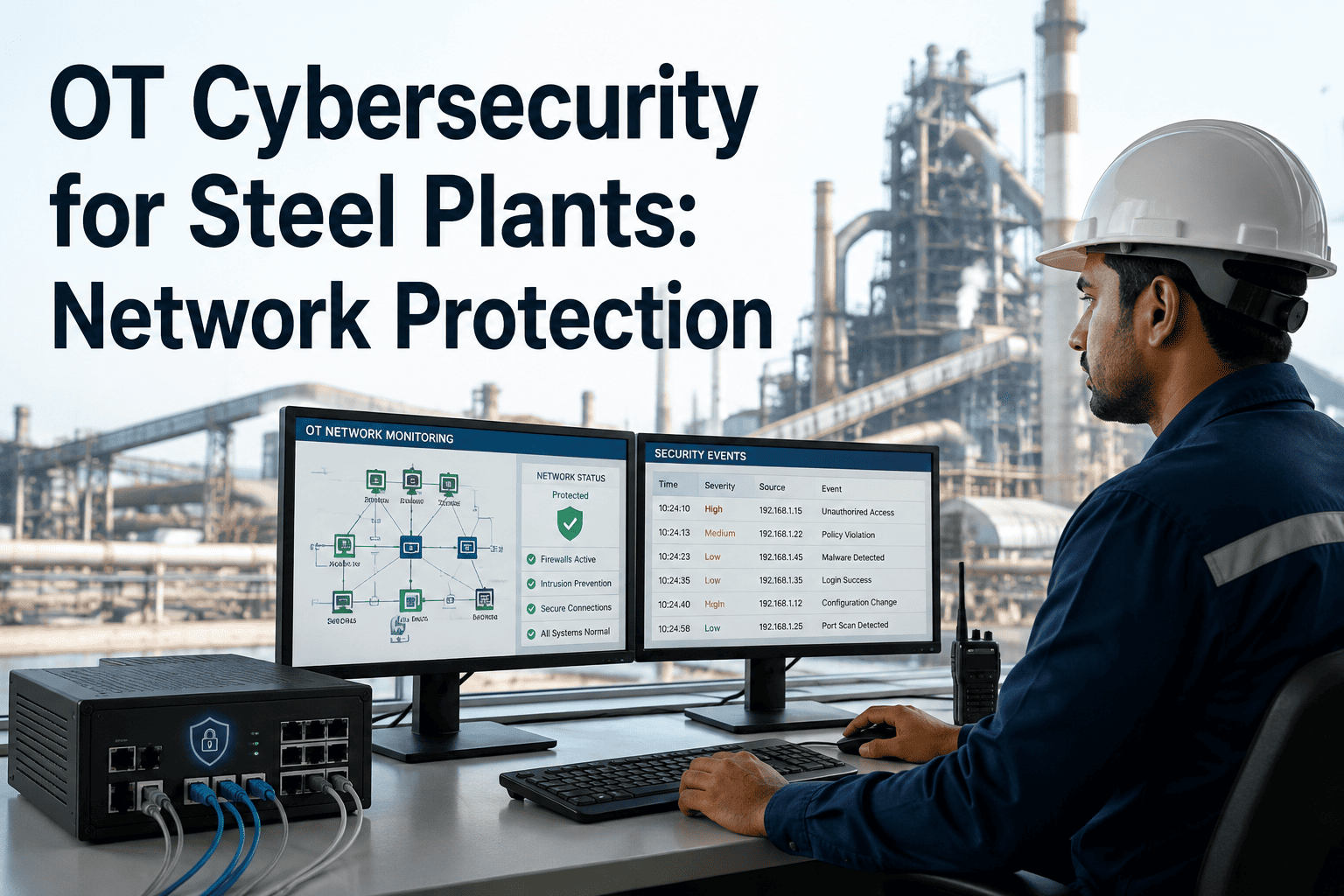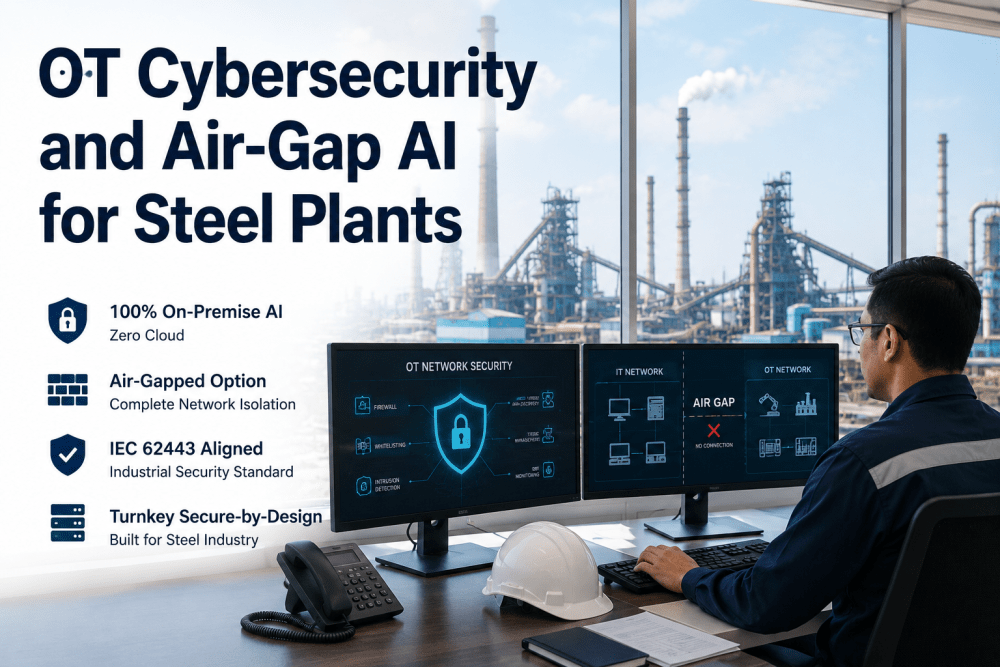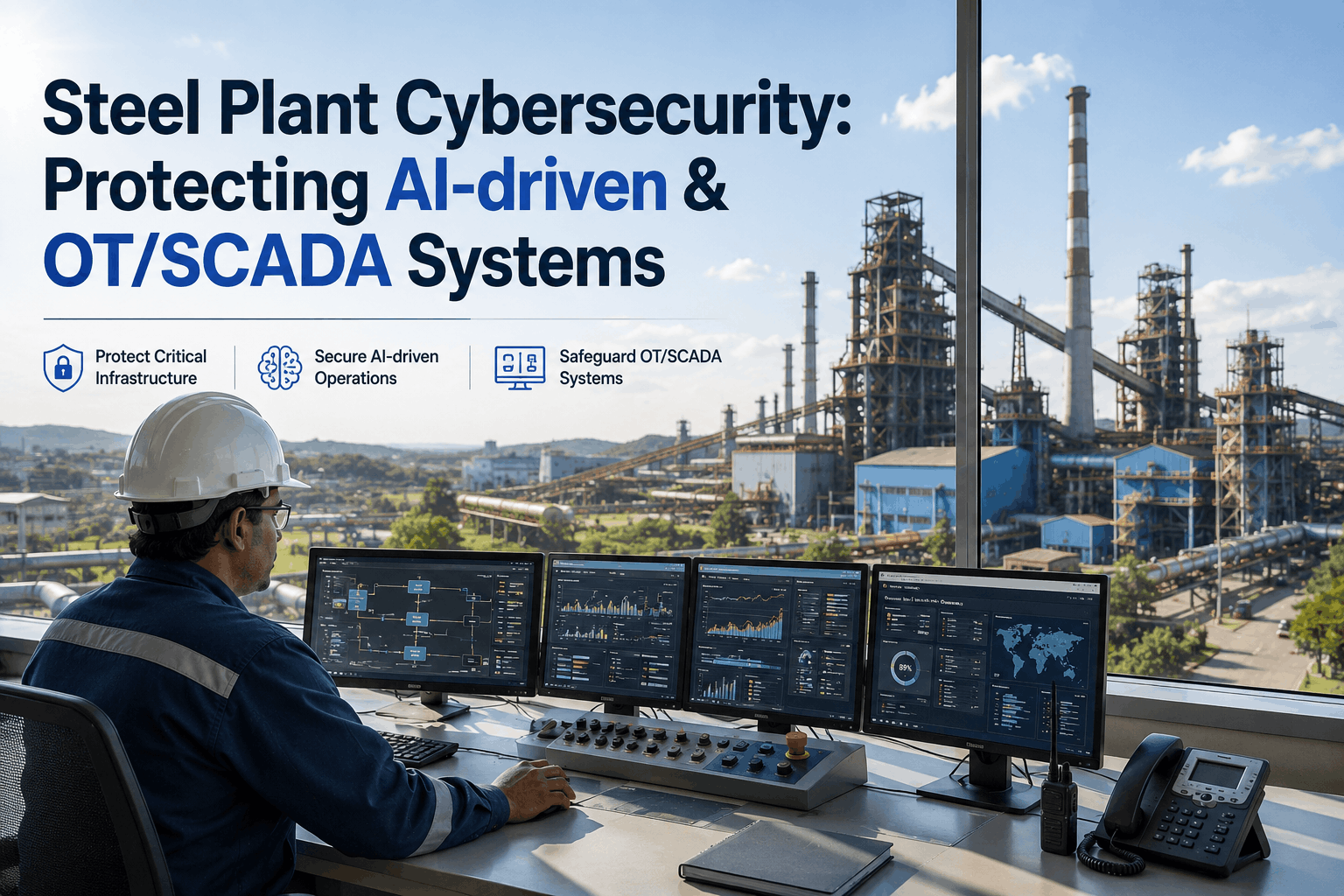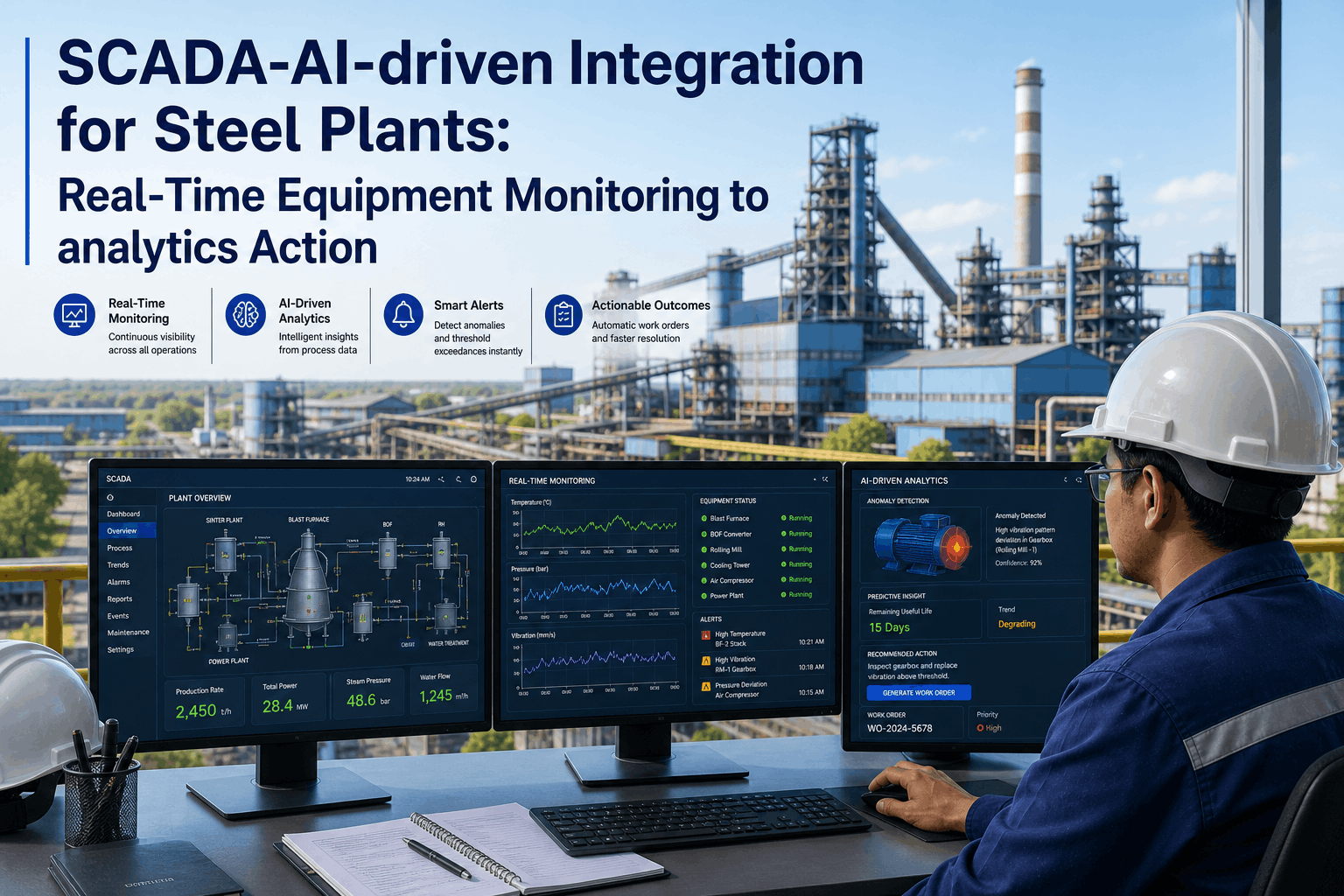
The digital transformation of steel manufacturing presents a critical paradox: connecting operational technology (OT) to cloud analytics unlocks massive EBITDA gains, but it simultaneously exposes previously air-gapped systems to global cyber threats. Ransomware attacks on manufacturing facilities are increasing exponentially, often targeting vulnerable legacy PLCs or unpatched HMI terminals that run critical, multi-million dollar processes. Because these industrial systems operate 24/7, standard IT practices like weekly patching or aggressive endpoint detection and response (EDR) are often impossible without causing unacceptable downtime. Traditional IT security tools fail in the plant environment because they prioritize data confidentiality over machine availability. Cybersecurity for Connected Steel Plants requires a purpose-built approach that respects the physics of the plant floor. iFactory delivers secure-by-design industrial analytics by implementing hardware data diodes, rigorous network segmentation, and fully encrypted edge-to-cloud pipelines. We extract the telemetry you need for AI-driven insights without opening a reverse path to your critical control loops. Book an OT Security Audit to safely digitize your operations.
Digitize Your Plant Without Exposing Your PLCs
Deploy iFactory's secure edge architecture to extract real-time SCADA analytics while maintaining an impenetrable firewall around your core industrial controls.
The Strategic Imperative of OT Cybersecurity
For decades, steel plant equipment was protected by a "physical air gap." A blast furnace PLC or a rolling mill drive controller was physically isolated, connected only via RS-232 serial cables or closed-loop proprietary networks. This isolation made remote hacks virtually impossible. However, the modern push for Industry 4.0 and steel plant data security requires bridging IT and OT networks to achieve AI-driven efficiency. Without strict network segmentation, the plant becomes a massive, flat network where a single phishing email opened by a front-office accountant can easily traverse the system and shut down a continuous caster on the floor.
This convergence creates an unparalleled attack surface. Hackers understand that heavy industry cannot afford downtime—a halted steel mill can lose upwards of $2 million a day. This makes steel plants highly lucrative targets for ransomware extortion. Relying on "security by obscurity" or assuming that hackers don't understand industrial protocols is a dangerous fallacy. Modern threat actors deploy specialized malware designed specifically to seek out and compromise SCADA systems and industrial control environments.
iFactory mitigates this cyber risk in steel manufacturing by acting as a secure intermediary buffer zone. We replace the vulnerable flat network with a highly segregated architecture. By utilizing strictly read-only edge nodes, industrial control security is guaranteed at the hardware level. The telemetry flows outward to the cloud for powerful, AI-driven processing, but malicious commands cannot physically flow inward to alter machine states.
This robust, defense-in-depth strategy enables corporate leaders to achieve full analytics system security while maintaining the 99.99% uptime required by heavy industry. You get the financial upside of cloud-based digital twinning and predictive maintenance without gambling your core production assets.
Understanding the Attack Surface: Where Steel Mills are Most Vulnerable
Before implementing a defense, it is critical to understand how breaches occur in industrial environments. The most devastating attacks on manufacturing facilities rarely involve complex zero-day exploits; instead, they exploit fundamental structural weaknesses in legacy plant networks.
- Unpatched HMIs and Legacy Workstations: Many plant floors rely on Windows XP or Windows 7 terminals to run proprietary HMI software. These machines cannot be patched because the software vendor no longer supports them, leaving known vulnerabilities wide open to exploitation.
- Unsecured Vendor Remote Access: Equipment manufacturers frequently install cellular modems or use remote desktop software (like TeamViewer or VNC) to provide remote troubleshooting. These "backdoors" bypass corporate firewalls entirely and are a primary entry point for ransomware gangs.
- Weak and Default PLC Passwords: Industrial controllers are often deployed with default factory credentials (e.g., Admin/Admin). Because these devices were historically air-gapped, engineers never changed the passwords, assuming physical security was sufficient. Once an attacker breaches the IT network and pivots to OT, these devices are easily hijacked.
iFactory's architecture is explicitly designed to neutralize these vulnerabilities by isolating legacy systems and strictly controlling data flow, ensuring that even if a vendor portal is compromised, the core production line remains secure.
Four Critical Security Layers Resolved by iFactory
Industrial cyber resilience cannot be solved with a single software patch; it must be built from the machine level up. iFactory’s OT IT convergence security framework protects the four most vulnerable vectors on the plant floor, providing a comprehensive shield for your operations. Review Our Security Topology.
Hardware Data Diodes & Read-Only Edge Processing
The cornerstone of iFactory's security is our deployment of NVIDIA-accelerated edge nodes configured for strict unidirectional data flow. By utilizing hardware data diodes or logically restricted proxies, we ensure traffic is strictly "transmit only." This means that while we can extract high-frequency vibration and temperature telemetry at millisecond intervals, it is physically impossible for cloud-based systems—or an attacker who has breached the cloud—to open a reverse shell and issue a write-command to a furnace controller or drive motor.
Purdue Model Network Segmentation & DMZ Buffering
A flat network is a hacker's playground. The iFactory architecture rigorously respects the ISA/IEC 62443 standard, commonly known as the Purdue Model. We position our data collection servers in the Level 3 Demilitarized Zone (DMZ), creating a hard, heavily monitored firewall boundary between the enterprise IT network (Level 4/5) and the critical control processes (Level 1/2). If ransomware infects the corporate HR department, the DMZ acts as a firebreak, ensuring the malware cannot laterally spread to the factory floor.
Encrypted Payload Transmission & Protocol Translation
Raw SCADA data traveling across a plant network is often transmitted in cleartext, making it highly susceptible to packet sniffing and espionage. The iFactory edge node translates these legacy protocols and encrypts all outbound telemetry using TLS 1.3 and military-grade AES-256 encryption before it ever leaves your facility's local area network. This ensures complete data integrity and confidentiality during transit through public networks to the corporate cloud environment.
Role-Based Access Control (RBAC) & Multi-Factor Authentication
External hackers are only half the battle; the biggest threat is often internal negligence or compromised credentials. iFactory enforces strict Multi-Factor Authentication (MFA) and granular Role-Based Access Control (RBAC) across all dashboards. A local operator can only view their specific line's OEE, while corporate engineers cannot unilaterally change a machine's digital twin parameters without secondary approval. This zero-trust approach ensures that a stolen password cannot be used to sabotage plant operations.
Architectural ROI: Flat Network vs. Segmented Deployment
Connecting a legacy plant without a comprehensive cybersecurity strategy is a massive financial liability. In heavy manufacturing, the average cost of downtime due to a ransomware attack can exceed $2 million per day, not including regulatory fines and reputational damage. Comparing legacy approaches to iFactory's secure architecture highlights the catastrophic cost of a breach and the clear ROI of doing it right the first time.
| Architecture Strategy | Ransomware Blast Radius | Uptime Guarantee | Deployment Speed | Data Exposure Risk |
|---|---|---|---|---|
| Legacy Flat Network (No Segregation) | Entire Plant (IT & OT down simultaneously) | 0% (Highly Vulnerable to automated worms) | Fast (But extremely reckless) | Critical (Unencrypted plain-text data) |
| Total Air-Gap (No Cloud Analytics) | Zero (Complete physical isolation) | 99.9% (Assuming no insider threat) | N/A (Prevents any modern digitization) | Zero (But eliminates all analytical ROI) |
| iFactory Segmented Edge-to-Cloud | Contained strictly to the IT Level | 99.9% (OT Protected behind DMZ) | < 60 Days with strict auditing | Near Zero (AES-256 Encrypted Tunnels) |
Deploying iFactory ensures you capture the financial upside of advanced AI analytics, predictive maintenance, and multi-plant visibility without betting the company's survival on a vulnerable IT/OT bridge.
Five Key Indicators of OT Cyber Health
Cybersecurity is not a set-it-and-forget-it deployment; continuous, passive monitoring is required to maintain a secure industrial perimeter. The iFactory platform goes beyond simple data collection by providing deep, continuous visibility into the health and integrity of your digital pipeline. Audit Your Plant's Health.
1. Edge Node Heartbeat Integrity & Cryptographic Sync
The system continuously monitors the cryptographic handshake between the local NVIDIA edge node and the centralized cloud server. Any drop in authentication, certificate mismatch, or unexpected latency instantly pauses data transmission, isolates the node, and triggers a high-priority alert to your IT Security Operations Center (SOC).
2. Traffic Volume Baselines & Exfiltration Detection
iFactory establishes strict behavioral baselines for data flow. If a vibration sensor that normally transmits 5MB of telemetry a day suddenly attempts to push a 500MB payload, the system immediately flags the anomaly as potential malware exfiltration or Command and Control (C2) beaconing, blocking the traffic.
3. Unauthorized Port Access & Lateral Movement Attempts
The edge nodes act as secure sentinels, logging and actively blocking any attempts to access the device via non-standard ports (e.g., SSH, RDP, or Telnet) from within the internal plant network. This neutralizes attackers attempting to move laterally across the plant floor.
4. Immutable Firmware Verification Status
To protect against supply chain attacks and advanced persistent threats (APTs), the system ensures the edge processing hardware is running the latest cryptographically signed security patches. The node will refuse to boot or transmit data if the firmware signature cannot be cryptographically verified against the iFactory root of trust.
5. Unidirectional Read-Only Protocol Verification
The system continuously audits the OPC-UA connection state and proxy logic to guarantee that the token exchange remains strictly unidirectional (read-only) at all times. Any anomalous write-requests originating from the cloud are dropped silently before they reach the OT firewall.
Compliance, Regulatory Alignment & Data Governance
The regulatory landscape for industrial cybersecurity is rapidly tightening. With new mandates like the NIS2 Directive in Europe and TSA security directives in the United States, steel manufacturers face massive fines for non-compliance. Furthermore, because steel plants often supply critical infrastructure, defense, automotive, and aerospace sectors, a cyber breach can result in severe supply chain penalties and lost contracts. Cybersecurity insurance providers are also demanding proof of rigorous OT security controls before underwriting policies. iFactory provides the necessary architecture and documentation for strict audit compliance.
iFactory Security & Compliance Deliverables
Our architecture is explicitly designed to support your organization's legal, regulatory, and insurance requirements.
- ISO 27001 Alignment: Our cloud infrastructure is hosted in heavily certified environments, ensuring rigorous data management, disaster recovery, and confidentiality protocols are met.
- IEC 62443 Compatibility: iFactory deployment topologies map directly to industrial cybersecurity zones and conduits, making it easy for auditors to verify Purdue Model adherence.
- Data Sovereignty & Localization Controls: We provide options for regional or on-premise cloud hosting to ensure your sensitive production telemetry never crosses unauthorized international borders, satisfying strict local data privacy laws.
- Immutable Audit Trails: Every user login, parameter threshold change, and automated work order dispatch is securely logged in a tamper-proof ledger, providing crucial historical data for post-incident forensics and compliance reporting.
60-Day Secure Deployment Roadmap
Connecting a sprawling, complex steel plant securely is a highly deliberate process. At iFactory, we prioritize exhaustive security mapping over rapid, reckless software deployment. Our 60-day roadmap ensures total architectural integrity before a single byte of data is sent to the cloud.
We begin by conducting a passive network sweep, mapping your existing PLC subnets without sending disruptive ping requests that could crash older controllers. We identify highly vulnerable legacy systems (like Windows XP HMIs), locate rogue vendor connections, and establish the safest logical insertion point for the Level 3 DMZ data collector.
The physical iFactory edge hardware is installed and segregated. We work alongside your internal IT and OT network administrators to configure strict "deny-all-by-default" firewall rules. The only permitted traffic is outbound-only transmission over port 443 (HTTPS/TLS 1.3) to designated iFactory cloud IP addresses.
The read-only connection is initiated in a staging environment. After a final round of validation to ensure no inbound routing is possible, the system goes live. Live machine data flows securely to the cloud, powering your predictive maintenance dashboards without risking control loop integrity or plant safety.
Don't Risk Production for Analytics
Implement iFactory's segmented architecture to safely bridge your IT and OT networks, protecting your steel plant from devastating cyber threats while unlocking AI efficiency.
"Our biggest hesitation with Industry 4.0 was opening our legacy rolling mills to the cloud. A ransomware attack would cost us over $2 million a day in lost production, and our insurance premiums were already skyrocketing. iFactory’s approach of using hardware edge nodes with strictly unidirectional flow gave my IT department the confidence to finally approve the integration. We recently passed a rigorous third-party cybersecurity audit with flying colors. We got the analytics we needed with zero compromise on safety or compliance."
— Chief Information Security Officer (CISO), Global Steel Network
Frequently Asked Questions: Plant Cybersecurity
Is iFactory a cybersecurity product?
No. iFactory is an advanced Enterprise Asset Management and Analytics platform. However, because we ingest critical industrial data, our architecture is built to be secure-by-design. Our primary goal is to ensure our software deployment never inadvertently introduces vulnerabilities into your manufacturing network or compromises your OT perimeter.
What is a read-only edge node?
It is a localized hardware server (often an NVIDIA Jetson industrial PC) physically placed on your plant floor or in your DMZ. It actively requests data from your PLCs, securely packages it, and transmits it outbound to the cloud. It is configured at the kernel level to explicitly reject any inbound commands from the internet, acting as a one-way digital valve for telemetry data.
We have legacy machines running Windows XP. Is it safe to connect them?
We absolutely never connect legacy, unpatchable systems directly to the internet. We connect them to our local Edge Node via highly isolated, local subnets. The Edge Node acts as a secure, intelligent proxy, isolating the vulnerable Windows XP machine from the broader corporate IT network and the internet, while still safely extracting the necessary production data.
Do we need to open inbound ports on our corporate firewall?
No. iFactory relies entirely on secure, outbound-only connections via standard HTTPS (Port 443). Your firewall does not need any open inbound listening ports, which dramatically reduces your attack surface and complies with the strictest IT security policies regarding external vendor connections.
Where is our machine data actually stored and processed?
Telemetry is stored in iFactory’s highly secure cloud infrastructure (partnering with AWS/GCP) using localized availability zones. This allows us to comply with stringent data sovereignty and localization laws depending on your region. All data at rest is encrypted using industry-standard AES-256 encryption, and backed up in immutable storage vaults.
Can a cloud breach shut down our physical plant?
No. Because of the strictly unidirectional architecture and rigorous Purdue Model network segmentation, even in the highly unlikely event of a catastrophic cloud breach, the attackers cannot send commands backward through the edge data diode to alter your PLC logic, change machine speeds, or halt the physical production line.
How do you handle software updates for the edge nodes?
Updates are never "pushed" from the cloud to the edge. Instead, they are managed via secure, cryptographically signed packages. The edge node initiates an outbound pull request on a scheduled basis, downloads the package, and verifies the cryptographic signature locally before applying any patch, completely preventing malicious code injection.
Does this platform replace our existing OT firewalls?
No. iFactory is an analytics overlay designed to sit safely behind your existing OT firewalls (such as Cisco, Fortinet, or Palo Alto networks). We work in conjunction with your current cybersecurity infrastructure, adding a secure application layer for operational analytics rather than replacing your core network security hardware.
Capture the Data. Reject the Risk.
Integrate your steel operations with the iFactory platform using industry-leading segregation and encryption standards.