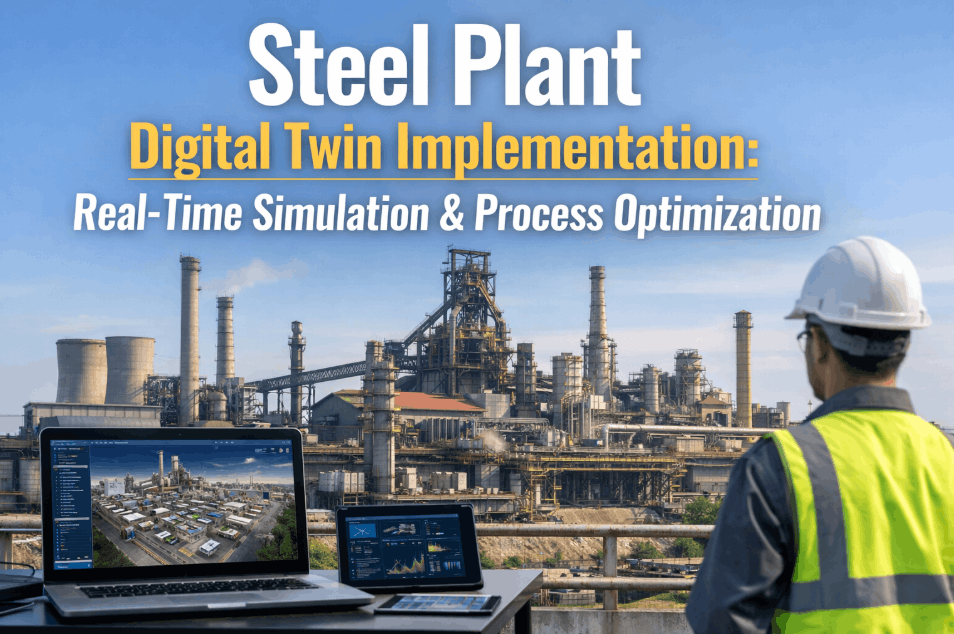
Steel plants generate over 50,000 data points per minute across furnaces, casters, and rolling mills. Yet most operations still rely on shift-end reports and spreadsheet summaries to make critical decisions. By the time a plant manager sees the numbers, the production loss has already happened. AI-powered real-time KPI monitoring changes this equation entirely—transforming raw sensor data into live, actionable intelligence that drives decisions in seconds, not days.
Smart Steel Intelligence
Your Steel Plant Generates 50,000 Data Points Per Minute. How Many Are You Actually Using?
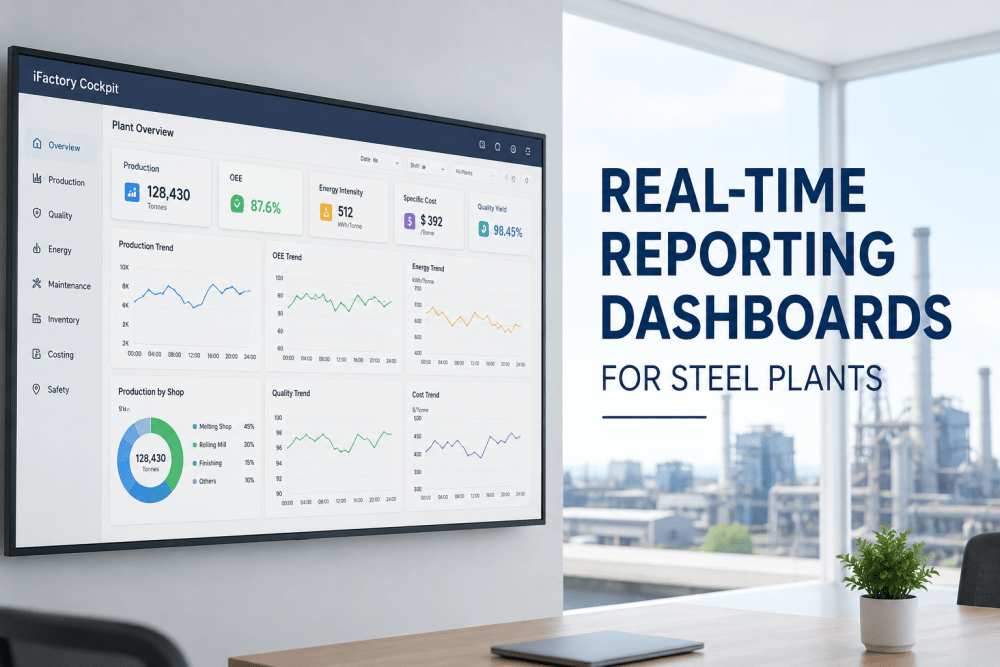
AI-driven KPI dashboards turn raw sensor floods into real-time production insights—tracking OEE, casting rate, rolling output, and energy consumption live across every shift.
35%
Production capacity lost at 65% OEE
$1.2M
Cost of one day unplanned downtime
8-15 pts
OEE gain from real-time visibility alone
Sources: McKinsey Steel Operations Report, Oxmaint Industry Data, PwC Manufacturing Analytics
Why Traditional KPI Tracking Fails in Steel
Steel production operates at extreme temperatures, massive scale, and relentless speed. Traditional monitoring approaches—manual log sheets, end-of-shift summaries, weekly Excel reports—were designed for a slower era. They cannot capture the cascading micro-events that silently erode production output every hour of every day.
The Visibility Gap: What You See vs. What's Actually Happening
Traditional Monitoring
Data frequency
Shift-end or daily
Micro-stoppages
Invisible — never logged
Speed losses
Hidden in averages
Quality drift
Found after production run
Decision speed
Hours to days
AI-Powered Real-Time
Data frequency
Continuous — every second
Micro-stoppages
Auto-detected and categorized
Speed losses
Flagged the instant they occur
Quality drift
Predicted before defects form
Decision speed
Seconds — with AI recommendations
A typical integrated steel plant at 65% OEE is losing 35% of production capacity to a combination of downtime, speed restrictions, and quality rejections—most of it invisible to traditional reporting. See what your plant is missing.
The 7 KPIs That Define a Smart Steel Plant
Not every metric matters equally. The highest-performing steel plants focus on a core set of KPIs that connect shop-floor reality to business outcomes. AI monitors all of them simultaneously, correlating data across production areas to surface insights no single metric can reveal alone.
01
Overall Equipment Effectiveness (OEE)
The gold standard metric combining availability, performance, and quality into one number. AI breaks OEE down by production area—blast furnace, BOF, caster, rolling mill—to pinpoint exactly where capacity is being lost.
02
Casting Rate & Sequence Length
$40K/day
Cost of 8% speed drop
The caster is often the plant bottleneck. AI monitors casting speed in real time, detecting mold wear and nozzle clogging before breakouts occur—every OEE point recovered here translates directly into additional plant output.
03
Rolling Mill Throughput
10-12%
Throughput gain with AI
AI correlates rolling speed, stand vibration, and strip temperature to prevent cobbles before they happen. Every cobble traces to an equipment condition that predictive analytics can identify and prevent.
04
Energy Consumption per Tonne
12%
Average energy saving
7%
CO2 of global emissions
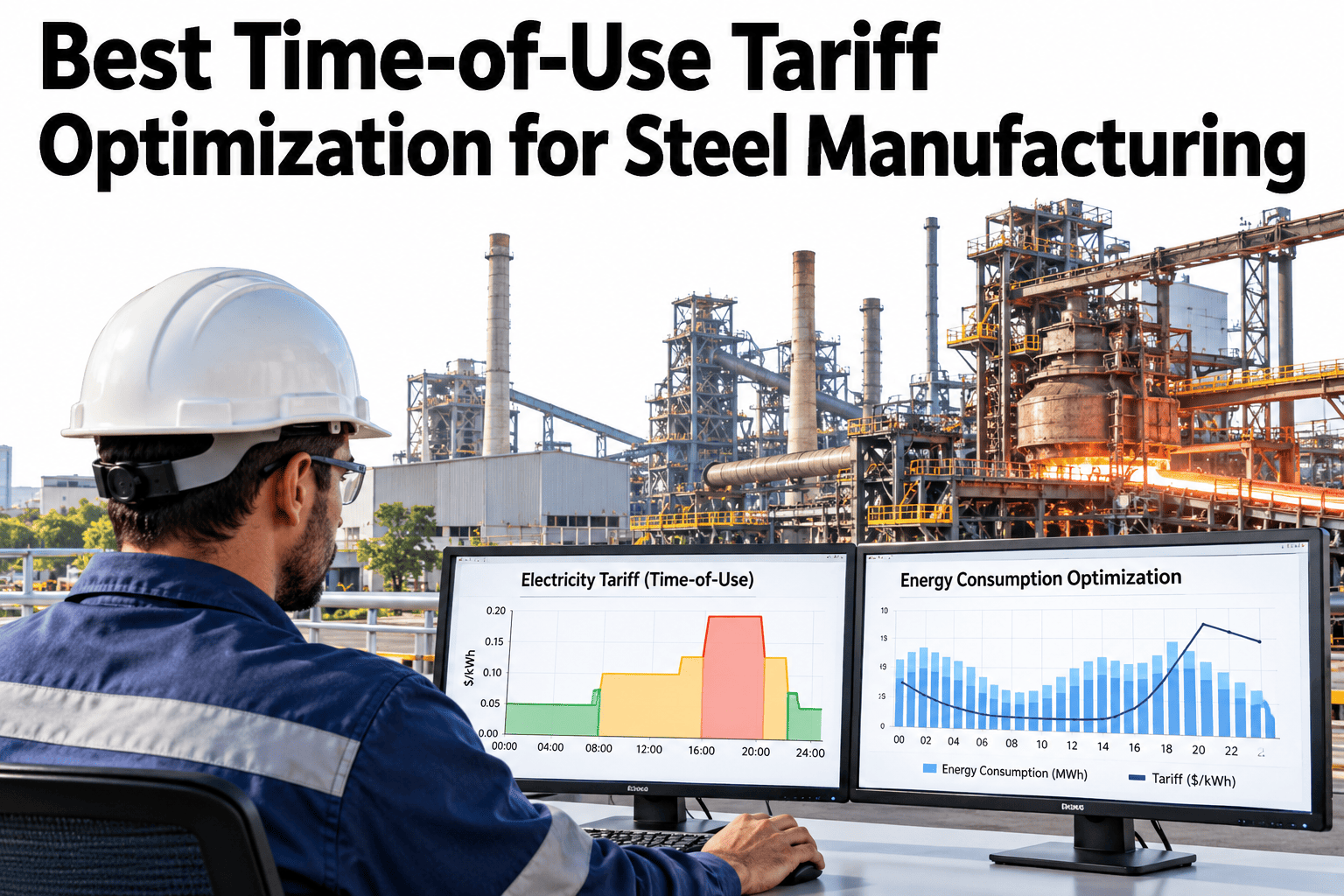
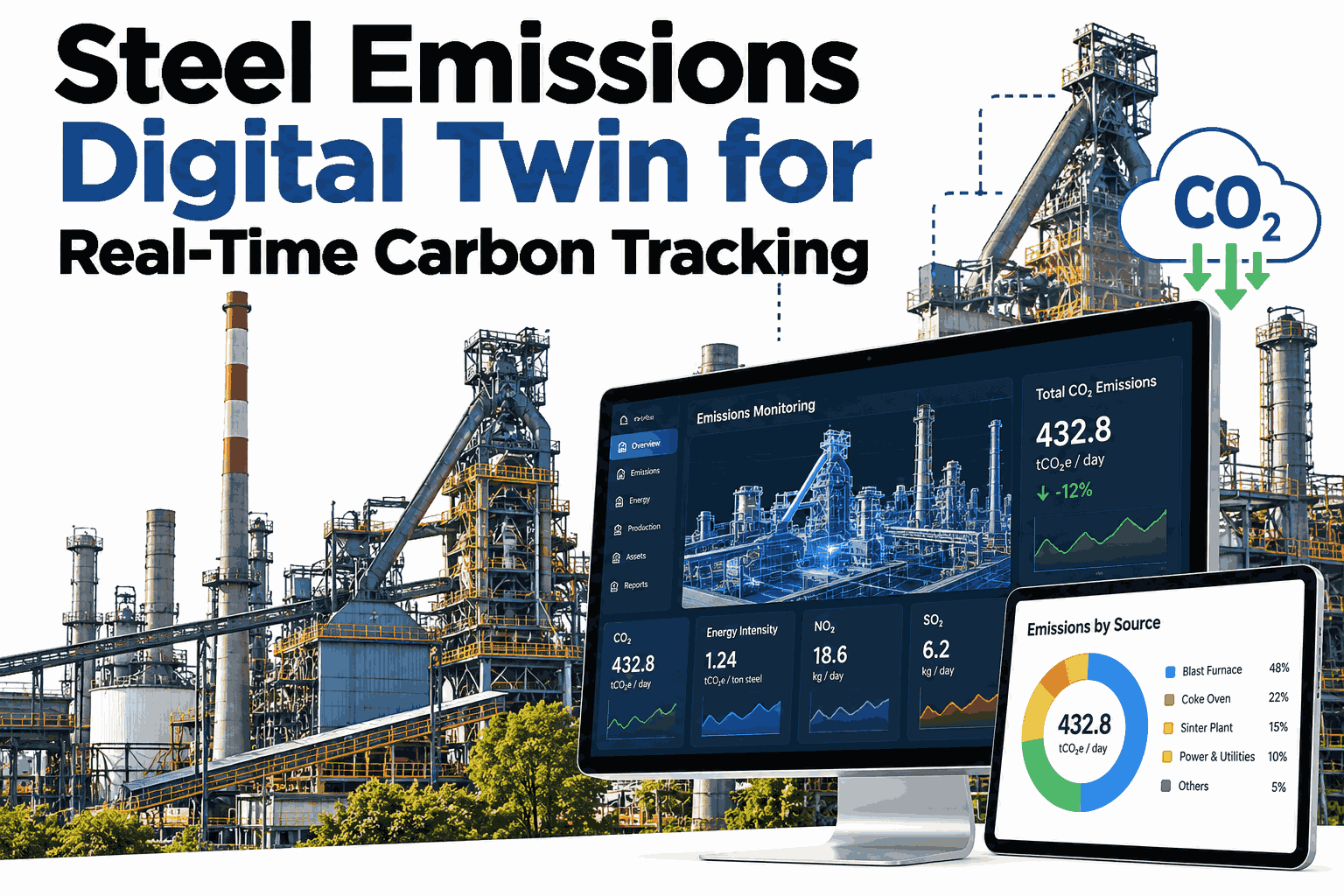
Steel is extremely energy-intensive, responsible for roughly 7% of global carbon emissions. AI optimizes furnace temperature profiles, schedules heavy loads during off-peak windows, and identifies energy waste invisible to manual monitoring.
05
First Pass Yield (FPY)
$4M/yr
Revenue from 0.5% gain
Improving yield by just 0.5% can generate an additional $4 million in annual revenue from the same input material. AI vision systems detect surface defects at microscopic levels, catching quality drift before it becomes scrap.
30-50%
Breakdown reduction
<2 days
World-class target/year
AI predictive maintenance analyzes vibration, temperature, and oil analysis data continuously—detecting bearing degradation, refractory wear, and hydraulic failures weeks before they cause unplanned shutdowns.
07
Tap-to-Tap Time & Heat Cycle
9%
Uptime increase with AI
AI optimizes the entire melt cycle—from scrap charging through tapping—reducing delays between heats. Faster tap-to-tap times with consistent quality mean more heats per day and lower cost per tonne.
Which KPIs Are Silently Costing Your Plant Millions?
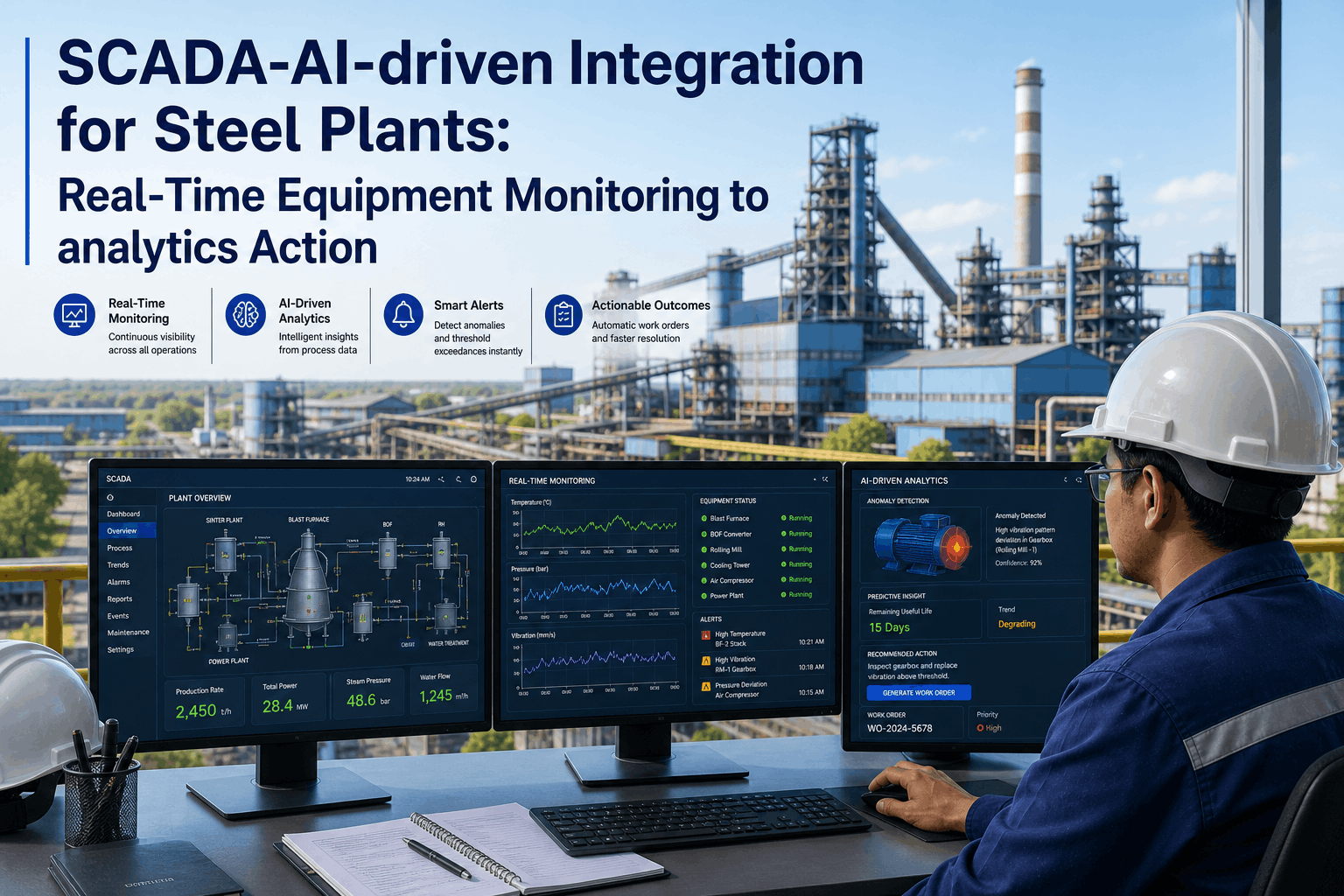
iFactory's AI platform connects to your existing SCADA and DCS systems—revealing the hidden OEE losses, speed restrictions, and quality gaps that shift reports never show.
How AI Turns Raw Data Into Production Intelligence
Installing sensors is easy. The hard part is making sense of 50,000+ data points per minute flowing from furnaces, casters, and rolling mills simultaneously. AI does what no team of analysts can: it processes everything in real time, correlates across systems, and surfaces the specific actions that recover the most tonnes.
The AI KPI Intelligence Pipeline
Sensors on every furnace, caster, mill, and conveyor stream data via OPC-UA and MQTT protocols into a unified AI platform—no rip-and-replace of existing systems.
AI models cross-reference vibration data, temperature profiles, production speeds, and quality signals—finding patterns invisible to isolated monitoring systems.
Machine learning forecasts failures, quality deviations, and production bottlenecks hours or days in advance—before they impact output or create scrap.
Auto-generated work orders, operator alerts, and process adjustments flow directly into your CMMS—closing the loop between detection and action in minutes, not days.
Real Impact: What Changes When You Go Real-Time
The shift from periodic reporting to continuous AI monitoring isn't incremental—it's transformational. Here's what leading steel plants are achieving with intelligent KPI tracking.
Gained from visibility alone
Before adding predictive maintenance or AI scheduling. Simply making every micro-stoppage, speed loss, and quality rejection visible in real time enables immediate corrective action.
Through predictive maintenance
AI monitors thousands of parameters across interconnected processes, detecting subtle degradation patterns in extreme noise environments that human analysts cannot catch at scale.
Downtime reduced with analytics
Predictive analytics cuts unplanned stoppages by identifying the exact point of failure weeks in advance, scheduling repairs during planned maintenance windows instead of emergency shutdowns.
For a mid-sized plant (2 MTPA)
Combined value from energy optimization, reduced scrap, avoided downtime, and throughput gains. Monitoring platform typically pays for itself within the first 90 days of deployment.
Who's Already Doing This?
The world's top steel producers aren't waiting. They're deploying AI-powered KPI monitoring at scale—and the performance gap between digital leaders and laggards is widening every quarter.
ArcelorMittal
Smart Steel Strategy
The world's largest steel producer uses AI-driven process optimization and smart factory dashboards across global operations for real-time quality and efficiency tracking.
Tata Steel
Industrial AI Center
Created a dedicated AI hub advancing data-driven decisions, with drone integration, smart factory programs for yield prediction, and workforce analytics across all levels.
POSCO
Smart Factory Vision
Uses deep learning and advanced robotics targeting perfection in production lines, with smart monitoring dashboards showing real-time manufacturing performance across every facility.
JSW Steel
Digital Twin Technology
Vijayanagar plant deploys digital twins to optimize production in real time—demonstrating India's rapid shift toward AI-powered steel manufacturing excellence.
88% of steel industry firms believe digital transformation gives them a competitive advantage. 59% have already adopted remote monitoring and real-time control systems.
From Installation to Insight in 90 Days
AI KPI monitoring deploys on top of your existing infrastructure. No rip-and-replace. No production disruption. Value from the first month.
Week 1
Connect SCADA & DCS
Integrate existing sensor data streams via OPC-UA. Digital work orders replace paper immediately across all production areas.
Month 1-3
Baseline & Configure
Register top 500 critical assets. Establish KPI baselines. Activate automated PM schedules. Emergency failures typically drop 20-30% in this phase alone.
Month 4-6
AI Models Go Live
Condition monitoring integrates. AI correlates vibration, temperature, and speed data. Live KPI dashboards roll out to operators, supervisors, and plant managers.
Month 7-12
Predictive Intelligence
Full AI predictions activate. Auto-generated work orders prioritized by OEE impact. Cross-plant benchmarking begins. Documented $14-24M annual value creation for integrated mills.
Frequently Asked Questions
What KPIs should a steel plant track in real time?
The essential KPIs for real-time monitoring are OEE (overall equipment effectiveness), casting rate and sequence length, rolling mill throughput, energy consumption per tonne, first pass yield, unplanned downtime, and tap-to-tap time. AI platforms track all of these simultaneously, correlating data across production areas to identify root causes of losses and prioritize improvement actions by their impact on total plant output.
Do we need to replace existing SCADA and sensor infrastructure?
No. AI-powered KPI platforms integrate with your existing SCADA, DCS, and sensor systems via standard industrial protocols like OPC-UA and MQTT. The platform adds an intelligence layer on top of your current infrastructure—processing the data your equipment already generates and turning it into real-time dashboards, predictive alerts, and automated work orders. Deployment typically begins in Week 1 without any infrastructure replacement.
What OEE improvement can we expect from real-time monitoring?
Plants typically see 8-15 OEE points improvement from visibility alone in the first year—before adding predictive maintenance or AI scheduling. The gains come from making invisible losses visible: micro-stoppages under 5 minutes that total hours of lost production per shift, gradual speed restrictions operators apply to protect aging equipment, and quality drift that only appears in post-production analysis under traditional tracking.
How does AI handle the extreme conditions inside a steel plant?
Steel plant AI is fundamentally different from general manufacturing AI due to three factors: extreme operating environments (2,700°F+ in blast furnaces), continuous operation with no opportunity for routine shutdowns, and cascading failure dynamics where one equipment failure can shut down the entire production chain. The AI architecture is specifically designed to monitor thousands of parameters across interconnected processes, detecting degradation patterns in extreme noise environments and prioritizing maintenance by cascading failure risk.
What is the ROI timeline for AI KPI monitoring?
Phase 1 alone—digital work orders and systematic preventive maintenance—typically reduces emergency failures by 20-30%, generating savings that exceed the annual platform cost within the first 90 days. Full deployment with predictive analytics delivers $5-10 million in annual savings for a mid-sized plant through combined energy optimization, scrap reduction, avoided downtime, and throughput gains.
Every Shift Without Real-Time KPIs Is Another Shift of Invisible Losses
iFactory's AI platform deploys in Week 1. Digital work orders replace paper immediately. Live KPI dashboards surface the hidden losses costing your plant millions—with automated alerts and predictive intelligence that turns data into tonnes.