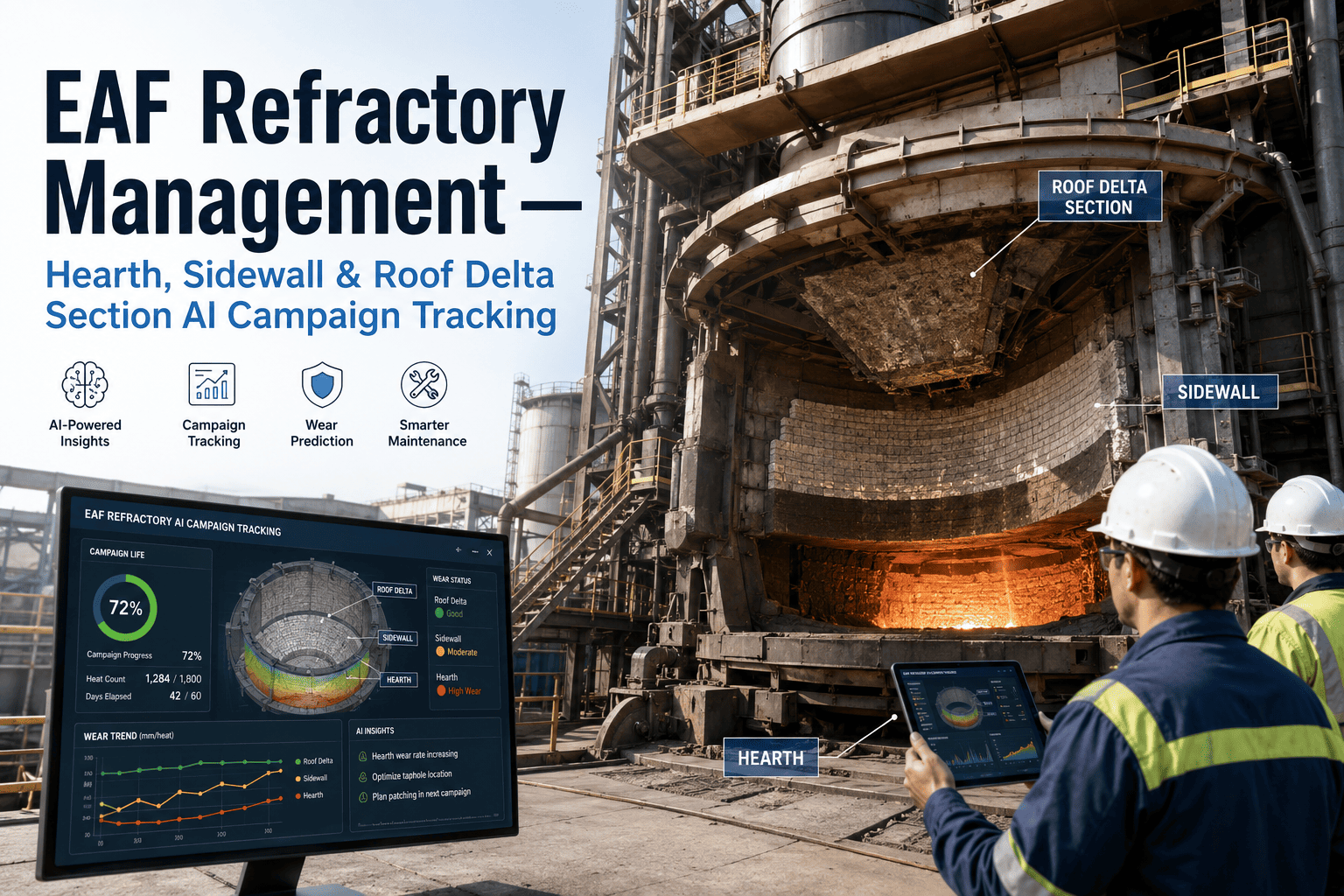
Electric Arc Furnace refractory management is a critical discipline that directly impacts campaign life, operational costs, and steel quality. In modern steelmaking, the EAF lining comprises three distinct zones: the hearth, the sidewall, and the roof delta. Each zone experiences unique thermal, mechanical, and chemical stresses. Without precise tracking and predictive intervention, refractory degradation can lead to unscheduled downtime, increased gunning consumption, and shortened campaign intervals. This article presents a comprehensive AI-driven approach to manage these three refractory sections, leveraging campaign tracking, optimized gunning schedules, hot repair timing, and intelligent patch material selection to maximize heats per campaign. For expert guidance on implementing these solutions, visit iFactory Support.
Maximize EAF Campaign Life with AI-Driven Refractory Management
Integrate real-time thermal imaging, wear modeling, and predictive analytics to extend hearth, sidewall, and roof delta life. Reduce gunning material consumption by up to 25% and increase heats per campaign by 15%.
Understanding EAF Refractory Zones
Hearth Refractory
The hearth is the bottom of the EAF, in constant contact with molten steel and slag. It experiences extreme thermal cycling, chemical erosion from slag, and mechanical impact from scrap charging. Typical refractory materials include magnesia-carbon bricks and ramming mixes. Wear mechanisms include dissolution, spalling, and erosion. AI monitoring uses thermal cameras and wear sensors to track thickness and detect anomalies. Predictive models forecast when the hearth requires patching or complete replacement, allowing maintenance to be scheduled during planned outages. Data shows that proactive hearth management can extend campaign life by 20% compared to reactive approaches.
Sidewall Refractory
The sidewall is exposed to intense radiation from the arc, slag splashing, and mechanical abrasion from scrap movement. It is typically lined with high-quality magnesia-carbon bricks or precast blocks. The sidewall is the most frequently gunned area because thermal stress causes rapid wear. AI-driven gunning optimization analyzes real-time temperature gradients and historical wear patterns to determine the optimal timing and quantity of gunning material. This reduces over-gunning and under-gunning, both of which waste material and compromise lining integrity. Studies indicate that intelligent gunning scheduling can reduce sidewall wear rate by 18%.
Roof Delta Refractory
The roof delta is the central section of the EAF roof around the electrode ports. It is subjected to extreme heat from the arc, chemical attack from fumes, and thermal shock during electrode movements. Refractory materials often include high-alumina castables or precast shapes. The delta is a critical area because a failure can cause electrode misalignment or roof collapse. AI campaign tracking monitors delta thickness using laser scanning and thermal imaging. Predictive models identify when hot repair is needed, such as shotcreting or patching, to extend delta life. Proper delta management can increase campaign life by 12% and reduce electrode consumption.
AI Campaign Tracking: A Step-by-Step Process
Data Acquisition
Install thermal cameras, wear sensors, and laser scanners on hearth, sidewall, and roof delta. Collect temperature, thickness, and surface condition data every heat. Data is transmitted to the AI platform in real time via IoT gateways.
Wear Modeling
The AI engine uses physics-based models and machine learning to calculate wear rates for each zone. Models are calibrated with historical campaign data and updated continuously. The output is a live wear map showing remaining lining thickness.
Predictive Intervention
When wear reaches predefined thresholds, the system generates alerts for gunning, hot repair, or patching. Recommendations include optimal material type, quantity, and application method. The system also suggests the best timing to minimize impact on production.
Campaign Optimization
By integrating intervention data with production schedules, the AI platform optimizes campaign length. It balances refractory life extension with planned maintenance windows. The result is maximum heats per campaign with minimal unplanned downtime.
Optimizing Gunning Schedules with AI
Gunning is a common practice to repair EAF refractory, especially sidewalls. However, traditional schedules are often based on fixed intervals or operator judgment, leading to inefficiencies. AI-driven gunning optimization uses real-time wear data to determine when and how much to gun. Key benefits include:
Reduced Material Waste
Over-gunning wastes expensive refractory material and increases slag volume. AI ensures that gunning is applied only where needed and in the correct quantity, reducing consumption by 25%.
Improved Lining Integrity
Under-gunning leaves weak spots that can lead to breakouts. AI monitors lining thickness and applies gunning before wear becomes critical, maintaining uniform lining thickness.
Extended Campaign Life
By optimizing gunning frequency and volume, the overall campaign life increases. Case studies show a 15% increase in total heats per campaign when using AI scheduling.
Hot Repair Timing: When to Act
Hot repairs, such as shotcreting or flame gunning, are performed while the furnace is still hot, minimizing downtime. However, performing repairs too early wastes material, while too late risks a breakout. AI campaign tracking determines the optimal timing for hot repairs based on:
- Wear Rate Acceleration: When the wear rate exceeds a threshold, immediate repair is recommended.
- Thermal Gradient Analysis: Rapid temperature changes indicate thermal shock damage that needs repair.
- Historical Patterns: The AI learns from past campaigns when repairs were most effective.
- Production Schedule: Repairs are timed during tap-to-tap intervals to avoid production loss.
Implementing AI-driven hot repair timing has been shown to reduce the number of repairs per campaign by 20% while maintaining lining integrity.
Patch Material Selection for Maximum Durability
Choosing the right patch material for each zone is critical. Factors include chemical compatibility, thermal conductivity, and application method. AI systems analyze wear patterns and recommend materials such as:
Magnesia-Carbon Bricks
Best for hearth and sidewall due to high slag resistance and thermal shock stability. AI recommends brick grade based on slag basicity and temperature profile.
High-Alumina Castables
Ideal for roof delta due to high refractoriness and abrasion resistance. AI selects castable composition based on electrode port geometry and thermal load.
Ramming Mixes
Used for quick patching of hearth and sidewall. AI determines optimal grain size and binder content for maximum adhesion and density.
By using AI to select patch materials, plants have reduced refractory consumption by 10% and increased patch longevity by 15%.
Ready to Transform Your EAF Refractory Management?
Implement AI-driven campaign tracking, optimize gunning schedules, and select the best patch materials with iFactory's advanced platform. Book a demo today to see how you can maximize heats per campaign and reduce costs.
Real-World Case Study: AI Implementation at Steel Mill X
Steel Mill X operates a 150-ton EAF with a typical campaign length of 800 heats. Before AI implementation, they experienced frequent sidewall breakouts and high gunning consumption. After deploying iFactory's AI platform, they achieved:
Campaign Heats
Increased from 800 to 920 heats per campaign, a 15% improvement.
Gunning Consumption
Reduced from 3.5 kg/ton to 2.6 kg/ton, saving $120,000 annually.
Unplanned Downtime
Decreased by 40%, resulting in 120 additional production hours per year.
Refractory Cost
Lowered by 12%, from $4.50/ton to $3.96/ton.
This case study demonstrates the tangible benefits of AI-driven refractory management. For a detailed analysis of your plant, contact iFactory support.
Frequently Asked Questions
How does AI track EAF refractory wear in real time?
AI systems use a combination of thermal cameras, laser scanners, and embedded wear sensors to continuously monitor the thickness and condition of the hearth, sidewall, and roof delta. The data is transmitted to a cloud-based platform where machine learning models analyze wear patterns, temperature gradients, and historical trends. The system generates a live wear map that shows remaining lining thickness in each zone. Alerts are triggered when wear reaches critical thresholds, allowing maintenance teams to plan interventions proactively. This real-time tracking eliminates the need for manual inspections and reduces the risk of unexpected breakouts. For more details, visit iFactory Support.
What is the optimal gunning schedule for EAF sidewalls?
The optimal gunning schedule is not fixed; it depends on the specific wear rate of the sidewall, which varies with scrap quality, power input, and slag chemistry. AI-driven systems analyze real-time wear data and historical patterns to recommend gunning intervals and quantities. Typically, gunning is performed when the sidewall thickness drops below a safety threshold, but the AI also considers upcoming production plans to schedule gunning during tap-to-tap intervals. Studies show that AI-optimized schedules reduce gunning consumption by 25% and extend sidewall life by 18%. For a tailored schedule for your EAF, book a demo with iFactory.
How do I select the best patch material for the roof delta?
Selecting the best patch material for the roof delta involves evaluating thermal load, chemical attack, and application method. AI systems recommend high-alumina castables with low cement content for areas with high thermal shock, or magnesia-chrome bricks for zones with severe slag attack. The AI considers the delta's temperature profile, electrode port geometry, and historical wear data to suggest the optimal material composition. Additionally, the system provides guidance on curing time and application technique to ensure maximum adhesion and durability. Proper material selection can extend delta life by 12% and reduce electrode consumption. For expert recommendations, contact iFactory support.
Can AI predict when a hot repair is needed?
Yes, AI can predict hot repair needs with high accuracy by analyzing wear rate acceleration, thermal gradient changes, and historical repair effectiveness. The system monitors each refractory zone continuously and identifies when the wear rate exceeds a predefined threshold, indicating that a hot repair is necessary. It also considers the production schedule to recommend the best timing for the repair, minimizing downtime. By using predictive models, plants can reduce the number of hot repairs per campaign by 20% while maintaining lining integrity. This proactive approach prevents costly breakouts and extends overall campaign life. For implementation details, visit iFactory Support.
What are the key metrics for EAF refractory campaign tracking?
Key metrics include remaining lining thickness (mm) for hearth, sidewall, and roof delta, wear rate (mm/heat), gunning consumption (kg/ton), number of hot repairs per campaign, and total heats per campaign. AI platforms track these metrics in real time and provide dashboards for maintenance managers. Advanced analytics also track refractory cost per ton of steel, unscheduled downtime due to refractory issues, and material usage efficiency. By monitoring these KPIs, plants can benchmark performance, identify improvement areas, and optimize their refractory management strategy. For a comprehensive tracking solution, book a demo with iFactory.
Take Control of Your EAF Refractory Campaigns
Stop relying on guesswork and manual inspections. iFactory's AI platform gives you real-time visibility into your refractory condition, predicts failures before they happen, and optimizes every intervention. Maximize your campaign life, reduce costs, and improve steel quality. Book a demo now or contact our support team for a personalized consultation.