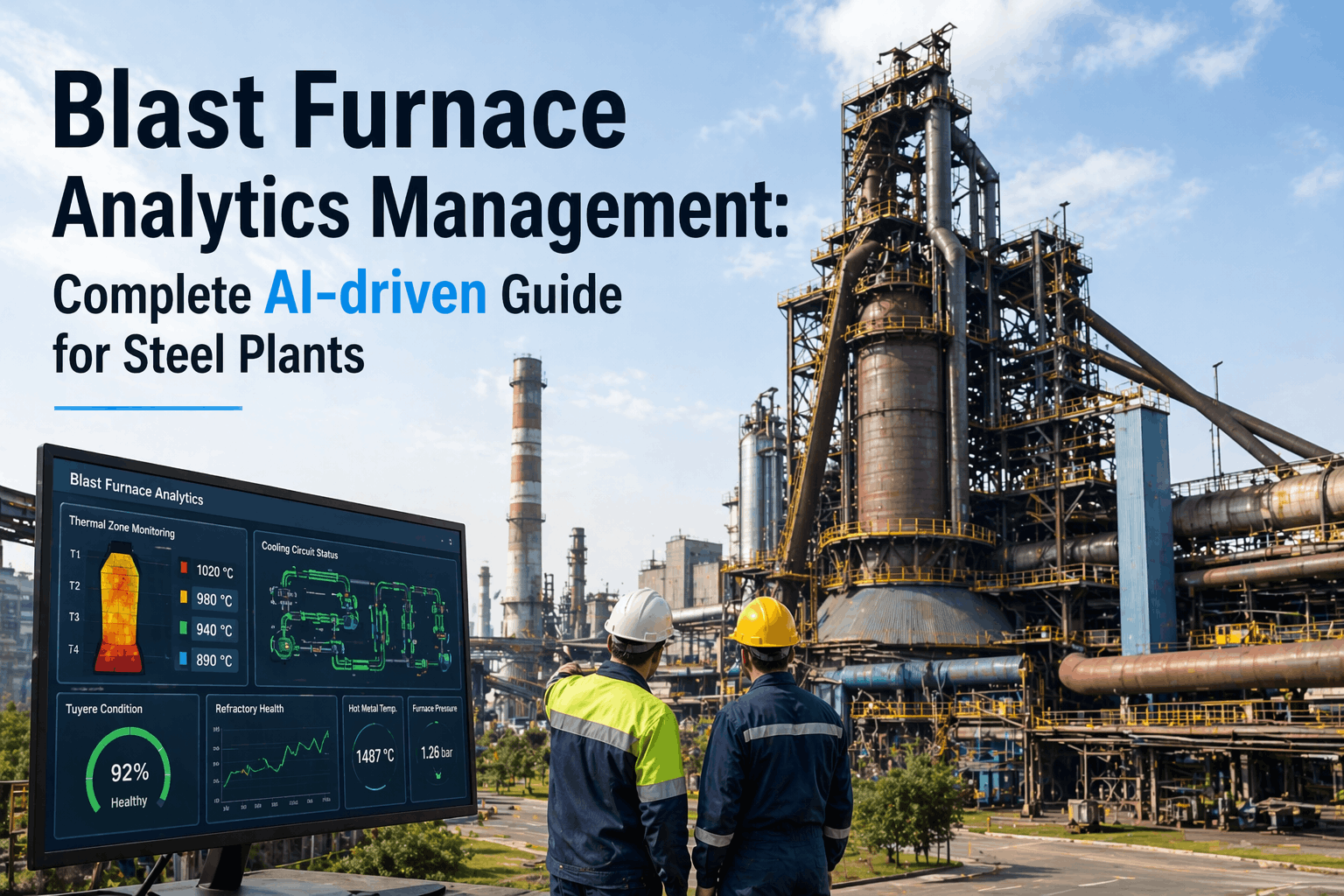
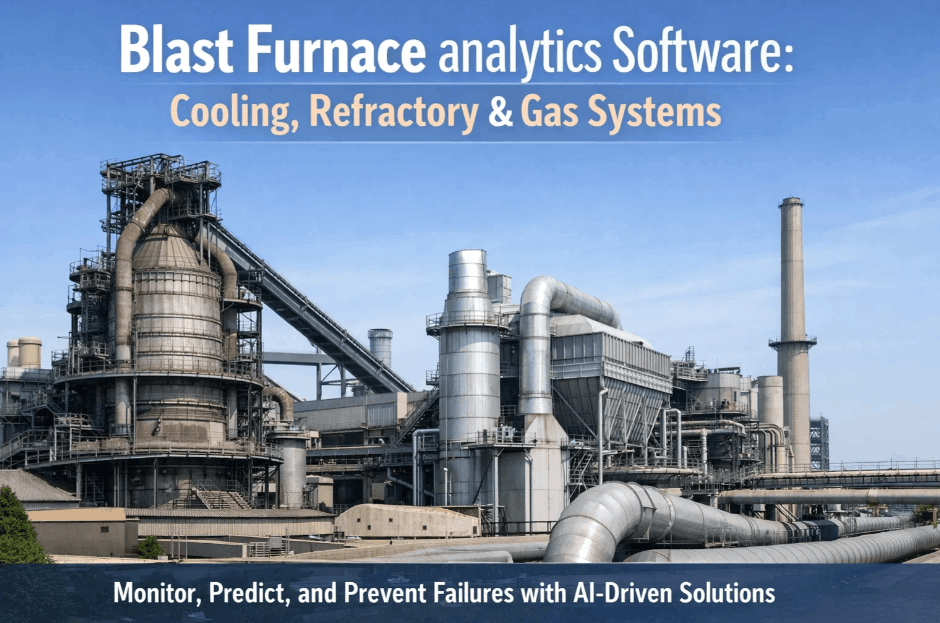
In the metallurgical heart of an integrated steel mill, the Blast Furnace is the ultimate high-stakes asset. The hearth—where molten iron and slag accumulate at temperatures exceeding 1,500°C—represents the most critical failure point in the entire production chain. A hearth breakout is not just an operational delay; it is a multi-million dollar catastrophic event. **Blast furnace hearth and tuyere analytics with AI-driven intelligence** provides the "Internal Eyes" necessary to manage these extreme conditions with scientific precision. By correlating thermocouple data, cooling water flows, and raceway stability, iFactory enables operators to predict refractory wear, detect tuyere leakages before they cause explosions, and optimize tapping schedules for maximum liquid level control. Organizations that schedule a hearth health audit with iFactory are securing the long-term structural integrity of their furnace while simultaneously pushing the boundaries of daily production volume.
Is Your Blast Furnace Hearth Generating Untapped Intelligence?
Unify refractory wear modeling, tuyere leakage detection, and liquid level tracking into one AI-driven platform built for the world's most extreme metallurgical environments.
Why AI-Driven Hearth Analytics is the Ultimate Risk-Mitigation Tool
The management of a Blast Furnace hearth has historically been an exercise in "Educated Guesswork," relying on infrequent manual measurements and the intuition of experienced operators. However, as furnaces are pushed for higher productivity, the safety margins for refractory wear and liquid level management become razor-thin. Modern **hearth and tuyere analytics** platforms bridge this gap by aggregating data from hundreds of thermocouples, flow meters, and pressure sensors into a single, unified intelligence layer. When ironmaking directors book a demo, the most common realization is that their furnace is already "Screaming" early warning signs of degradation that—once connected to iFactory—can prevent unplanned shutdowns and extend the campaign life of the furnace by a decade.
The shift from reactive to predictive hearth management begins with thermal visibility. iFactory's inverse heat transfer models calculate the "Deadman" state and remaining refractory thickness in real-time. This data layer transforms a plant manager's ability to intervene early, adjust cooling patterns, and maintain structural compliance with global ironmaking safety standards.
Refractory Wear Modeling
Deploy AI-driven thermal mapping across the hearth lining. Predict the "Remaining Useful Life" (RUL) of the refractory and identify "Elephant Foot" erosion patterns before they threaten structural integrity.
Tuyere Leakage Detection
Monitor cooling water inlet/outlet delta-flows with millisecond precision. Detect microscopic tuyere leaks before water enters the furnace, preventing steam explosions and furnace "chilling."
Liquid Level & Taphole Sync
Calculate the real-time accumulation of molten iron and slag. Optimize tapping intervals and taphole lengths to maintain the ideal "Sump Level" and prevent hearth pressure surges.
Raceway Stability Monitoring
Analyze tuyere pressure-drop and gas-flow distribution to map raceway brightness and stability. Ensure uniform gas distribution across the furnace circumference for optimal reduction.
Building a Unified Analytics Architecture for Ironmaking Reliability
A purpose-built hearth analytics platform must address four foundational requirements unique to the blast furnace: thermal boundary tracking, safety-critical leakage detection, liquid management, and long-range campaign forecasting. Ironmaking teams that have already booked a demo consistently report that connecting their fragmented SCADA data and thermocouple logs into a unified analytics layer is the single most impactful step in their modernization journey.
| Analytics Module | Primary Function | Blast Furnace Application | Reliability Benefit | Priority Level |
|---|---|---|---|---|
| Thermal Wear Model | Inverse heat-transfer calc | Hearth & Bottom refractories | Prevents hearth breakouts | Critical |
| Tuyere Leakage AI | Delta-flow water sync | Tuyeres & Cooling staves | Prevents steam explosions | Critical |
| Liquid Level Tracking | Accumulation modeling | Iron & Slag pool (Hearth) | Optimizes tapping efficiency | High |
| Taphole Intelligence | Condition & Length tracking | Taphole refractory & clay | Guarantees taphole stability | High |
| Raceway Mapping | Vibration & Pressure sync | Tuyere raceway zones | Uniform gas distribution | Standard |
How AI-Driven Analytics Support Global Ironmaking Safety Compliance
Compliance with international ironmaking safety standards is a non-negotiable requirement for any modern steel plant. Yet most agencies still manage their furnace health through periodic manual checks and disconnected spreadsheets. This approach creates dangerous documentation gaps that can lead to catastrophic failures and significant regulatory liability. Modern **blast furnace analytics** platforms address this directly by digitizing every safety touchpoint—from tuyere leakage monitoring to hearth cooling trends—into a single, audit-ready system of record. Ironmaking directors who book a demo early in their campaign planning cycle consistently achieve stronger safety outcomes and faster insurance approvals.
Hearth Instrumentation & Sensory Foundation
Deploy high-density thermocouple arrays across the hearth and bottom. Integrate ultrasonic flow meters for tuyere cooling water and pressure sensors for the hot blast system. This creates the "Nervous System" of the furnace.
Edge-to-Platform Connectivity
Stream all SCADA and sensory data to the iFactory Industrial Edge. Establish real-time dashboards for hearth thermal gradients, cooling stave heat loads, and tuyere water balance.
Inverse Heat-Transfer Modeling Activation
Connect the thermal data to iFactory's physics-based models. Generate real-time 3D visualizations of the 1,150°C isotherm—mapping the exact profile of the remaining refractory lining.
Predictive Leakage & Wear Modeling
Enable AI-driven leakage forecasts that automatically alert operators when tuyere water flows indicate a breach. Prioritize maintenance interventions by structural significance, ensuring that critical zones receive immediate attention.
Long-Range Campaign Capital Planning
Leverage historical wear data to generate 10-, 20-, and 30-year campaign forecasts. Build defensible budget justifications for major relines and furnace upgrades based on actual structural data rather than chronological timers.
Top Operational Gaps in Blast Furnace Hearth Management
Most ironmaking departments pursuing improvements to their reliability programs encounter a predictable set of operational and documentation challenges. Understanding these gaps before a platform deployment dramatically improves implementation success. Reliability managers regularly book a demo to benchmark their current operational gaps against a proven iFactory AI architecture.
Micro-leaks in tuyeres often go undetected for days, allowing water to chill the furnace or, in worst-case scenarios, causing high-pressure steam explosions that threaten personnel safety.
Relying on "Old-School" periodic manual measurements leads to undocumented erosion zones (Elephant Foot), creating a breakout risk that is invisible until it is too late.
Without real-time liquid level tracking, tapping is often triggered too early or too late, causing hearth pressure spikes and reducing the efficiency of iron-slag separation.
High thermal loads on cooling staves cause premature fatigue and cracking. Without continuous monitoring, stave failures can force a furnace shutdown during peak production periods.
A lack of raceway mapping allows the furnace to operate with "One-Sided" gas flow, leading to increased fuel rates, poor iron quality, and accelerated lining wear on the active side.
Scheduling major relines based on "Time in Service" rather than "Actual Wear" results in either premature capital expenditure or dangerous operation beyond the refractory's safe limits.
"The Blast Furnace hearth used to be our biggest anxiety point. We were essentially flying blind between manual inspections. iFactory's predictive hearth module gave us the first real-time map of our 1,150°C isotherm. It allowed us to identify a hotspot in the bottom refractory six months before it reached a critical level, giving us the time to adjust our cooling pattern and extend our campaign by three years without a single hour of unplanned downtime. It's transformed how we manage our furnace life-cycle."
Integrating Modern Analytics into the Furnace Floor: The iFactory Approach
One of the most technically demanding aspects of **blast furnace reliability** is the responsible integration of high-frequency sensors into the extreme environments of the furnace floor. Tuyere monitors, hearth thermocouples, and flow meters must all be designed to survive intense heat, dust, and vibration. iFactory's platform supports this by maintaining a "Digital Lineage" of every sensor and intervention—creating a complete record that satisfies international safety standards and supports future campaign planning.
Key Hearth & Tuyere Analytics Capabilities for Modern Steel Plants
Maintain continuous 3D digital condition records for hearth refractories, with automated erosion-pattern alerts linked to thermocouple arrays.
Detect micro-leaks using real-time inlet/outlet flow synchronization—preventing water-furnace contact and ensuring 100% personnel safety.
Track molten iron and slag pool levels in real-time, optimizing taphole intervals to ensure maximum production stability and zero pressure surges.
Monitor thermal fatigue across all cooling staves, correlating heat-load with furnace productivity to optimize cooling-water setpoints.
Protect Your Furnace Hearth and Campaign Life Today
Deploy a unified analytics platform that integrates refractory monitoring, tuyere leakage detection, and liquid management — built specifically for the blast furnace environment.
Blast Furnace Hearth & Tuyere Analytics — Common Questions Answered
How does iFactory predict refractory wear without an internal shutdown?
We use a "Physics-Informed Neural Network" (PINN) that performs inverse heat transfer calculations. By analyzing the data from hundreds of thermocouples embedded in the lining, the AI solves the heat conduction equation to find the 1,150°C isotherm—the point where iron solidifies. This gives you a real-time map of the remaining refractory thickness while the furnace is running.
What is "Tuyere Water Balance" and why is it safety-critical?
Tuyere Water Balance is the continuous comparison of water entering and leaving each tuyere. Even a 0.5% difference can indicate a micro-leak. If water enters the furnace, it instantly flashes to steam, causing high-pressure surges or "Chilling" the hearth. iFactory's AI detects these flow imbalances in milliseconds, automatically alerting operators to take immediate action.
How does the platform help optimize "Tapping Schedules"?
iFactory models the production rate of iron and slag based on raw material charging and chemical reduction. It tracks the accumulation in the hearth and predicts when the liquid level will reach the taphole. This allows for perfectly timed tapping, ensuring the taphole is always stable and the hearth is never over-pressurized.
Can the platform detect "Elephant Foot" erosion patterns?
Yes. Elephant Foot erosion is a specific pattern near the hearth bottom-wall junction. By analyzing the thermal profile across the lower hearth thermocouples, iFactory's wear model can identify the specific 3D signature of this erosion, allowing you to adjust your cooling intensity or raw material mix to slow the wear.
Does iFactory integrate with our existing Level 1 SCADA systems?
Yes. The platform uses vendor-neutral API architecture to connect with your existing SCADA, L2 automation, and historian systems. We ingest the data in real-time, process it through our ironmaking models, and send the results back to your operator dashboards and mobile maintenance apps.
How does hearth analytics impact the "Campaign Life" of a furnace?
A furnace campaign ends when the hearth refractory is too thin to operate safely. By providing real-time wear mapping, iFactory allows you to manage "Hot Spots" through localized cooling or raw material adjustments (like adding titania). This "Managed Wear" approach can extend a furnace's campaign by 5 to 10 years, saving billions in premature relining costs.
What is the "Deadman State" and how do you monitor it?
The "Deadman" is the column of un-reduced coke in the center of the hearth. If it becomes "Cold" or "Solid," it blocks iron and slag flow. iFactory monitors the temperature gradients across the hearth bottom to infer the thermal state of the Deadman, alerting you to adjust the blast parameters to maintain a "Floating" and permeable state.
How long does it take to see a return on investment (ROI)?
Most ironmaking departments achieve a measurable ROI within **6 months** through the elimination of unplanned furnace stoppages and the reduction in "Tuyere-Replacement" labor. The long-term ROI from campaign extension is measured in the hundreds of millions. Book a demo to see a detailed ironmaking ROI model.