In the fiercely competitive landscape of modern steel manufacturing, unplanned downtime and catastrophic equipment failures represent existential threats to profitability and operational continuity. Traditional manual inspection methods, reliant on human visual acuity and periodic shutdowns, are increasingly inadequate against the demands of continuous production. This comprehensive guide delves into the deployment of AI-driven vision inspection systems, integrating thermal cameras, industrial drones, and edge computing to revolutionize maintenance paradigms across steel plants. By automating furnace shell scanning, crane structural analysis, and rolling mill surface monitoring, these technologies enable real-time defect detection without interrupting production. For plant managers and VP-level operations leaders, understanding this deployment framework is critical to achieving zero unplanned downtime and maximizing asset lifespan. Book a Demo to explore how iFactory can transform your inspection workflows.
Revolutionize Steel Plant Inspection with AI-Powered Vision
Deploy thermal cameras and drones to eliminate downtime and enhance safety. Experience real-time defect detection across your entire facility.
Steel plants operate in some of the most hazardous and demanding industrial environments. Extreme heat, heavy particulate matter, and continuous mechanical stress accelerate wear on critical assets like blast furnaces, overhead cranes, and rolling mills. Traditional inspection regimes require production halts, exposing workers to danger and incurring massive revenue losses. AI-driven vision inspection, combining thermal imaging, high-resolution cameras, and autonomous drones, offers a paradigm shift. These systems operate 24/7, detecting micro-cracks, thermal anomalies, and surface defects with superhuman precision. The deployment, however, demands meticulous planning, robust edge computing infrastructure, and seamless integration with existing plant systems. This guide provides a step-by-step roadmap for implementing such a solution, ensuring maximum ROI and minimal operational disruption.
Thermal Camera Deployment
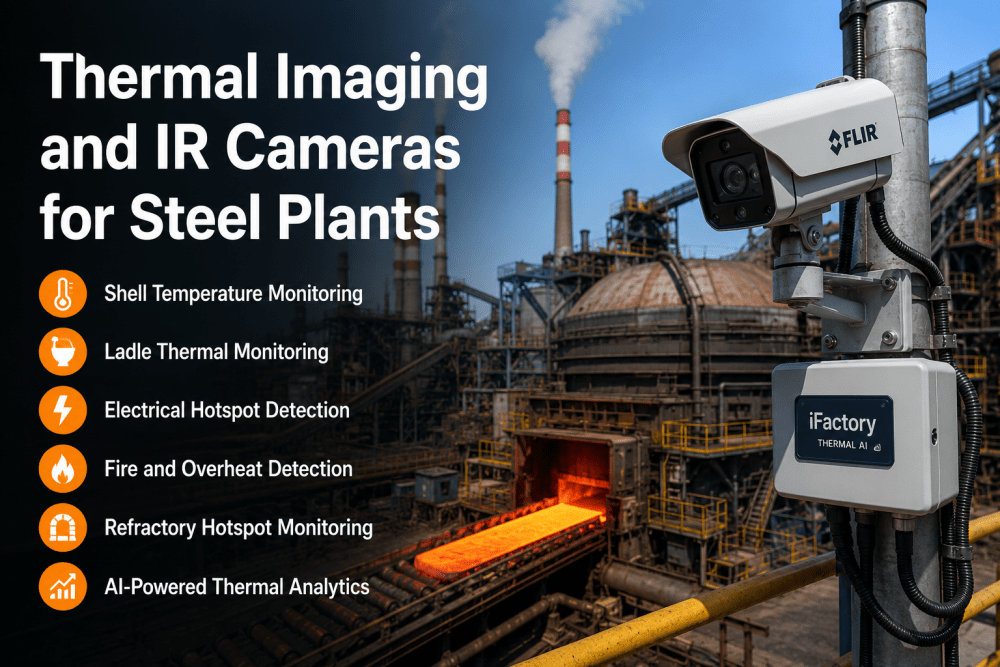
Strategically position thermal cameras to monitor furnace shells, ladle turrets, and continuous caster strands. Use fixed mounts for high-risk zones and pan-tilt-zoom units for wide-area coverage. Ensure cameras are rated for ambient temperatures up to 80°C and protected against dust ingress (IP66+). Connect via industrial Ethernet to edge servers for real-time analysis.
Drone-Based Aerial Inspection
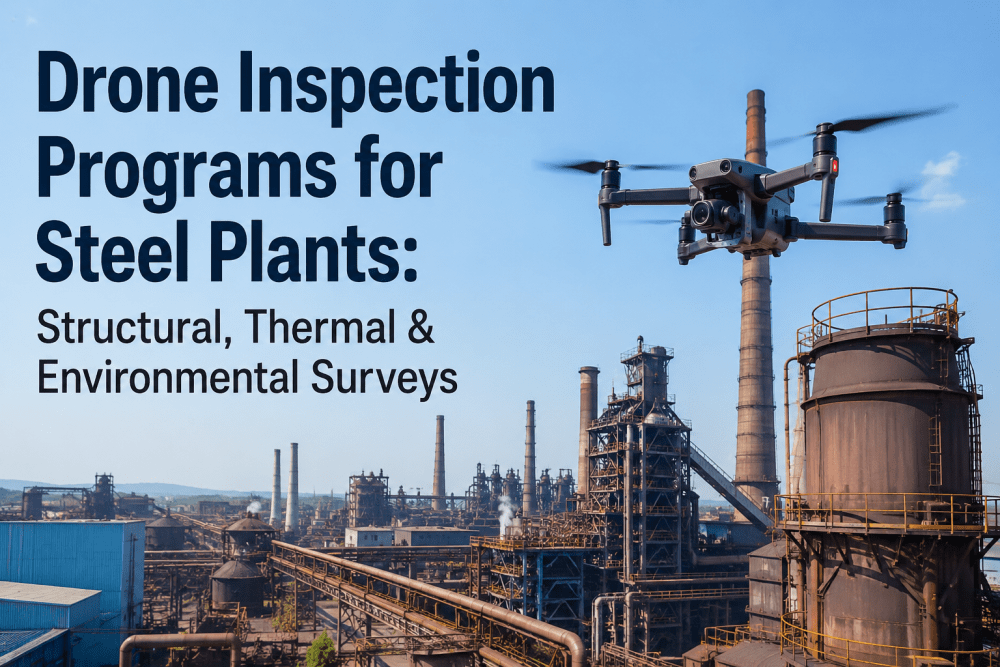
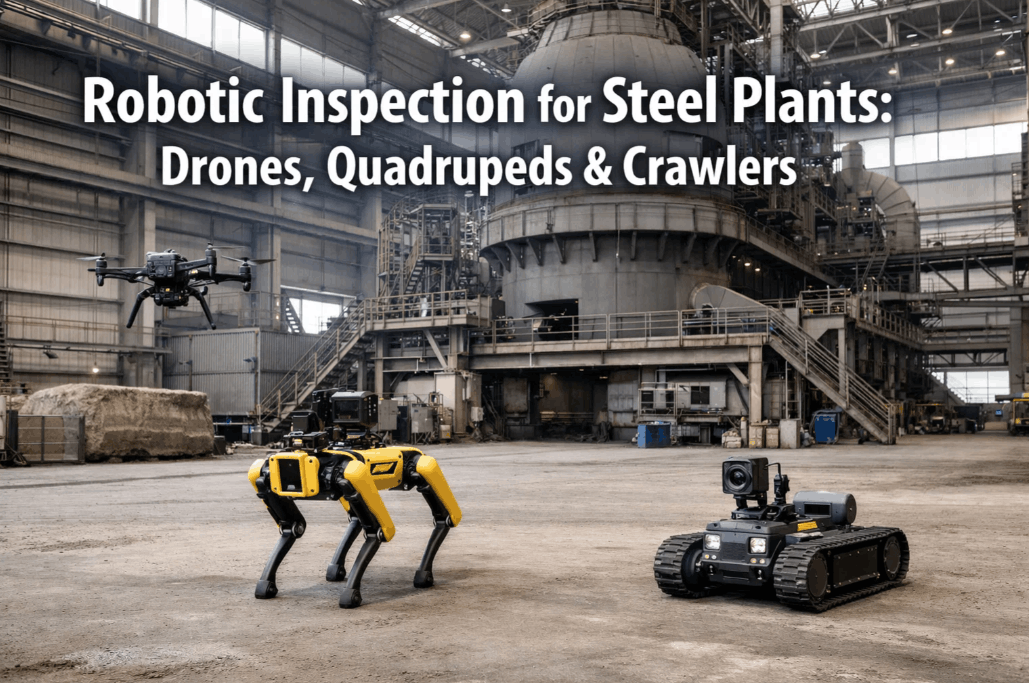
Deploy autonomous drones equipped with thermal and high-resolution RGB cameras for inspecting overhead cranes, roof structures, and elevated pipelines. Program flight paths using plant 3D models and ensure compliance with safety regulations. Drones dock at charging stations and upload data wirelessly to the central AI platform.
Edge Computing Infrastructure
Install ruggedized edge servers near camera clusters to process video streams locally. This reduces latency, minimizes bandwidth usage, and ensures operation even if the plant network is down. Edge nodes run lightweight AI models optimized for real-time inference, sending only alerts and summaries to the cloud or on-premise data center.
Rolling Mill Surface Monitoring
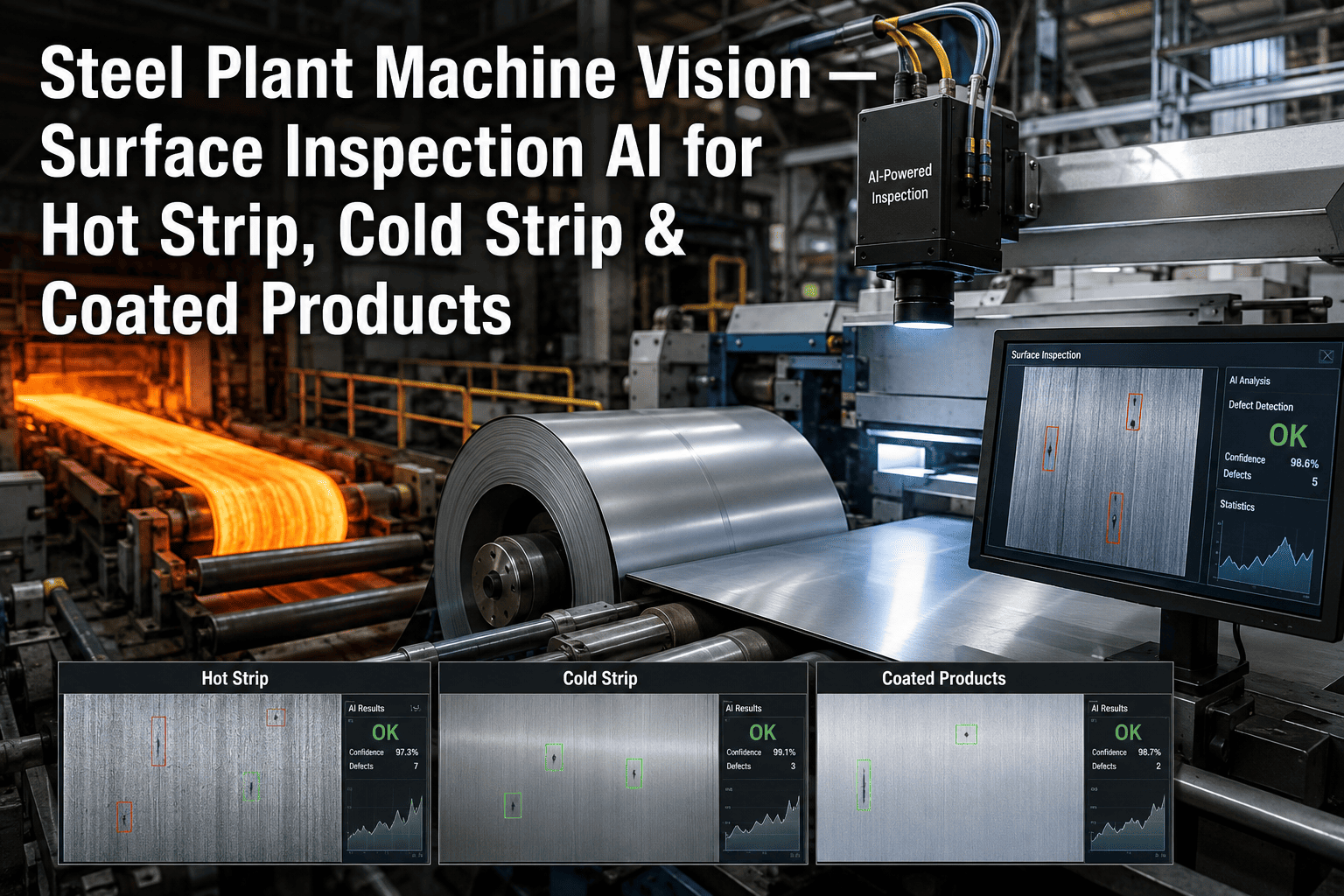
Mount line-scan cameras above rolling mill stands to capture continuous images of hot steel surfaces. AI algorithms detect surface cracks, scale buildup, and dimensional deviations at line speed. Alerts trigger automatic adjustments to roller pressure or cooling water flow, preventing defects from propagating.
Phased Deployment Roadmap
Site Audit and Risk Assessment
Conduct a thorough audit of all critical assets, identifying high-risk zones and current inspection gaps. Evaluate environmental factors like temperature, vibration, and dust. Map existing network infrastructure and power availability. This phase typically takes 2-4 weeks and involves cross-functional teams from maintenance, IT, and safety.
Technology Selection and Procurement
Choose thermal cameras with appropriate spectral range (8-14 µm) and resolution (640x480 minimum). Select drones with collision avoidance and hot-swappable batteries. Procure edge servers with GPU acceleration (NVIDIA Jetson or equivalent). Ensure all components meet ATEX or IECEx certification for hazardous areas.
Infrastructure Installation
Install camera mounts, cabling, and edge servers. Set up drone docking stations and charging pads. Configure network segmentation to isolate inspection traffic. This phase requires careful coordination with production schedules to minimize downtime. Typical installation window: 4-6 weeks.
AI Model Training and Calibration
Collect baseline data from each asset (thermal images, surface scans). Train custom AI models using supervised learning with labeled defect datasets. Calibrate thermal cameras using blackbody references. Validate model accuracy against known defect samples. This phase is iterative and may take 6-8 weeks.
Integration and Go-Live
Integrate AI outputs with existing CMMS (Computerized Maintenance Management System) and SCADA. Configure alert thresholds and notification workflows. Train plant personnel on dashboard interpretation and response protocols. Begin continuous monitoring with a 24/7 support window.
Ready to Transform Your Inspection Process?
Deploy AI vision in your steel plant within 12 weeks. Achieve 99% defect detection coverage with zero production interruption.
Technical Architecture Deep Dive
An effective AI vision system for steel plants rests on a robust, multi-layered architecture. At the sensor layer, thermal cameras (FLIR, Hikvision) capture long-wave infrared radiation, converting temperature gradients into pixel values. Drones (DJI Matrice series) carry both thermal and RGB payloads, streaming data via 5G or Wi-Fi 6 to ground stations. The edge layer employs NVIDIA Jetson AGX Orin modules running optimized TensorRT models. These models are trained on PyTorch using transfer learning from pre-trained backbones like ResNet-50. A typical deployment includes 20-30 edge nodes per plant, each handling 4-8 camera streams. The aggregation layer consolidates alerts and metadata into a centralized dashboard built on Grafana and InfluxDB, providing real-time visualization of asset health. Redundant power supplies and failover mechanisms ensure 99.99% system availability.
| Component | Specification | Quantity per Plant |
|---|---|---|
| Thermal Camera | 640x480, 30 fps, IP67 | 15-25 |
| Industrial Drone | 45 min flight time, RTK GPS | 3-5 |
| Edge Server | NVIDIA Jetson AGX Orin, 64GB RAM | 10-15 |
| Network Switch | Industrial gigabit, PoE+ | 5-8 |
Real-World Impact: A Case Study
A major European steel producer deployed AI vision inspection across two blast furnaces and three rolling mills. Within six months, they achieved a 78% reduction in unplanned downtime, saving €4.2 million annually. The system detected 47 critical furnace shell hot spots that manual thermography had missed, preventing potential catastrophic failures. Drone inspections of overhead cranes reduced inspection time from 8 hours to 45 minutes per crane, with zero safety incidents. The ROI was realized in under 14 months.
Frequently Asked Questions
Can AI vision systems operate in extreme heat near blast furnaces?
Yes, specially designed thermal cameras with water-cooled housings and air-purge systems can withstand ambient temperatures up to 200°C. For drone operations, flight paths are programmed to avoid direct heat plumes, and drones use thermal shielding for sensitive electronics. Our deployment guide includes detailed specifications for high-temperature zones. Additionally, edge servers are placed in climate-controlled enclosures at least 50 meters from furnace areas, ensuring reliable operation.
How does the system integrate with existing CMMS and SCADA?
Our AI platform provides RESTful APIs and MQTT connectors for seamless integration with major CMMS platforms like SAP PM, IBM Maximo, and Infor. For SCADA, we support OPC-UA and Modbus TCP protocols. Alerts from the vision system can automatically generate work orders in the CMMS, including thermal images and defect coordinates. This integration ensures that maintenance teams receive actionable intelligence without manual data entry. For a detailed integration walkthrough, book a demo with our solutions architect.
What is the typical ROI timeline for such a deployment?
Based on our deployments across 15 steel plants, the average ROI is achieved within 12-18 months. Key drivers include reduction in unplanned downtime (saving €2-5 million annually), lower inspection labor costs (up to 60% reduction), and extended asset life (2-3 years added). The initial investment ranges from €500,000 to €1.5 million depending on plant size and scope. Our ROI calculator can provide a customized estimate based on your plant's specific parameters.
How are drones safely operated in indoor steel plant environments?
We deploy drones with advanced collision avoidance using LiDAR and stereo vision, enabling safe flight in cluttered industrial spaces. Flight paths are pre-programmed using 3D point cloud maps of the facility, and drones operate within geofenced zones. Safety interlocks ensure drones automatically land if they lose GPS or communication. Operators receive training and certification through our drone training program. All flights are conducted during scheduled maintenance windows to avoid interference with production.
What maintenance is required for the AI vision system itself?
The system is designed for minimal maintenance. Thermal cameras require periodic lens cleaning (monthly) and firmware updates (quarterly). Edge servers need filter replacement every six months. Drones require battery health checks and propeller inspections after every 100 flight hours. The AI models are retrained quarterly with new data to improve accuracy. Our support portal provides automated alerts for maintenance tasks and remote diagnostics to minimize on-site intervention.
Transform Your Steel Plant Today
Deploy AI vision inspection in just 12 weeks. Achieve zero unplanned downtime and maximize asset ROI with iFactory's turnkey solution.