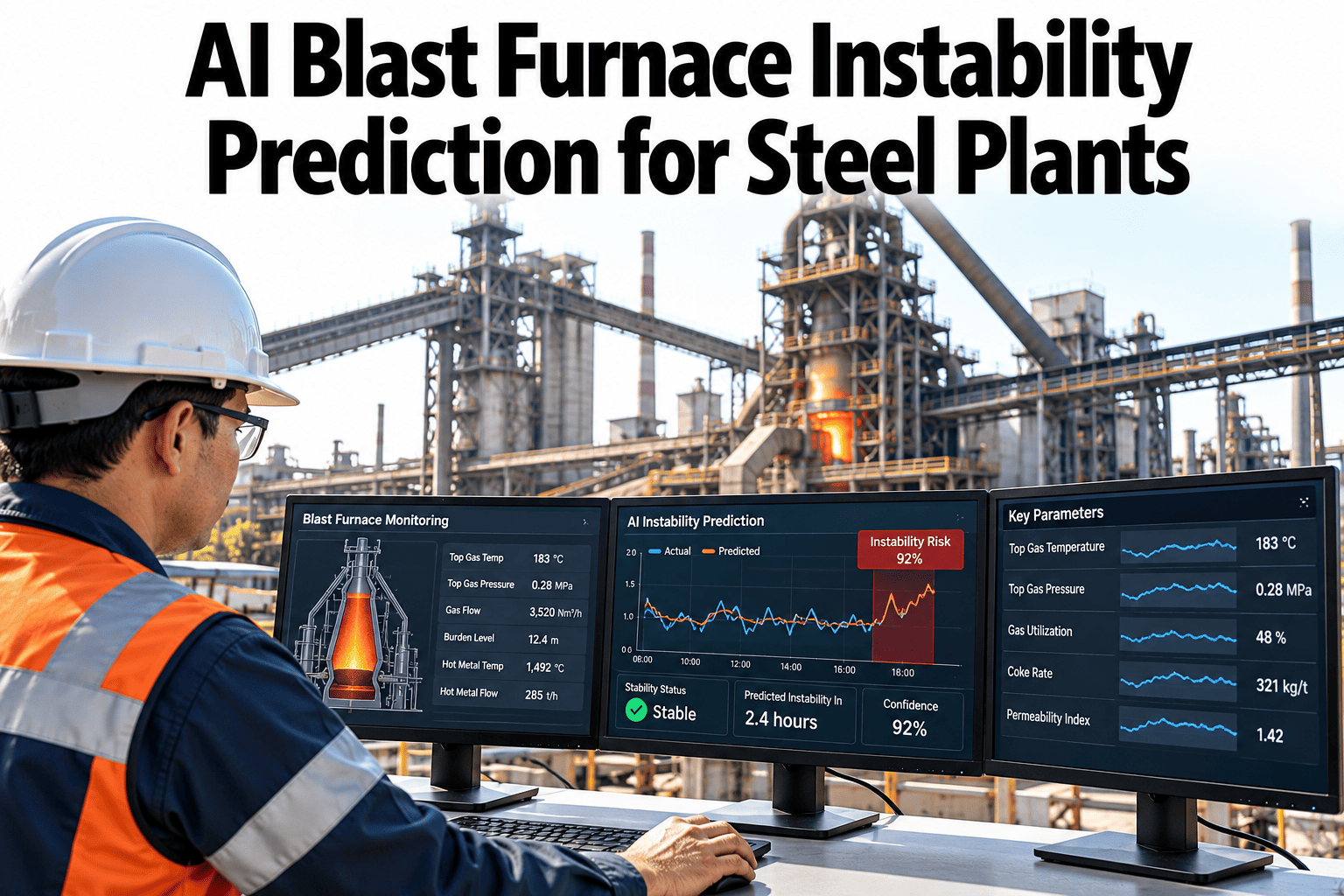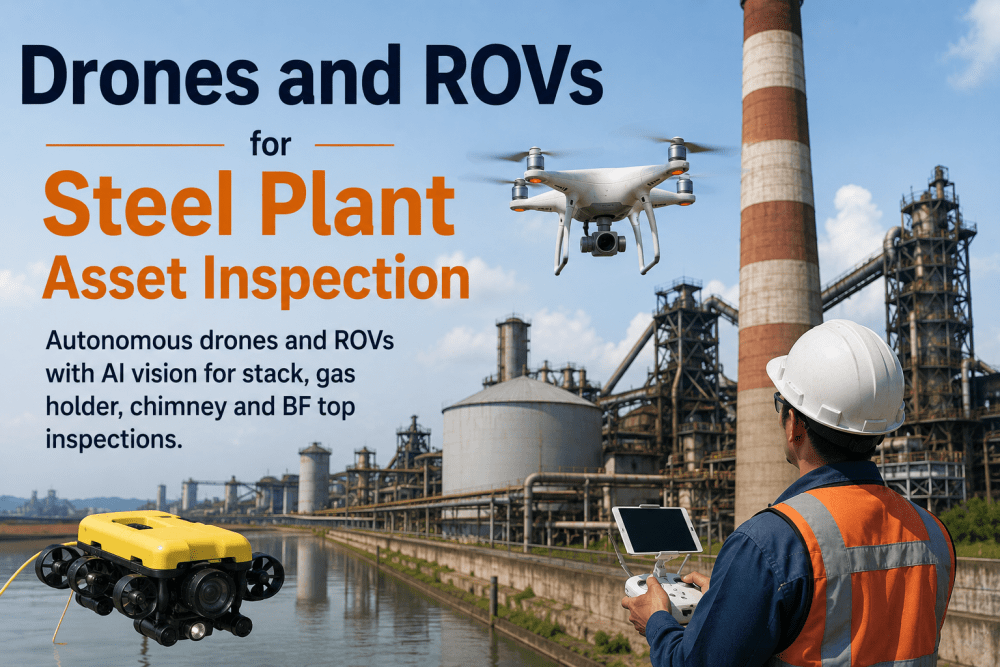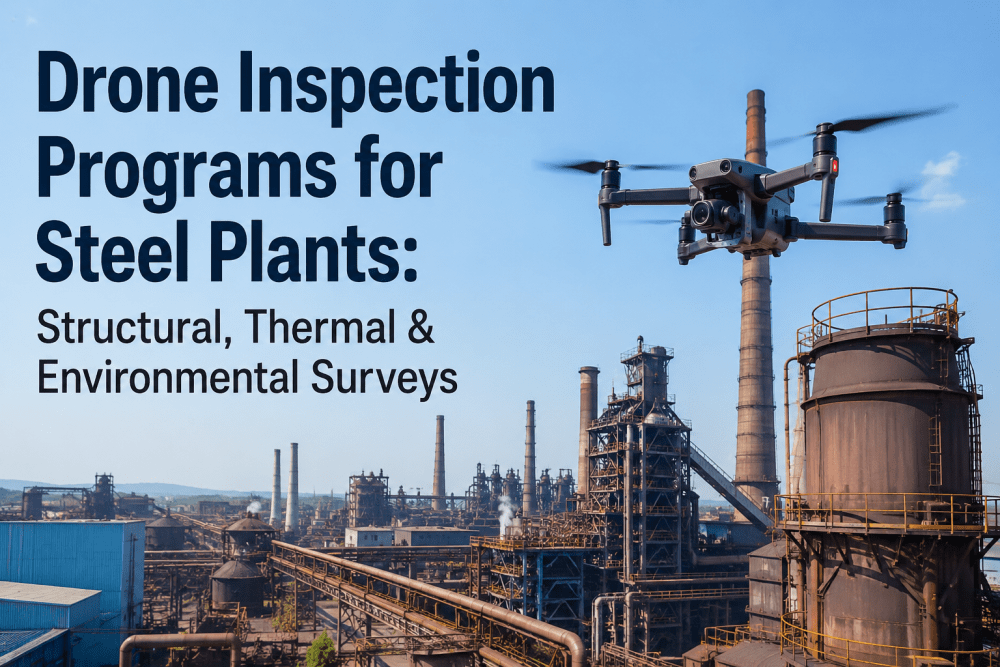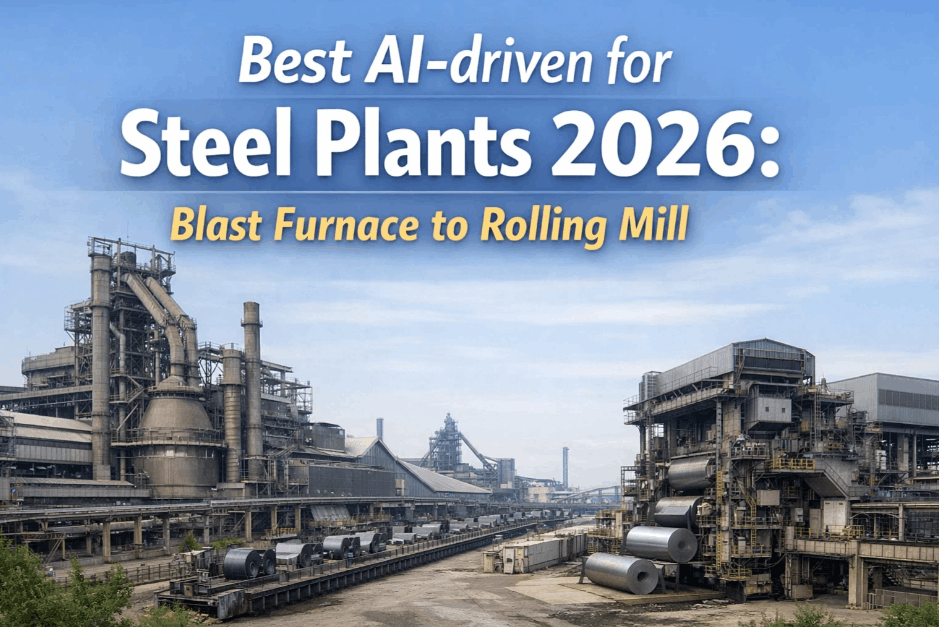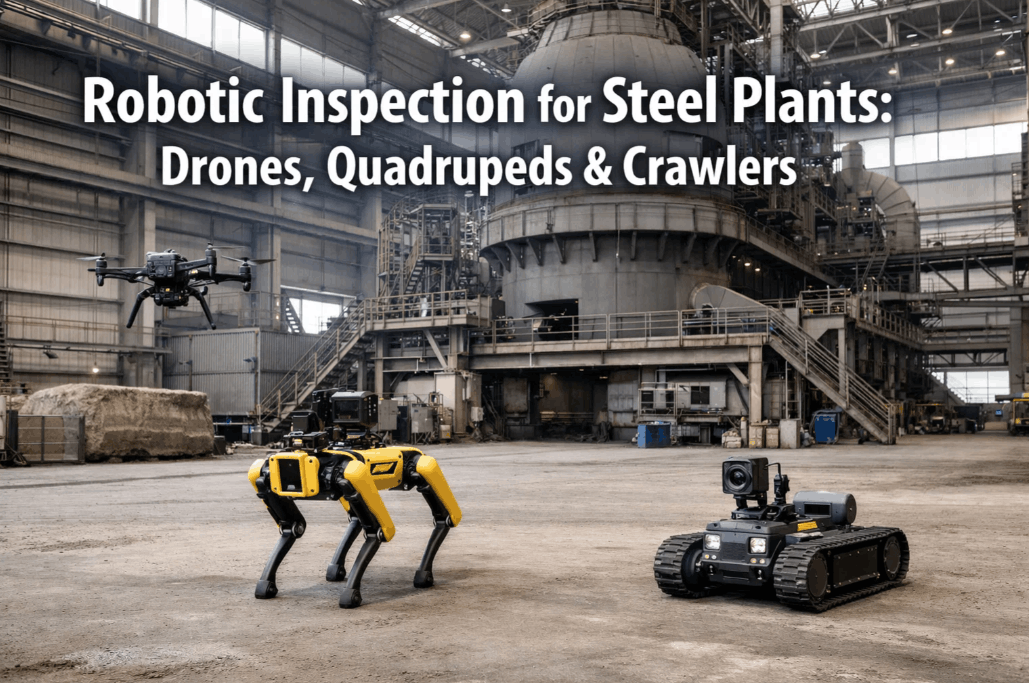
As the steel industry transitions from manual maintenance cycles to autonomous oversight, robotic inspection for steel plants is becoming the new baseline for operational availability. Traditional inspection routes are no longer sufficient when high-stakes assets like blast furnaces, casters, and rolling mills reach their thermal limits. In 2026, the strategy is about removing humans from "Red Zones" while capturing high-fidelity NDT data that was previously inaccessible. This guide outlines the tactical framework for deploying robotic inspection AI-driven fleets to protect primary metal assets before catastrophic failure. Initiate a Fleet Feasibility Audit →
Autonomous Steel Inspection: Drones, Quadrupeds & High-Temp Crawlers
Deploying a unified robotic mesh for real-time refractory mapping, structural health monitoring, and acoustic leak detection across high-heat mill environments.
Mill Failure Modes Eliminated by Robotic Intelligence
Legacy manual inspections are governed by human thermal limits. iFactory's robot analytics steel fleets resolve critical failure modes in real-time. Schedule a Tactical Consult →
Hearth & Ladle Burn-through
Refractory thinning is invisible from the outside. Magnetic crawlers use UT sensors to map hot-spots at 250°C, preventing liquid metal spills before they occur.
High-Bay Structural Fatigue
Autonomous drones conduct surveys of crane rails and bay roofs with millimeter-level crack detection, eliminating $100K+ scaffolding overheads entirely.
Toxic Gas Migration
Quadruped patrols carry multi-gas telemetry nodes in coke battery zones, identifying CO/H2S leaks with sub-meter precision while humans stay safe outside.
Confined Space Blockages
Miniature tracked bots navigate internal pipe headers and cooling ducts, using 4K visual feeds to verify flow integrity with zero human "Permit-Required" entry. Book Demo →
Why Manual "Route Inspections" Are a Reliability Liability
The "Cooldown Wall": 72hr → 12hr
Specialized steel plant crawler systems enter furnaces at 250°C, recovering nearly 60 hours of lost production time per shutdown campaign cycle.
Zero-Scaffolding Overhead
45% of inspection budgets are spent on scaffolding and standby teams. Steel plant drone fleets eliminate these costs by flying directly to the asset.
Subjective Data → Verified NDT
Manual routes rely on technician "feel." iFactory bots deliver repeatable robot analytics steel data loops, tracking every hairline crack over months.
The "Lagging Indicator" Trap
Human routes happen every 30-90 days. A catastrophic failure can develop in 72 hours. Steel automated inspection provides the continuous oversight that catches fast-failure modes. Talk to Our Engineers
Command Your Fleet with iFactory Robotic Intelligence
From blast furnace drone surveys to quadruped robot steel patrols, our platform integrates telemetry directly into your CMMS. Establish Your Fleet Profile →
Fleet Configuration: 2026 Robotic Standards
Modern steel plants deploy a multi-modal robotic mesh across four distinct tactical tiers, synchronized by iFactory's central intelligence layer.
Aerial Structural Sentry (Drones)
High-elevation LiDAR surveys of chimneys and bay roofs map deformation with 2mm precision. Eliminates $100K+ scaffold setups. Book Air Demo →
Ground Intelligence (Quadruped)
Navigates multi-level melt shops for 24/7 visual HMI checks and acoustic vibration sweeps. The "Digital Ranger" replaces routine human rounds permanently.
High-Temp Crawler NDT
Magnetic crawlers built for 250°C contact perform Ultrasonic Thickness (UT) tests while blast furnaces are live, mapping refractory thickness in 3D.
Sub-Surface Infiltration
Miniature tracked bots for internal duct inspections. Eliminates Confined Space Entry permits and ventilation logistics entirely. Talk to Safety Lead →
Tactical Comparison: Mission Efficiency
Contrasting legacy human shutdown cycles versus the iFactory autonomous "Mission Profile" model for a single blast furnace campaign.
Threat Level: HIGH
- Shutdown dictated by human thermal limits
- Handwritten NDT records (audit risk)
- $80K+ scaffolding mobilization cost
Status: OPTIMIZED
- 250°C crawler entry saves 60+ hours
- Zero human-to-hazard Red Zone entry
- 3D millimeter-precision thickness map
Regulatory Standards Driving Robotic Adoption
2026 mandates prioritize "Robotic First" entry for hazardous industrial environments, aligned with ISO and SIL-2 safety frameworks.
| Standard | Requirement | iFactory Robotic Relevance |
|---|---|---|
| ISO 10218-1 | Industrial Robot Safety | Full compliance for autonomous human-robot collaborative Red Zones. |
| IEC 61508 / SIL-2 | Functional Safety Logic | Verified logic safety for autonomous robotic inspection AI-driven missions. |
| OSHA 1910.146 | Confined Space Entry | Eliminates 100% of CSE permits via Vulcan-S and Pulse-B crawler modules. |
| IECEx / ATEX | Explosive Atmosphere | Intrinsically safe steel plant robot platforms for coke and gas recovery zones. |
| ASTM E543 | NDT Agency Standards | Standardizes robotic inspection AI-driven data for legal structural liability. |
Financial Impact Matrix
Calculated ROI for global steel mill robotic deployments. Schedule an ROI Analysis →
Ready to Deploy Autonomous Robotic Oversight?
Speak with an iFactory robotics specialist about deploying a high-density inspection mesh across your mill assets. Protect your technicians, maximize uptime, and own your reliability data.
Robotic Steel Plant Inspection: Frequently Asked Questions
Q: How do robots survive extreme magnetic fields near an EAF?
Our platforms use EM-Hardening — shielded electronics and non-ferrous housings. Comms use high-frequency hopping to maintain signal lock during heavy discharge cycles. Talk to Robotics Lead →
Q: Will robotic feeds work in the high-dust environment of a coke battery?
Yes. We use "Active-Illumination" multi-spectral sensors (Infrared + RGB) that see through dust better than the human eye. Drones also use LiDAR for navigation, which is unaffected by visible dust concentrations. Initiate Mission Demo →
Q: What is the operator learning curve for managing these robots?
iFactory is designed for "Operator-Lite" usage. Robots self-navigate defined inspection missions autonomously. Staff only oversee the robot analytics steel dashboard and respond to Anomaly Flags — no piloting expertise required.
Q: Can iFactory robotics prevent a caster breakout before it happens?
Our steel automated inspection provides earliest-possible indicators by mapping refractory thinning in 3D. We identify specific "Laminar Erosion" patterns that precede a breakout by days, allowing for a controlled safety stop.