The steel industry's transition from periodic human inspection to continuous AI-powered monitoring has been driven by a new generation of smart sensors — devices that don't just measure, but interpret. Blast furnace stockline radar systems track burden descent in real time. AI vision cameras mounted at tuyere level detect refractory wear and tuyere blockage without human entry. Thermal cameras on conveyor belts identify hotspots and belt damage before failure. Computer vision systems running YOLOv8 and custom CNN models detect surface defects on rolling strip at 20 metres per second. iFactory's Smart Sensor Module connects every advanced sensor type into a unified analytics platform — integrating with PLC, SCADA, and SAP PM to convert sensor intelligence into maintenance decisions and quality actions automatically.
Smart Sensors for Steel Plant Monitoring: Radar, Thermal Camera & AI Vision Systems
BF stockline radar, tuyere cameras, AI vision for conveyors, thermal monitoring & YOLOv8 surface inspection — all integrated in iFactory's Smart Sensor platform.
Five Advanced Sensor Systems — What Each Detects and Where It Deploys
Each smart sensor technology solves a specific measurement challenge that conventional sensors cannot address — extreme temperatures, high-speed motion, opacity to light, or the need for simultaneous multi-point thermal mapping. Schedule a smart sensor assessment to identify which systems suit your specific plant zones.
BF Stockline Radar
- Measures burden surface profile every 60 seconds
- Detects channelling, hanging, and uneven distribution
- ±2mm accuracy through dust and gas atmosphere
- Feeds BF digital twin for coke rate optimisation
Tuyere & Cast House Camera
- Monitors all 28–42 tuyeres simultaneously
- Detects tuyere burn-through 15–30 min before failure
- Ladle shell hot-spot detection — refractory wear alert
- No human entry into hot zone required
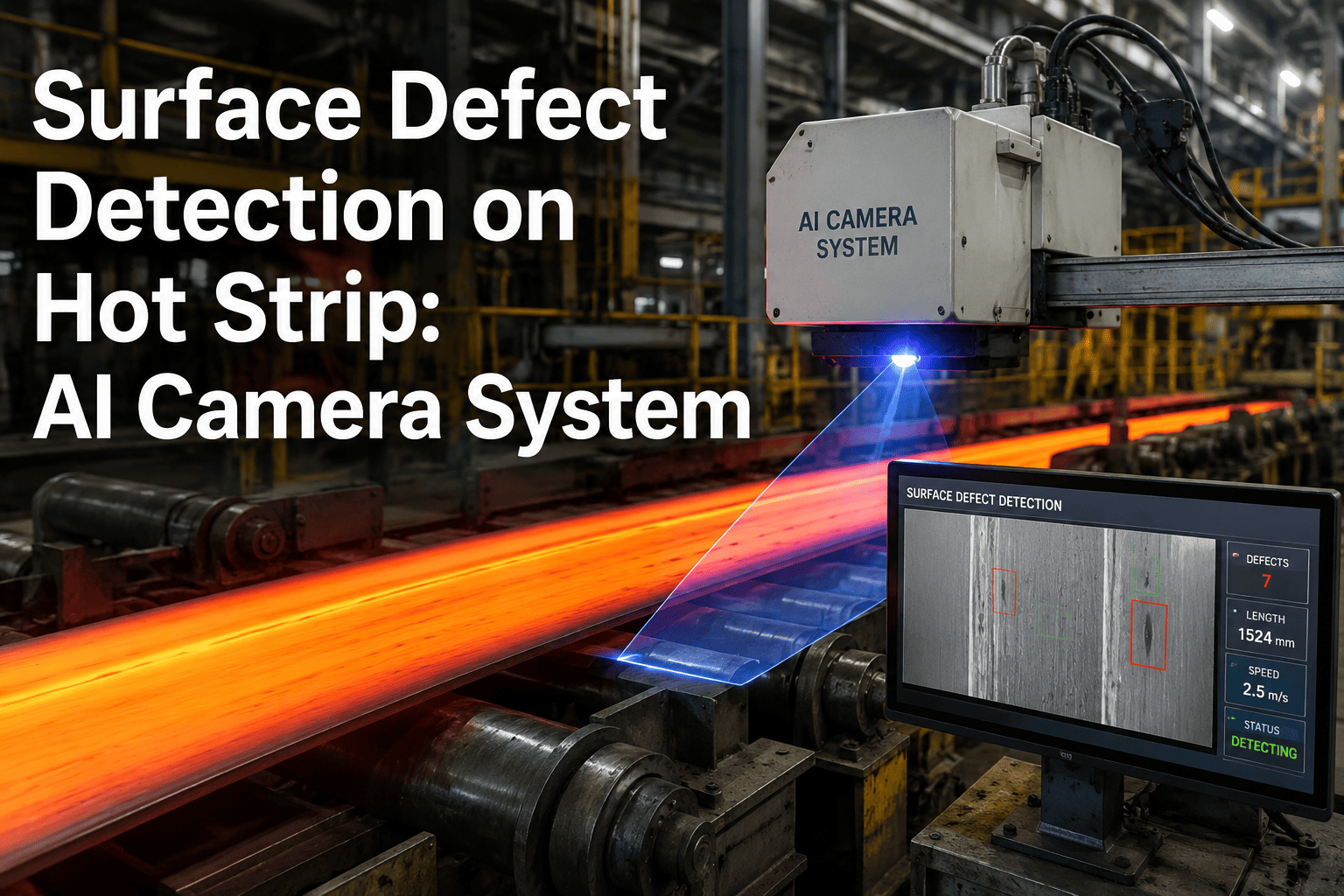
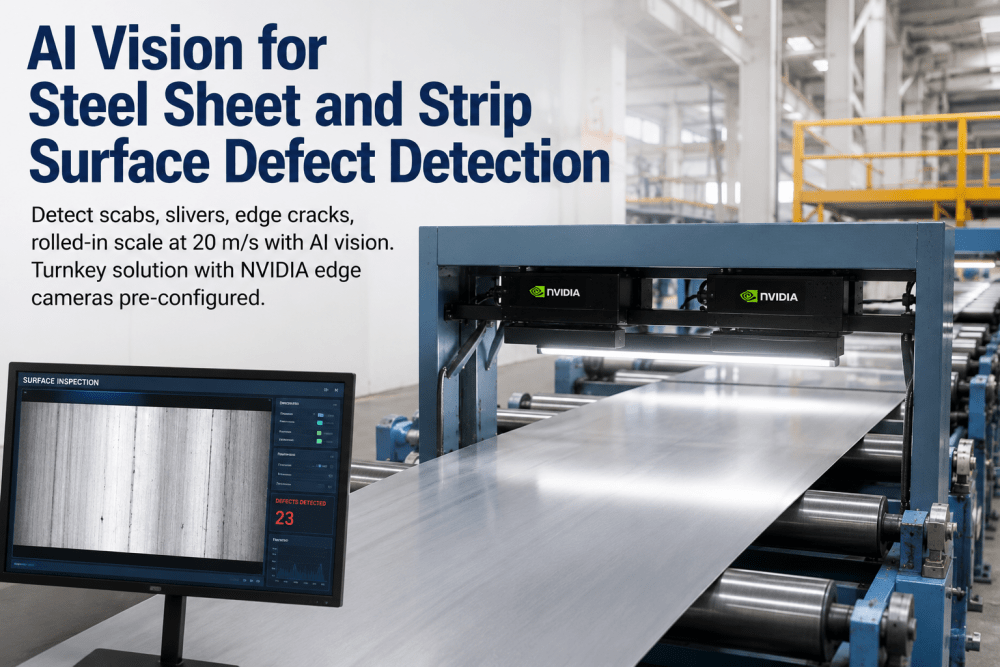
Surface Defect Inspection
- YOLOv8 / custom CNN detects cracks, scale, scratches
- Operates at strip speeds up to 20 m/s, 4K resolution
- 94% defect detection — 0.3mm minimum defect size
- Auto-rejects coils and creates SAP QM notifications
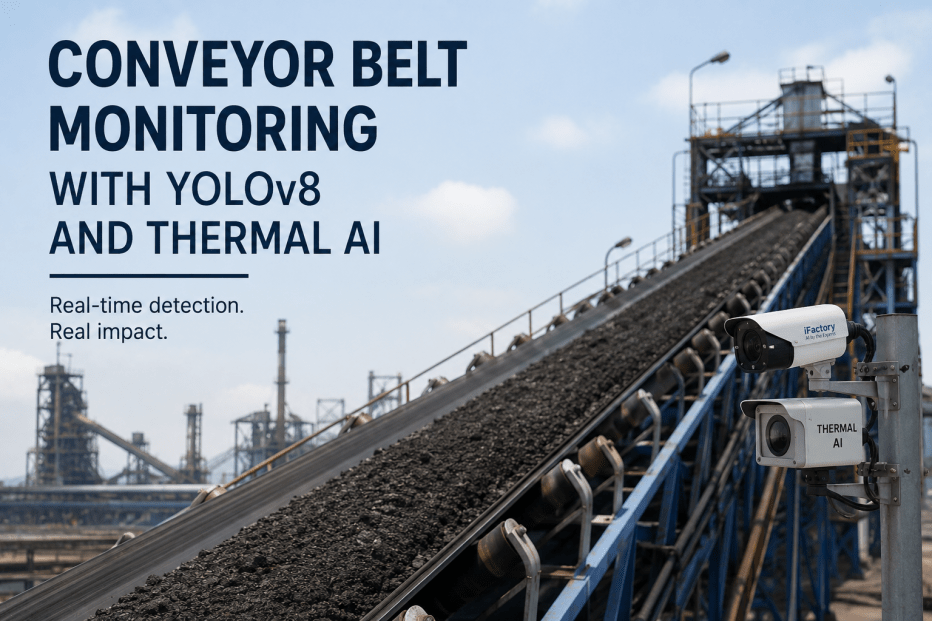
Conveyor Belt Thermal Monitor
- Full belt-width thermal scan every metre of travel
- Detects hot material, belt damage, and idler seizure
- 3°C anomaly threshold — triggers stop before fire risk
- Integrates with belt conveyor PLC for auto-shutdown
BOF / EAF Process Monitor
- Monitors lining wear via acoustic emission patterns
- Detects slopping, over-blowing, and skull formation
- Reduces refractory inspection entries by 80%
- AI model predicts remaining lining life per heat
Arc Flash & Electrical Anomaly Monitor
- Continuous partial discharge & arc flash risk monitoring
- Harmonic distortion detection — prevents EAF transformer failure
- Power factor and demand anomaly alerts in real time
- Integrates with LOTO permit system before energised work
How AI Vision Works in Steel — From Pixel to SAP Work Order
AI vision in a steel plant is not a single camera and a simple threshold. It is a trained deep-learning model, a high-speed image pipeline, and a calibrated integration layer that converts detection events into business actions. Here's how iFactory's AI vision pipeline works end-to-end.
4K line-scan cameras at 10,000 fps capture the full strip width. Stroboscopic LED illumination eliminates motion blur at 20m/s. Camera enclosures rated IP68 for water, scale, and heat.
YOLOv8 model runs on edge GPU server <2ms from frame — classifying defect type (crack, pit, scale, scratch), measuring size, and mapping pixel coordinates to strip position.
iFactory AI applies grade-specific quality rules — determining accept, downgrade, or reject per defect type, density, and location within the coil width. No human review needed for 89% of decisions.
SAP QM usage decision created automatically. If root cause is a rolling mill roll defect, SAP PM notification raised for roll inspection. Full traceability from coil ID to defect image to work order.
Before vs. After — Smart Sensors at a 4 MTPA Steel Plant
Results from deploying all five smart sensor systems across a 4 MTPA integrated plant. Data verified by plant quality and maintenance leadership after 12 months.
| Metric | Before | After iFactory |
|---|---|---|
| Surface defect escape rate | 4.8% | 0.28% |
| Tuyere failure (undetected) | 3–4 per year | Zero undetected |
| BF campaign inspection frequency | Weekly visual | Continuous radar |
| Belt fire events | 2 per year | Zero |
| BOF lining overshoot (excess wear) | 12% of campaigns | 1.4% of campaigns |
| Customer quality complaints | 38 / year | 6 / year (−84%) |
What a VP Quality Said
The AI vision system caught a recurring roll mark defect that our human inspectors had classified as random variation for two years. It wasn't random — it was a 47mm periodic pattern matching our work roll circumference. That single finding saved us three major customer claims in the next quarter alone.
Frequently Asked Questions
What AI model does iFactory use for surface defect detection — can it be customised?
iFactory uses YOLOv8 as the base architecture, fine-tuned on steel-specific defect libraries per grade and mill. Custom training on your plant's defect history is included in the deployment programme — typically 6–8 weeks of model calibration.
How does BF stockline radar operate through dust and furnace gas?
Microwave radar (24 GHz or 77 GHz band) penetrates dust, gas, and high-temperature atmospheres that stop optical systems. Signal processing filters reflections from furnace walls and burden surface irregularities to deliver ±2mm profile accuracy.
Can iFactory's thermal cameras work in the BF cast house at 1,400°C+?
Yes — water-cooled camera housings with sapphire optics operate continuously in cast house environments. Spectral filtering rejects the dominant furnace radiation wavelengths to isolate tuyere and refractory surface temperatures accurately.
How does the AI vision system create SAP QM and PM records automatically?
iFactory's SAP connector maps AI detection events to QM usage decisions and PM notifications via RFC/BAPI calls — coil ID from L2 automation, defect classification and coordinates from the vision AI, work order priority from the defect severity model.
Deploy Smart Sensors Across Your Steel Operations
Demo built around your specific sensor zones, camera locations, and SAP setup.