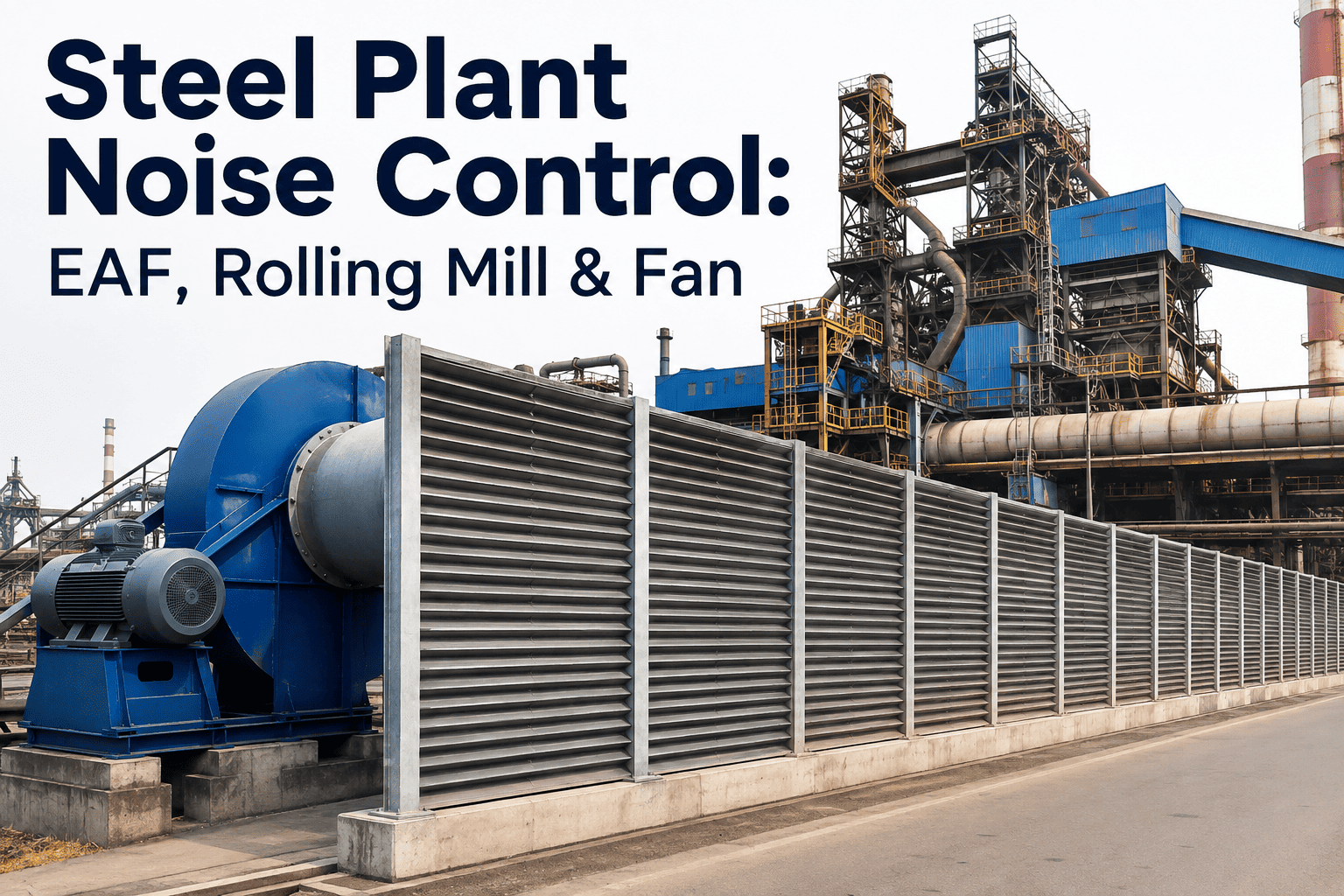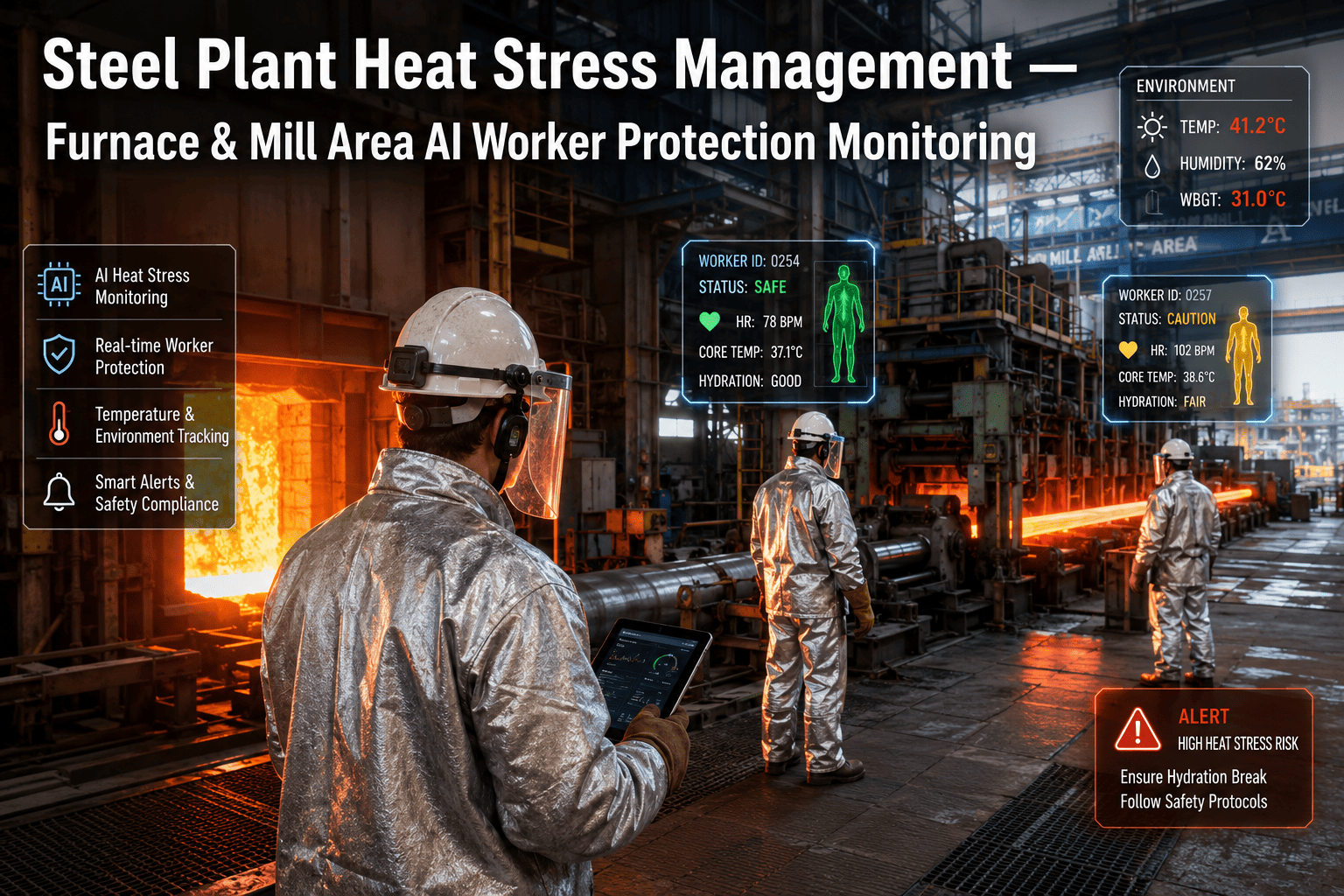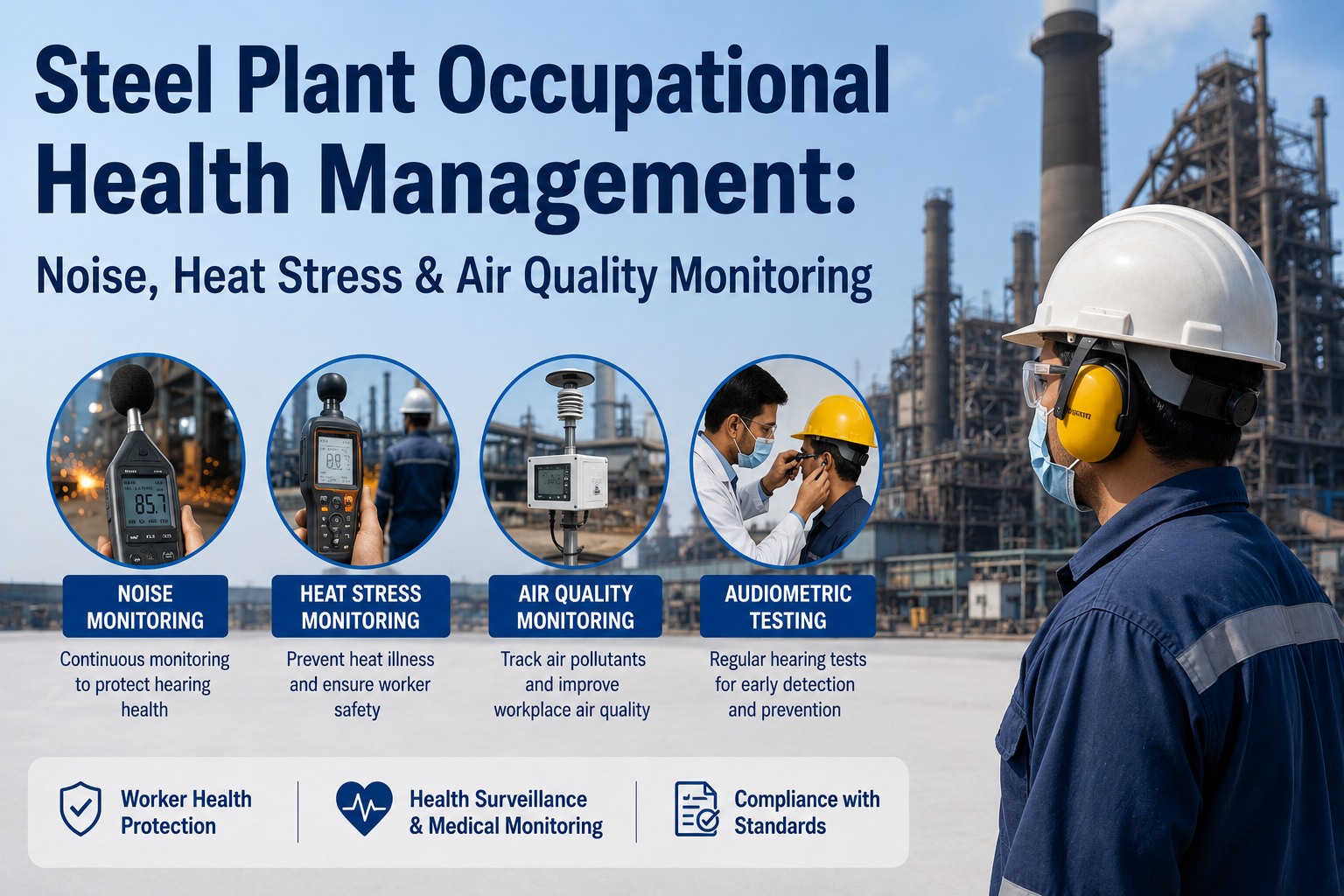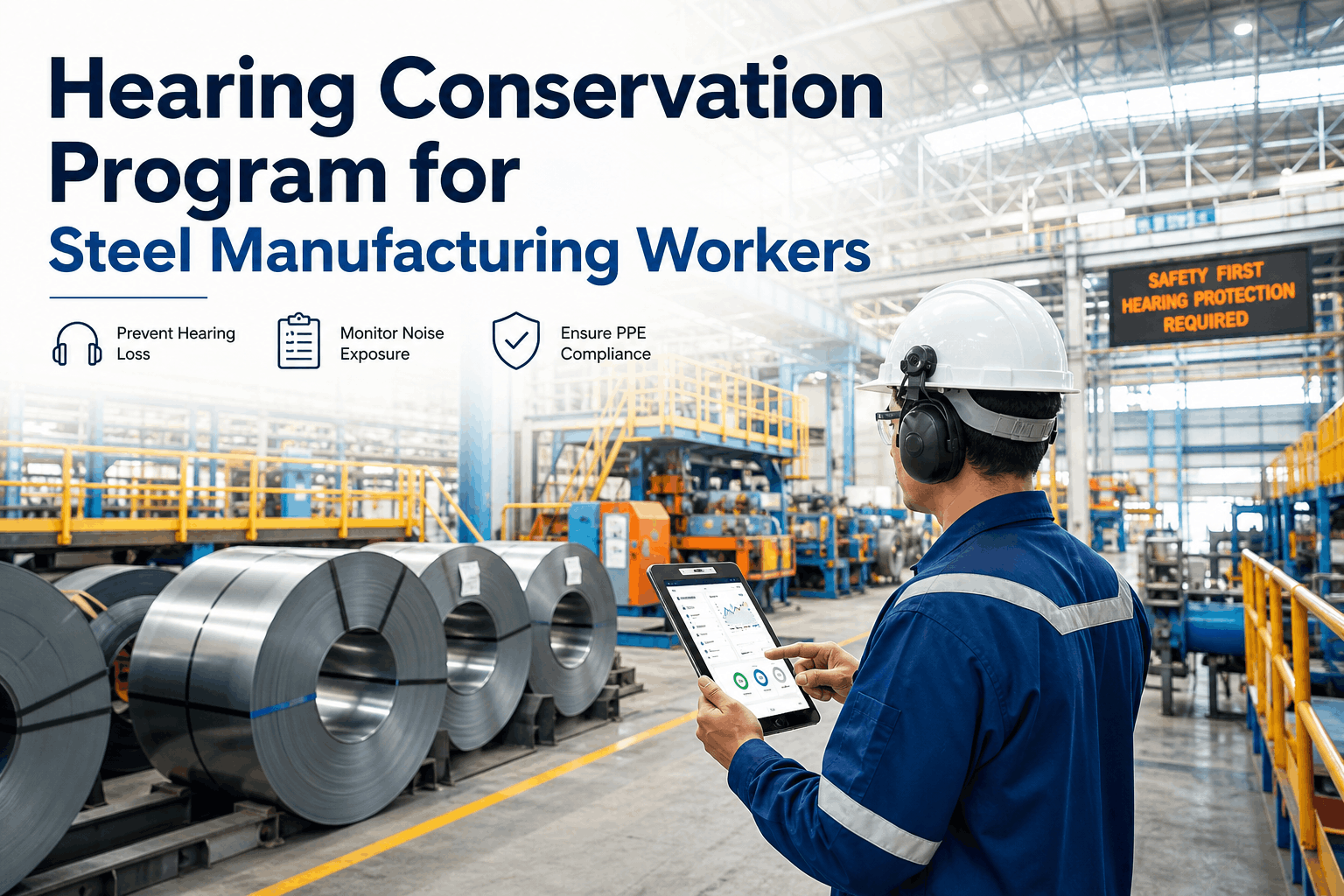
The acoustic environment of a steel manufacturing plant is among the most aggressive in the industrial world. Between the concussive blasts of Electric Arc Furnaces (EAF), the high-frequency screeching of cold rolling mills, and the constant roar of pneumatic equipment, ambient noise levels routinely exceed 90 to 105 decibels (dBA). Under OSHA standard 1910.95, any workforce exposed to an 8-hour time-weighted average (TWA) of 85 dBA or higher must be enrolled in a stringent Hearing Conservation Program. Historically, managing this program has been an administrative nightmare—involving scattered spreadsheets, lost audiometric test results, and undocumented PPE dispensing. A modern hearing conservation program for steel manufacturing requires a fully digitized, instantly accessible framework. iFactory digitizes your entire noise management protocol by tying audiometric tracking and PPE compliance directly into your Enterprise Asset Management (EAM) system. From scheduling mandatory annual hearing tests as automated workflows to tracking the inventory velocity of specialized hearing protection, iFactory ensures your workforce is protected and your plant remains audit-ready. Book a demo to digitize your OSHA 1910.95 compliance today.
Automate Hearing Conservation — Audiometric Tracking, PPE Inventory, and Compliance in One Platform
iFactory's safety module delivers structured audiogram scheduling, automated alerts for Standard Threshold Shifts (STS), and mobile PPE compliance auditing — purpose-built for the extreme noise hazards of steel manufacturing.
The Hidden Liability of Paper-Based Noise Management
Noise-Induced Hearing Loss (NIHL) is insidious. Unlike a laceration or a burn, hearing loss is painless, progressive, and completely invisible. By the time a steel worker notices a ringing in their ears (tinnitus) or struggles to hear a safety radio call, the irreversible damage to their cochlear hair cells has already been done. Because the injury is cumulative, regulatory bodies like OSHA place the entire burden of proof on the employer to demonstrate that a comprehensive, functional Hearing Conservation Program was active every single day of that worker's employment.
This strict liability exposes the fatal flaw of legacy systems. Maintaining paper logs for hundreds of employees across multiple rotating shifts is prone to catastrophic failure. When an OSHA inspector requests the baseline audiogram for a mechanic who started three years ago, discovering that the record was lost in a filing cabinet instantly triggers a willful violation fine. Furthermore, tracking whether workers are actually utilizing their Personal Protective Equipment (PPE) is impossible without digital auditing tools. iFactory solves this by centralizing all noise dosimetry surveys, audiometric schedules, and PPE dispensing logs into a single, immutable digital ledger. The system treats every employee's hearing test schedule as a recurring critical task, escalating immediately to the HSE Director if a mandatory test is deferred. Schedule a compliance readiness assessment to identify your documentation gaps before an audit occurs.
When a worker's annual hearing test shows an average shift of 10 dB or more at 2000, 3000, and 4000 Hz, OSHA defines this as a Standard Threshold Shift (STS). If a steel plant cannot electronically prove they immediately re-fitted the employee with appropriate PPE, retrained them, and investigated the noise source, the plant is liable for significant workers' compensation claims and federal penalties. iFactory automates the STS response workflow, ensuring every required corrective action is tracked and documented within 21 days.
Digitizing the 5 Pillars of Hearing Conservation
An effective OSHA-compliant program requires absolute adherence to five specific pillars. iFactory's digital safety module allows HSE directors to manage all five pillars from a single unified dashboard, ensuring no administrative detail slips through the cracks.
Area Noise Monitoring & Dosimetry
Employers must map the noise levels of the plant. iFactory EAM Role: Stores digital noise maps and schedules recurring area dosimetry surveys as preventive work orders. If an exhaust fan bearing degrades and begins emitting 95 dBA, the resulting noise survey instantly triggers a mechanical repair ticket to eliminate the hazard at its source.
Audiometric Testing Schedules
Every exposed worker requires a baseline hearing test and mandatory annual retests. iFactory EAM Role: Automatically generates individual work orders for employee clinic visits. Supervisors are notified via the mobile app exactly who is due for a test this month, preventing lapses in testing compliance across rotating shifts.
PPE Inventory & Dispensing Management
Providing adequate hearing protection is a legal mandate. iFactory EAM Role: Ties custom-molded earplugs and high-NRR earmuffs directly into the EAM spare parts inventory. The system tracks consumption velocity per department and automatically triggers reorder alerts, ensuring the plant never stocks out of critical PPE.
Digital Training Acknowledgments
Workers must be trained annually on the effects of noise and the proper fitting of PPE. iFactory EAM Role: Pushes digital training modules directly to operator mobile devices or kiosk tablets. Workers must electronically sign that they completed the training, creating an instant, audit-ready training log.
Mobile PPE Compliance Auditing
Having a program on paper is meaningless if workers remove their earmuffs on the floor. iFactory EAM Role: Allows safety managers to conduct randomized, geo-tagged PPE audits using their tablets. Near-misses (e.g., "Worker observed without PPE in EAF zone") are logged instantly, driving targeted retraining efforts.
STS Investigation & Root Cause Analysis
When hearing loss occurs, the root cause must be identified. iFactory EAM Role: Forces a digital Corrective and Preventive Action (CAPA) workflow. Engineering controls (like building an acoustic enclosure around a loud compressor) are tracked to completion as high-priority maintenance tasks.
Hearing Conservation Readiness & Inspection Schedule
A comprehensive noise management program requires constant verification of both personnel health and mechanical equipment. The administrative burden of tracking this manually is immense. The table below maps the required frequencies for critical readiness checks. Book a demo to see how iFactory auto-generates these tasks as trackable digital work orders.
| Compliance Category | Weekly | Monthly | Quarterly | Annual |
|---|---|---|---|---|
| PPE Inventory Levels | Stockroom level check via EAM | Consumption analysis report | Vendor lead-time review | Full physical inventory audit |
| Behavioral Safety Audits | Randomized mobile PPE checks | Department compliance scoring | Review of repeat offenders | Overall culture assessment |
| Audiometric Testing | — | Schedule upcoming expirations | Follow-up on deferred tests | Mandatory annual testing for all exposed |
| Noise & Dosimetry Surveys | — | — | Spot checks on new equipment | Full plant noise contour mapping |
| Engineering Controls | Inspect acoustic enclosures | Check pneumatic mufflers | Lubrication PMs on loud assets | Capital review for noise reduction |
iFactory Incident Analytics: Quantified Safety ROI
Steel manufacturers using iFactory's EAM and safety modules maintain continuous compliance, eliminate administrative blind spots, and drastically reduce the incidence of occupational hearing loss. By shifting from reactive paper logs to proactive digital workflows, plants see immediate improvements in their safety culture and audit scores. Book a demo to bring these results to your facility.
Digital Command: Executing the Hearing Loss CAPA Workflow
When a worker exhibits hearing loss, immediate action is legally required. iFactory acts as the ultimate digital enforcer for your Corrective and Preventive Action (CAPA) plans, ensuring that every required step is tracked, assigned to a specific owner, and closed out before regulatory deadlines expire.
The iFactory STS Response Workflow
- Automated Notification: When the clinic uploads an audiogram showing a 10 dB shift, iFactory immediately flags the employee profile and triggers a high-priority alert to the HSE Director and the employee's direct supervisor.
- Mandatory Retraining: The system automatically assigns a digital retraining module to the affected employee's mobile dashboard, forcing them to re-certify their understanding of proper earplug insertion techniques.
- PPE Re-evaluation: A task is generated for the safety manager to physically audit the employee's PPE. If standard earplugs are insufficient, the system tracks the procurement and dispensing of custom-molded protection.
- Engineering Root Cause Analysis: iFactory forces a review of the employee's assigned work zones. If a specific compressor is identified as the culprit, a mechanical work order is instantly generated to install acoustic dampening.
Step-by-Step Tactical Auditing & Enforcement
A successful safety culture requires constant field enforcement. iFactory digitizes the behavioral auditing process, allowing supervisors to spend less time filling out paperwork and more time coaching employees on the floor.
Mobile PPE Compliance Audits
A supervisor walks the rolling mill floor with their tablet. They open the iFactory safety module and conduct a randomized 10-point PPE audit. They note that three contractors are wearing their earmuffs improperly. The observation is logged instantly with a geo-tag.
On-the-Spot Coaching
Rather than writing a formal write-up later, the supervisor corrects the contractors immediately. They log the "Coaching Interaction" into iFactory. This positive intervention is recorded, proving to OSHA that the plant actively enforces its safety policies.
Trend Identification
At the end of the month, the HSE Director reviews the iFactory dashboard. They notice a 40% spike in PPE non-compliance specifically on the night shift in the melt shop. This granular data allows management to target their safety interventions surgically.
Hazard Elimination via EAM
The best hearing protection is eliminating the noise. Audit data reveals a specific exhaust fan is so loud workers refuse to wear dual-protection. The HSE Director issues an EAM work order to replace the fan bearings and install a silencer, permanently solving the behavioral issue.
"Tracking annual hearing tests for 600 steelworkers using Excel was impossible. We were constantly missing deadlines because guys would swap shifts or take vacation. When OSHA audited us, finding the baseline audiograms took three days of frantic searching through filing cabinets. Moving our Hearing Conservation Program into iFactory changed everything. Now, the system automatically generates clinic visit work orders for the exact month they are due. If an operator misses their appointment, it escalates to me instantly. We recently passed a federal OSHA inspection with zero citations because our digital audit trail was flawless."
— Occupational Health Manager, Integrated Steel Works
Ready to Digitize Your Hearing Conservation Program?
iFactory's safety module delivers automated audiometric scheduling, mobile PPE auditing, and immutable compliance logs — ensuring your steel plant protects its workers and avoids regulatory fines.
Frequently Asked Questions: Industrial Hearing Conservation
Schedule. Protect. Audit. Digitally Tracked.
Complete hearing conservation management in one platform — automated audiometric scheduling, digital PPE tracking, and immutable audit logs. Protect your workforce today.