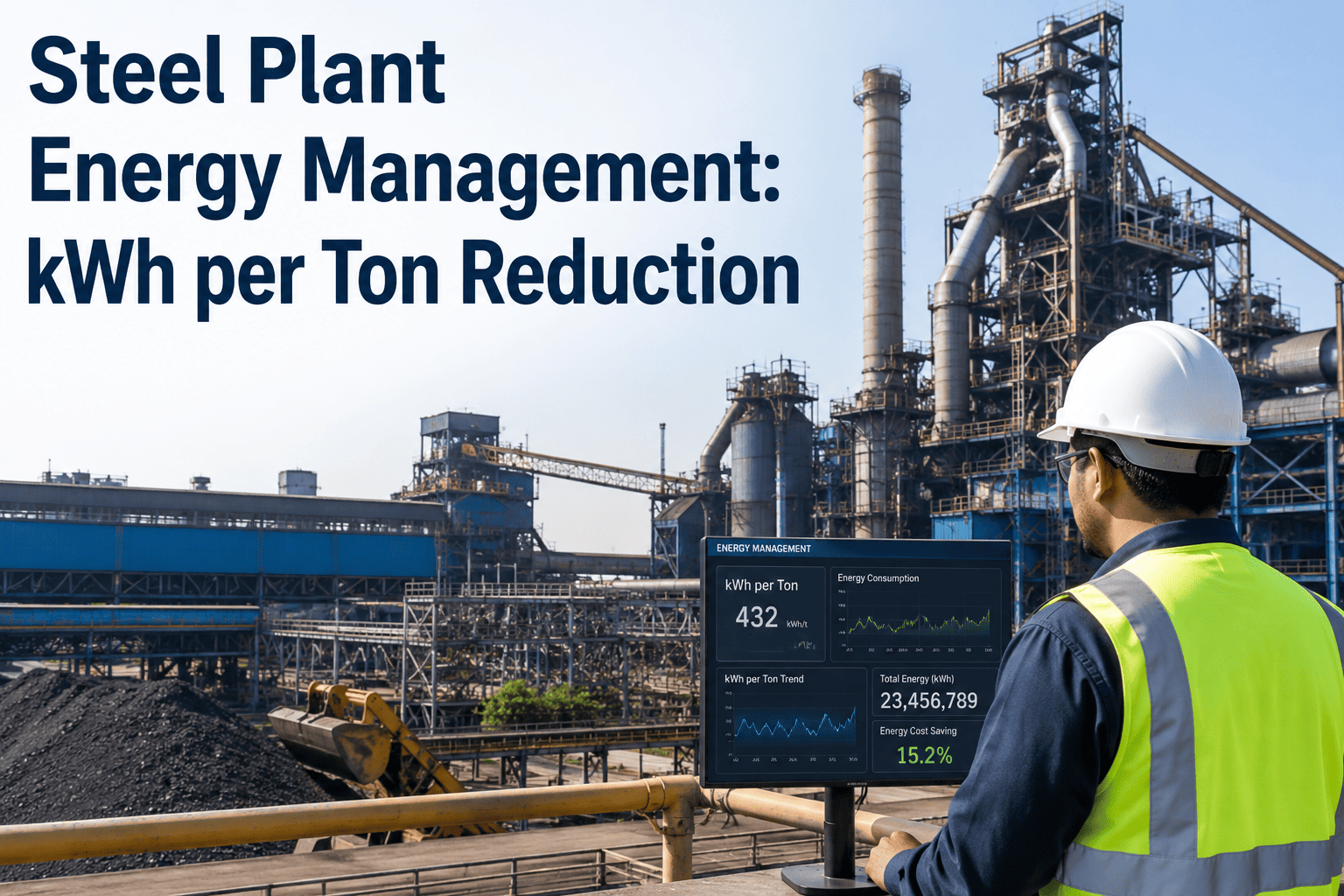
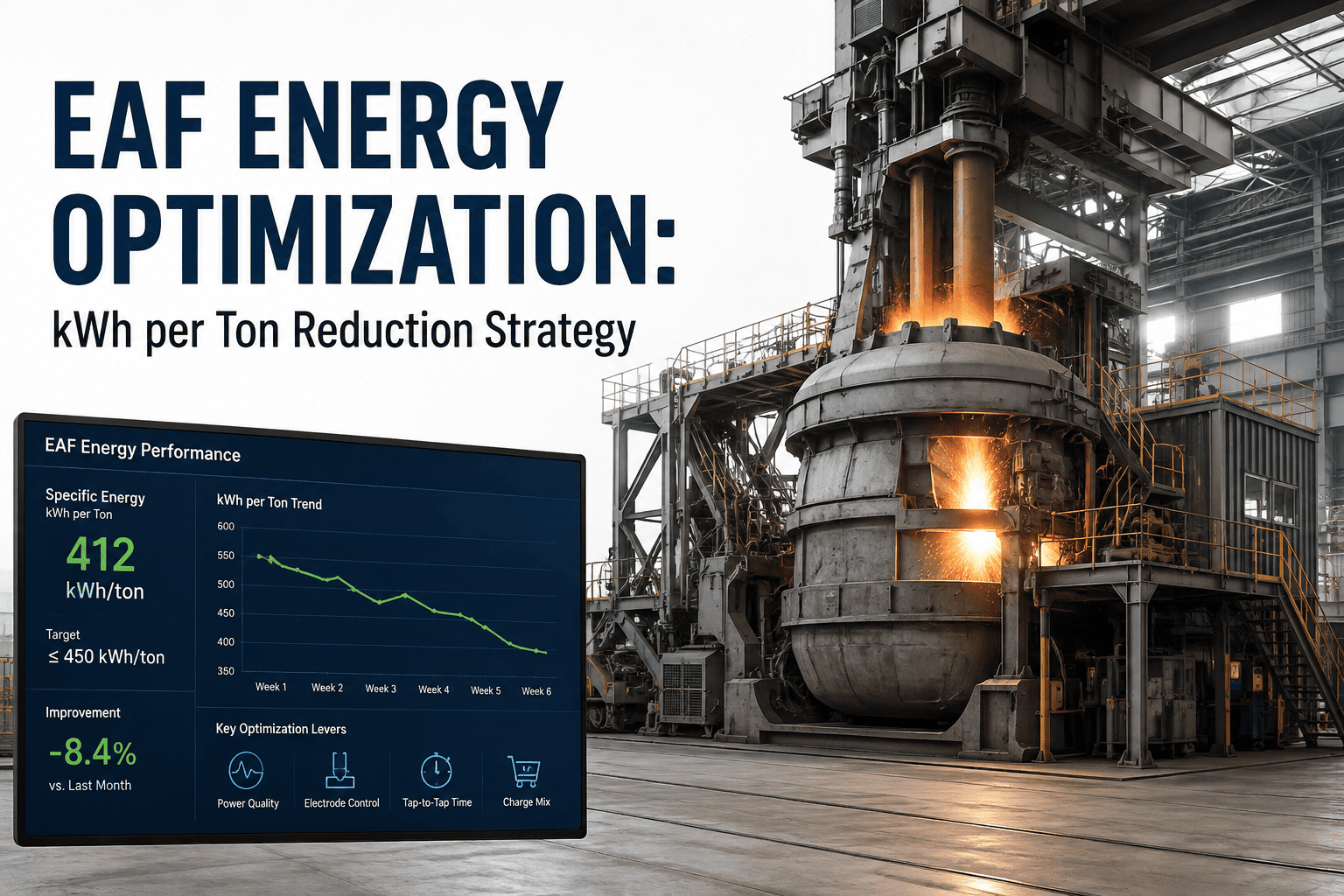
The electric arc furnace remains the cornerstone of modern steelmaking, yet its energy intensity presents both a significant operational cost and a strategic lever for competitive advantage. With energy constituting up to 30% of total production costs, even marginal improvements in power utilization, oxygen lancing efficiency, and carbon injection timing can yield substantial financial and environmental returns. This comprehensive guide delves into the technical intricacies of AI-driven energy optimization for EAF operations, offering process engineers and plant managers a data-centric framework to minimize kWh per ton, reduce tap-to-tap times, and maintain precise metallurgical control across diverse grade families. By integrating real-time sensor analytics, predictive modeling, and adaptive control algorithms, facilities can achieve unprecedented levels of efficiency without compromising steel quality or operational safety. Book a Demo to explore how iFactory's AI platform transforms your EAF energy management.
Fundamentals of EAF Energy Dynamics
Electric arc furnaces consume between 350 and 700 kWh per ton of liquid steel, depending on scrap quality, operational practices, and desired metallurgical outcomes. The electrical energy is primarily dissipated through arc radiation, conductive losses, and thermal absorption by the bath. A typical power-on efficiency ranges from 60% to 75%, meaning a substantial portion of input energy is lost to the furnace walls, cooling systems, or off-gas. Understanding these loss mechanisms is the first step toward targeted optimization. The power profile—comprising voltage, current, arc length, and power factor—must be dynamically adjusted throughout the heat to match the changing conditions of scrap meltdown, flat bath formation, and refining stages. Traditional fixed-setpoint approaches fail to adapt to real-time variations in scrap density, electrode wear, and slag chemistry, leading to suboptimal energy transfer and prolonged heat times. AI-driven systems, by contrast, continuously analyze thousands of data points per second from electrode regulators, transformer taps, and optical sensors to compute the ideal power trajectory for each unique heat. This adaptive capability ensures maximum energy is transferred to the bath while minimizing electrical losses and refractory stress.
AI-Powered Power Profile Optimization
Modern AI models for EAF power management employ a hybrid approach combining physics-based simulations with machine learning regression. The system ingests historical data on scrap composition, electrode consumption, transformer tap settings, and off-gas temperatures to train a predictive engine that forecasts optimal power setpoints for each phase of the heat. During the initial scrap meltdown phase, high power and long arcs are typically preferred to maximize energy transfer to the cold scrap. As the bath becomes molten, the arc length is shortened to reduce heat loss and protect the sidewalls. The AI continuously adjusts voltage and current to maintain a stable arc while minimizing flicker and harmonic distortion. Field implementations have demonstrated that AI-optimized power profiles can reduce total electrical energy consumption by 12% to 18% compared to conventional PID-based control, with corresponding decreases in electrode consumption and refractory wear. The system also learns from grade-specific requirements: for high-carbon steels, the power profile is adjusted to promote controlled decarburization, while for low-carbon grades, the focus shifts to minimizing nitrogen pickup. This level of granularity is unattainable with static recipe-based approaches.
Real-Time Arc Stability
AI monitors arc impedance and voltage waveforms to detect instabilities within milliseconds. By modulating electrode position and transformer taps, it maintains a consistent arc length, reducing power fluctuations by up to 40%.
Adaptive Tap Changing
Instead of fixed tap schedules, the AI predicts the optimal transformer tap for each phase based on scrap density and bath temperature. This minimizes reactive power and improves power factor to over 0.95.
Harmonic Mitigation
By coordinating power setpoints with active filters, the AI reduces total harmonic distortion (THD) below 5%, protecting downstream equipment and complying with grid codes.
Optimizing Oxygen Lance Timing and Flow
Oxygen injection serves multiple critical functions in EAF steelmaking: decarburization, bath stirring, slag foaming, and supplemental chemical energy. The timing and flow rate of oxygen lancing directly influence energy efficiency, as oxygen reacts exothermically with carbon, silicon, and iron to release heat. However, excessive or poorly timed oxygen injection can lead to iron oxidation, increased slag volume, and refractory damage. AI-driven optimization models analyze real-time off-gas composition (CO, CO2, O2), bath temperature, and carbon content to compute the optimal oxygen flow profile. During the initial meltdown, oxygen flow is kept low to avoid excessive oxidation of scrap. As the bath reaches a molten state, oxygen flow is ramped up to accelerate decarburization and generate foamy slag, which shields the arc and improves energy transfer. The AI dynamically adjusts lance position and flow rate to maintain a stable slag foaming index, typically between 1.2 and 1.5. This approach has been shown to reduce total oxygen consumption by 20% to 30% while increasing the chemical energy contribution by 15% to 25%, directly lowering electrical energy demand. The system also accounts for grade-specific targets: for ultra-low carbon steels, oxygen flow is precisely controlled to avoid over-oxidation, while for high-carbon grades, the focus is on maximizing heat generation from carbon combustion.
Carbon Injection Strategy for Energy Efficiency
Carbon injection serves dual purposes in EAF operations: it provides a source of chemical energy through combustion and generates CO bubbles that promote slag foaming. The quantity and timing of carbon addition must be carefully balanced to avoid excessive carbon carryover into the steel or incomplete combustion that leads to energy losses. AI models predict the optimal carbon injection rate based on scrap carbon content, desired final carbon level, and oxygen flow. The system uses a mass balance approach, continuously updating the carbon-oxygen reaction stoichiometry to maintain a target C/O ratio of approximately 0.8 to 1.0. This ensures that most injected carbon is fully combusted to CO2, maximizing heat release while minimizing CO emissions. Advanced implementations incorporate laser-based carbon analyzers in the off-gas stream to provide real-time feedback, enabling the AI to adjust injection rates on a sub-second timescale. Field data from installations in North America and Europe show that AI-optimized carbon injection reduces total carbon consumption by 15% to 25% while improving slag foaming stability and reducing tap-to-tap times by 8% to 12%. The system also learns from historical data to anticipate the effects of different scrap mixes on carbon requirements, further refining the injection strategy over time.
Phase 1: Scrap Meltdown
High power, long arc, low oxygen flow. AI establishes baseline energy transfer and monitors scrap density variations to adjust power profile.
Phase 2: Flat Bath Formation
Arc length shortened, oxygen flow increased. AI initiates slag foaming by ramping carbon injection and optimizing lance position.
Phase 3: Refining & Temperature Homogenization
Power reduced to maintain temperature, oxygen flow modulated for final decarburization. AI ensures precise chemistry and temperature targets.
Ready to Transform Your EAF Operations?
Discover how iFactory's AI platform can reduce your energy costs by up to 25% while improving steel quality and throughput.
Integrating Power, Oxygen, and Carbon Control
The true power of AI-driven optimization lies in the holistic coordination of power profile, oxygen lancing, and carbon injection. These three levers are interdependent: changing the power profile affects bath temperature and thus the reaction kinetics of oxygen and carbon; oxygen flow influences slag foaming, which in turn affects arc stability and power transfer. Traditional control systems treat each variable independently, leading to suboptimal overall performance. AI models, particularly those based on reinforcement learning, can simultaneously optimize all three parameters to achieve a global objective, such as minimizing total energy cost per ton while meeting grade specifications. The AI agent learns from thousands of simulated and actual heats to develop a policy that balances short-term energy consumption with long-term refractory wear and electrode consumption. In practice, this integrated approach has delivered energy savings of 18% to 25% compared to conventional control, with corresponding reductions in tap-to-tap times of 10% to 18%. The system also provides operators with real-time recommendations and visual dashboards, enabling them to understand the rationale behind each control action and build trust in the AI's decisions.
Grade-Specific Optimization Strategies
Different steel grades impose distinct constraints on energy management. For example, low-carbon steels require precise control of decarburization to avoid excessive oxygen consumption and nitrogen pickup. High-carbon steels, on the other hand, benefit from higher carbon injection rates to maximize chemical energy and maintain carbon content within tight tolerances. Stainless steel grades introduce additional complexities due to chromium oxidation and the need for controlled temperature profiles. AI systems can be trained on grade-specific datasets to develop tailored optimization strategies. The model learns the unique thermal and chemical dynamics of each grade family and adjusts the power, oxygen, and carbon setpoints accordingly. This capability is particularly valuable for mills that produce a wide range of steel grades, as it eliminates the need for manual recipe adjustments and reduces the risk of off-grade heats. Data from multi-grade EAF operations show that AI-driven grade-specific optimization reduces the variance in final carbon and temperature by 40% to 60%, leading to higher first-pass yield and reduced rework. The system also incorporates learning from each heat, continuously improving its predictions and recommendations over time.
Low-Carbon Grades
AI prioritizes decarburization efficiency, limiting oxygen flow to avoid over-oxidation. Carbon injection is minimized to prevent carbon pickup, while power profile is adjusted for rapid temperature control.
High-Carbon Grades
Focus on maximizing chemical energy from carbon combustion. AI ramps carbon injection early, maintains high oxygen flow for slag foaming, and uses power profile to sustain target temperature.
Stainless Steel Grades
Chromium retention is critical. AI reduces oxygen flow to minimize chromium oxidation, uses argon stirring for bath homogenization, and adjusts power to avoid overheating.
Real-Time Data Integration and Sensor Fusion
The effectiveness of AI optimization depends heavily on the quality and granularity of real-time data. Modern EAFs are equipped with a variety of sensors: electrode position encoders, transformer tap position indicators, power quality meters, off-gas analyzers (CO, CO2, O2, H2), temperature probes, and laser-based carbon analyzers. The AI platform fuses data from these disparate sources into a coherent representation of the furnace state. Advanced signal processing techniques, such as Kalman filtering, are used to reduce noise and estimate unmeasured variables like bath carbon content and slag viscosity. The system also incorporates data from upstream processes, such as scrap composition analysis and ladle treatment status, to anticipate changes in furnace conditions. This holistic data integration enables the AI to make proactive, rather than reactive, control decisions. For example, if the off-gas analyzer detects a sudden increase in CO concentration, the AI can infer that the bath carbon content is higher than expected and adjust the oxygen flow accordingly. This level of situational awareness is impossible with conventional control systems and is the key to achieving the energy savings and quality improvements reported by early adopters.
Predictive Maintenance for EAF Components
Energy optimization is closely linked to equipment health. Electrode consumption, refractory wear, and transformer efficiency all affect energy consumption and must be factored into the optimization strategy. AI models can predict the remaining useful life of electrodes based on historical consumption patterns and real-time arc conditions. If the model detects accelerated electrode wear, it can adjust the power profile to reduce arc intensity and prolong electrode life. Similarly, refractory wear models use temperature sensors and thermal imaging data to identify hot spots and predict when relining will be required. By integrating these predictive maintenance capabilities with the energy optimization engine, the system can balance short-term energy savings with long-term equipment longevity. This holistic approach has been shown to reduce total maintenance costs by 15% to 20% while maintaining or improving energy efficiency. The AI also provides operators with actionable recommendations for maintenance scheduling, allowing them to plan interventions during planned outages rather than reacting to unexpected failures.
Implementation Roadmap for AI-Driven EAF Optimization
Deploying an AI-based energy optimization system requires a structured approach that balances technical readiness with operational priorities. The first step is a comprehensive audit of existing sensor infrastructure, data acquisition systems, and control capabilities. Many older EAFs lack the sensor density required for advanced AI, so investments in off-gas analyzers, temperature probes, and power quality meters may be necessary. The next phase involves data collection and model training: typically, three to six months of historical data are needed to train the initial models. During this period, the AI system runs in a shadow mode, providing recommendations without directly controlling the furnace. Once the models achieve a satisfactory accuracy threshold (typically 95% or higher for energy predictions), the system can be gradually given control over power, oxygen, and carbon setpoints, starting with the least critical phases. Full deployment usually takes six to twelve months, depending on the complexity of the mill and the availability of data. Throughout the process, operator training and change management are critical to ensure buy-in and effective use of the system. iFactory provides comprehensive support and expertise to guide mills through each stage of the implementation, from initial audit to full-scale operation.
Unlock the Full Potential of Your EAF
Join industry leaders who have transformed their energy management with iFactory's AI platform. Reduce costs, improve quality, and enhance sustainability.
Frequently Asked Questions
How does AI improve EAF energy efficiency compared to traditional control systems?
Traditional control systems rely on fixed setpoints and PID loops that cannot adapt to real-time variations in scrap density, electrode wear, or slag chemistry. AI models, by contrast, continuously analyze thousands of data points per second to compute the optimal power profile, oxygen flow, and carbon injection rate for each unique heat. This adaptive capability enables the system to respond to changing conditions within milliseconds, maximizing energy transfer to the bath while minimizing losses. Book a Demo to see real-world performance data.
What data is required to implement an AI-based EAF optimization system?
The minimum data requirements include historical records of power setpoints (voltage, current, power factor), oxygen flow rates, carbon injection rates, off-gas composition (CO, CO2, O2), bath temperature, and tap-to-tap times. Ideally, data should be collected at intervals of one second or less for at least three months. Additional data sources such as scrap composition, electrode consumption, and refractory temperatures can further improve model accuracy. Contact Support for a detailed data audit checklist.
Can AI optimization handle different steel grades without manual intervention?
Yes, AI models can be trained on grade-specific datasets to develop tailored optimization strategies for each grade family. The system learns the unique thermal and chemical dynamics of low-carbon, high-carbon, and stainless steel grades, automatically adjusting the power profile, oxygen flow, and carbon injection to meet the specific targets. This eliminates the need for manual recipe adjustments and reduces the risk of off-grade heats. Book a Demo to see grade-specific optimization in action.
What are the typical energy savings achieved with AI-driven EAF optimization?
Field implementations have demonstrated total electrical energy savings of 15% to 25%, with corresponding reductions in oxygen consumption of 20% to 30% and carbon consumption of 15% to 25%. Tap-to-tap times are reduced by 10% to 18%, leading to increased throughput. These savings are achieved while maintaining or improving steel quality, with on-grade first-pass yields exceeding 99%. Contact Support for case studies from similar mills.
How long does it take to deploy an AI-based EAF optimization system?
The typical deployment timeline ranges from six to twelve months, depending on the existing sensor infrastructure and data availability. The process begins with a comprehensive audit, followed by data collection and model training (three to six months). The system then operates in shadow mode for validation before being given gradual control over setpoints. iFactory provides end-to-end support to ensure a smooth and efficient deployment. Book a Demo to discuss your specific timeline.
Start Your Energy Optimization Journey Today
Partner with iFactory to implement AI-driven EAF optimization and achieve measurable improvements in efficiency, quality, and sustainability.