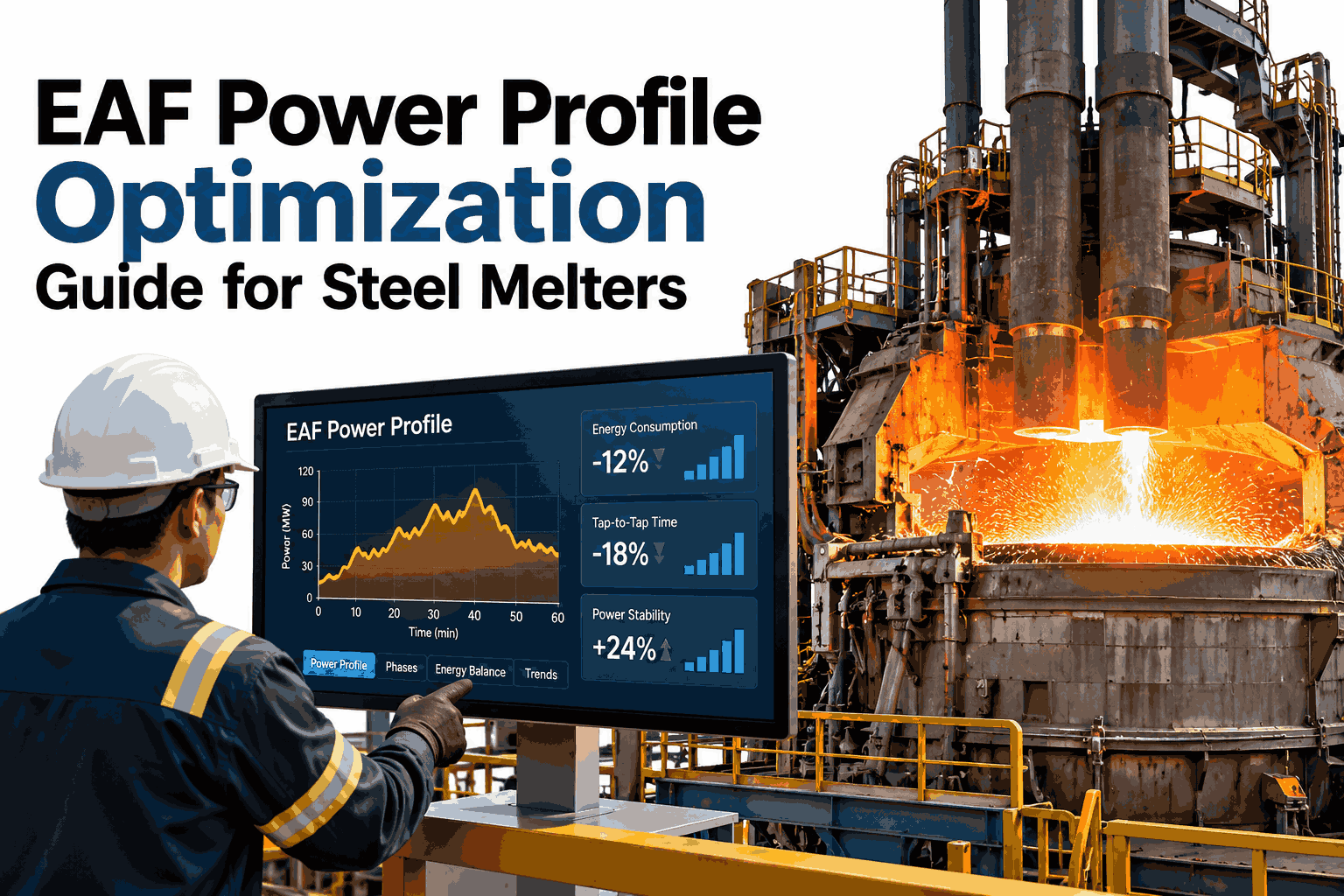
An electric arc furnace does not need the same power for the whole heat, yet many melt shops run one familiar profile on every grade and every scrap mix. Voltage, current and reactance set how the arc delivers energy, and the right setting changes as scrap melts, the bath flattens and the slag starts to foam. A profile tuned by heat phase can cut kWh per tonne without stretching tap-to-tap time, but only if the tuning follows evidence instead of habit. Melt shops that want to test that on their own heats can see a phase-by-phase power profile reviewed on real heat data in a short session.
Give Every Phase of the Heat the Power It Actually Needs
iFactory AI reads each heat's phases and recommends voltage, current and reactance steps that cut kWh per tonne without lengthening tap-to-tap.
Four Phases, Four Priorities
A heat is not one process. Each phase has a different goal, a different arc condition and a different way to waste energy. The bar shows an illustrative share of power-on time.
| Phase | Goal | Typical Setting Approach | Main Risk |
|---|---|---|---|
| Bore-in | Start the arc and protect the roof | Lower voltage and a short arc | Electrode breakage on unstable scrap |
| Melting | Deliver maximum energy into scrap | High voltage, long arc shielded by scrap | Arc instability and flicker |
| Flat bath | Heat the bath without exposing panels | Shorter arc, buried in foaming slag | Radiation loss to panels and roof |
| Refining | Reach tap temperature and chemistry | Moderate power, controlled finish | Overheating and wasted energy |
Why a Shorter Arc Late in the Heat Saves Energy
Once the scrap has melted, nothing shields the walls from the arc. A long, exposed arc radiates heat into the water-cooled panels and roof. A shorter arc buried in foaming slag keeps more of it in the bath. The bars show an illustrative split of arc energy.
See Where Your Heats Lose Energy by Phase
Book a 30-minute session and iFactory AI will show energy, power-on time and loss by phase for your own EAF heats.
The Tap-to-Tap Seesaw
Cutting power does not automatically cut kWh per tonne. A slower heat spends longer losing heat to the surroundings. The columns compare three illustrative profiles on energy and tap-to-tap time, with the tuned profile as the baseline of 100. Melters can compare profiles side by side on their own heats.
kWh 104, time 106
kWh 100, time 100
kWh 103, time 98
Other Levers That Share the Heat
The electrical profile works alongside the chemical one. Five levers decide how much work the arc has to do.
Oxygen and Carbon Timing
Chemical energy replaces electrical energy, and it also builds the foaming slag.
Scrap Mix and Charging
Density and order of baskets set how smoothly the arc bores in and melts.
Slag Foaming
A deeper foam lets power stay high late in the heat without exposing the panels.
Tap Temperature
Every degree of overshoot is paid for in kWh. Aim for the temperature the caster needs.
Power-Off Time
Delays between heats add losses and lengthen tap-to-tap without adding steel.
Signals Worth Watching During a Heat
These readings tell the melter when the profile no longer fits the heat.
A Composite Scenario: Heats That Land Closer to Target
A melt shop compared twelve heats of one grade before and after phase-based tuning. Each cell shows how the heat's kWh per tonne compared with target, using illustrative results.
Where iFactory AI Fits
Level 2 data, power meters, off-gas readings and heat records live in different places. iFactory AI joins them heat by heat.
Phase Detection
Each heat is split into bore-in, melting, flat bath and refining from power and time data.
Profile Recommendations
Suggested steps are shown to melters with expected energy and time effects.
Heat-to-Heat Comparison
Compare crews, scrap mixes and grades on a normalised basis.
Verified Savings
After a change, kWh per tonne is checked against a baseline for the same grade and mix.
Frequently Asked Questions
Can we tune the profile without extending tap-to-tap?
Yes, because the savings come mostly from where power is applied, not from using less of it overall. Reducing power in the flat bath, where more energy is lost, and keeping it high during melting, where it is absorbed, can lower kWh without adding time. Each change should be tested heat by heat against tap-to-tap. iFactory AI's team can help design a controlled trial for your furnace.
Who changes the settings, the system or the melter?
The melter and the furnace controls do. iFactory AI recommends and explains, and the operating team decides, within the limits set by the transformer, the electrode regulation system and your safety procedures. Many plants start with recommendations only. Any move toward automatic adjustment should be agreed with the furnace supplier and tested carefully, because the electrical settings are tightly linked to equipment limits.
How does scrap quality affect the profile?
A great deal. Light or mixed scrap bores in unevenly and tends to cause arc instability, while dense scrap melts predictably but can cause breakage if the arc is too long early on. Separate profiles by scrap mix often outperform one profile for all heats. See a profile comparison by scrap mix in a short walkthrough on your own heats.
What data do we need to start?
Heat records, electrical readings such as power, voltage and current, tap-to-tap and power-on times, and charge details are the core. Off-gas readings, panel temperatures and slag practice add depth. Most plants already hold these in their Level 2 and MES systems. The first weeks of the rollout focus on matching the records by heat and time, so phases can be identified cleanly.
How does this connect to kWh per tonne reporting?
The profile is one of the biggest controllable drivers of kWh per tonne in an EAF. Because iFactory AI measures energy by phase and by heat, any change shows up in the headline figure and in the phase where it was made. Ask support how phase results roll into your energy benchmarks and cost reports.
Put the Right Power in the Right Phase of Every Heat
iFactory AI turns heat data into phase-by-phase profile recommendations that cut kWh per tonne without lengthening tap-to-tap. Book a walkthrough to see it on your own furnace.