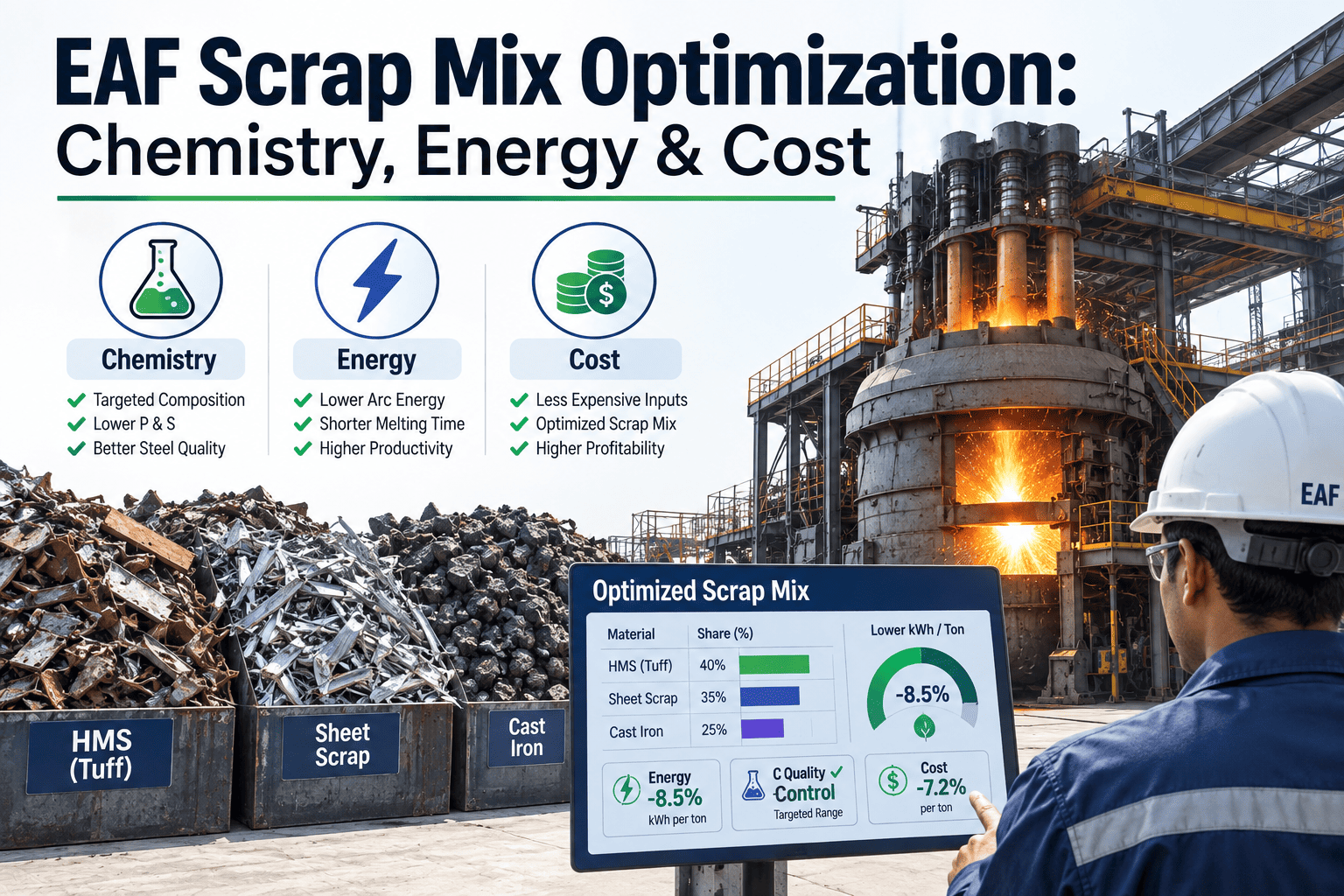
Every melter knows the feeling of a charge that looked fine in the yard and behaved badly in the furnace. The bucket was too light and needed an extra charge, the copper crept above the grade limit, or the cheapest scrap on the plan pushed the power-on time up. Scrap is the largest cost in an electric arc furnace shop, yet the mix is often decided by habit, a static recipe and whatever is in the pile that morning. This guide explains how AI balances density, chemistry and cost together to lower kWh per tonne while still hitting the steel grade, and if you want to see it on your own heats, you can review your scrap mix strategy with our team.
EAF Scrap Mix Optimization with AI: A Guide for Steel Melters
How dynamic scrap blending balances bulk density, residual chemistry and cost so every charge melts efficiently and lands on grade.
Three Inputs Pulling in Three Directions
A good scrap mix is never one perfect recipe. It is a balance, and each input pushes against the others.
Humans balance this by experience. AI balances it by calculation, for every heat, using what is actually in the yard today.
Scrap Types Compared: Density, Residual Risk and Melting Behavior
The table shows indicative planning values. Real figures depend on your supplier, processing and yard handling.
| Scrap type | Bulk density | Residual risk | Melting behavior |
|---|---|---|---|
| Shredded | Medium | Medium to high copper | Fast melt, good for cushioning |
| Heavy melting | Medium to high | Medium | Steady, reliable bulk |
| Bundles | High | Medium to high | Dense, slower to start |
| Busheling | Low to medium | Low | Clean, fast, premium priced |
| Home scrap | Varies | Known and low | Predictable, limited supply |
| Pig iron and DRI | High | Very low | Dilutes residuals, costs more |
Residual Elements: How Close Is Each One to the Limit
This illustrative chart shows how much of the grade limit a loose mix might use up. A bar near full means little room for error.
Copper is the usual constraint because it cannot be removed in the furnace, only diluted. That is why the mix has to be right before the charge, not after tap.
Why a Fixed Recipe Falls Behind a Dynamic Mix
A static recipe assumes every pile and every price is the same as last month. A dynamic mix does not.
See What a Smarter Scrap Mix Could Do on Your Furnace
Share your grades, scrap sources and current kWh per tonne, and we will walk through how a dynamic mix would be set up.
How the AI Builds a Mix for Each Heat
The method follows the same path every time, so melters can see why a recommendation was made.
Where the kWh per Tonne Savings Come From
Energy savings do not come from one trick. They come from small gains that stack, shown here as an illustrative split of a typical improvement.
Results vary by shop, furnace and scrap supply, so treat these as areas to measure rather than promised numbers. You can ask support how savings are tracked heat by heat.
Data Inputs That Make the Recommendation Trustworthy
Most shops already hold this data in separate places. The value comes from bringing it into one model that the melter can trust.
Common Scrap Mix Mistakes That Waste Energy
What Melters Ask Before Trusting an AI Scrap Mix
Bring Dynamic Scrap Mix Optimization to Your Melt Shop
Book a session with iFactory AI to see how density, chemistry and cost can be balanced on every heat to lower kWh per tonne and hit grade.