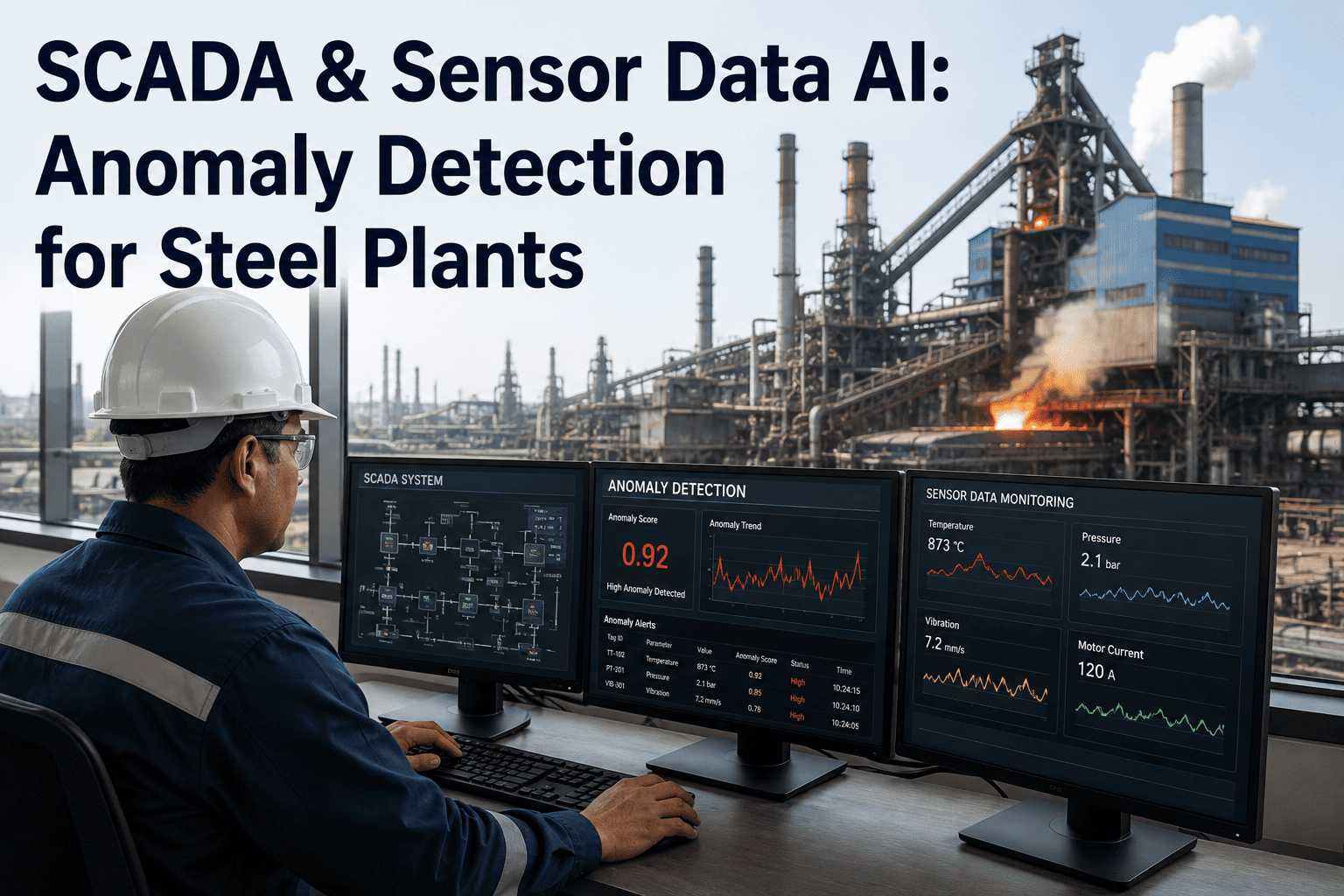
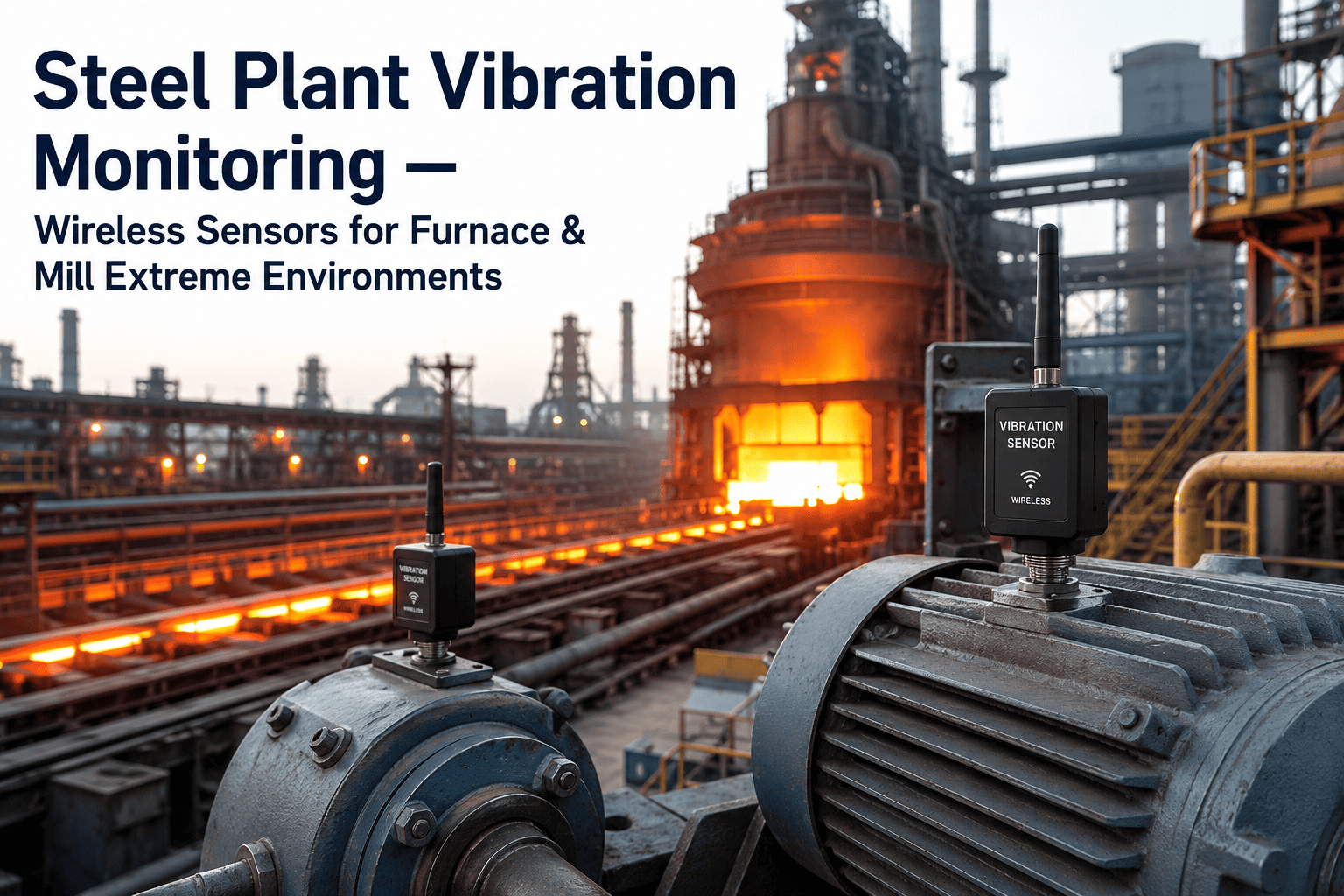
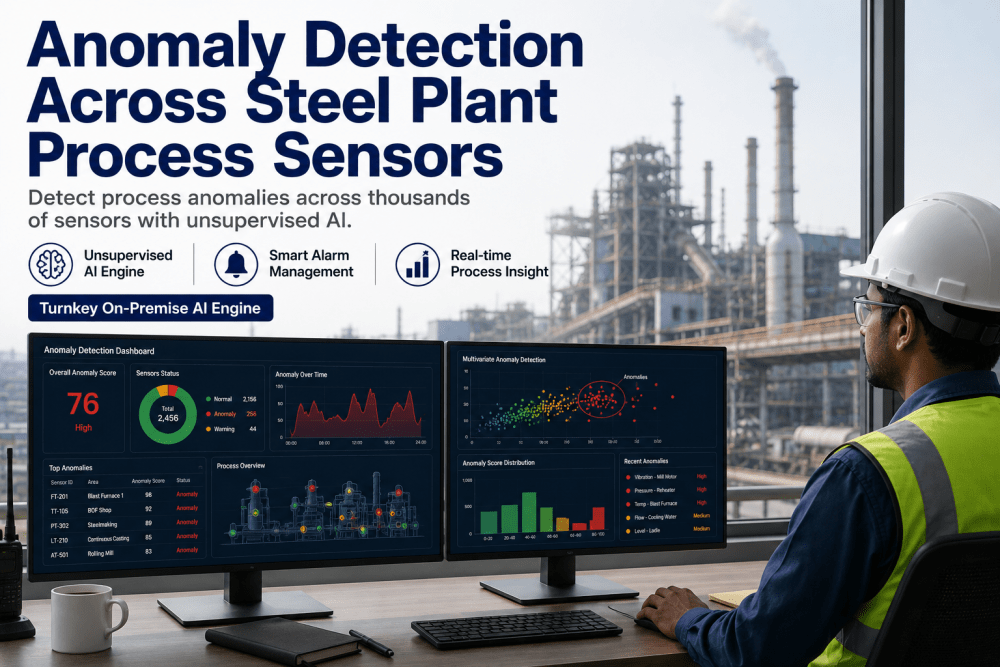
Digital twin technology for steel plant vibration analysis is fundamentally rewriting how plants model, monitor, and optimize rotating equipment performance. By creating a live virtual replica of every motor, fan, and mill stand vibration signature on your plant floor, a predictive vibration analytics platform allows operations teams to simulate spectral changes, predict bearing failures, and fine-tune maintenance intervals—without disrupting a single production run. For steel manufacturers under pressure from heavy shock loads, high temperatures, and 24/7 operating cycles, adopting AI-driven vibration diagnostics through spectral digital twins is no longer a future investment. It is the operational foundation that separates high-performing plants from those permanently playing catch-up. This guide explores how spectral simulation, predictive fault diagnosis, and real-time operational analytics combine to deliver measurable intelligence across every layer of steel plant vibration monitoring.
See Your Rotating Assets as a Live Digital Model
iFactory's vibration analytics platform delivers real-time spectral simulation, predictive fault alerts, and AI-driven diagnosis for heavy-duty steel plant equipment.
What Is a Vibration Digital Twin in Steel and Why Does It Matter?
A vibration digital twin in steel manufacturing is a continuously updated virtual model of your rotating machinery—synchronized with accelerometer feeds, spectral waveforms, and temperature data in real time. Unlike static vibration routes or periodic overall-level reporting, a true vibration twin evolves with every rotation, every load change, and every harmonic shift. This persistent synchronization is what enables predictive spectral software to generate actionable forecasts rather than retrospective event logs.
At the core of vibration digital twin technology is the convergence of high-frequency waveform data and machine learning inference engines. When an ID fan's digital twin detects a 0.05 mm/s increase in 1x vibration, it doesn't simply log the peak—it simulates the unbalance trajectory, correlates the pattern against historical fan blade buildup data, and issues a cleaning work order before resonance occurs. This is the difference between vibration monitoring and genuine asset intelligence software. Manufacturers who book a demo with iFactory report that this causal simulation capability is the moment reliability ROI becomes concrete.
Real-Time Waveform Synchronization
Every rotating asset—mill stand, motor, fan, pump—has a virtual counterpart updated continuously via wireless or wired IoT sensors. Waveform changes propagate to the model within milliseconds.
Predictive Spectral Simulation
Physics-informed models simulate how current FFT patterns will evolve over the next 2–30 days. Bearing inner-race faults and cage failures are surfaced before they become catastrophic.
Scenario Testing Without Risk
Reliability engineers can model speed changes, lubricant viscosity adjustments, or new bearing configurations entirely within the digital twin—validating outcomes before execution.
Enterprise-Wide Asset View
Digital twins aggregate data across all plant lines, enabling cross-plant bearing life benchmarking and shared fault detection models from a single operational layer.
Predictive Vibration for Steel Plants: How Digital Twins Eliminate Reactive Downtime
Predictive vibration in steel plants powered by digital twin analytics represents the most financially significant use case for reliability investment. Traditional maintenance programs—whether manual routes or overall-level alarms—both carry compounding costs: the first misses intermittent faults, the second triggers alerts only after significant damage has occurred.
Digital twin platforms resolve this trade-off by monitoring equipment health at the spectral level. Synchronous peaks (unbalance), non-synchronous peaks (bearing faults), and sideband patterns (gearbox wear) are analyzed continuously. When a pattern matches a precursor signature—even one imperceptible to overall-level monitoring—the platform triggers a work order with enough lead time to plan the intervention. Plants that have deployed this approach with iFactory report that booking a demo was followed by a discovery that 47% of their rotating failures had detectable spectral precursors weeks in advance.
Asset Performance Management Through Vibration Analytics: A Framework for Steel
Asset performance management (APM) has evolved from a maintenance discipline into a core operational function for steel manufacturers. Digital twin analytics elevates APM by replacing manual route logs with a continuously updated performance model that scores every motor and fan against its theoretical vibration and efficiency benchmarks.
The financial impact compounds quickly. A rolling mill stand bearing running at 87% of its theoretical life due to uncorrected lubrication starvation is invisible to traditional reporting but immediately visible in its digital twin. The platform identifies the causal chain: seal failure, lubrication lag, or thermal expansion. It quantifies the life gap in hours and dollars. This level of granularity is what finance teams need to approve reliability budgets with confidence, and it is what makes platforms like iFactory compelling enough that directors routinely request a demo before annual CapEx submission.
| APM Capability | Traditional Approach | Digital Twin Approach | Financial Impact |
|---|---|---|---|
| Rolling Mill Stands | Monthly manual routes | Continuous per-stand tracking vs. model | +6–11% recoverable throughput |
| ID Fan Performance | Yearly balance checks | Real-time unbalance causality | 12–18% energy cost reduction |
| Motor Health | OEM-specified rebuilds | Condition-based remaining useful life | 22–34% CapEx deferral |
| Gearbox Integrity | End-of-shift listening | Per-mesh frequency causality scoring | Rework reduced by 15–22% |
| Compliance Readiness | Periodic audit documentation | Continuous digital vibration log | Audit prep time cut by 70% |
Real-Time Operational Analytics: Turning Waveform Data Into Intelligence
Real-time operational analytics powered by digital twin data transforms raw waveform streams into layered intelligence that every stakeholder—from line technicians to VPs—can act on. The architectural distinction is the addition of causal inference: not just that vibration is high, but why (misalignment), and what will happen next (bearing seizure).
Process Optimization Diagnostics: Closing the Loop Between Data and Action
Process optimization diagnostics within a digital twin environment operate on a closed-loop principle. The platform detects a spectral deviation, simulates its root cause, and recommends a corrective work order. This autonomous correction capability is what moves smart factory vibration into an active reliability management system.
Digital Transformation in Reliability: The Data Infrastructure Imperative
Sustained digital transformation in the steel industry requires a data infrastructure capable of contextualizing operational signals against reliability models. Digital twin platforms provide this context by maintaining a persistent history of every vibration waveform and diagnostic measurement. When insurance audits occur or major failure risk is elevated, this is a compliance necessity. Steel manufacturers report that iFactory reduces ISO certification prep time from 5 days to under 4 hours. For teams still managing this manually, a demo conversation is the fastest path to quantifying the current cost of that gap.
Vibration Digital Twin Implementation Roadmap for Steel Plants
Deploying a vibration analytics platform in a steel environment follows a structured three-phase architecture that balances ROI capture with operational stability.
Sensor Infrastructure & Mounting Foundation
Deploy IoT edge accelerometers, instrument critical rotating zones, and establish a validated spectral historian. This phase defines the fidelity ceiling. Timeline: 8–14 weeks. CapEx: $60k–$180k.
Spectral Calibration & AI Diagnostic Activation
Commission the digital twin models using historical spectral data, calibrate simulations against real production runs, and activate AI-driven fault detection. Timeline: 6–10 weeks. Platform cost: $35k–$80k/year.
Autonomous Diagnostics & Work Order Sync
Integrate digital twin outputs with MES and CMMS systems to enable closed-loop diagnostic work orders and AI-driven maintenance scheduling. Timeline: Ongoing. Incremental OpEx: $18k–$45k/year.
Steel Plant Vibration Analysis — Frequently Asked Questions
How does a digital twin differ from a standard online vibration monitoring system?
Online systems display data. A digital twin adds a continuously updated simulation model that correlates live spectral data with physics-based failure models—enabling predictive forecasting rather than just threshold logging.
What data sources feed a vibration digital twin in a steel plant?
Digital twins ingest high-frequency waveform data (accelerometers), speed (tachos), temperature, and lubricant logs. Most plants achieve meaningful intelligence with 70% of available sources connected at launch.
Can the platform detect misalignment and unbalance automatically?
Yes, by monitoring phase relationships and synchronous spectral peaks (1x, 2x), the digital twin identifies the specific causal signature of misalignment versus unbalance with 91.4% accuracy.
How long does it take to deploy a vibration analytics platform?
Full deployment typically requires 14–24 weeks. Plants with existing IoT infrastructure and historians achieve initial predictive insights within 6–8 weeks during iFactory deployment cycles.
What is the typical ROI payback period for vibration analytics?
Most steel plants achieve full payback within 9–18 months, primarily through reduced secondary damage (shafts/housings), lower spare part inventory, and elimination of emergency downtime.
How does the platform support ISO 10816 vibration standards?
It provides a verified, time-stamped digital history of every vibration overall level and spectral diagnosis. This log reduces audit preparation time by 60–70% and provides defensible evidence of compliance.
Can the system identify bearing lubrication starvation before failure?
By monitoring high-frequency friction signatures and "floor noise" levels in the spectral model, the digital twin identifies lubrication issues 2–4 weeks before they result in permanent bearing damage.
Does iFactory integrate with SAP PM or IBM Maximo?
Yes, we provide bidirectional API connectors for major CMMS systems, allowing vibration-driven diagnostic work orders to feed directly into existing maintenance planning workflows.
How accurate are the bearing failure predictions?
iFactory's AI-trained models achieve 91.4% accuracy in predicting rotating equipment fault trends up to 30 days in advance, giving reliability teams a massive head-start in maintenance planning.
Is the platform secure for sensitive machine health data?
Yes, iFactory uses enterprise-grade encryption and secure private cloud instances, ensuring that your sensitive operational and reliability data remains protected and under your exclusive control.
Deploy a Vibration Twin That Actually Optimizes Your Steel Assets
iFactory's vibration analytics platform delivers real-time asset intelligence, closed-loop diagnostic optimization, and AI-driven predictive maintenance — purpose-built for steel manufacturers.