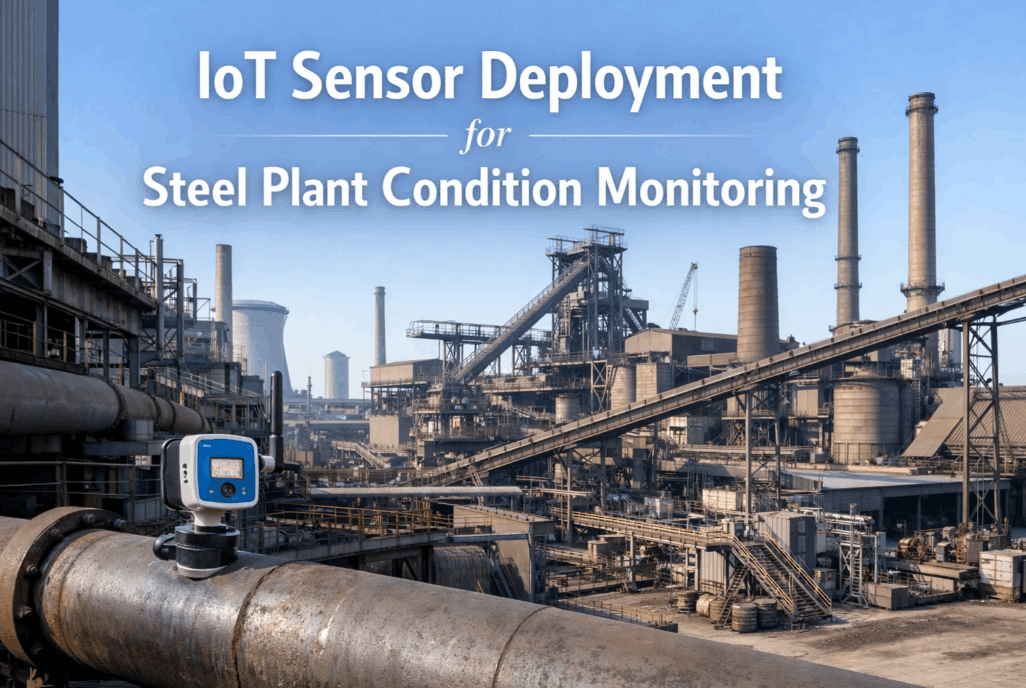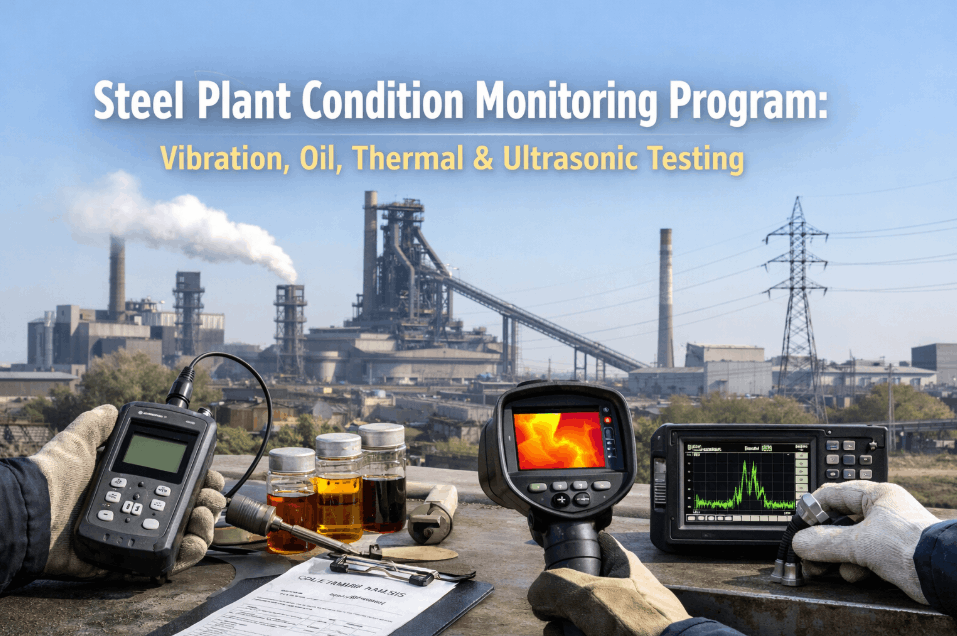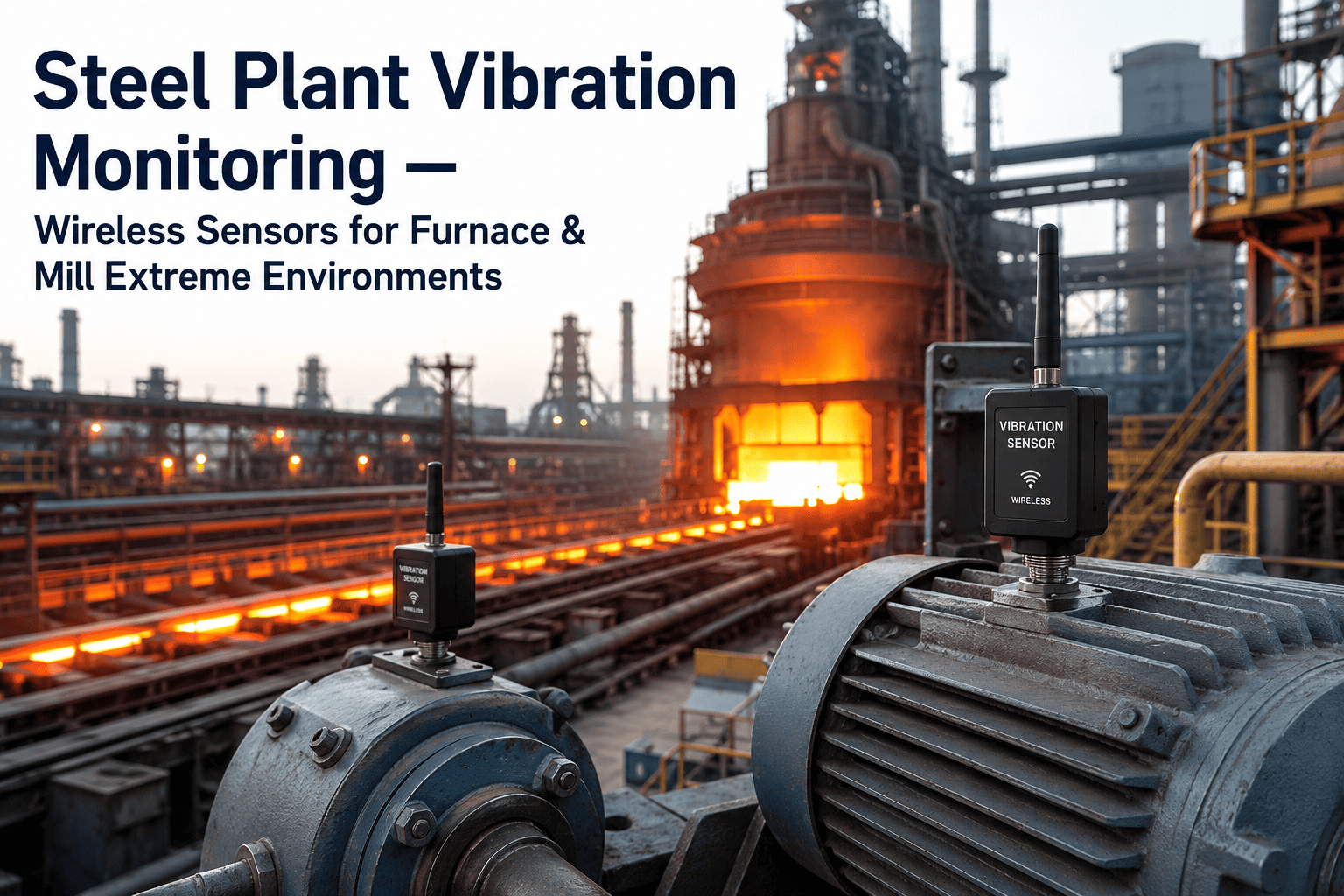
Most vibration monitoring systems are designed and rated for the environments where they're easiest to sell — clean, temperature-controlled process plants where a sensor's biggest challenge is dust settling on the housing. A steel plant doesn't offer that environment anywhere near the equipment that actually needs monitoring most: the mill stand areas run hot from adjacent process heat, the furnace platforms combine radiant heat with heavy particulate, and casting floors mix moisture, scale, and vibration from the process itself into the ambient noise the sensor has to filter out. This piece looks at why standard vibration hardware fails early in these zones, what a wireless sensor actually needs to be rated for to survive there, and how a demo can walk through sensor placement for your specific furnace, mill, or casting areas.
Why Standard Vibration Sensors Fail in Steel Plant Zones
A sensor rated for a typical industrial environment — say, 60°C ambient and standard IP-rated dust ingress protection — is usually validated in conditions nothing like a furnace charging deck or a mill stand adjacent to a reheat furnace, where radiant heat alone can push local ambient well past that rating even without direct process contact. Electronics inside the sensor housing degrade faster than their published rating suggests once they're run continuously near that thermal ceiling rather than occasionally spiking toward it, and battery life in wireless units shortens dramatically in sustained heat, turning a sensor rated for a multi-year battery life into one needing replacement every few months.
Dust and scale present a different failure mode. Fine particulate from casting and rolling operations works into connector seals and housing gaskets over time in a way that a short-duration ingress test doesn't fully capture, and vibration itself — ironically, the exact signal the sensor exists to measure — accelerates that seal degradation on equipment mounted directly to vibrating machinery in high-particulate zones.
What an Extreme-Environment Rating Actually Needs to Cover
A rating on a data sheet is only useful if it reflects sustained, real-world conditions rather than a short controlled test. For steel plant deployment, the meaningful specifications are continuous operating temperature rather than peak survival temperature, ingress protection validated under vibration rather than static conditions, and wireless signal reliability through the specific structural interference a mill or furnace building introduces — thick steel structures and equipment housings attenuate wireless signal in ways an open test facility doesn't replicate.
| Specification | Why It Matters in Steel Plant Zones |
|---|---|
| Continuous operating temperature rating | Sustained radiant heat near furnaces exceeds typical peak-only ratings for extended periods |
| Ingress protection under vibration | Static IP testing doesn't reflect seal degradation from continuous equipment vibration |
| Battery life at elevated ambient temperature | Published battery life figures assume moderate ambient; heat shortens actual life significantly |
| Wireless range through steel structure | Open-facility range specs don't account for signal attenuation through mill and furnace building steel |
Why Wireless Matters More in These Zones, Not Less
It might seem counterintuitive to add wireless electronics to the harshest zones in a plant, but wired vibration monitoring in these areas carries its own reliability problem: cable runs through high-heat, high-vibration zones degrade insulation and connectors over time, and cable routing near furnace or mill areas often has to avoid direct heat exposure entirely, forcing longer runs that introduce more points of failure. A properly rated wireless sensor removes that cable run liability entirely, at the cost of needing a battery and signal path robust enough to handle the same harsh conditions the cable was trying to avoid.
Deploying Across Rotating Equipment That's Been Historically Unmonitored
A large share of rotating equipment in steel plant furnace, mill, and casting zones has historically gone unmonitored simply because the environment made conventional monitoring impractical to install and maintain — not because the equipment matters less. Fans, pumps, and auxiliary drives adjacent to furnaces, mill roll bearings, and casting segment rolls are all critical to continuous operation, and unplanned failure in any of them can force a full line stop, yet many plants have relied on manual route-based checks in these zones precisely because fixed monitoring hardware couldn't reliably survive there.
What This Means for a Reliability Engineer's Program
Extending continuous monitoring into zones that previously relied on manual route checks changes the failure detection window meaningfully. A route-based check on a monthly or even weekly cycle can miss a bearing degradation that develops and worsens between visits, especially on equipment running continuously in a hot, high-vibration zone where wear tends to accelerate. Continuous monitoring shortens that detection window from weeks to hours, giving maintenance planning enough lead time to schedule a repair during an already-planned outage rather than reacting to an unplanned failure that stops a line.
It also changes what a reliability engineer's risk register actually reflects. Equipment that's been excluded from a formal monitoring program simply because the environment made it impractical to instrument can finally be assessed on the same data-driven basis as equipment in more accessible areas, rather than being managed by inspection frequency and institutional memory alone.
.png)