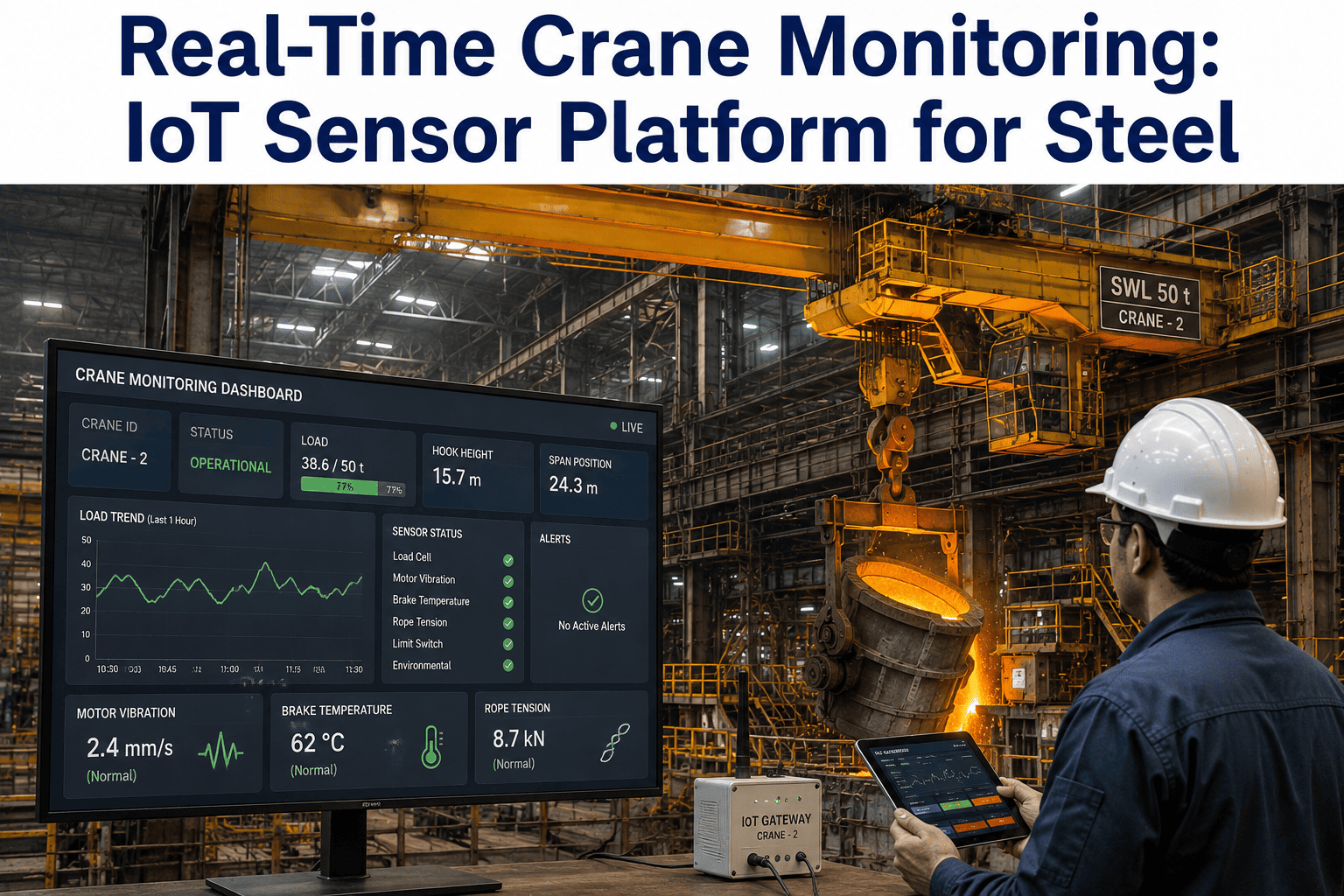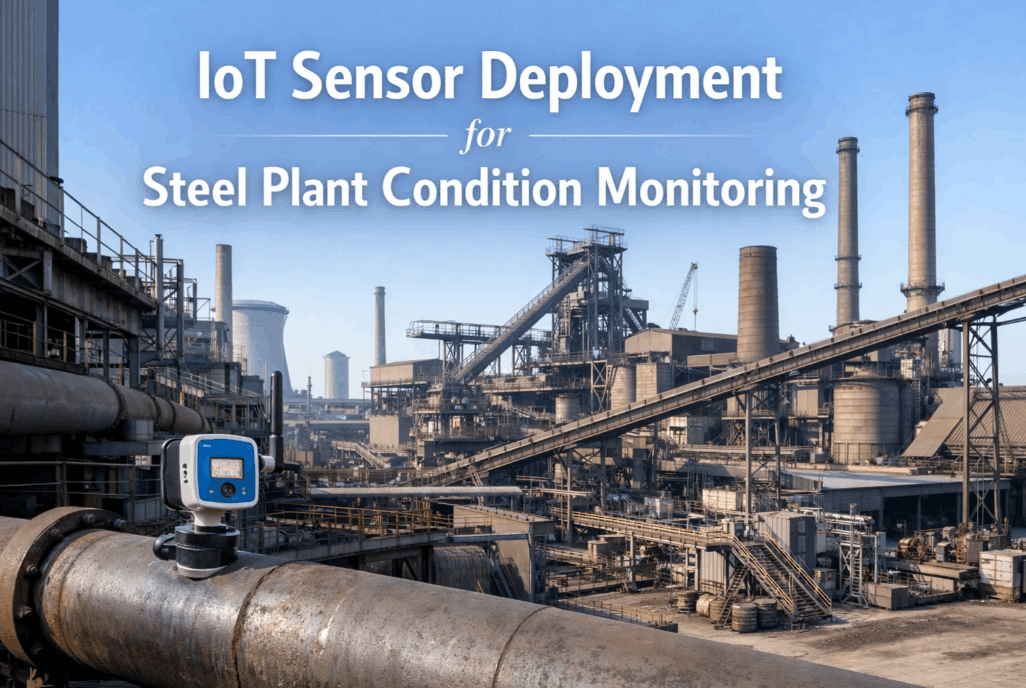
The modern steel mill is the ultimate crucible for hardware—a landscape of 1500°C temperatures, abrasive dust, and intense electromagnetic interference (EMI) that shreds standard electronics. For decades, this "Sensing Void" has forced reliable operators to rely on manual route inspections. IoT sensor deployment for steel plant condition monitoring changes the paradigm. By utilizing hardened, wireless mesh networks, iFactory provides 24/7 technical transparency into the plant's most inaccessible gearboxes and motors. Our steel-grade smart sensors don't just survive the heat; they thrive in it, providing the high-fidelity data needed for real-time steel condition AI-driven operations. Book a Sensor Mesh Audit to eliminate your sensing blind spots.
Deploy Hardened Wireless Sensors in Your Melt Shop
Bridge the sensing gap with IP69K-rated, EMI-shielded IoT sensors for steel plants. 100% signal reliability in the most extreme primary metal environments.
Overcoming the "Wireless Paradox" in IIoT Steel Operations
Wireless reliability in a steel plant is often considered impossible due to the "Faraday Cage" effect of metal structures and the noise of EAF arc blasts. IoT steel plant architecture must be built on a hybrid connectivity model. This guide to steel plant IoT deployment explores how we utilize WirelessHART for mission-critical control loops and **LoRaWAN** for plant-wide condition monitoring. Schedule a Demo to see our 99.9% packet delivery rate in action.
By deploying wireless sensors for steel assets, maintenance teams eliminate the massive CAPEX of industrial cabling—reducing install costs by up to 60%. These smart sensors for steel utilize specialized lithium-thionyl chloride (Li-SOCl2) batteries that provide over 5 years of life even when mounted on motor housings reaching 85°C. This persistent oversight allows for the 30% reduction in unplanned downtime required for global production competitiveness.
Four Core Sensing Technologies for Primary Metals
No single sensor covers every failure. iFactory **condition monitoring steel** telemetry combines four core sensing modes into a unified health score. Book a Technical Review.
High-Frequency Tri-Axial Vibration (Acceleration)
The steel vibration sensor is the frontline of mill reliability. It monitors stand motor bearings and gearboxes with sub-millimeter precision, detecting "Outer-Race" pitting (120+ hour warning) before failure occurs.
Non-Contact Infrared (IR) Pyrometry
Steel temperature monitoring requires non-contact sensors for assets like ladles and tundishes. Our IR sensors track thermal gradients through dust and steam, identifying refractory thinning in real-time.
Ultrasonic Acoustic Emission (Leak Detection)
High-pressure oxygen and nitrogen lines are prone to "Silent Leaks." Ultrasonic sensors identify the unique "Hiss" of gas leaks through ambient mill noise, saving thousands in annual atmospheric gas costs.
Motor Current (MCSA) via Digital CTs
Monitors the electrical health of the motor winding from the Motor Control Center (MCC). Non-invasive current clamps identify cracked rotor bars and load imbalances with zero machine contact.
Connectivity ROI: Wired vs. WirelessHART vs. LoRaWAN
A successful **IIoT steel** deployment balances reliability with scale. iFactory utilizes a hybrid mesh to ensure mission-critical data never drops.
| Connectivity Standard | Signal Reliability | Signal Bandwidth | Typical Range | Best Asset Use Case | Power Consumption |
|---|---|---|---|---|---|
| Wired Ethernet/PoE | 100.0% | Unlimited | <100m | Closed-Loop Control | External Power Required |
| WirelessHART (Mesh) | 99.9% (Self-Healing) | Moderate | <250m | Mission-Critical Melters | 3-Year Battery |
| LoRaWAN (Star) | 95.0% (Long Range) | Low | <2.5km | Auxiliary Pumps/Fans | 8-Year Battery |
| iFactory Hybrid Mesh | 99.9% (Optimized) | Automated | Dynamic | Entire Steel Facility | 5-Year Average |
By utilizing the steel plant IoT deployment hybrid model, owners achieve enterprise-wide coverage for the cost of a single wired mill-stand installation.
Five Technical Metrics for Steel-Grade Reliability
To achieve true **condition monitoring steel** excellence, our technical dashboard tracks five critical signal-health indicators. Explore the Live Dashboard.
1. Packet Delivery Rate (PDR) & Latency
Monitors the percentage of successful data transmissions. For critical vibration FFTs, we maintain >99% PDR even during high-EMI charge cycles in the EAF.
2. Signal-to-Noise Ratio (SNR) in EMI Zones
Tracks the clarity of the sensor signal against background electrical noise. Our sensors utilize hardware-level noise suppression to keep data clean near 50MW arc furnaces.
3. Sensor Junction & Case Temperature
Monitors the internal health of the sensor electronics. Predictive alerts trigger if the housing temperature exceeds 100°C, suggesting the need for additional thermal shielding.
4. Vibration Peak-to-Peak (g) Trend
The core metric for mechanical failure. AI recognizes the "Drift" in baseline vibration months before it reaches the ISO-standard alarm limits.
5. Battery Energy Density Remaining (%)
Uses advanced coulomb counting to predict exact battery replacement windows, ensuring that IoT sensors steel nodes never go dark during a critical production run.
Compliance & Safety: ATEX & EMI Integrity
Every IoT sensors steel deployment must align with international safety standards, especially near volatile melt-shop zones. Verify Your Compliance Status.
iFactory hardware is built for ATEX / IECEx Zone 1 & 2 compatibility, ensuring that wireless nodes are intrinsically safe even in potentially explosive environments near coke ovens or gas recovery systems.
Industrial IoT Safety & Regulatory Deliverables
The platform generates the core documentation required for Tier-1 steel infrastructure audits.
- ATEX Certification Records: Proof of intrinsic safety for every node deployed in hazardous zones.
- EMI Conflict Analysis: Documentation proving zero interference with critical safety PLCs.
- Signal Audit Trails: Timestamped records of every sensor pulse for forensic failure analysis.
- Cybersecurity Health Logs: Real-time monitoring of mesh encryption and gateway integrity.
- Calibration Status Certificates: Automated tracking of sensor accuracy for ISO 9001 compliance.
- Battery Recycling Program: End-of-life tracking for all wireless sensor hardware.
By converting your facility into a **smart sensors steel** ecosystem, you transform your sensing strategy into a measurable source of safety and operational stability.
60-Day Steel IoT Deployment Roadmap
Deploying **IIoT steel** sensors requires zero downtime. Our non-invasive mounting (Magnets & High-Heat Epoxy) allows for rapid rollout during normal shifts.
Identify "The Critical 15" mill assets and conduct a RF-spectrum audit of the melt shop. We identify the optimal gateway locations for 100% mesh coverage.
Install the secure Edge-Gateways. The steel plant IoT deployment backbone goes live, establishing the AES-128 encrypted tunnel to the iFactory engine.
Deploy the first 100 sensors on critical motors, gearboxes, and pumps. On Day 60, the final facility-wide rollout is complete and predictive alerts are initialized.
Stop Manual Inspections & Start Living the Data
Steel-grade wireless sensors, intrinsically safe hardware, and 99.9% mesh reliability—deployed in 60 days with zero mill downtime.
Signal-Failure Correlation: Predictive Sensing Matrix
Your sensing strategy should be predictive. iFactory assigns a failure probability based on subtle anomalies in the IoT sensors steel signal.
Sensor Signal Anomaly vs. Predicted Asset Failure Risk
| Tri-Axial Velocity Drift (>5mm/s) | Failure Risk: 92% | Asset: Stand Gearbox | Action: Schedule bearing replacement within 14 days |
| MCSA Winding Imbalance (>2%) | Failure Risk: 75% | Asset: 10MW Drive Motor | Action: Inspect winding insulation during next shift |
| Acoustic dB Spike (High freq) | Failure Risk: 60% | Asset: Hyd. Valve Rack | Action: Precise leak-mapping via technician handheld |
| IR Gradient Deviation (>5°C) | Failure Risk: 85% | Asset: Ladle Shell | Action: Remove ladle for emergency refractory audit |
The Steel Plant IoT Maturity Curve
**IIoT steel** ROI scales with the breadth of your sensor mesh. Moving from Level 1 to Level 4 reduces your maintenance labor costs by 40%.
| Maturity Level | Sensing Capability | Data Coverage | Typical Environment |
|---|---|---|---|
| Level 1 — Manual Routes | Handheld pens, paper checklists | 5–10% | Legacy integrated mills |
| Level 2 — Wired Telemetry | Point-to-point PLC wiring (High CAPEX) | 15–20% | Modernized Finishing Lines |
| Level 3 — Standard Wireless | Consumer-grade nodes, basic Wi-Fi | 35–50% | Light industrial packaging zones |
| Level 4 — Hardened Mesh | WirelessHART/LoRaWAN hardened nodes | 75–90% | Global "Smart Steel" Portfolios |
| Level 5 — Holisitic Sensing | Self-optimizing mesh, edge-AI analytics | 95–100% | Steel 4.0 Fully Autonomous Mills |
Key Takeaways: Why Hardened IoT is Your New Reliability Floor
Effective **condition monitoring steel** management is no longer optional—it is the foundation of structural safety. Book Your Pilot today.
Rapid ROI Deployment: Eliminate the million-dollar cost of industrial cabling with 99.9% reliable wireless mesh nodes.
High-Heat Reliability: Specialized lithium batteries and ceramic potting ensure 5yr+ life even in 100°C+ ambient heat.
Intrinsically Safe: ATEX/IECEx Zone 1 compatibility for 100% safety compliance in explosive gas zones.
Data Integrity: AI-driven noise suppression filters out 99.8% of melt-shop EMI for laboratory-clean vibration and thermal data.
Frequently Asked Questions
Below are the most common questions from maintenance leaders exploring **IoT sensors steel** deployment.
How do wireless sensors handle the magnetic fields of an Electric Arc Furnace?
Our sensors utilize specialized Mu-metal EMI shielding and digital noise-canceling circuits that specifically filter out the 50/60Hz harmonics generated by furnaces. This allows us to maintain stable vibration signals within meters of the arc.
What happens if a wireless gateway loses power?
Our iFactory gateways include a 4-hour battery backup and redundant LTE/5G failover. Additionally, the individual nodes can buffer up to 24 hours of data locally, re-syncing the entire backlog the moment the gateway returns to the mesh.
Can these sensors be mounted on curved, vibrating surfaces safely?
Yes. We use a combination of 50lb-rated neodymium magnets for non-invasive testing and high-heat industrial epoxy with stainless-steel "Stud-Mounting" for permanent vibration monitoring on rounded gearboxes.
Is the data secure from external cyber threats?
Absolutely. Every sensor-to-gateway and gateway-to-cloud connection is protected by military-grade AES-128 rotation encryption. We also support on-premise "Air-Gapped" deployments for facilities with higher security protocols.
How frequently do the sensors send data?
It is dynamic. For "Steady-State" monitoring, sensors might wake up every 30 minutes. However, the moment the on-edge AI detects an anomaly, the sensor shifts into "Burst Mode," sending real-time data until the event is resolved.
Get Your Custom Steel Plant IoT Deployment Proposal
Stop flying blind. Find out how much you can save on maintenance labor and equipment life with a facility-wide sensor mesh.