
Digital twin technology for Electric Arc Furnaces (EAF) is fundamentally rewriting how mini-mills model, monitor, and optimize the scrap-to-steel transformation. By creating a live virtual replica of the furnace shell, electrode systems, and power transformers, a digital twin analytics platform allows melt-shop teams to simulate power curves, predict refractory wear, and fine-tune slag foaming — without risking a single "Hot-Spot" breakthrough or catastrophic transformer failure. For steel manufacturers under pressure from rising scrap costs and tightening energy mandates, adopting AI-driven furnace optimization is the operational foundation that separates high-yield plants from those permanently playing catch-up. Understanding your obligations around Electrode Consumption KDEs, Refractory Wear DTEs, and real-time power scheduling is the only way to maintain a zero-breakdown furnace pulse.
See Your Furnace as a Live Digital Model
iFactory's EAF digital twin platform delivers real-time arc simulation, predictive refractory alerts, and AI-driven electrode optimization built for the world's most hostile melt-shop environments.
What Is a Digital Twin in Electric Arc Furnaces and Why Does It Matter for Profitability?
At the core of EAF digital twin technology is the convergence of high-frequency industrial IoT data streams, physics-based metallurgical models, and machine learning inference engines. When a furnace's digital twin detects a 0.8% deviation in arc harmonics or a 2°C shift in a water-cooled panel's exit temperature, it doesn't simply log the error — it simulates the downstream effect on refractory life, correlates the pattern against thousands of historical "break-through" precursors, and issues a preventative power-curve adjustment before damage can occur. This is the difference between simple SCADA monitoring and genuine furnace intelligence software. Manufacturers who book a demo with iFactory consistently report that the first live demonstration of this causal simulation capability is the moment EAF ROI becomes concrete and undeniable.
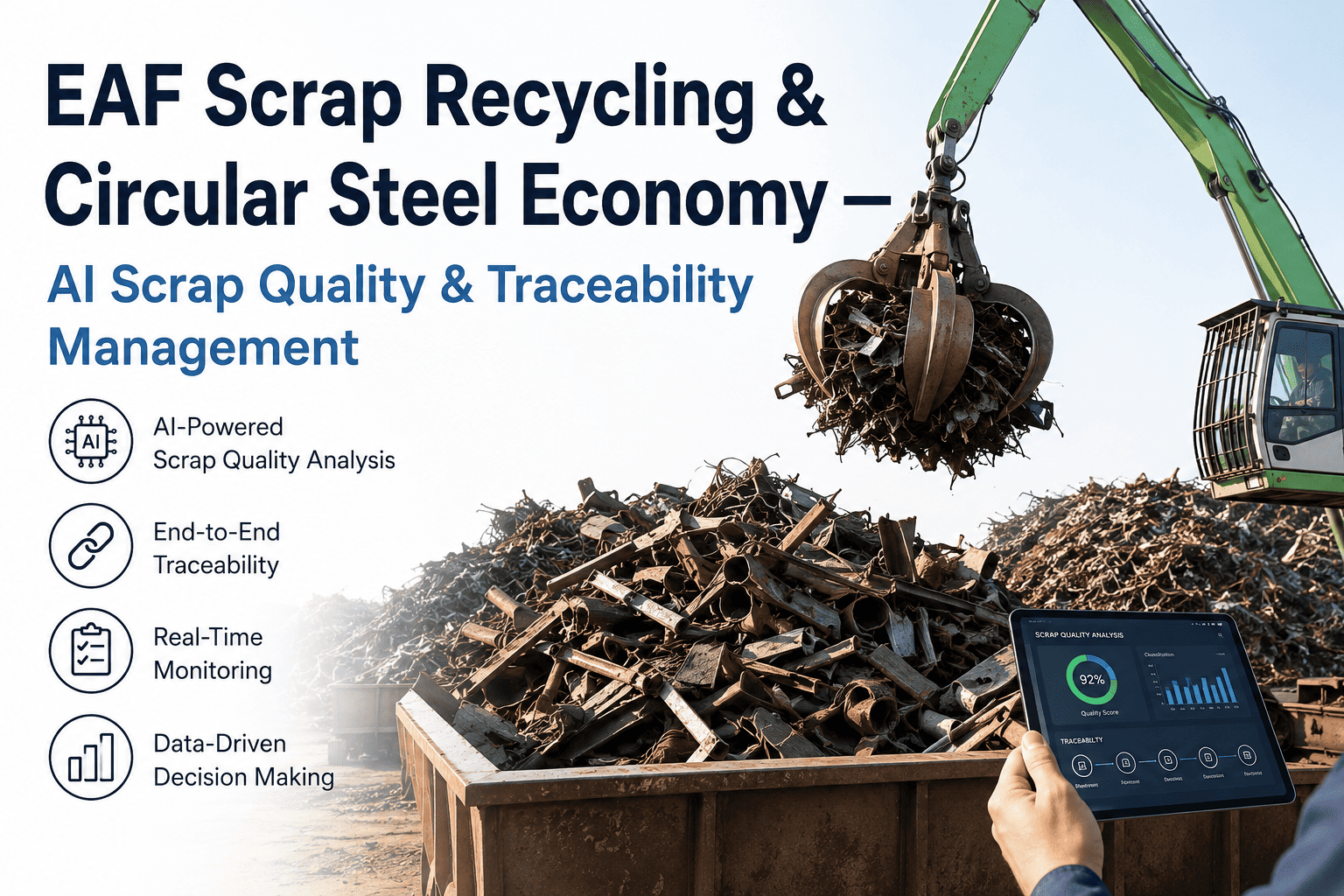
The implementation of a digital twin also serves as a critical pillar for Green Steel Decarbonization. By optimizing the specific energy consumption (SEC) per heat, the system minimizes unnecessary power-grid load and reduces the carbon intensity of every ton produced. Furthermore, the platform enables Scrap Utilization Flexibility, allowing melt-shop managers to model the metallurgical impact of varying scrap grades in real-time, ensuring chemistry targets are met at the lowest possible input cost. This "Metallurgical Decision Support" is what allows modern mini-mills to maintain razor-thin margins in volatile global markets.
Real-Time Electrode Synchronization
Every electrical component — transformers, electrodes, arc regulators — has a virtual counterpart updated via 200Hz IoT feeds. Arc stability maps propagate to the model within milliseconds, enabling live visibility into heat-transfer efficiency.
Predictive Refractory Simulation
Physics-informed models simulate how refractory lining wear and slag-foaming chemistry will evolve over the next 48 hours. Breakthrough risks and "Hot-Spot" anomalies are surfaced before they compromise shell integrity.
Zero-Risk Power Curve Testing
Melt-shop engineers can model new power setpoints, scrap-mix transitions, or burner adjustments entirely within the digital twin — validating "Tap-to-Tap" outcomes before execution, eliminating trial-and-error downtime.
Cross-Heat Intelligence Fusion
Digital twins aggregate data across all furnace heats, enabling heat-by-heat performance benchmarking, shared electrode wear models, and enterprise-wide melt-shop OEE visibility from a single layer.
Predictive Maintenance for EAF: How Digital Twins Eliminate Reactive Breakdowns
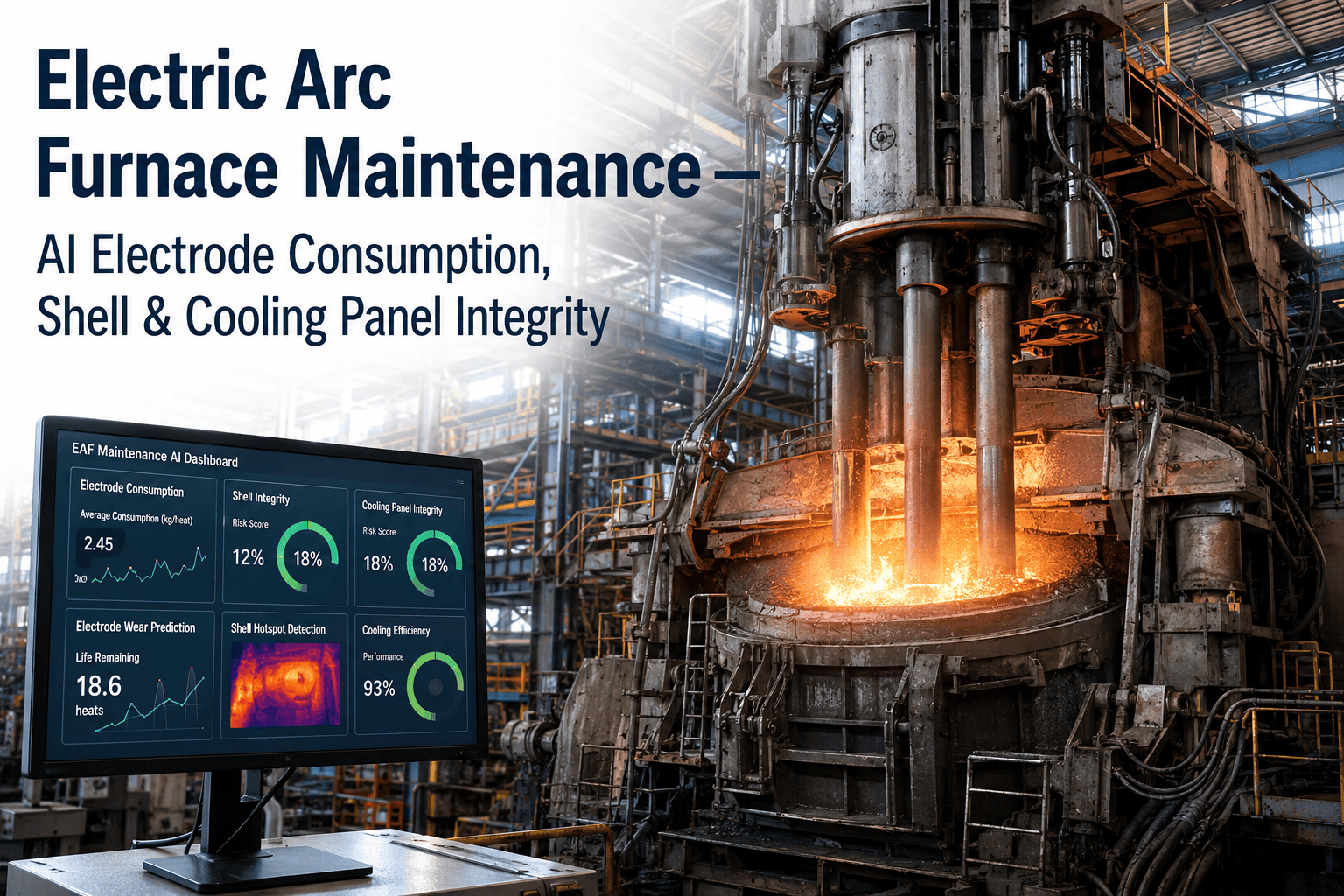
Digital twin platforms resolve the trade-off between furnace speed and maintenance cost by monitoring EAF health at the component level. Vibration spectral densities from transformer bushings, thermal flux across water-cooled panels, and hydraulic pressure signatures on electrode mast cylinders are analyzed continuously against degradation curves derived from thousands of historical "incident" events. When a pattern matches an electrode-breakage precursor — even a subtle vibration harmonic that would be imperceptible to legacy SCADA — the platform triggers an autonomous power ramp-down and a maintenance work order. This level of predictive precision allows mills to transition from calendar-based refractory patches to condition-based maintenance, significantly extending the life of the furnace lining.
The platform specifically addresses EBT (Eccentric Bottom Tap-hole) Wear Analytics and Burner/Oxygen-Injector Correlation. By monitoring the thermal signatures of the tap-hole area during every pour, the AI identifies early refractory erosion that could lead to a dangerous "Burn-Through." Simultaneously, it correlates oxygen-lancing patterns with refractory "Hot-Spot" development, providing actionable feedback to operators on how to balance melting speed with lining longevity. Plants that have deployed this approach with iFactory report that booking a demo was followed by a discovery that 47% of their historical furnace downtime had detectable precursors in data they were already collecting but not analyzing.
EAF Asset Performance Management Through Digital Twin Analytics: A Framework
The financial impact of EAF analytics compounds through energy. A furnace running at 85% of its theoretical efficiency due to "Arc Jitter" or "Slag-Sluggishness" is invisible to traditional production reporting but immediately visible in its digital twin. The platform identifies the specific causal chain: electrode-tip wear, slag chemistry imbalance, or transformer heat stress. It quantifies the efficiency gap in kWh per ton and dollars per heat. This level of granularity is what finance teams need to approve capital reinvestment with confidence, and it is why melt-shop directors routinely request a demo before completing their annual CapEx submission.
| EAF Capability | Traditional Approach | Digital Twin Approach | Financial Impact |
|---|---|---|---|
| Energy Performance | Monthly utility billing | Real-time kWh per heat produced | 12–18% energy cost reduction |
| Refractory Lifespan | Heats-based replacement | Condition-based wear modeling | 22–34% refractory cost deferral |
| Electrode Consumption | Visual tip inspection | AI-driven wear-rate prediction | 15–22% consumption saving |
| Throughput Monitoring | Shift-end tap counts | Continuous per-heat tracking vs. model | +6–11% recoverable output |
| Compliance Readiness | Manual emission logs | Continuous digital compliance log | Audit prep time cut by 70% |
Real-Time Operational Analytics: Turning Furnace Data Into Production Intelligence
Real-time operational analytics powered by EAF digital twin data transforms raw sensor streams into layered production intelligence that every stakeholder — from furnace operators to CFOs — can act on within their decision horizon. The architectural distinction between a digital twin analytics platform and a conventional SCADA or MES reporting module is the addition of causal inference: not just that a breaker tripped, but *why*, and what will happen to the next 5 heats if the current power trajectory continues.
Process Optimization Analytics: Closing the Loop on Scrap-to-Steel Control
Process optimization analytics within an EAF digital twin environment operate on a closed-loop principle. The platform detects a harmonic deviation, simulates its root cause (e.g., scrap cave-in), recommends a corrective electrode-position adjustment, and — on modernized furnaces — executes the adjustment autonomously. This autonomous correction is what moves "Smart Melting" from a visualization tool into an active production management system. For mini-mills managing 8–12 simultaneous heats per shift, this real-time process intelligence layer effectively multiplies the decision-making capacity of every melt-shop engineer on shift.
EAF Digital Twin Implementation Roadmap
Sensor Infrastructure & High-Frequency Historian
Deploy high-temp IoT nodes on shell panels and transformers. Establish millisecond-level data historian sync. This phase defines the "Resolution" of your furnace's virtual replica. Timeline: 10–14 weeks. CapEx: $80k–$250k per machine.
Digital Twin Model Calibration & AI Intelligence
Commission the digital twin using historical "Heat-Loss" data. Calibrate arc-stability and refractory models against real melting runs. Activate AI-driven anomaly detection. Timeline: 8–10 weeks. Platform: $40k–$85k/year.
Closed-Loop Power Optimization & Scheduling
Integrate digital twin with Furnace Level-2 and scheduling systems. Enable autonomous power-curve adjustments and predictive electrode mast alerts. Timeline: Ongoing. Incremental OpEx: $20k–$45k/year.
EAF Digital Twin Impact Across Key Steelmaking KPIs
The performance gains from deploying a digital twin analytics platform span every operational dimension — from OEE and energy efficiency to electrode life and compliance readiness. The chart below benchmarks the average improvement steel plants achieve within 12 months of full EAF digital twin deployment, based on iFactory customer data across carbon and specialty steel melt shops.
Electric Arc Furnace Analytics — Frequently Asked Questions
How does a digital twin differ from our existing EAF SCADA or Level-2 system?
SCADA displays what is happening now. A digital twin adds a predictive simulation layer that correlates live power data with thermal physics models to forecast electrode breakage and refractory wear hours before they occurs.
What specific data sources are needed for EAF digital twin analytics?
We ingest transformer vibration FFTs, electrode mast hydraulic pressures, water-cooling panel temperatures, harmonic distortion data, and chemical scrap-mix logs for 100% diagnostic fidelity.
Can iFactory predict transformer failure before it shuts down the melt shop?
Yes. By monitoring bushing vibrations and oil-thermal gradients, the AI identifies insulation breakdown precursors days in advance, allowing for a planned inspection during a routine shift change.
How does the platform help with electrode consumption savings?
The AI analyzes arc harmonics 200 times per second and recommends power setpoint adjustments to minimize tip oxidation and mechanical breakage caused by scrap cave-ins.
How long does it take to see ROI after deploying EAF analytics?
Most mini-mills achieve full payback within 6-9 months, primarily through a 15% reduction in electrode consumption and the elimination of just one single catastrophic "Hot-Spot" breakthrough.
Is the system compatible with older furnace transformers and mast controls?
Yes. iFactory utilizes non-invasive industrial IoT sensors to ingest data from legacy hardware, bringing modern AI intelligence to furnaces built decades ago.
How does the digital twin handle slag foaming optimization?
The platform correlates acoustic signatures and electrical arc stability KDEs to determine real-time slag height, recommending oxygen/carbon injection adjustments to protect refractories and optimize heat transfer.
Does iFactory provide emission tracking for compliance?
Absolutely. The continuous digital log records all furnace states and burner parameters, reducing EPA/compliance audit preparation time from 3 days to under 4 hours.
Deploy a Digital Twin That Actually Optimizes Your EAF
iFactory's EAF digital twin analytics platform delivers real-time asset intelligence, closed-loop power optimization, and AI-driven refractory management — purpose-built for the melt-shop floor.


-analytics-electrode,-shell,-cooling.png)