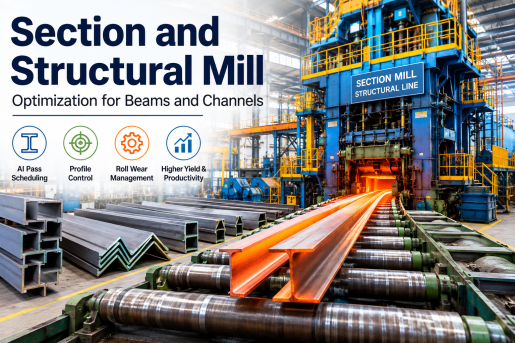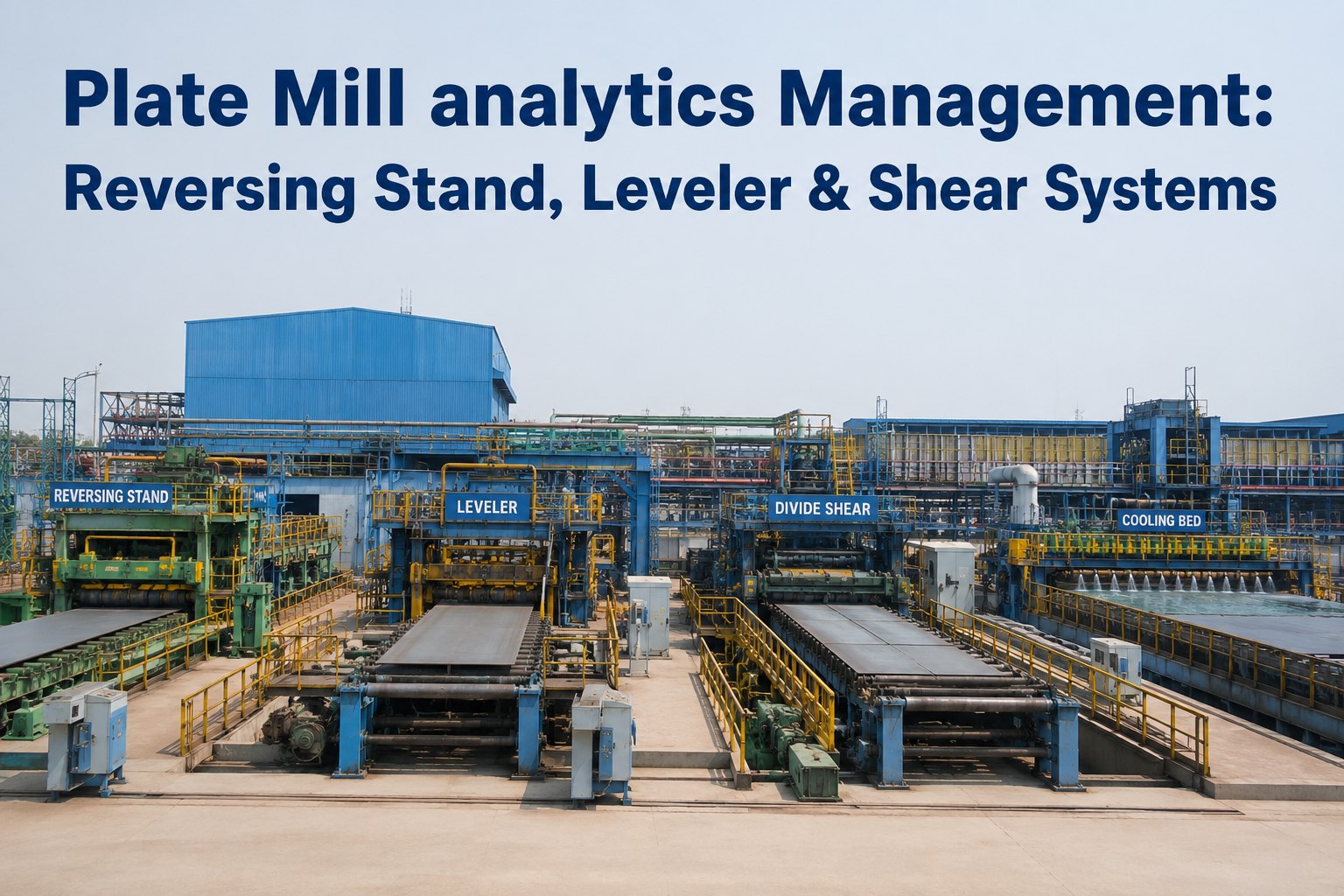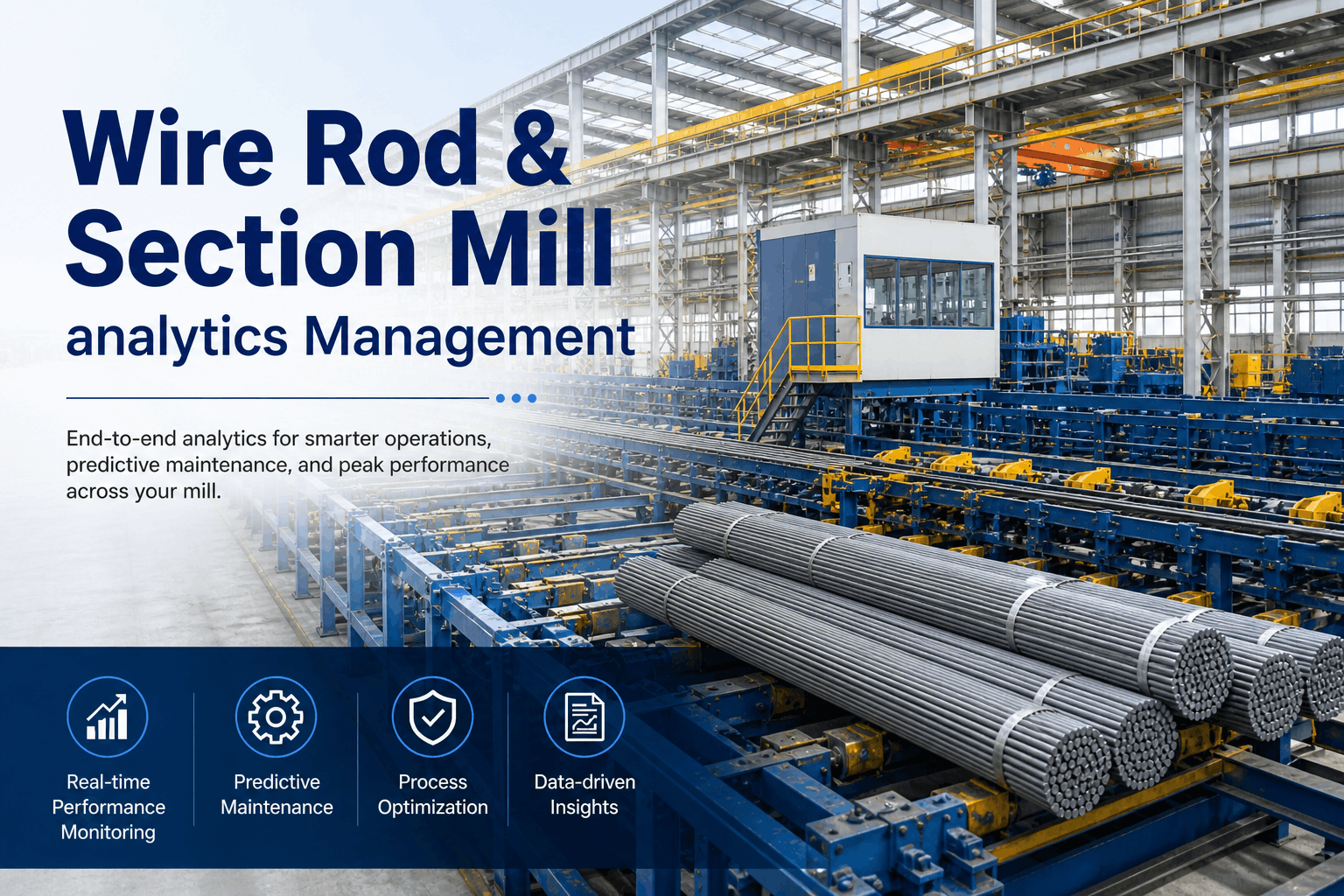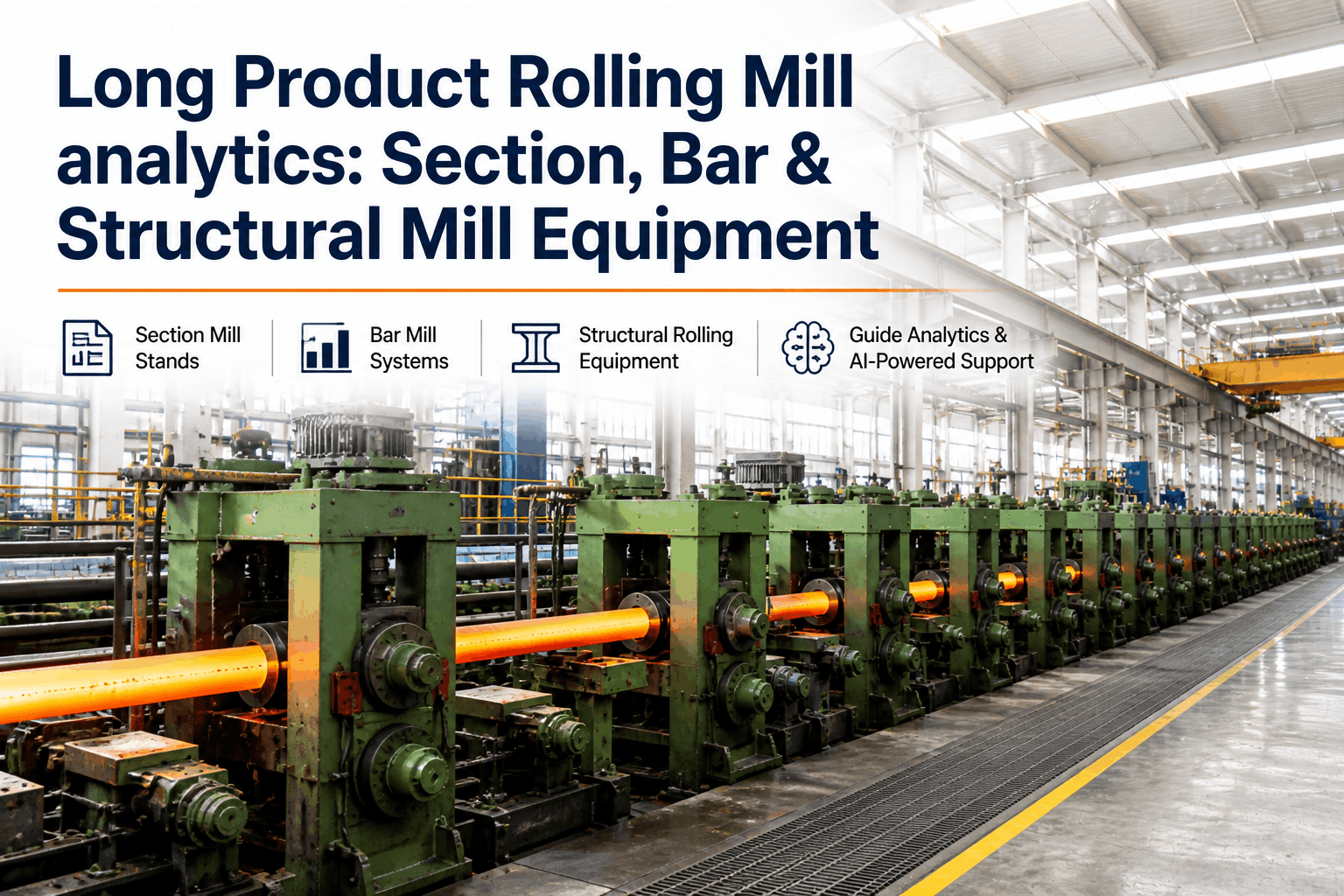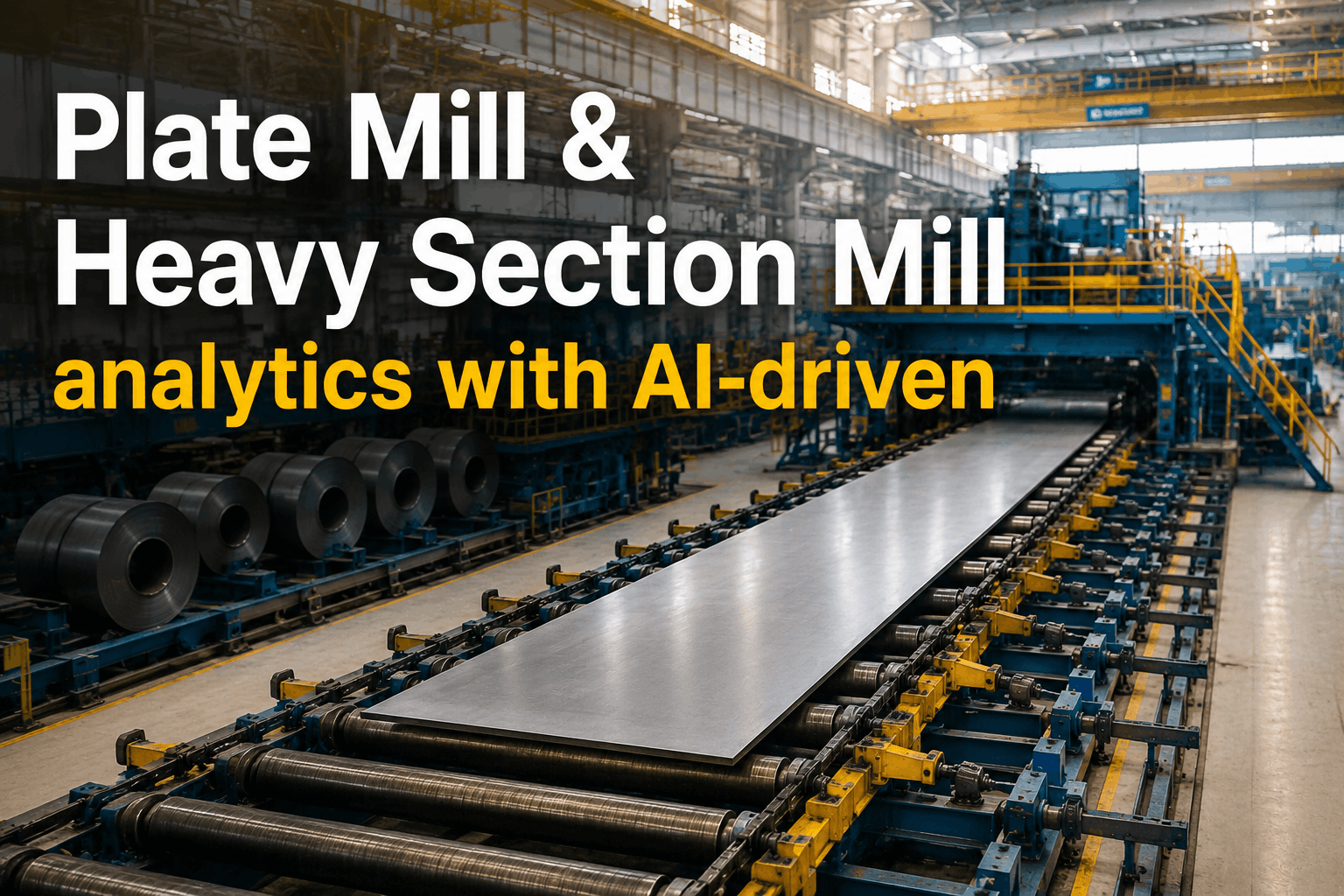
In the downstream segment of a steel plant, **plate mill and heavy section mill analytics** represents the final frontier of metallurgical precision and asset endurance. These mills process massive slabs into high-value structural components, yet their efficiency is constantly eroded by the brutal mechanical impact of 20-ton plates and the high-pressure spray of descaling systems. Legacy monitoring focuses on "Mill Speed" while ignoring the subtle vibration harmonics of table rollers or the pressure-decay signatures of descaler nozzles—the primary causes of rolled-in scale and unplanned downtime. iFactory’s AI-driven suite transforms these mechanical giants into intelligent ecosystems: tracking shear blade fatigue with acoustic fingerprints, monitoring descaler performance through real-time hydraulic twins, and predicting table roller bearing failure before it halts the production line. Global steel producers who book a rolling mill audit are reducing "Cobble" rates by 35% while extending the life of critical mill components by over a thousand operating hours.
Is Your Plate Mill Ready for Autonomous Quality Control?
Deploy real-time table roller wear tracking, descaler nozzle health AI, and shear blade fatigue modeling in one unified finishing-mill intelligence platform.
The Strategic Impact of AI-Driven Rolling & Section Mill Stewardship
Plate and section mills are the most mechanically intensive environments in the steel industry. A standard plate mill may feature over 300 **table rollers**, each a potential point of failure. Traditional maintenance is reactive—waiting for a roller to seize or a shear blade to chip before intervening. **AI-driven mill analytics** shifts this to a "Proactive Quality" model. By correlating rolling torque, water pressure, and vibration harmonics, iFactory provides a continuous "Health Score" for every critical stand and descaler. This allows operators to maintain tight tolerances and pristine surface finishes at maximum mill speeds. When structural steel leaders schedule a technical demo, they discover that surface defects are often predicted hours in advance through subtle shifts in the descaler's hydraulic fingerprint.
Table Roller Wear AI
Monitor hundreds of rollers simultaneously. AI identifies bearing degradation and surface "Flats" caused by plate impact, preventing roller-to-plate friction marks.
Descaler Performance PM
Track nozzle pressure profiles and flow rates. AI detects partial blockages or nozzle wear that leads to "Rolled-in Scale," ensuring 100% scale removal efficiency.
Shear Blade Fatigue AI
Acoustic and torque sensors monitor every cut. Predict blade sharpness and edge quality to eliminate burrs and extend blade-change intervals.
Mill Stand Vibration AI
Detect mill "Chatter" and work-roll eccentricity. AI provides real-time feedback to adjust screw-down pressure or rolling speed to maintain gauge precision.
Cooling Bed Uniformity
Thermal sensors track plate cooling rates. Prevent warping and "Waviness" by automatically adjusting fan speeds and bed rotation based on plate thickness.
Main Drive Motor Health
Analyze current harmonics and winding temperatures. Detect insulation breakdown or bearing failure in the 5MW+ motors powering the mill stands.
"Our Plate Mill was struggling with 'Rolled-in Scale' defects that were only caught in final inspection. iFactory's descaler analytics showed us that our middle-bank nozzles were losing pressure by 12% during high-speed runs. We fixed the pump synchronization and our surface-related rejection rate dropped from 4% to 0.5% in just one month."
Solving the "Blind Spots" in Plate & Structural Section Rolling
Operating a high-capacity mill without predictive asset intelligence leads to "Maintenance Overshooting"—replacing expensive rollers and blades too early, or "Reactive Chaos"—dealing with a jammed cooling bed. iFactory's **Plate Mill AI** solves this by providing a unified view of the mill's physical state. If you are facing surface quality issues or motor downtime, you can book a mill health audit today.
Problem 1 — Inconsistent Descaling (Rolled-in Scale)
Scale is the enemy of surface quality. Even a single clogged nozzle can leave a "streak" of scale that is rolled into the plate surface. iFactory's AI monitors the pressure-drop across each spray header and uses physics-based models to detect partial clogs. The system notifies maintenance *before* the scale becomes a rejection risk.
Problem 2 — Table Roller Bearing Failures
When a table roller bearing fails, it can seize, causing the plate to "skid" and creating surface scratches. With hundreds of rollers, manual inspection is impossible. iFactory uses high-frequency vibration sensors (10kHz+) and AI to map the health of every bearing, allowing for "Batch Replacement" during planned outages.
Problem 3 — Shear Edge Quality & Burrs
Dull shear blades create "Ragged Edges" that require expensive manual grinding. iFactory's "Shear Intelligence" module analyzes the acoustic signature of the cut and the motor torque. When the blade reaches its "Dullness Threshold," the AI flags it for a flip or replacement, ensuring every plate leaves the mill with a perfect edge.
Eliminate up to 80% of rolled-in scale rejections with predictive descaler performance monitoring.
Reduce table-related delays by 45% through predictive bearing and motor analytics.
Extend shear blade life by 25% while maintaining strict ISO edge-quality standards.
Identify winding hotspots and harmonic losses to reduce net energy consumption per ton rolled.
The ROI of Intelligence: KPI Gains from iFactory Mill Analytics
Optimizing your plate or structural mill isn't just a maintenance win; it's a direct booster for your throughput and customer satisfaction. The benchmark chart below shows the average gains achieved by leading steelmakers within 12 months of adopting iFactory's mill intelligence platform. These results are driven by "Physics-Based AI." Mill managers who book a demo today are securing these stability gains for the next campaign.
Stop Reactive Rolling. Start Driving Mill Excellence Today.
Our platform gives structural steel producers continuous descaler health mapping, table roller fatigue tracking, and audit-ready shear analytics—all in one system.
Frequently Asked Questions: Plate Mill & Heavy Section Mill Analytics
How does iFactory detect partial clogs in descaler nozzles?
We use "Hydraulic Signature Analysis." By monitoring the high-frequency pressure profile of each spray header and correlating it with the pump speed and flow rate, iFactory's AI identifies the subtle back-pressure shifts associated with nozzle scaling or debris clogs. This allows you to perform targeted cleaning before quality drops.
Can we monitor all 300+ table rollers with this platform?
Yes. iFactory utilizes a "Mesh-Network" of wireless vibration and thermal sensors for table rollers. These sensors are specifically hardened for mill impact environments. The AI aggregates the data into a "Heat Map" of the roller table, highlighting individual rollers that are approaching bearing failure.
What is the ROI on shear blade fatigue modeling?
The ROI is achieved through two paths: 1) Extending the blade life by avoiding "Pre-emptive Changing" and 2) Eliminating the cost of manual grinding or customer rejections due to burred edges. Most mills see a full ROI on this module within 6 months.
Does the platform support structural section mills (I-beams, H-beams)?
Absolutely. For section mills, we add specific analytics for the **Universal Mill** stands, monitoring the horizontal and vertical roll forces and the health of the beam-blank cooling systems to ensure dimensional stability across the entire section profile.
How does the AI handle mill "Chatter" during rolling?
Chatter is a complex vibration phenomenon. iFactory's AI monitors the vibration frequencies of the mill housing and work-roll chocks. When it detects the early-stage resonant harmonics of chatter, it provides automated guidance to the mill pulpit to adjust speed or tension, preventing roll marks.
Can we track mill motor harmonics for energy saving?
Yes. By analyzing the electrical waveform of the main drive motors, iFactory identifies "Non-Work Torque"—energy wasted on friction, misalignment, or electrical losses. This allows maintenance to precisely target mechanical issues that are driving up your "Power per Ton" rolling cost.
Is the platform compatible with older legacy mills?
Yes. iFactory is designed to bridge the digital gap for legacy assets. We can install "Smart Sensors" on older mill stands and connect them to our Edge Gateway, providing modern AI-driven insights without needing a multi-million dollar automation overhaul.
How long does implementation take for a typical Plate Mill?
A standard iFactory Plate Mill deployment takes **8 to 10 weeks**. This includes sensor installation, Edge Gateway setup, and the "Learning Phase" where the AI baselines the unique vibration and thermal characteristics of your specific rolling cycles. Request an implementation roadmap here.