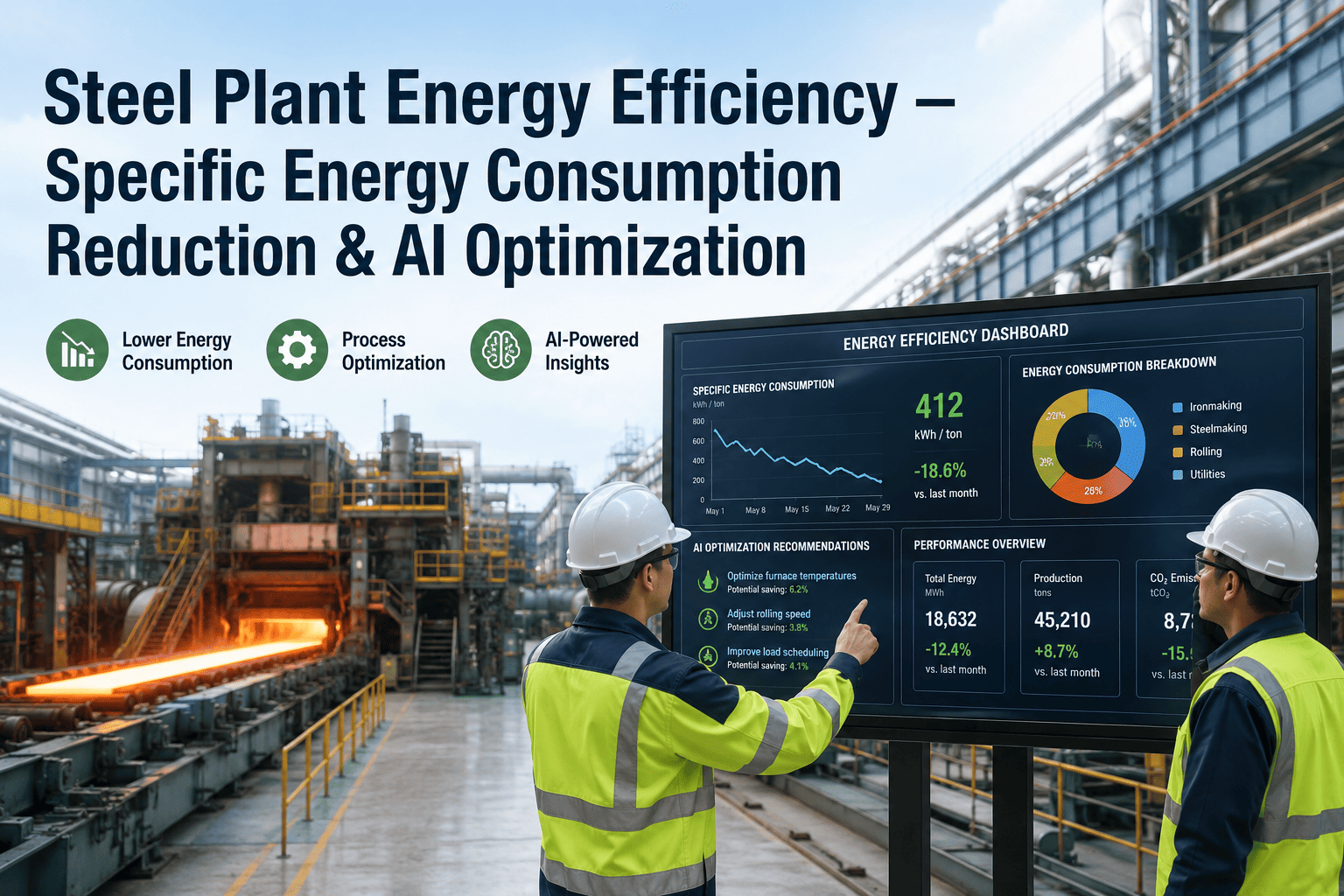
An integrated BF-BOF steel plant consumes between 17 and 23 GJ per tonne of crude steel — but that number hides a critical truth. Energy does not flow evenly. Some processes swallow 45% of total plant energy while contributing 12% of value-add. Others flare recoverable byproduct gases worth millions per year because nobody is watching in real time. The global average BF-BOF energy intensity sits at 18.9 GJ/t crude steel, while the best-practice reference value is 17.67 GJ/t — a gap of 1.26 GJ/tonne representing 6.6% wasted energy across every tonne produced. That gap, multiplied across a 2 MTPA plant, is $4–8 million in annual energy cost that vanishes into furnaces, flares, and thermal losses without a single alert. iFactory delivers process-level SEC analytics that make every gigajoule visible — book a 30-minute consultation to find where your plant is bleeding energy.
Process-Wise SEC Analytics
See Where Every
Gigajoule Goes.
Fix What Wastes It.
AI-Powered SEC Breakdown Across Coke Making, Sintering, Blast Furnace, BOF, Casting & Rolling — With Global Benchmarks Built In
Book a Free Consultation
18.9
GJ/t — Global Average SEC for BF-BOF Route
17.67
GJ/t — World Best Practice Reference Value
6.6%
Energy Efficiency Gap Between Average and Best Practice
6–10 GJ/t
Recoverable Energy in Off-Gases (BFG, COG, BOFG)
The Process-by-Process SEC Map: Where Energy Actually Goes
Every integrated steel plant follows the same thermodynamic chain — coke making feeds the blast furnace, which feeds the BOF, which feeds casting and rolling. But energy consumption at each stage varies enormously between plants. The table below maps the SEC contribution, world best practice benchmarks, and AI optimization potential for each process — giving you the exact roadmap to close your plant's efficiency gap.
Coke Making
3.5–5.0GJ/t coke
2.08GJ/t coke
8–12%
Sintering
1.8–3.2GJ/t sinter
1.26GJ/t sinter
5–8%
Blast Furnace
12.0–18.8GJ/t hot metal
10.4GJ/t hot metal
6–10%
BOF (Steelmaking)
0.2–0.4GJ/t steel
Net exporter(BOF gas + steam)
15–20% recovery
Continuous Casting
0.1–0.3GJ/t steel
0.04GJ/t steel
3–5%
Hot Rolling
1.8–2.5GJ/t rolled steel
1.34GJ/t rolled steel
8–12%
Utilities & Power Plant
Variesby configuration
Optimized gas network+ WHR systems
12–18%
Deep Dive: The Three Processes That Define Your Plant's SEC
Blast furnace, coke oven, and hot rolling together account for 75% of total plant energy consumption. If your SEC reduction strategy does not start with these three, you are optimizing the margins while ignoring the core. Here is exactly what AI monitors and how it finds savings that manual audits cannot.
45% of plant energy
Blast Furnace — The Energy Giant
12.0–18.8
GJ/t hot metal (typical range)
460–500
kg reductant/t hot metal (global avg)
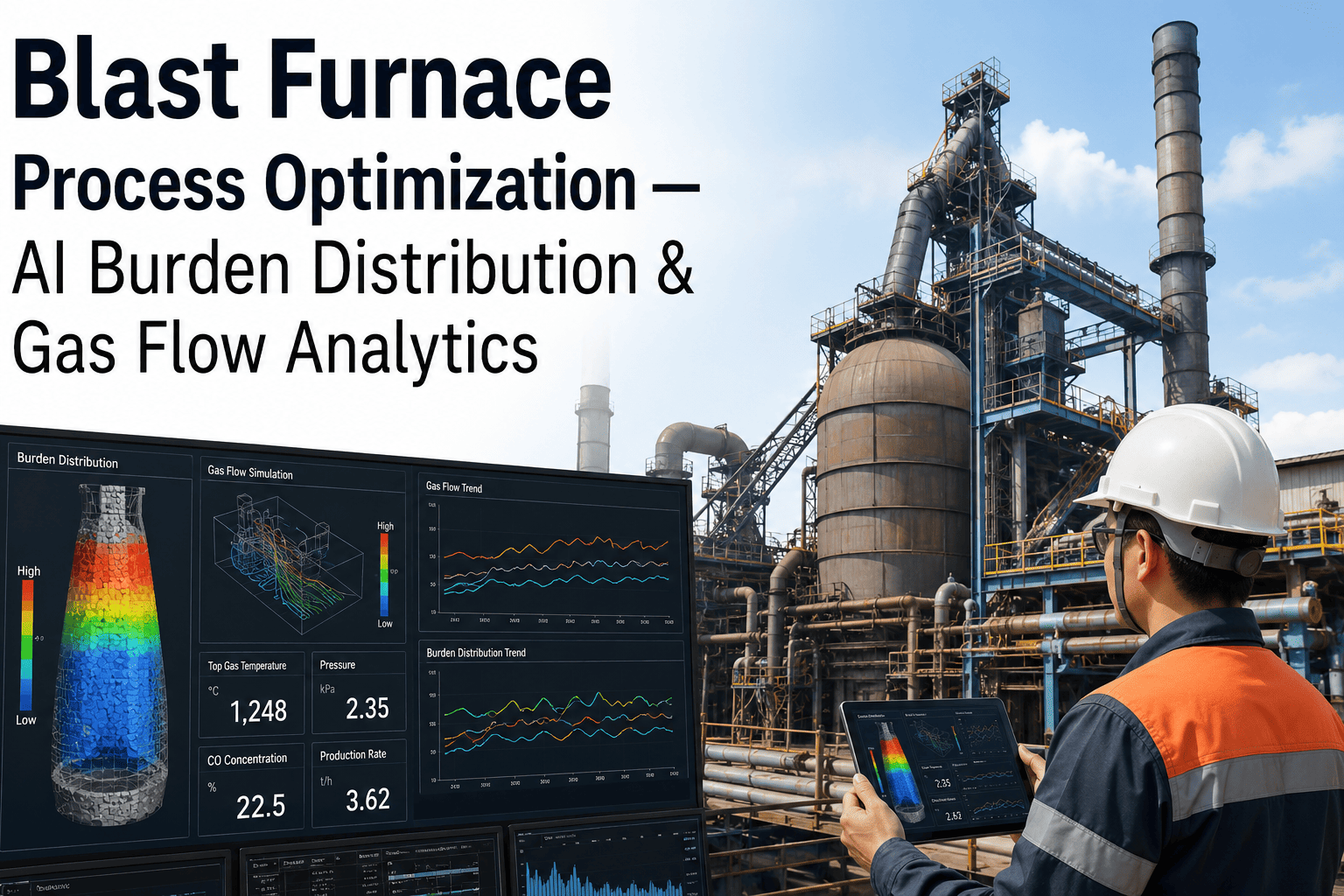
The blast furnace is the single largest energy consumer in any integrated steel plant. Its SEC is governed by coke rate, hot blast temperature, burden distribution, PCI injection rate, and the quality of iron-bearing charge. Indian blast furnaces average 18.8 GJ/t hot metal — compared to 16.8 GJ/t best practice globally — a gap of 2.0 GJ/t that represents the largest single optimization opportunity in the plant.
AI monitors burden composition, tuyere zone temperature, top gas analysis (CO/CO2 ratio), and stove efficiency simultaneously — adjusting hot blast parameters and PCI rate every 60 seconds to maintain the lowest achievable coke rate while preserving hot metal quality.
14% of plant energy
Coke Oven — The Hidden Energy Drain
3.5–5.0
GJ/t coke (typical range)
51.2%
of input energy used as coking heat
Only 51% of input energy goes into actual coking. The rest escapes through flue gas losses, sensible heat in hot coke, radiation from oven walls, and coke oven gas that goes unrecovered. The world best practice SEC for coke making is 2.08 GJ/t coke — less than half of what many plants actually consume. Dry coke quenching alone can recover 24% of the sensible heat that wet quenching throws away as steam.
AI optimizes coking time based on coal blend volatility, monitors wall temperatures for heat penetration uniformity, detects door leaks via thermal imaging correlation, and schedules coke oven gas recovery to maximize byproduct capture rather than flaring.
16% of plant energy
Hot Rolling — The Thermal Synchronization Challenge
1.8–2.5
GJ/t rolled steel (typical range)
65–80%
of rolling energy consumed by reheating furnace
The reheating furnace dominates rolling mill energy. When slabs sit waiting for the mill, the furnace holds temperature and burns fuel for zero productivity. When rolling schedules change mid-shift, furnaces either overheat or underheat — creating both energy waste and quality defects. Best practice hot rolling consumes 1.34 GJ/t — achievable only when furnace and mill operate as a synchronized system.
AI synchronizes reheating furnace temperature profiles with actual rolling schedules in real time. If a delay is predicted, furnace setpoints drop automatically. When throughput accelerates, the furnace ramps in advance. This eliminates thermal holding losses and reduces reheating fuel consumption by 8–12%.
The Byproduct Gas Economy: Energy You Already Produce But Do Not Use
An integrated steel plant produces three major byproduct gases — coke oven gas (COG), blast furnace gas (BFG), and BOF gas (BOFG). Together, these contain 6–10 GJ of recoverable energy per tonne of steel. Yet globally, 2.5% of COG, 5.5% of BFG, and a staggering 26.4% of BOF gas is simply flared — burned off with zero energy recovery.
Coke Oven Gas (COG)
CV: 17–18 MJ/Nm3
Used for: coke oven underfiring, blast furnace injection, power generation, chemical synthesis
2.5% flared globally
AI optimizes COG distribution across consumers based on real-time demand, prioritizing highest-value uses over flaring
Blast Furnace Gas (BFG)
CV: 3.0–3.5 MJ/Nm3
Used for: hot blast stoves, power generation, sinter ignition, reheating furnaces
5.5% flared globally
AI predicts BFG production volume from blast furnace operating parameters and pre-allocates to highest-efficiency consumers
BOF Gas (BOFG)
CV: 7–9 MJ/Nm3
Used for: power generation, reheating furnaces, lime kilns, secondary metallurgy
26.4% flared globally
AI captures BOF gas during intermittent blow cycles by predicting tap-to-tap timing and pre-positioning gas holders
In total, recoverable off-gas energy in an integrated steel plant can reach 6–10 GJ per tonne of steel. Plants with optimized gas networks and AI-managed distribution reduce external energy purchases by 15–25% — turning waste streams into their most cost-effective fuel source.
Benchmarking Your Plant: Where Do You Stand?
SEC varies dramatically even within the same production technology. The difference between the most efficient and least efficient BF-BOF plants is over 6 GJ/tonne — representing a cost difference of $15–40 per tonne of crude steel at current energy prices.
17.0–18.0
World Best Practice
Japan, South Korea, Germany — advanced heat recovery, optimized gas networks, AI-assisted operations
18.0–20.0
Competitive Range
EU average, top-quartile Indian plants — partial heat recovery, some automation, periodic energy audits
20.0–23.0
Industry Average
US average, developing country plants — limited automation, manual monitoring, reactive maintenance
23.0+
Underperforming
Aging facilities, poor gas recovery, minimal instrumentation — highest potential for AI-driven improvement
AI Optimization Moves Plants 1.2–3.0 GJ/t Toward Best Practice
What AI Anomaly Detection Actually Catches
Manual energy audits happen quarterly or annually. Energy anomalies happen every shift. AI monitors hundreds of sensor streams continuously and flags deviations that escape human attention — catching the slow drifts and sudden spikes that compound into millions in wasted energy over a year.
Blast Furnace
Coke rate creep — gradual increase of 5–15 kg/t hot metal over weeks due to burden quality drift, undetected by shift-level reporting
Impact: +0.15–0.45 GJ/t hot metal ($200K–$600K/year at 2 MTPA)
Coke Oven
Door seal degradation — air infiltration raises flue gas volume 8–12%, increasing fuel consumption while reducing coke quality
Impact: +0.3–0.5 GJ/t coke ($150K–$300K/year per battery)
Reheating Furnace
Excess air infiltration — furnace operating at 15–25% excess air instead of optimal 5–10%, invisible without continuous O2 monitoring
Impact: +0.2–0.4 GJ/t rolled product ($180K–$350K/year)
Gas Network
BFG flaring during blast furnace irregularities — gas holder management fails to absorb production surges, sending recoverable energy to flare stack
Impact: 3–8% of total BFG production lost ($300K–$800K/year)
Hot Blast Stoves
Dome temperature decay — refractory degradation reduces stove efficiency by 2–4% over months, lowering hot blast temperature and increasing BF coke rate
Impact: +0.1–0.3 GJ/t hot metal ($150K–$400K/year)
Power Plant / CPP
Turbine efficiency drop — condenser fouling and steam leaks reduce captive power output, forcing increased grid import at peak tariff rates
Impact: 5–10% higher electricity cost ($250K–$500K/year)
The iFactory SEC Analytics Platform
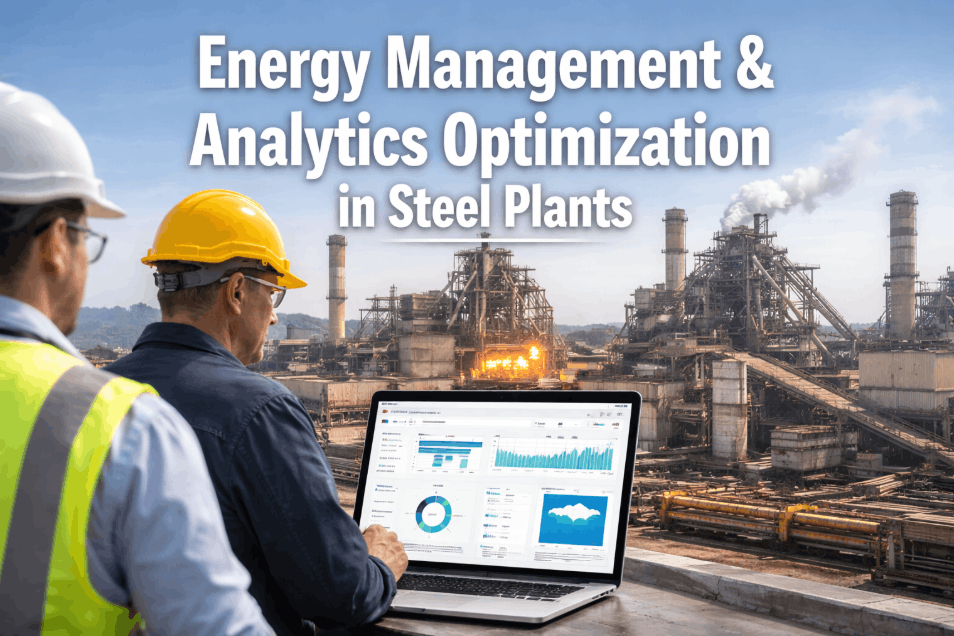
iFactory connects directly to your existing SCADA, DCS, and historian systems via OPC-UA, Modbus, and MQTT — requiring no control system modifications. Within 4–6 weeks, you get a live SEC dashboard that breaks energy down to individual process units, compares against global benchmarks, and flags anomalies the moment they begin.
Frequently Asked Questions
What is SEC and why is process-level breakdown important?
Specific Energy Consumption (SEC) measures energy consumed per unit of production — typically expressed in GJ per tonne of crude steel. Plant-level SEC is a single number that hides enormous variation between processes. A blast furnace consuming 45% of total energy at 18.8 GJ/t while the world best practice is 10.4 GJ/t represents a fundamentally different optimization opportunity than a rolling mill consuming 16% at 2.5 GJ/t versus 1.34 GJ/t. Process-level breakdown reveals exactly where savings exist and how large they are.
How does iFactory calculate SEC for each process unit?
The platform ingests energy input data (fuel flow meters, power meters, gas flow meters) and production output data (tonnage from weigh scales, counters) for each process unit via direct integration with SCADA historians, DCS, and IoT sensors. SEC is calculated as total energy input divided by production output, normalized per tonne, and compared against configurable benchmarks — including your own historical baselines and global best practice values.
Can the platform detect energy anomalies that manual audits miss?
Yes. Manual energy audits capture a snapshot at one point in time. AI monitors continuously — analyzing hundreds of sensor streams every 60 seconds. It catches slow drifts like coke rate creep that increases by 5–15 kg/t over weeks, door seal degradation, excess air infiltration, and gas flaring events that occur between audit cycles. Plants using continuous AI monitoring report catching 3–5x more energy anomalies than quarterly manual audits.
What integration does the platform require?
iFactory connects to existing infrastructure via OPC-UA, Modbus TCP, MQTT, and REST APIs. No control system modifications are required. The platform reads data from your existing historians (PI, IP.21, Wonderware), DCS, and SCADA systems — wrapping them into a unified analytics layer without disturbing production. Typical deployment takes 4–6 weeks from connection to live dashboard.
Your Plant's SEC Is Not One Number. It Is Six.
iFactory breaks energy consumption down to individual process units — with global benchmarks, AI anomaly detection, and actionable insights that tell you exactly where to save and how much. Every process measured. Every deviation flagged. Every gigajoule accounted for.