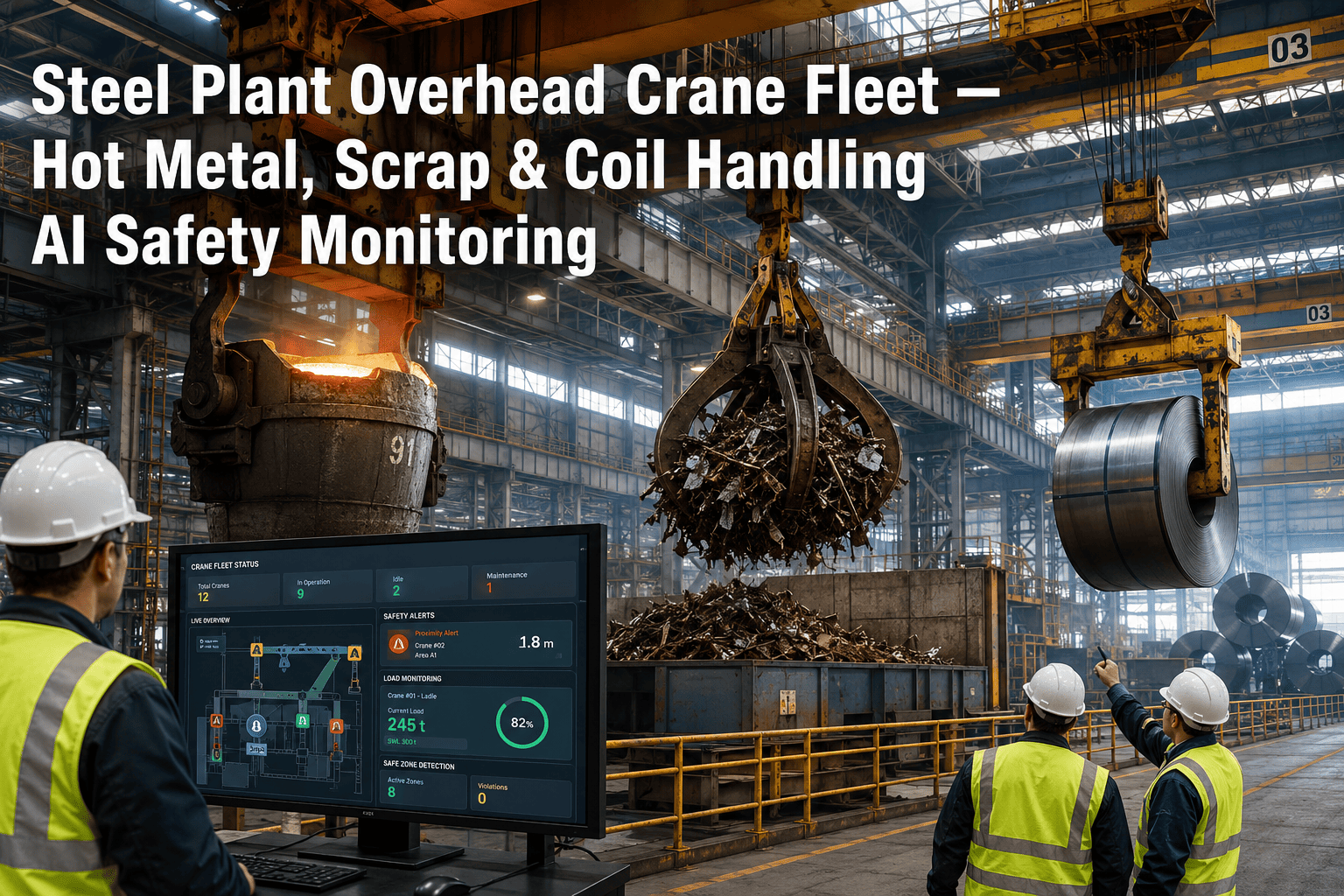
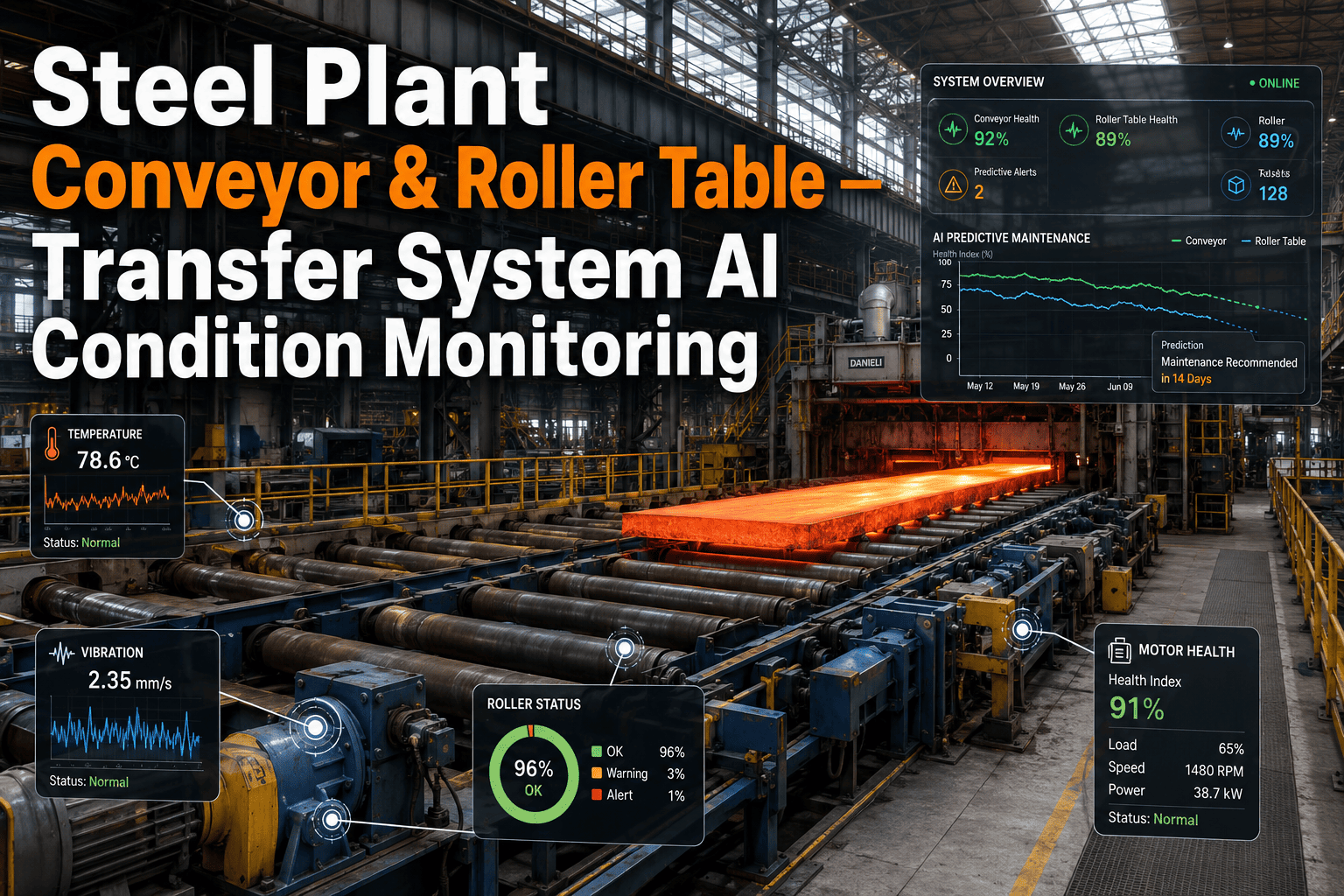
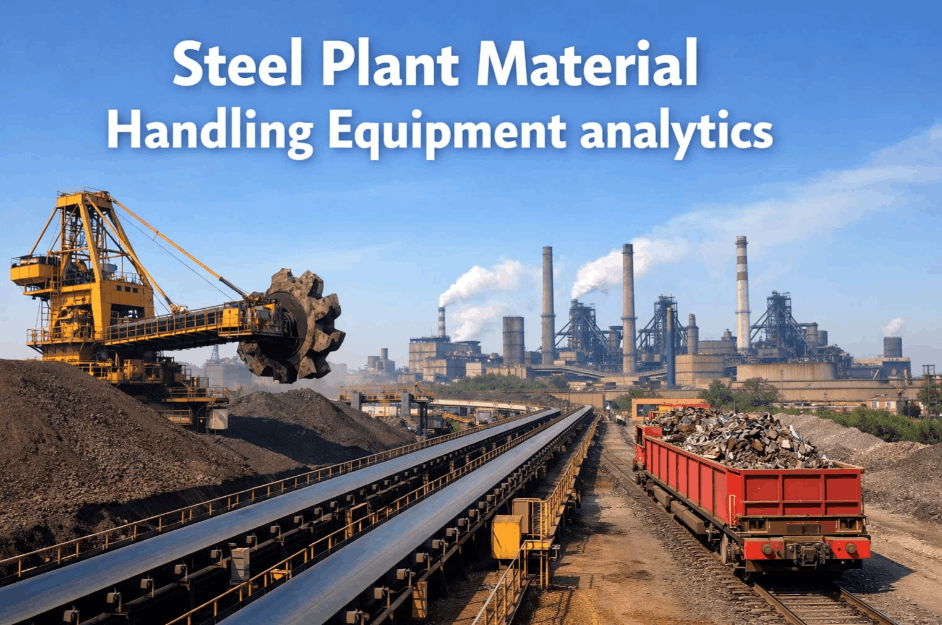
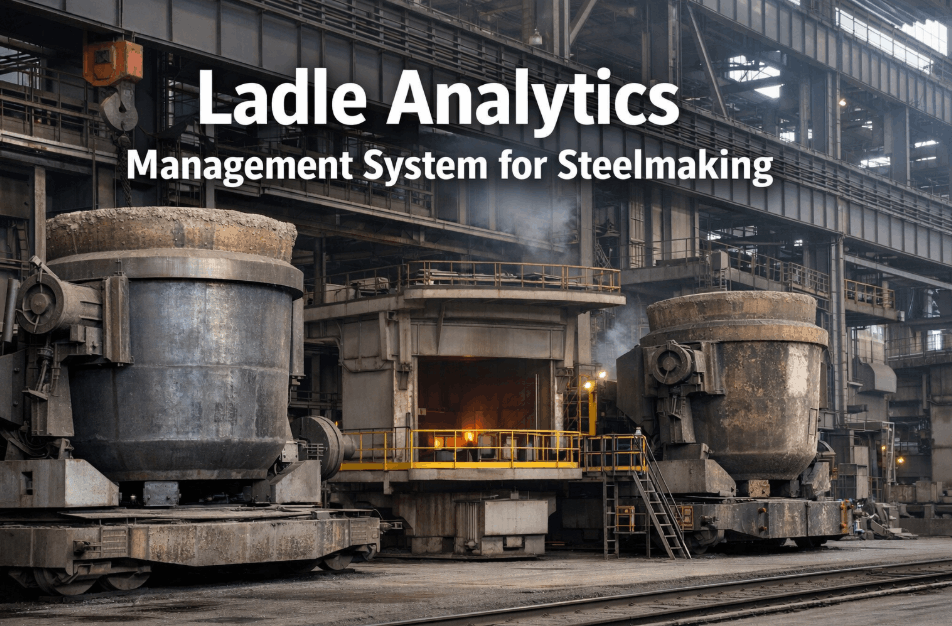
Inside a steel plant, material never stops moving — hot metal flows from blast furnace to BOF via torpedo ladles, liquid steel transfers from converter to caster on ladle cars, slabs move through rolling mills on roller tables, and finished coils travel to the dispatch yard on overhead conveyors and transfer cars. When any single transfer system fails, the entire production chain backs up within minutes. A ladle car breakdown between BOF and caster halts continuous casting — costing $80,000–$200,000 per hour in lost production and potential equipment damage from steel solidifying in the ladle. iFactory's Asset Tracking and Route Optimisation platform monitors every internal transfer asset in real time — from tilt mechanism health on ladle cars to roller bearing temperature on transfer tables — eliminating the bottlenecks that turn a 95% production availability into 85%.
Steel Plant Internal Logistics & Transfer Equipment Analytics
Eliminate internal bottlenecks — ladle car, transfer table, coil transport, and plant railway analytics that keep production flowing.
Steel Plant Material Flow — Where Every Transfer Failure Hits
Each node in the material flow chain has dedicated transfer equipment. iFactory monitors the specific failure modes at each handoff point — because a breakdown at any single node cascades through the entire production sequence. Map your transfer chain with iFactory.
Blast Furnace
Torpedo ladle receives hot metal
BOF / EAF
Ladle car transfers to converter
Caster
Tundish car positions for casting
Rolling Mill
Roller tables move slab/billet
Dispatch
Coil transport to yard/loading
Top 5 Internal Transfer Bottlenecks — Cause & iFactory Fix
Ladle Car Tilt Mechanism
Hydraulic failure stops metal pour — caster halts in minutes.
Roller Table Drive Failure
Motor burnout stops slab movement — rolling mill backs up within one heat.
Torpedo Ladle Refractory
Shell hotspot risks molten iron spill during transit — safety-critical failure.
Coil Car Rail Alignment
Misalignment causes coil damage and loading delays at the dispatch bay.
Slag Pot Transfer
Overloaded or cracked pot risks spill in transit — environmental and safety hazard.
How iFactory Prevents Internal Transfer Failures
AI Camera Vision
Thermal scanning on torpedo ladles in motion — detects refractory hotspots at hundreds of frames per second without slowing transit.
Digital Twin
Per-asset refractory life model for torpedo ladles and tundish cars. Reline scheduled 4–8 weeks ahead from heat count and thermal data.
PLC Integration
Direct feed from ladle car hydraulic PLC, roller table motor drives, and coil car position sensors — real-time health data without manual rounds.
SAP PM Work Orders
Every transfer asset alert auto-generates a SAP PM work order. Crew dispatched with diagnosis, parts list, and safety permits pre-attached.
Transfer Equipment KPIs iFactory Tracks Automatically
Uptime of all ladle cars, transfer tables, and coil transport assets.
Fill-to-pour cycle time including transit, treatment, and return.
Down from 3.2 heats/month before iFactory deployment.
Mean time between failures across all internal logistics assets.
What a Melt Shop Superintendent Said
We lost 14 heats last year from ladle car hydraulic failures alone. iFactory's PLC monitoring caught a pressure drop trend on ladle car #3 six weeks before failure — we replaced the pump during a scheduled stop and haven't lost a heat to transfer equipment since.
Frequently Asked Questions
How does iFactory monitor torpedo ladles in transit?
Fixed AI thermal cameras scan ladles at rail speed — detecting refractory hotspots and bottom/side skull conditions without slowing the locomotive.
Can iFactory track ladle turnaround time?
Yes — GPS and PLC position data track each ladle from fill to pour to reline. Turnaround KPIs reported automatically. See the tracking dashboard.
What happens when a roller table motor fails?
iFactory detects current and vibration anomalies 4–8 weeks before motor burnout — auto-raising a work order with the exact motor ID and replacement part number.
Does iFactory integrate with existing Level 2 automation?
Yes — OPC-UA and direct PLC connectivity to all major Level 2 systems from Siemens, ABB, Primetals, and Danieli.
Protect Your Material Flow with iFactory
Transfer asset tracking live in 3 weeks.