A steel plant is inherently unforgiving. When thousands of tons of molten metal interact with water, or when a blast furnace experiences a carbon monoxide excursion, the window for effective intervention is measured in seconds, not minutes. Traditional paper-based emergency action plans stored in a supervisor's office are practically useless during a high-stress crisis on the plant floor. Furthermore, fragmented communication systems—relying on radio calls and manual headcount roll-calls—delay critical rescue operations and expose the plant to catastrophic liability. A modern emergency response plan for a steel plant requires a fully digitized, instantly accessible framework. iFactory digitizes your emergency management protocols by tying incident response and safety readiness directly into your Enterprise Asset Management (EAM) system. From scheduling and tracking mandatory evacuation drills as automated work orders to ensuring operators have offline mobile access to critical Lockout/Tagout (LOTO) procedures during an electrical fault, iFactory ensures your workforce responds with coordinated precision. By embedding safety directly into daily maintenance execution, you eliminate the gap between planning for an emergency and actually being prepared for one. Book a demo to digitize your emergency readiness protocols today.
Automate Emergency Readiness — Drill Tracking, LOTO, and Crisis Protocols in One Platform
iFactory's safety module delivers structured incident checklists, automated scheduling for life-safety equipment inspections, and one-click compliance documentation — purpose-built for the extreme hazards of steel manufacturing.
Why Steel Plants Require Hyper-Specialized Incident Preparedness
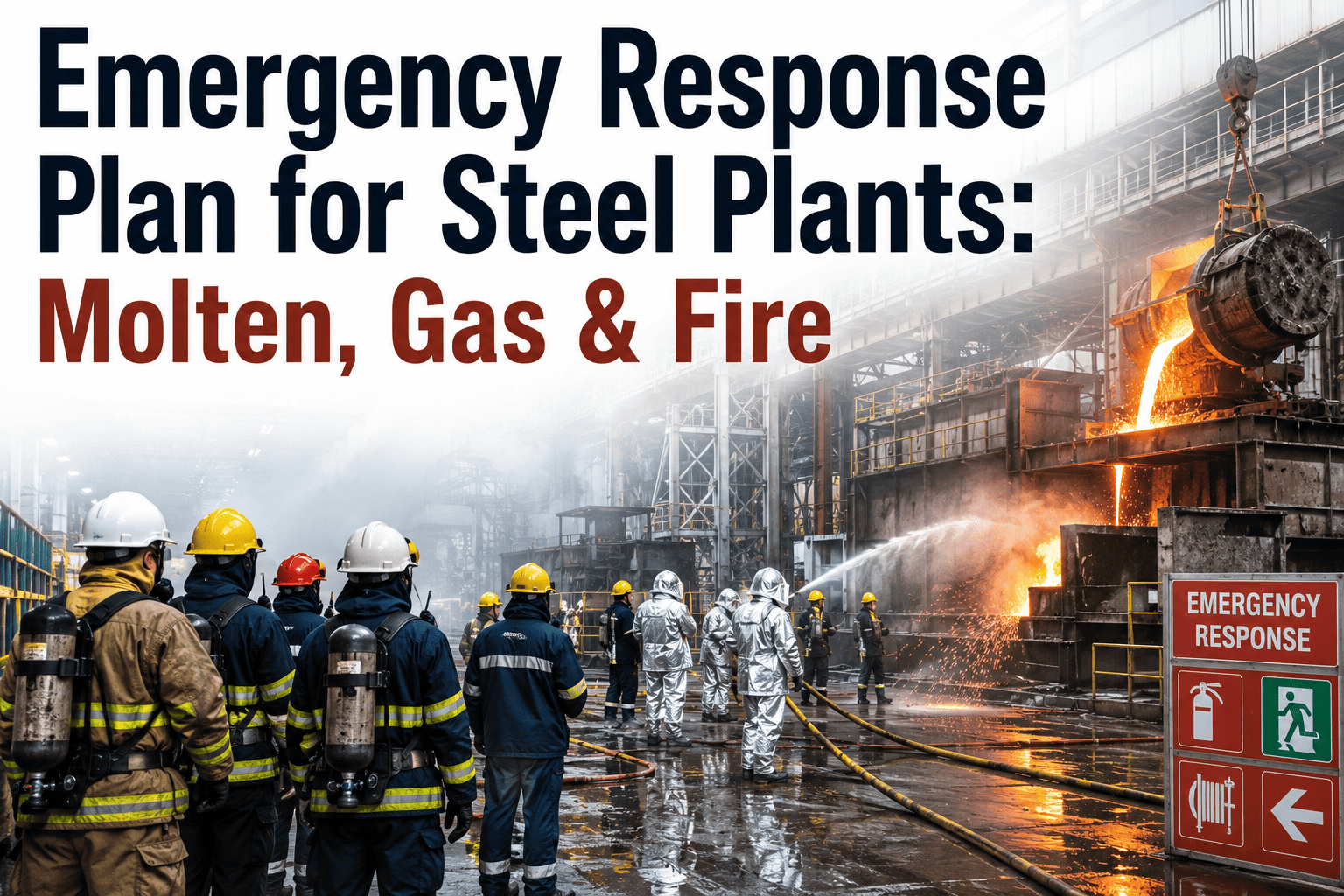
Unlike standard manufacturing facilities where fire is the primary concern, a steel mill presents a matrix of lethal, overlapping hazards. A localized electrical fault in a rolling mill can trigger a massive arc flash, instantly vaporizing copper components and creating a concussive shockwave. A cooling jacket failure on an Electric Arc Furnace (EAF) can lead to a catastrophic water-to-molten-metal explosion. If an emergency action plan relies on generic evacuation routes, workers might inadvertently flee from a fire directly into a heavier-than-air toxic gas plume accumulating in a lower trench. Preparing for these incidents requires absolute certainty that life-safety equipment is functional and that personnel are drilled on specific threat scenarios.
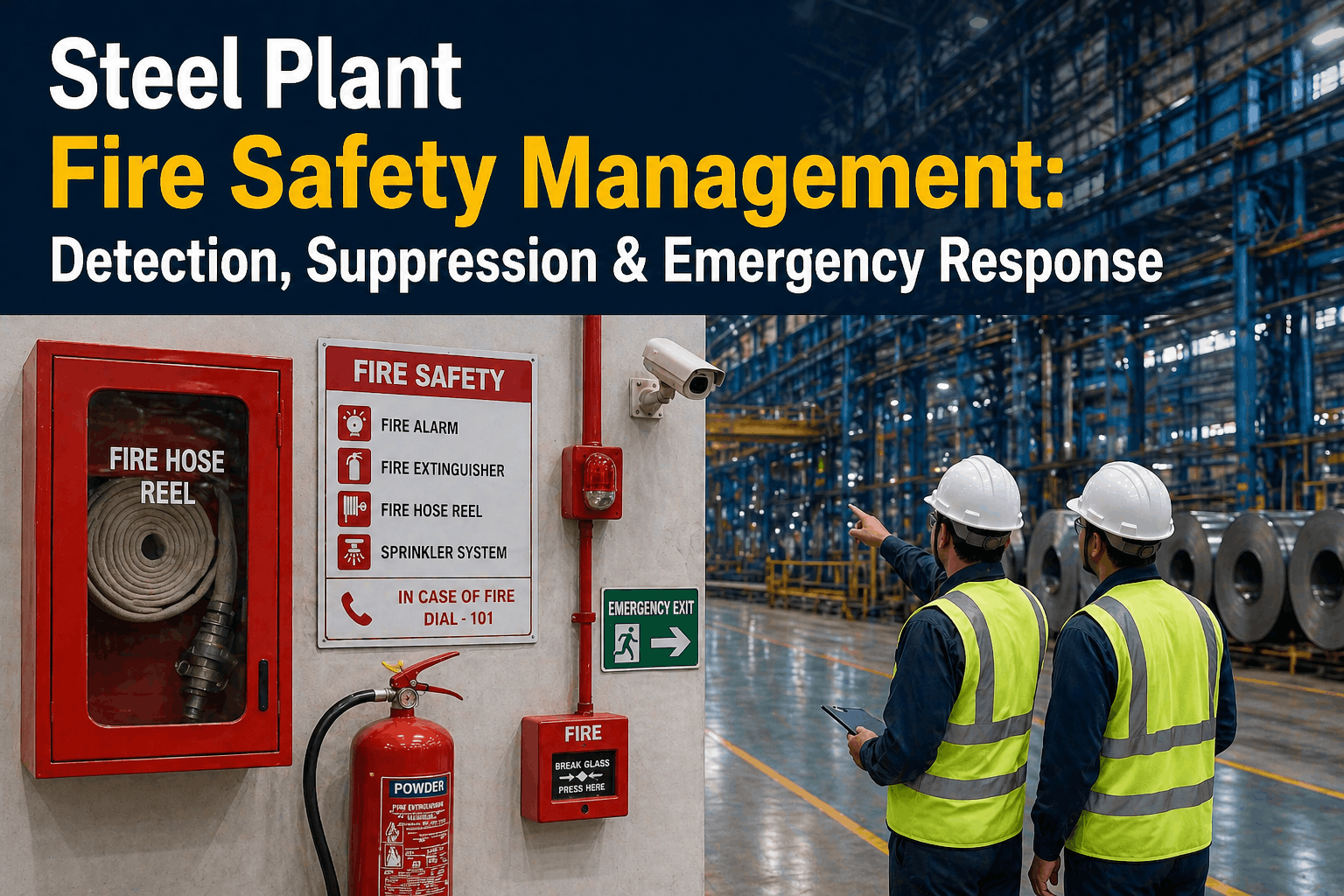
This is where legacy systems fail. Maintaining paper logs for hundreds of fire extinguishers, eyewash stations, and SCBA (Self-Contained Breathing Apparatus) sets is an administrative nightmare. When an emergency occurs, discovering that a critical gas monitor hasn't been calibrated in six months can be fatal. iFactory solves this by treating every piece of life-safety equipment as a critical asset within the EAM. The system automatically generates recurring inspection work orders, escalating immediately to the Plant Manager if a safety inspection is deferred. Regulatory risk amplifies these physical failure modes. OSHA specifically targets heavy industry for emergency preparedness under standard 1910.38 (Emergency Action Plans). Plants that cannot produce digital, time-stamped records of emergency drills, specialized rescue training, and functional equipment tests face severe compliance notices and immediate shutdown orders following an incident. Schedule an emergency readiness assessment to identify compliance gaps before they become fatalities.
Following a major industrial incident, investigators immediately subpoena the plant's emergency response and maintenance logs. If a steel plant cannot electronically prove that affected operators were recently drilled on the specific hazard (e.g., anhydrous ammonia leak) and that emergency shut-off valves were verified operational during the last maintenance cycle, the corporate entity faces extreme gross negligence liability, often resulting in multi-million dollar settlements and criminal charges for management. iFactory provides the immutable digital audit trail required to defend your compliance posture.
The Threat Matrix: Incident Typology and Preventive EAM Tracking
The response methodology for an emergency is entirely dictated by the hazard typology. However, the best emergency response is preventing the incident entirely. iFactory's digital safety module allows HSE directors to pre-configure distinct response workflows while ensuring the preventive maintenance (PM) required to avoid these disasters is strictly enforced.
Molten Metal & Slag Eruptions
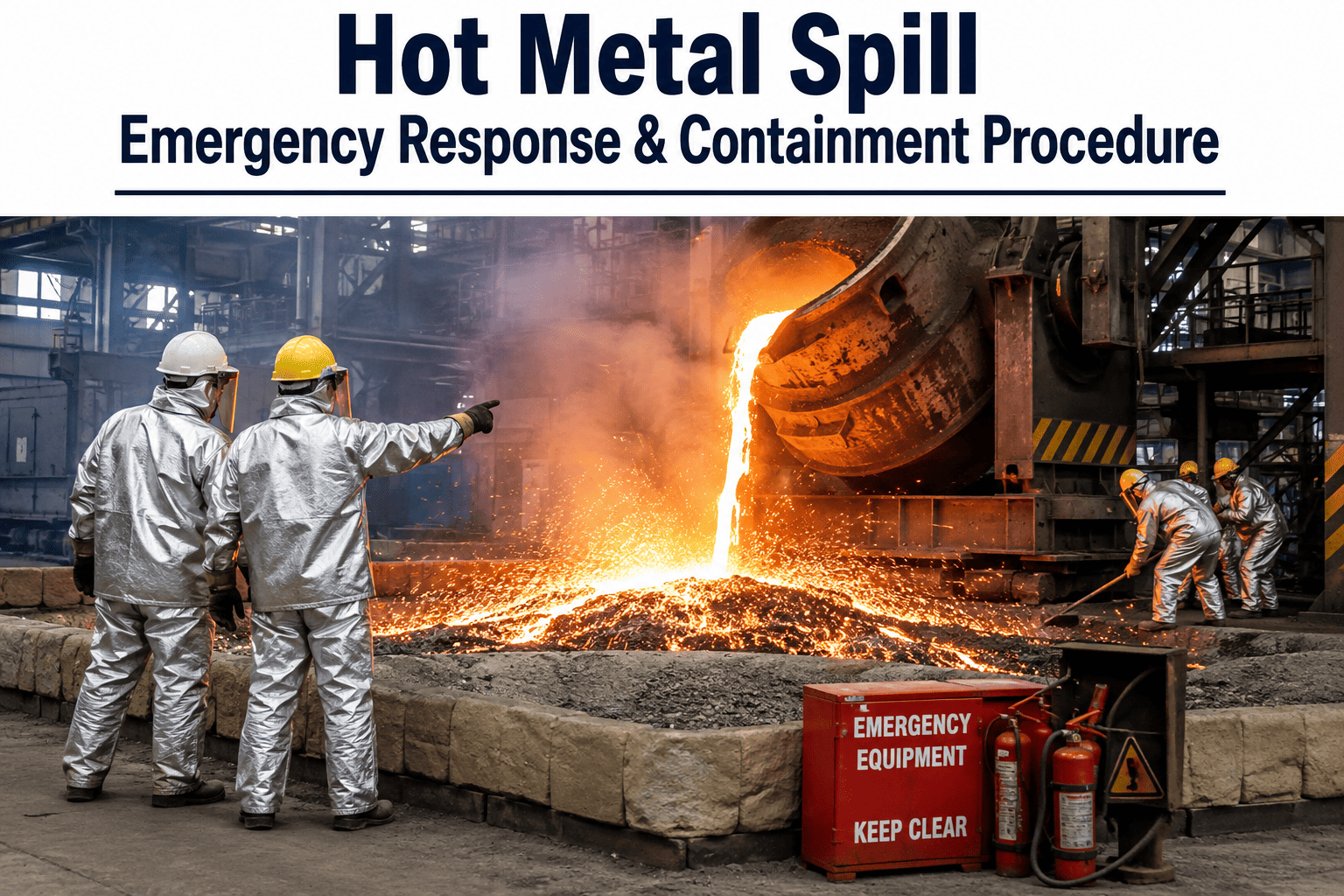
Occurs when water becomes trapped beneath molten steel, expanding 1,600 times its volume instantly. Response requires immediate zone isolation and specialized high-heat proximity suits. iFactory EAM Role: Tracks the strict inspection schedules of refractory linings and cooling jacket integrity, ensuring preventive work orders are completed before a breakout scenario can occur.
Toxic Gas Excursions (CO / Ammonia)
Blast furnaces and coke ovens produce massive quantities of Carbon Monoxide (CO), an odorless, colorless killer. iFactory EAM Role: Manages the calibration schedules for all fixed and portable gas detection monitors. When a calibration is due, a work order is pushed to the instrumentation technician's mobile app. If missed, the system flags the sector as non-compliant.
Electrical Arc Flash
High-voltage switchgear failures generate temperatures hotter than the sun. Emergency response requires immediate main breaker isolation. iFactory EAM Role: Provides electricians with offline mobile access to accurate Single-Line Diagrams (SLDs) and exact LOTO procedures, ensuring they can safely de-energize the correct panels during a chaotic emergency without relying on memory.
Confined Space Rescue
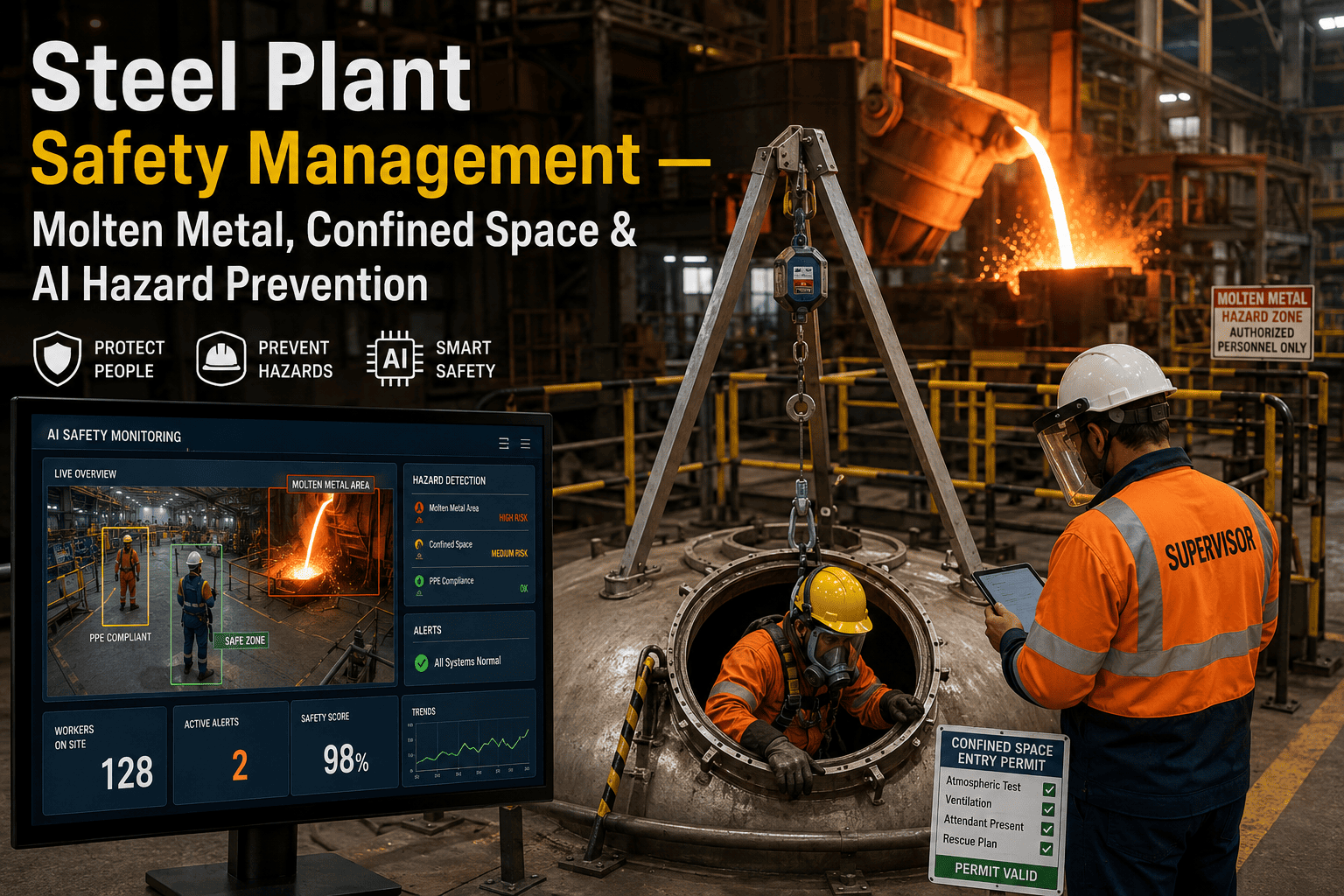
Routine maintenance inside a blast furnace stove can turn lethal if atmospheric conditions change. Emergency protocols require non-entry rescue equipment (tripods/winches). iFactory EAM Role: Digitizes the entire Confined Space Entry Permit process. It forces supervisors to physically sign off on atmospheric tests in the app before the maintenance work order can be unlocked for the crew.
Overhead Crane Failure
A ladle crane dropping 200 tons of liquid steel or a structural failure trapping an operator in the cab requires high-angle rescue capabilities. iFactory EAM Role: Enforces rigorous, digital wire rope inspections and brake testing schedules. Mechanics must log measurements directly into the mobile app, preventing "pencil-whipping" of critical crane safety checks.
Plant-Wide Power Loss (Blackout)
A sudden loss of utility power stops cooling water pumps, causing furnaces to overheat rapidly. Emergency generators must take the load within seconds. iFactory EAM Role: Automatically generates weekly work orders to test backup generators, track fuel levels, and inspect transfer switches, alerting management instantly if emergency power systems fail their readiness checks.
Emergency Readiness Inspection & Drill Schedule
A comprehensive emergency response program requires constant verification of life-safety equipment and regular workforce drilling. The administrative burden of tracking this manually is immense. The table below maps the required frequencies for critical readiness checks. Book a demo to see how iFactory auto-generates these tasks as trackable digital work orders, ensuring nothing is missed.
| Readiness Category | Weekly | Monthly | Quarterly | Annual |
|---|---|---|---|---|
| Emergency Eyewash & Showers | Flow test + clear access | Water temperature check | Filter cleaning | Full plumbing inspection |
| Gas Detection Systems | — | Bump testing via EAM | Full sensor calibration | System logic verification |
| Evacuation & Muster Drills | — | — | Shift-specific drill logged in app | Full-plant unannounced drill |
| Specialized Rescue Equipment | — | SCBA cylinder pressure check | Tripod / Winch load test | Third-party recertification |
| Emergency Sirens & PA System | Silent logic test | Audible tone test | Zone-specific isolation test | Battery backup duration test |
| Digital LOTO Procedure Review | — | — | — | Full documentation audit in iFactory |
iFactory Incident Analytics: Quantified Safety ROI
Steel manufacturers using iFactory's EAM and safety modules maintain continuous compliance, accelerate maintenance response times, and reduce the severity of incidents through rigorous, documented preparation. By shifting from reactive paper logs to proactive digital workflows, plants see immediate improvements in their safety culture and audit scores. Book a demo to bring these results to your facility.
Digital Command: Executing the Crisis Playbook via Mobile
When an incident escalates, chaos is the enemy. While iFactory is not a real-time GPS tracking system, it serves as the ultimate digital repository for your emergency action plans, ensuring that every worker has the exact procedures they need in their pocket. By replacing disparate radios, whiteboards, and physical binders with a unified mobile application, iFactory ensures that standard operating procedures (SOPs) are strictly followed even under extreme duress.
The iFactory Digital Readiness Workflow
- Instant Mobile Access to Procedures: During an emergency, mechanics don't have time to run to the supervisor's office to find the manual for a failing pump. The iFactory app caches critical equipment manuals, emergency shutdown sequences, and P&IDs locally on their device for instant offline access.
- Flawless LOTO Execution: To isolate a fire or electrical fault, workers must de-energize the equipment. iFactory provides step-by-step digital Lockout/Tagout instructions specific to that exact asset, complete with photos of the breaker locations, ensuring safe and rapid isolation.
- Drill Management & Verification: iFactory schedules mandatory evacuation drills as high-priority work orders. Supervisors must physically sign off in the app, recording the total evacuation time and noting any deficiencies (e.g., "North exit door was stuck"), which automatically triggers a repair work order.
- Contractor Safety Visibility: iFactory's digital permit-to-work system ensures you always know exactly which third-party contractors are scheduled to be on the plant floor, providing supervisors with an accurate roster to verify during muster-point roll calls.
Post-Incident Digital CAPA (Corrective Action)
- All safety inspections, drill times, and permit sign-offs are permanently logged in an immutable database for OSHA inspectors and insurance adjusters.
- The system manages post-incident investigations by assigning mandatory root-cause analysis (e.g., 5-Why) tasks to engineering teams within 24 hours of an event.
- Resulting Corrective and Preventive Actions (CAPAs) are automatically converted into trackable EAM work orders to permanently fix the hazard and prevent recurrence.
Step-by-Step Tactical Response & Recovery Protocols
A successful emergency response requires absolute adherence to standardized tactical phases. iFactory digitizes the documentation and workflow surrounding these steps, forcing responders to acknowledge critical safety gates and ensuring that panic does not override established protocol.
Hazard Verification & Reporting
An operator spots a hydraulic fluid leak near a heat source. They instantly create a high-priority "Safety Near-Miss" work ticket via the iFactory mobile app, snapping a photo of the hazard. The system immediately routes this to the Shift Supervisor and Maintenance Planner for rapid triage before it becomes a fire.
Energy Control & Perimeter Establishment
Before repairs can begin, the hazard must be isolated. Mechanics pull up the digital LOTO schematic for that specific hydraulic unit in iFactory. They systematically lock out the main breaker and fluid valves, digitally signing off on each step in the app, guaranteeing the equipment is safe to approach.
Muster Point Reconciliation Training
During scheduled drills, supervisors use the iFactory roster to verify headcount. If an issue is identified during the drill—such as an blocked emergency exit or a malfunctioning alarm siren—the supervisor creates an emergency corrective work order directly from the drill checklist, ensuring immediate repair.
Clearance & Return to Operations
After an incident is resolved, the area must be cleared. Safety techs log their atmospheric readings and inspection notes directly into the iFactory work order. Only when all digital signatures are collected does the Plant Manager electronically sign the clearance to resume full steel production.
"Before we deployed iFactory, our emergency readiness was an illusion built on paper checklists. We assumed our fire extinguishers were checked monthly, but an audit revealed missing signatures everywhere. We assumed our mechanics knew the LOTO procedures, but they were actually guessing because the binders were locked in an office. By moving everything into iFactory's EAM, we automated the scheduling of every single safety inspection. Now, our mechanics have the exact shutdown procedures on their mobile devices, and our evacuation drills are tracked as rigorous work orders. We didn't just digitize our records; we fundamentally changed our safety culture."
— EHS Director, Global Steel Corporation
Ready to Digitize Your Emergency Action Plan?
iFactory's safety module delivers automated drill tracking, mobile LOTO procedures, and immutable audit logs — ensuring your steel plant is prepared for the worst-case scenario.
Frequently Asked Questions: Steel Plant Emergency Response
Prepare. Document. Execute. Digitally Tracked.
Complete emergency readiness in one platform — digital drill tracking, offline mobile procedures, and immutable audit logs. Protect your workforce today.