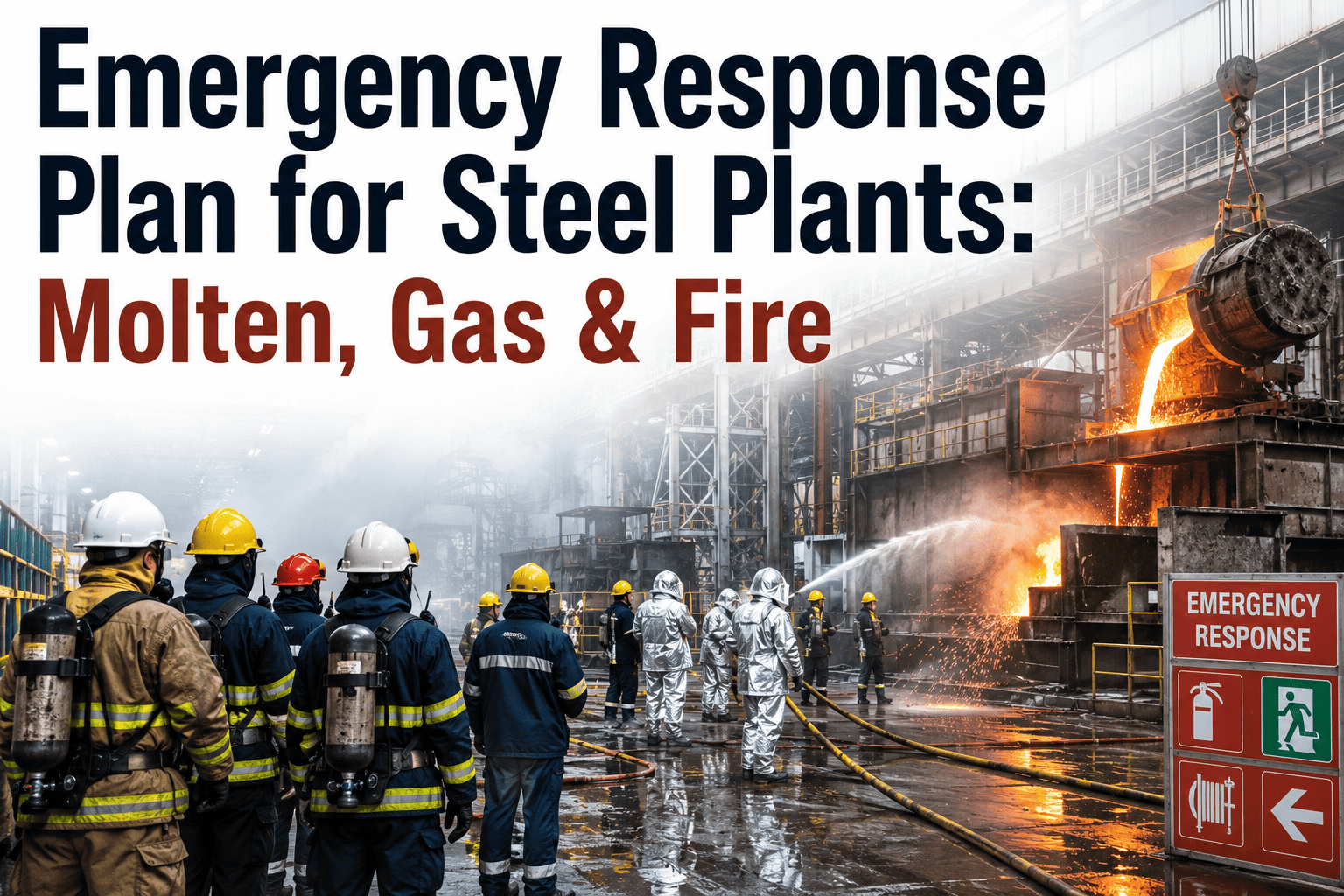
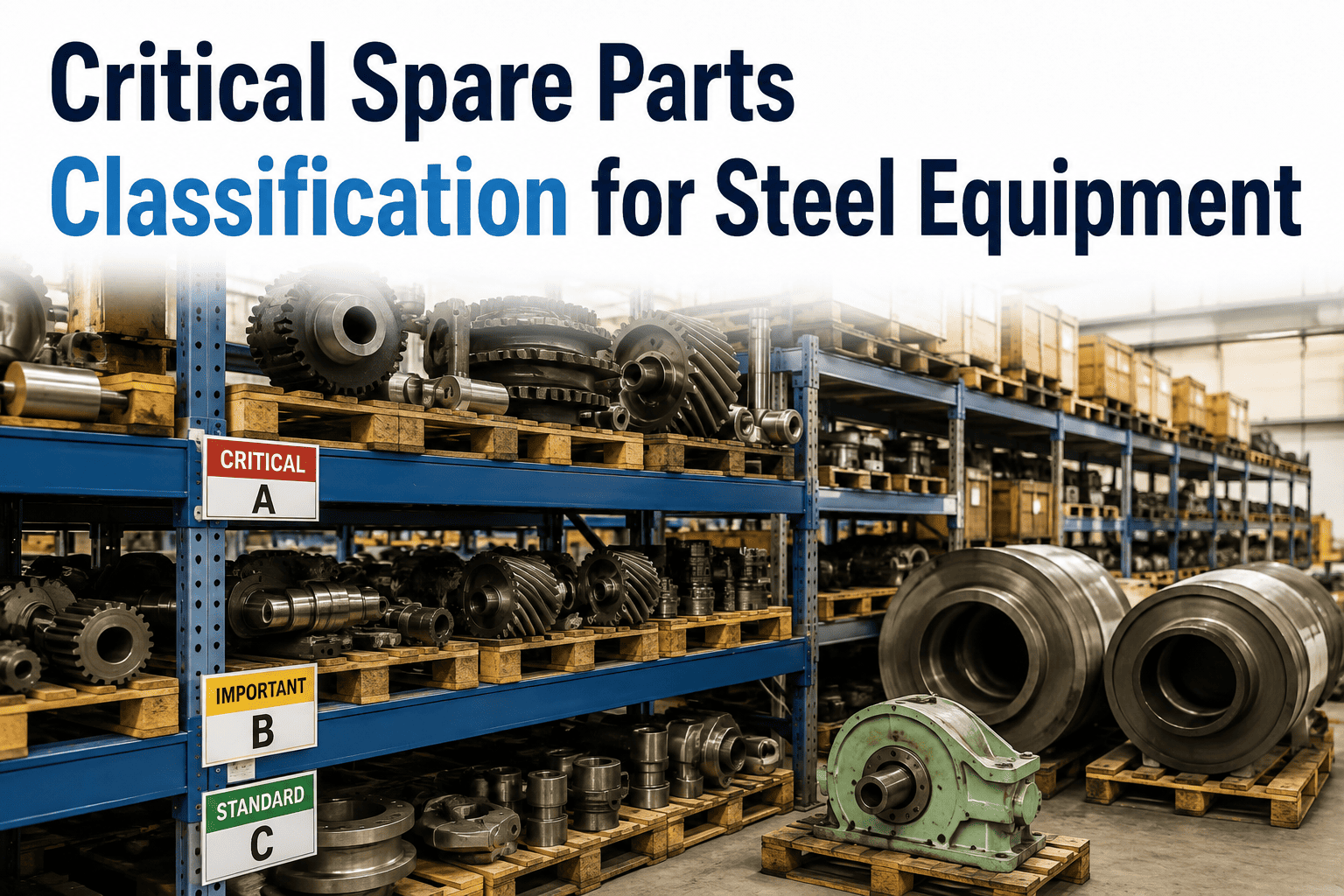
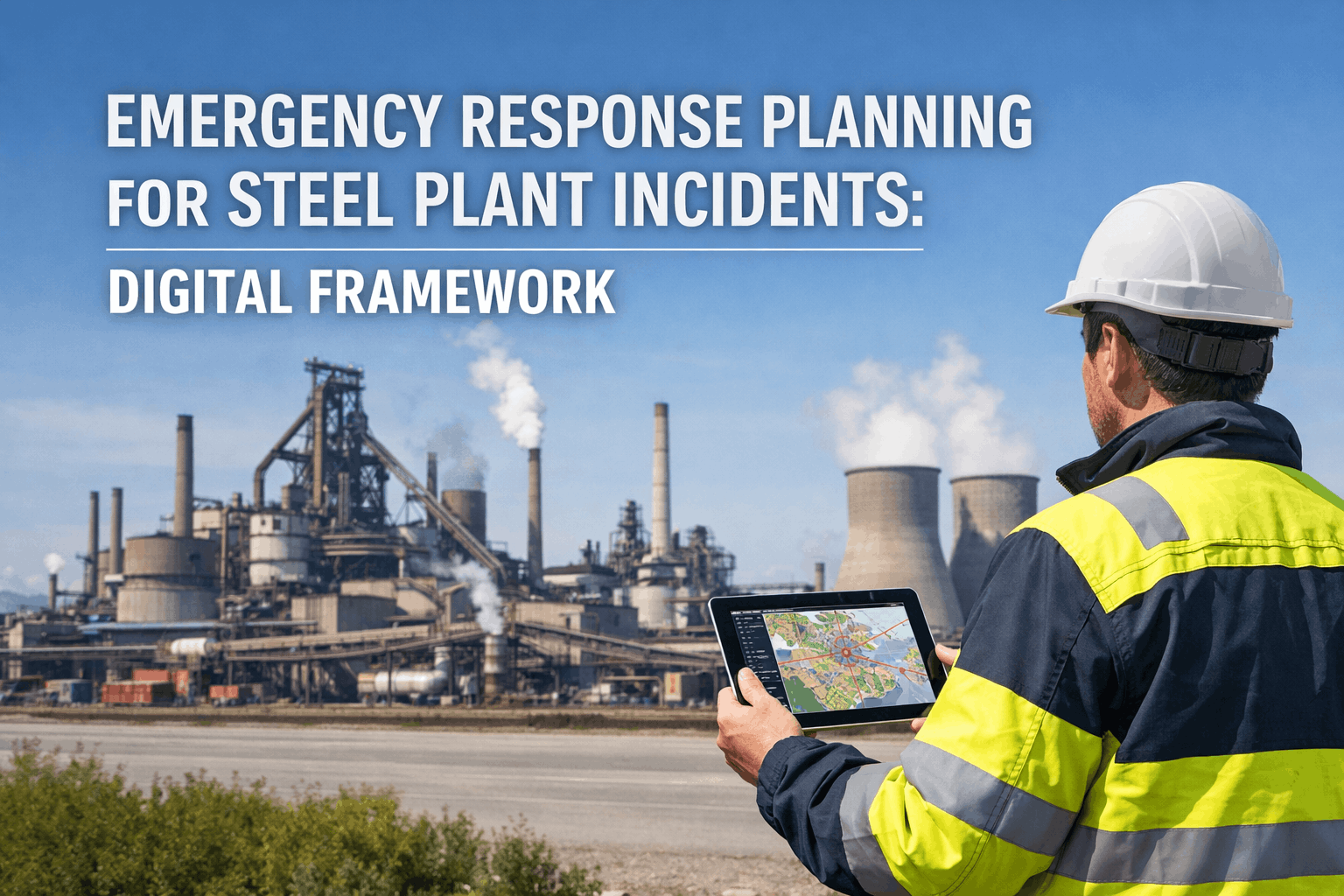
The emergency analytics response protocol for steel plants is the most significant operational and reliability shift in heavy manufacturing in decades. Effective immediately, modern world-class standards mandate that steel plants, rolling mills, and casters maintain detailed emergency repair records — down to the event level — and produce them for reliability audits within 24 hours upon request. For Maintenance and Operations Directors, the response window is no longer approaching. It is here. Understanding your obligations around Key Data Elements (KDEs), Critical Tracking Events (CTEs), and digital emergency records is not optional — it is the operational baseline for continued market competitiveness. This guide explores how AI-driven failure triage and real-time operational analytics combine to deliver measurable intelligence across every layer of steel plant emergency management.
What Is an AI-Driven Emergency Response Program for Steel Plants?
The Steel Emergency Response Rule establishes a new reliability recordkeeping framework for high-consequence failure events. Unlike prior voluntary guidance, world-class reliability standards now define a mandatory, standardized approach to tracking breakdown recovery — from the first alarm trigger through to the final post-mortem report. The rule introduces a structured vocabulary of response obligations built around two foundational concepts: Critical Tracking Events and Key Data Elements. Every emergency team must understand these two constructs in operational, not just technical, terms.
Traditional response models often fail because they rely on "tribal knowledge" and paper-based logs that are completed hours after the event. In the high-stakes environment of a steel mill — where a single hour of unplanned downtime in a caster or rolling mill can cost $50,000 to $100,000 — the data latency of a traditional report can hide the root cause forever. AI-driven programs close this loop by capturing Key Data Elements in real time as the repair progresses, creating a continuous failure-to-recovery model for every critical event. Book a demo to see how iFactory's digital twin connects your emergency plan to live data.
"Before iFactory, our emergency response was a blur of phone calls and frantic part searches. Now, we have a digital protocol that maps every second of the breakdown. Our MTTR has dropped by 38% because we're following a digital script, not guessing."
Understanding CTEs: Critical Tracking Events in Emergency Failure Response
Critical Tracking Events are the defined moments in the failure lifecycle where reliability records must be created and maintained. For steel plant response teams, these moments represent the "digital audit trail" of recovery. Any gap in this trail prevents effective root cause analysis. The most operationally significant CTEs are:
Initial Alarm Detection and AI-Triage
The point at which a failure signal is first detected by the monitoring system. Required KDEs include the asset ID, alarm timestamp, initial failure symptoms, and the AI-generated triage priority score.
Rapid Triage and Technician Dispatch
The decision point where a response team is assigned. A new emergency event code must be assigned. Required KDEs include the lead technician ID, dispatch time, and required emergency repair kit (ERK) type.
Emergency Repair Execution and Spare Part Issuance
The physical repair phase. This CTE captures the "meat" of the response. The emergency event code must follow the repair through all part swaps, including serial numbers of emergency spares used.
System Validation and Recovery Verification
The point where the asset is returned to production. KDEs include the completion timestamp, final repair diagnosis, safety check validation, and post-repair vibration or thermal baseline.
Root Cause Investigation and Lessons Learned
The final documentation phase. Every emergency response must be closed with a validated lessons-learned record. Book a demo to see automated post-mortem capture in iFactory.
Key Data Elements (KDEs): What Your Emergency Records Must Capture
Key Data Elements are the specific data points that must be recorded at each Critical Tracking Event. The practical response challenge is not knowing what KDEs are required; it is building systems that capture them in a format that can be produced to auditors within 24 hours. Book a demo to see how iFactory maps KDE capture to your floor technicians.
| CTE | Required KDEs | Emergency Event Code Required? | Who Must Record |
|---|---|---|---|
| Failure Alarm | Asset ID, Sensor Data, Time, Initial Triage Score | Yes — Auto-Generated | IoT Edge, Monitoring System |
| Triage Decision | Priority, Tech ID, Response Plan ID, Dispatch Time | Yes — Match Alarm ID | Shift Lead, AI-Controller |
| Dispatch | Lead ID, ERK Code, Expected Arrival, Initial Goal | Yes — Link to Team | Dispatch Coordinator |
| Repair Execution | Spares Used, Serial Nos, Photos, Time-to-Recover | Yes — Live Updates | Floor Technicians |
| Recovery Verification | Safety Pass, Baseline Data, Completion Time | Yes — Final Validation | Quality/Safety Inspector |
| Lessons Learned | Root Cause, Preventative Task, Cost, Approval ID | Yes — Close Event | Reliability Engineer |
Steel Plant Emergency Response Record Retention Requirements
World-class reliability standards require covered entities to retain emergency response and repair records for a minimum of two years from the date of creation. Records must be maintained in a format that is producible to auditors or insurance investigators within 24 hours. This requirement is the standard that exposes the most significant operational gaps in teams who rely on fragmented digital notes or paper logs.
The rule does not mandate electronic records, but the 24-hour production window makes paper-only systems extremely high-risk. A shift lead with 18 months of paper logs across multiple breakdown events cannot realistically produce a complete and accurate response chain for a specific failure within 24 hours. Book a demo to see how iFactory's system structures record retention to meet the 24-hour standard.
If an auditor or insurance investigator submits a written request for records related to a specific failure event or production outage, your facility must produce all relevant KDE records across every applicable CTE within 24 hours. This means your system must identify the event code, retrieve all dispatch and repair logs, trace backward to spare part batch records and forward to production recovery logs, and compile these records in a readable format. For facilities with high event volume, manual compilation is not viable without a purpose-built system.
AI-Driven Emergency Response: How Technology Closes the Gap
Manual and spreadsheet-based systems fail emergency response audits on three fronts: they cannot capture KDEs in real time, they cannot link dispatch to repair execution, and they cannot produce complete failure chains within 24 hours. AI-driven platforms address each of these failure points. Book a demo to see iFactory's AI-driven module in action.
Automated Alarm Triage at CTEs
Integrated with IoT sensors and historians, AI-driven platforms capture Key Data Elements automatically at the point of failure — eliminating manual triage delays and misclassification errors that create response gaps.
Real-Time Repair Documentation
Intelligent mobile interfaces automatically link technician actions to the failure event code — maintaining the response chain integrity required for investigation without manual data re-entry.
24-Hour Post-Mortem Compilation
On-demand response reports compile complete KDE histories across all CTEs for any failure event — in minutes, not days. Records are formatted to world-class standards and can be transmitted electronically instantly.
Predictive Breakdown Simulation
Built-in simulation tools allow Maintenance Directors to run mock emergency exercises, identifying response gaps before a real failure event. Audit-ready record libraries reduce response preparation time from weeks to hours.
Emergency Response Gaps: Where Steel Plants Are Most at Risk
Based on industry analysis of steel plant response readiness assessments, the following gaps appear most frequently in facilities approaching their audit deadline.
Building an Emergency Response Roadmap: A Step-by-Step Approach for Directors
For Maintenance and Operations Directors leading their organization's response readiness, the roadmap has five operational phases. Each phase feeds into the next, creating a structured pathway to crisis mastery.
Scope Determination: Map Your Failure Response Exposure
Audit every critical asset (caster, mill, crane) against the Emergency Protocol List. Document where each CTE (Alarm, Triage, Repair) applies. Output: a facility-specific response CTE map.
KDE Gap Analysis: Assess Current Data Capture
For each in-scope CTE, compare the KDEs your current systems capture against world-class requirements. Identify fields that are missing or recorded in disconnected formats. Output: a KDE gap register.
Response System Design and Event Code Strategy
Design an emergency structure that meets audit requirements: unique event identification, linkage to dispatch KDEs, and historical trending capability. Integrate assignment into floor workflows. Output: a documented response schema.
Technology Platform Selection and Integration
Select and deploy a response platform capable of automated KDE capture, repair linkage, and 24-hour record production. Integrate with existing CMMS and ERP systems. Output: a deployed emergency system.
Mock Failure Exercise and Audit Readiness Validation
Conduct a minimum of two mock failure exercises — one forward trace from an alarm to final recovery, and one backward trace from a recovery record to the alarm KDEs. Output: validated audit-readiness certification.
Frequently Asked Questions: Steel Plant Emergency Analytics & Repair Procedures
What is "Emergency Analytics Response" and why is it mandatory?
It is the digital mapping of every failure event from detection to recovery. It is mandatory for world-class steel plants to ensure root-cause integrity and to meet insurance and regulatory 24-hour audit standards.
What is an "Emergency Event Code" in iFactory?
A unique identifier assigned to a failure at the point of alarm and linked to all required KDEs. it follows the event through dispatch, repair, and post-mortem to maintain an unbroken response chain.
How long does it take to implement a digital emergency protocol?
Most mid-size steel plants achieve full digital compliance in 8–14 weeks, covering sensor integration, CTE mapping, event code schema design, and mock failure validation exercises.
What happens if a facility cannot produce repair records within 24 hours?
Failure to meet the 24-hour production window is a major reliability audit violation, exposing your plant to insurance premium increases, operational risk alerts, and potential loss of operational licenses.
Does modern emergency response require electronic records?
While not explicitly mandated, the 24-hour production requirement makes paper-only systems operationally unviable. AI-driven platforms are the only way to meet the standard consistently and at scale.
Which assets are on the "Emergency Protocol List"?
The list covers all critical-path assets including blast furnace cooling, caster drives, hot strip mill motors, and ladle crane hydraulics. iFactory updates this list based on industry failure modes.
How does AI-driven triage improve MTTR?
By analyzing failure symptoms in real-time, AI identifies the likely root cause and required repair kit immediately, saving 15-30 minutes of manual troubleshooting during the critical first hour of a breakdown.
Is the platform secure for sensitive breakdown and cost data?
Yes, iFactory uses enterprise-grade encryption and secure private cloud instances, ensuring that your sensitive operational and failure data remains protected and under your exclusive control at all times.