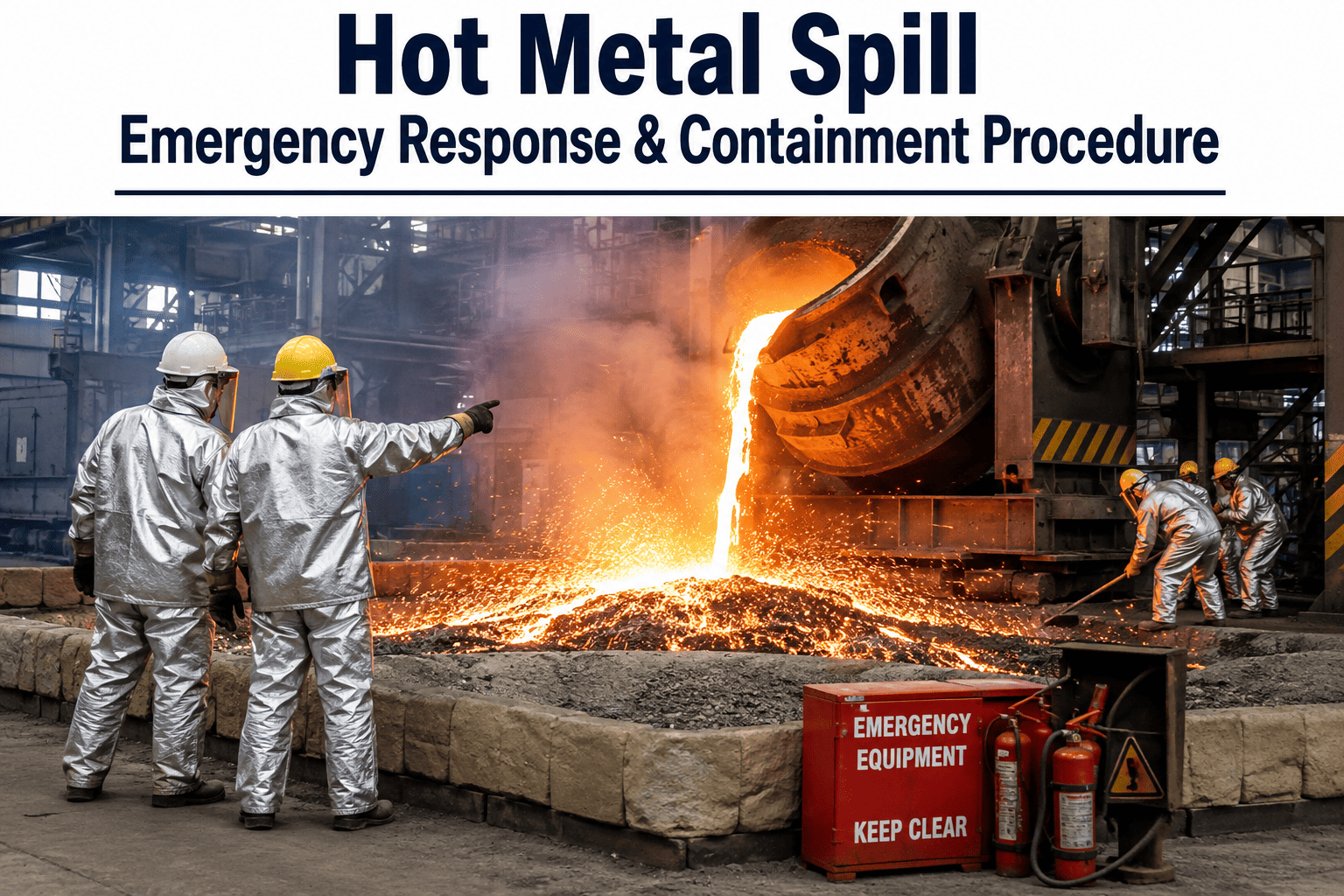
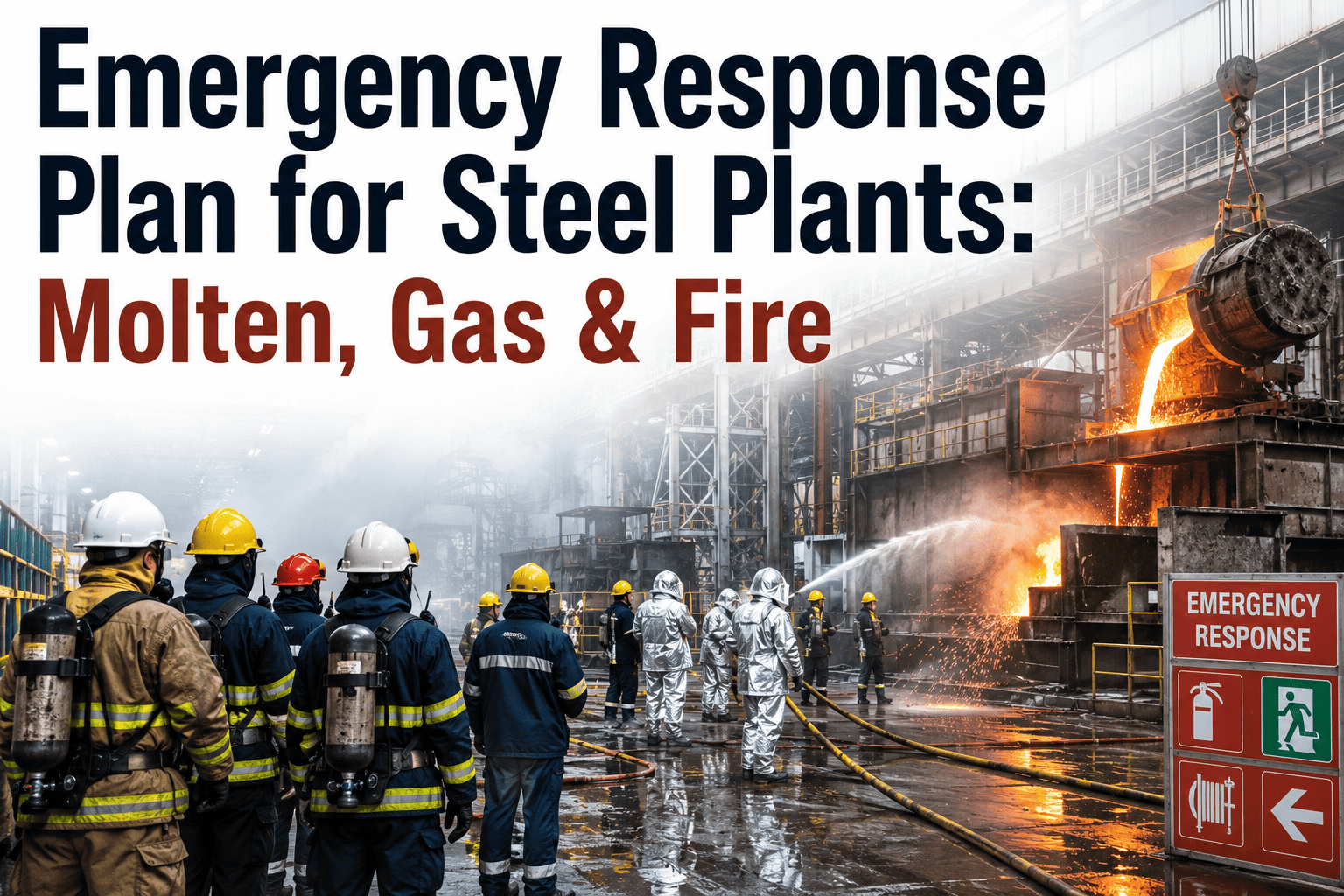
The first ninety seconds after a hot metal spill decide most of what happens next, and yet most emergency response procedures are written and rehearsed as if there is time to think through the situation calmly before acting. A ladle crack, a torpedo car breach, or a runner overflow does not wait for a shift supervisor to be located, and the crews closest to the incident are the ones who need the clearest, fastest, least ambiguous instructions available. Building that clarity into a response plan, and verifying it actually holds up when tested, is what separates a contained incident from one that spreads. Our team can help you pressure-test your current plan at ifactory support.
Molten Metal Emergency Preparedness
A Hot Metal Spill Plan Is Only as Good as What Happens in the First Two Minutes
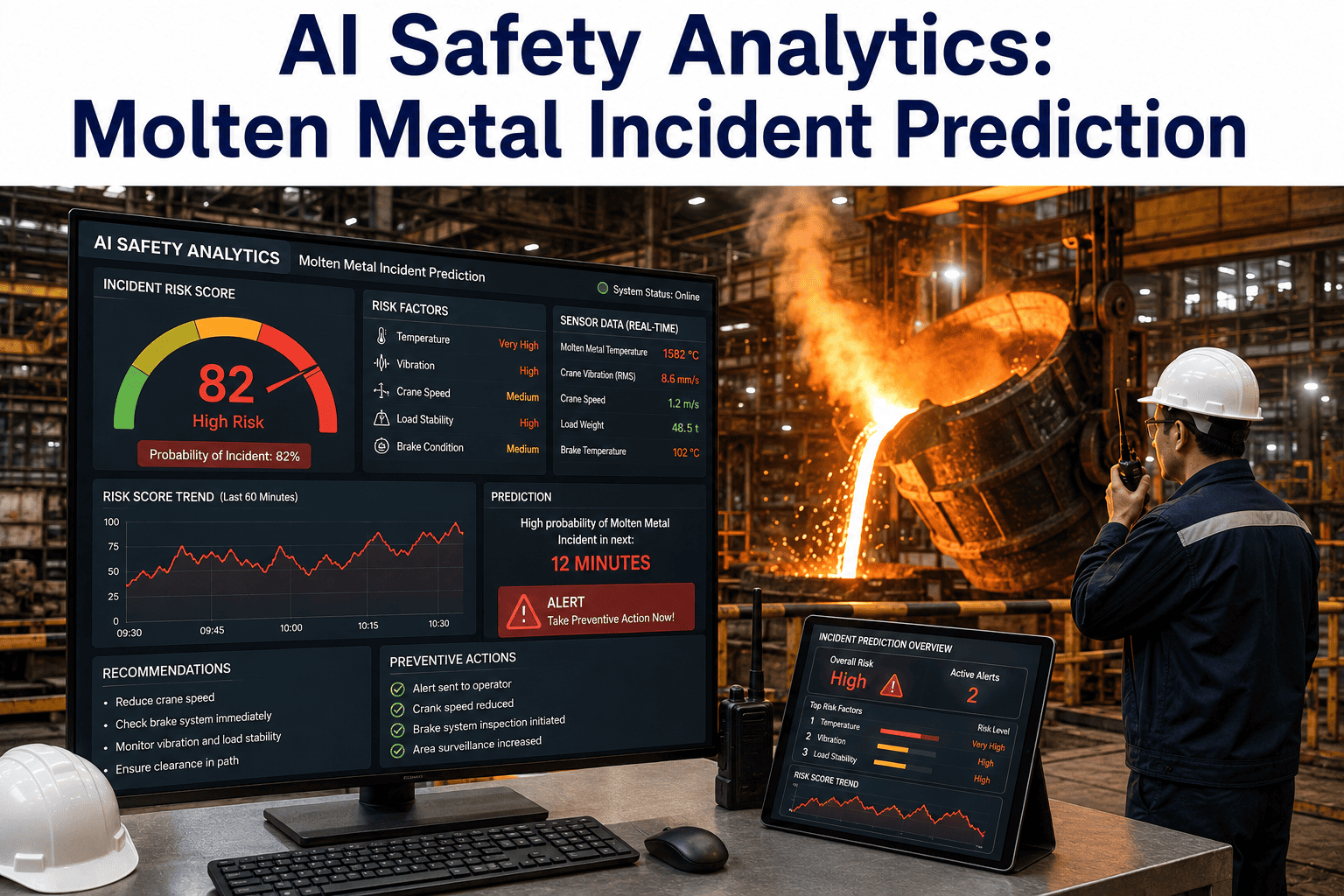
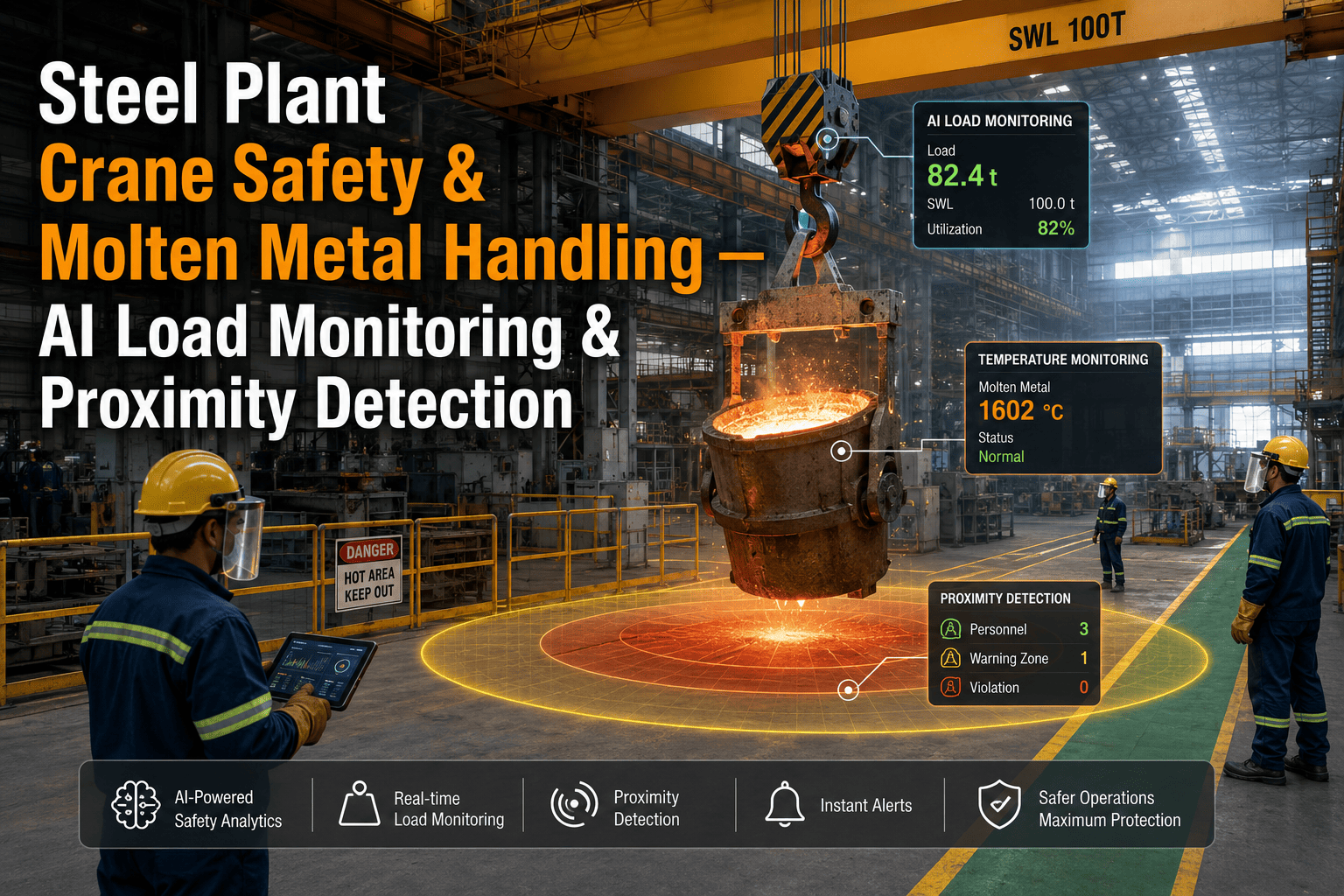
AI-assisted incident readiness tracks response time performance, containment readiness, and evacuation route reliability for molten metal spill scenarios, so gaps get found in a drill instead of during a real event.
Seconds
The timescale that actually matters for initial response
3
Distinct phases every credible spill plan must cover
Rehearsed
The only condition under which a plan reliably works
Why Most Spill Procedures Fail in Practice, Not on Paper
Almost every steel plant has a documented hot metal spill procedure, and almost every one of those documents reads reasonably well when reviewed in an office. The gap between a good document and a good response shows up only when the procedure meets a real sequence of events, where alarms are competing for attention, visibility is reduced by heat shimmer or smoke, and the people closest to the spill are often the ones with the least formal authority to make containment decisions on their own.
The procedures that hold up under those conditions share a common trait: they are built around what a person can actually remember and execute under stress, not around a complete technical description of every possible spill scenario. That means fewer branching decision points, clearer default actions, and response times that have actually been measured in drills rather than assumed from the written plan.
The Three Phases of a Hot Metal Spill Response
Phase One
Immediate Reaction
The first actions taken by whoever is nearest the spill: sounding the alarm, moving personnel away from the immediate hazard zone, and initiating any automatic containment already built into the area.
Phase Two
Containment and Evacuation
Directing metal flow away from personnel and equipment using sand, containment berms, or dedicated runoff channels, while a wider evacuation of the affected area is coordinated.
Phase Three
Recovery and Investigation
Cooling and safely removing solidified metal, assessing structural and equipment damage, and beginning the root cause review before the area returns to normal operation.
What Determines Whether Containment Actually Works
Containment is often treated as a single action, redirecting the flow of spilled metal, but its effectiveness depends heavily on decisions made long before any incident occurs: where berms and runoff channels are physically located relative to likely spill points, how quickly sand or containment material can actually be deployed by the nearest crew, and whether the containment path leads metal away from both personnel and critical equipment rather than simply somewhere convenient.
Sand Berms and Diversion Channels
Pre-built physical barriers that redirect molten metal flow along a defined path away from walkways and equipment, effective when their layout matches actual likely spill points.
Dedicated Runoff Pits
Sunken containment areas designed to receive and hold spilled metal safely until it solidifies, most effective at fixed high-risk locations like tapping and pouring stations.
Portable Containment Material
Sand, dry refractory material, or specialized compounds kept staged near high-risk zones for rapid manual deployment during an unplanned spill.
Automatic Shutoff Systems
Engineering controls that stop or divert metal flow automatically when a leak or breach is detected, reducing reliance on manual reaction time entirely.
Detection Methods and Their Real-World Response Time
How Spill Detection Speed Compares
Test Your Own Response Readiness
Find Out Where Your Current Spill Plan Actually Loses Time
Bring your current procedure and drill records to the call. We will walk through how continuous monitoring and readiness tracking would apply to your highest-risk spill zones.
Why Evacuation Routes Fail Quietly Between Drills
An evacuation route that was clear and functional during the last drill does not stay that way automatically. Equipment gets temporarily staged in a walkway, a door that should swing freely gets propped shut, or new construction changes a path that used to lead directly away from a high-risk zone. None of these changes are dramatic on their own, and none of them typically get reported as a safety issue, which is exactly why they tend to persist until the moment an actual evacuation reveals the problem.
The plants that catch this early are the ones that verify evacuation routes as a standing operational check, not just as part of a periodic formal drill. A route audit that happens only once or twice a year leaves long windows where a blocked or degraded path goes unnoticed, and the difference between a route that works and one that does not is rarely visible until people are actually trying to use it under pressure.
Readiness Indicators Worth Tracking Continuously
Containment Material Staged and Accessible
Verified present at designated points, not assumed from the last inventory check
Evacuation Routes Clear and Functional
Checked against current layout, not the layout from the last formal drill
Alarm and Detection Coverage
Full risk zone monitored rather than relying on fixed points with gaps between them
Want to see how your current readiness indicators would score? Talk to our team and we will walk through it together.
Four Mistakes That Slow Down a Real Response
Writing the Plan Around Every Scenario
Overly detailed branching procedures are hard to recall under stress, when a simple default action would serve the crew better.
Auditing Evacuation Routes Only During Drills
Blocked or degraded paths that develop between scheduled drills go unnoticed until an actual evacuation is attempted.
Assuming Containment Material Is Where It Should Be
Sand and containment supplies get borrowed or depleted for other tasks without anyone confirming replacement before it is needed.
Treating Detection and Response as Separate Systems
A fast detection system does not help if the alert does not reach the right people with clear next steps immediately.
Who Should Own Each Part of the Response Plan
Frontline Operators
Execute the immediate reaction phase, own the first alarm and initial containment action, and are the group any procedure must be written for first.
Shift Supervisor
Coordinates the evacuation and containment phase once initial reaction is underway, and confirms the affected area is actually clear.
Safety and EHS Lead
Owns readiness verification between incidents, including route audits, containment material checks, and drill scheduling.
Maintenance and Engineering
Maintains automatic shutoff systems and fixed detection sensors, and investigates root cause once recovery is complete.
Frequently Asked Questions
How often should evacuation routes near molten metal areas actually be checked?
Formal drills are usually scheduled quarterly or annually, but the physical condition of a route can change far more frequently than that, through staged equipment, temporary barriers, or minor layout changes that never get reported as a safety concern. A standing operational check, separate from the drill schedule, is what catches these changes before an actual evacuation exposes them.
Talk to our team about building a continuous route verification process.
What is the difference between a spill response plan and a spill containment plan?
A response plan covers the full sequence of actions from initial detection through recovery and investigation, while containment specifically addresses how spilled metal is physically redirected away from people and equipment. Containment is one phase within a broader response plan, and a plan that only addresses containment without covering detection, evacuation, and recovery is incomplete.
Can automatic detection systems replace the need for trained human observation?
Automatic detection significantly reduces response time and removes blind spots that depend on someone being present and attentive at the right moment, but it does not remove the need for trained personnel to execute the physical containment and evacuation actions that follow an alert. The strongest programs use detection to trigger faster human response, not to replace it.
Book a scoping call to see how this would apply to your facility.
Why do written procedures often fail during an actual incident even when they are technically correct?
A technically complete procedure with many branching decision points is difficult for a person to recall accurately under the stress, reduced visibility, and time pressure of a real spill event. Procedures that hold up in practice tend to be simpler, built around a small number of clear default actions rather than an exhaustive description of every possible scenario, and they have been rehearsed enough that the actions become close to automatic.
How do we know if our containment material and equipment are actually ready right now?
The only reliable way is a physical verification check at the designated staging points, since inventory records or the assumption that nothing has changed since the last drill are not the same as confirming material is present and accessible today. Building this into a routine operational check, rather than only checking before a scheduled drill, closes the gap between what should be true and what is actually true.
Reach out to our team to discuss how to build this check into your existing workflow.
Don't Wait for a Real Spill to Find the Gaps.
Get a Readiness Review of Your Hot Metal Spill Plan
Bring your current procedure, drill history, and site layout to the call. We will walk through where response time and containment readiness could improve.