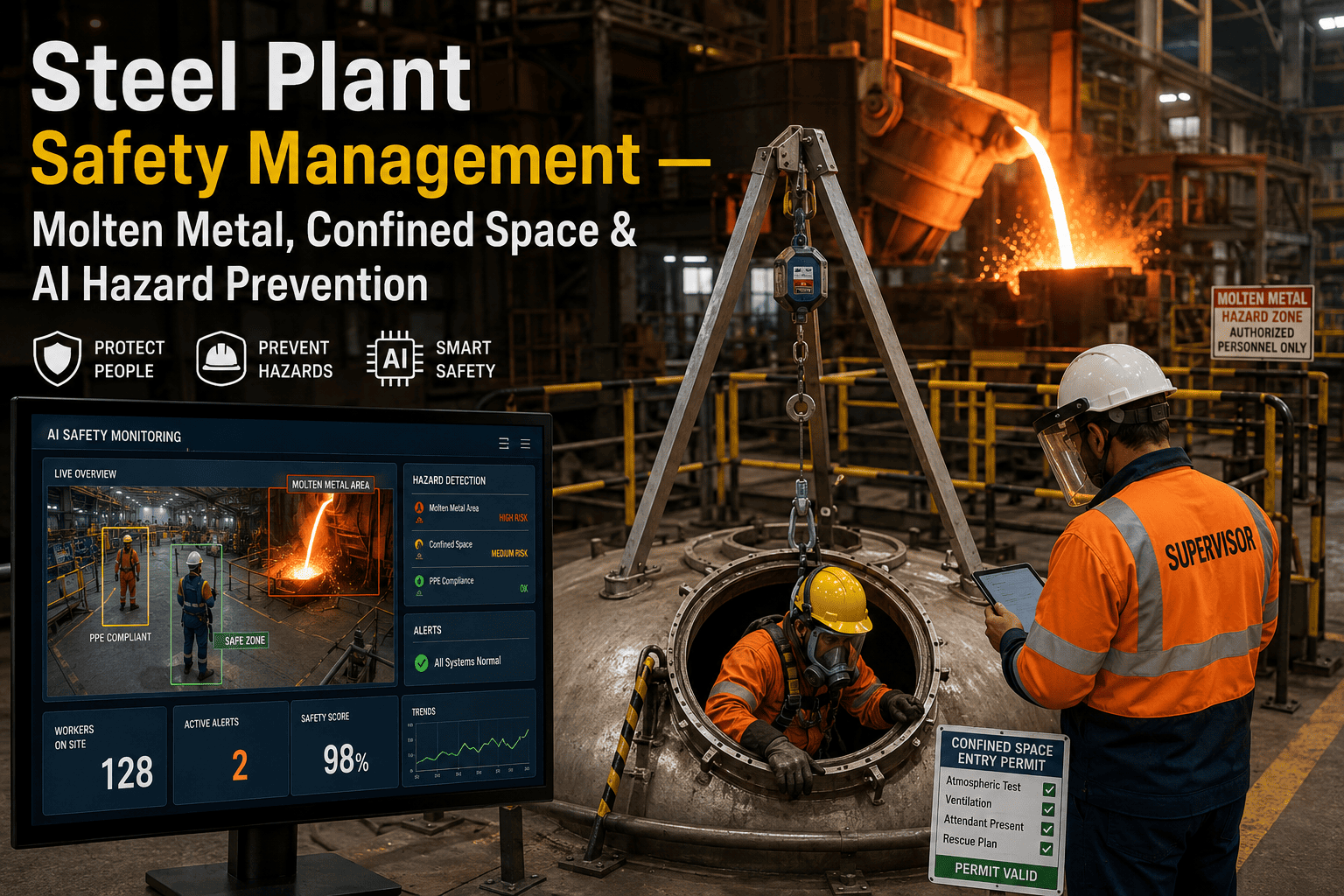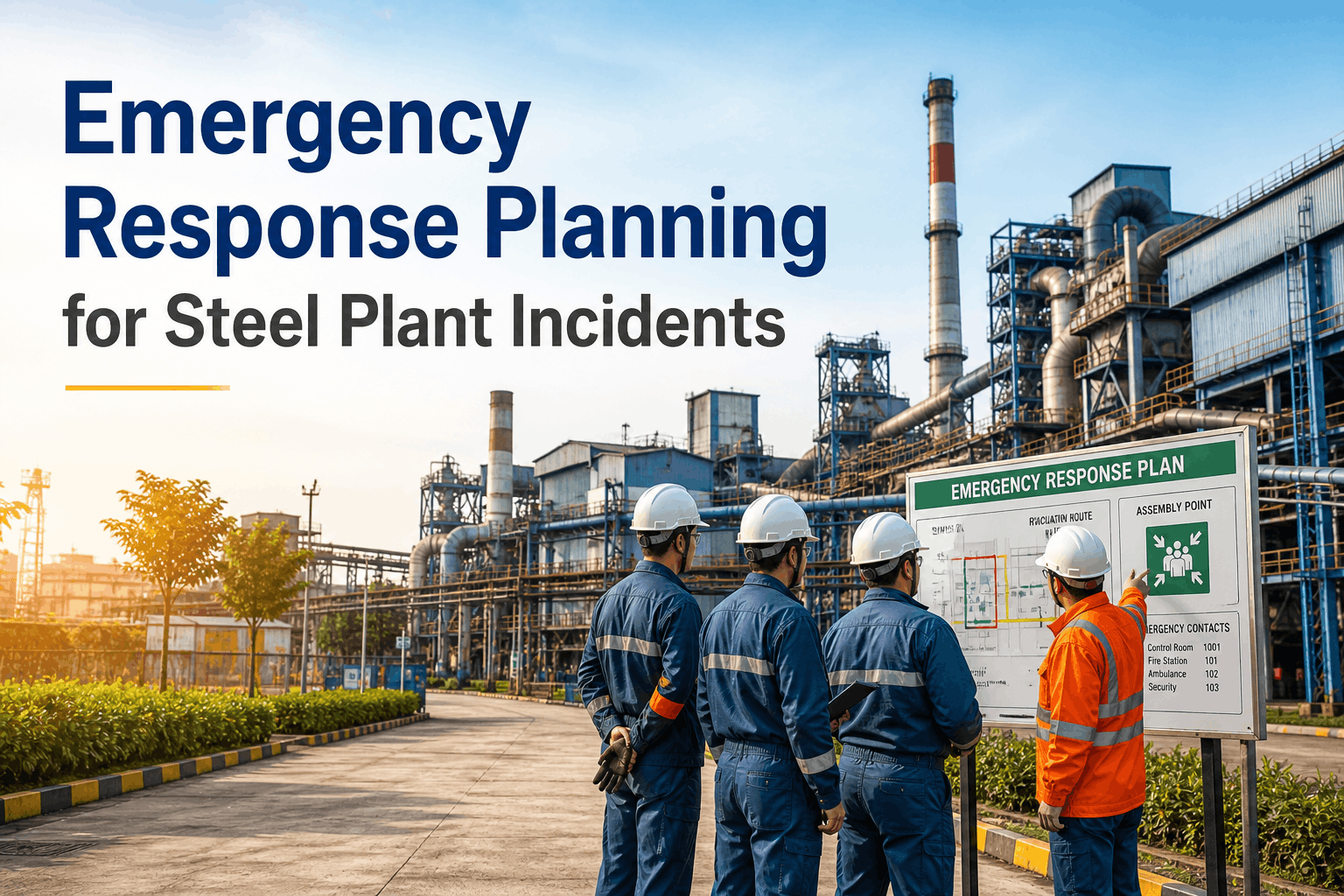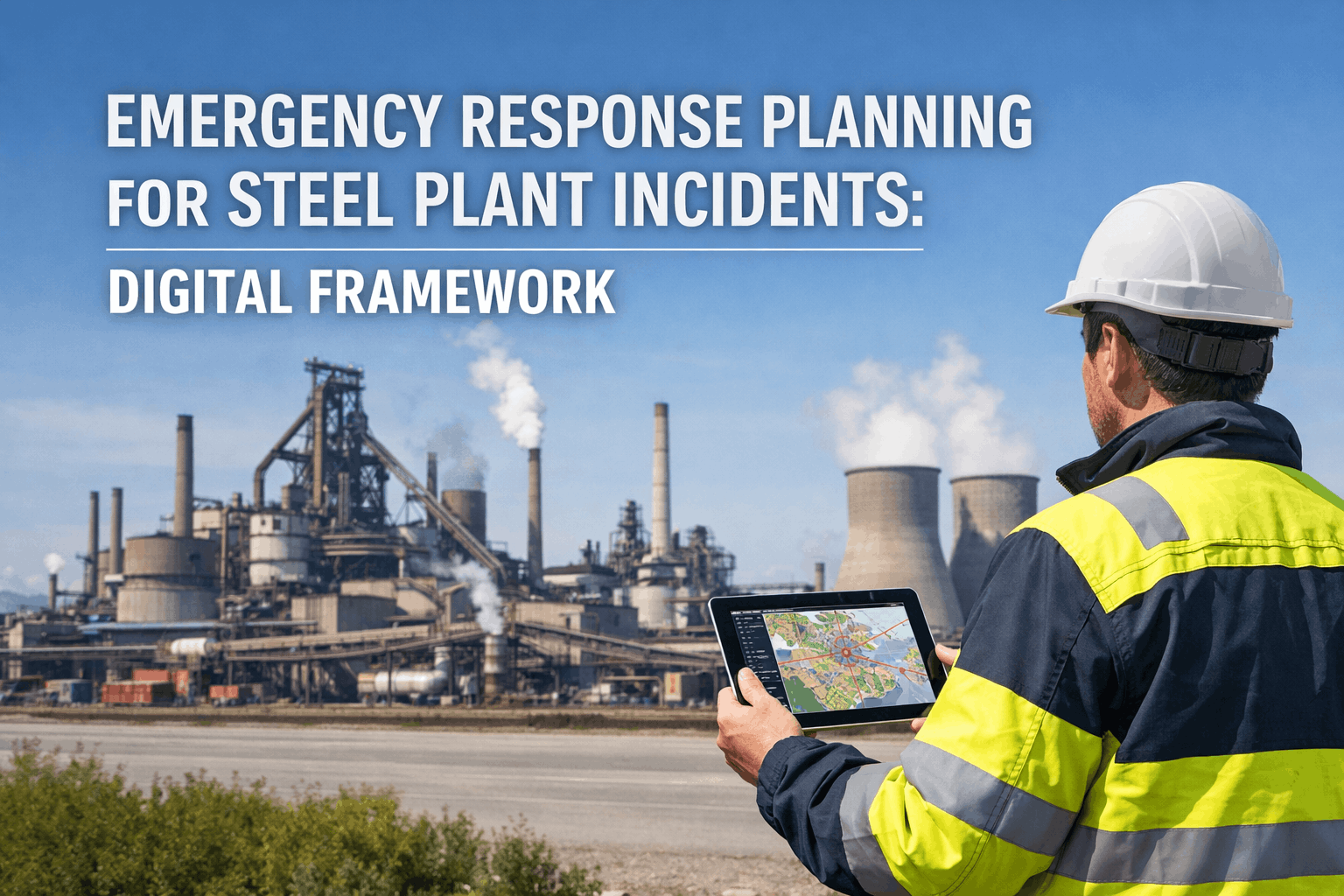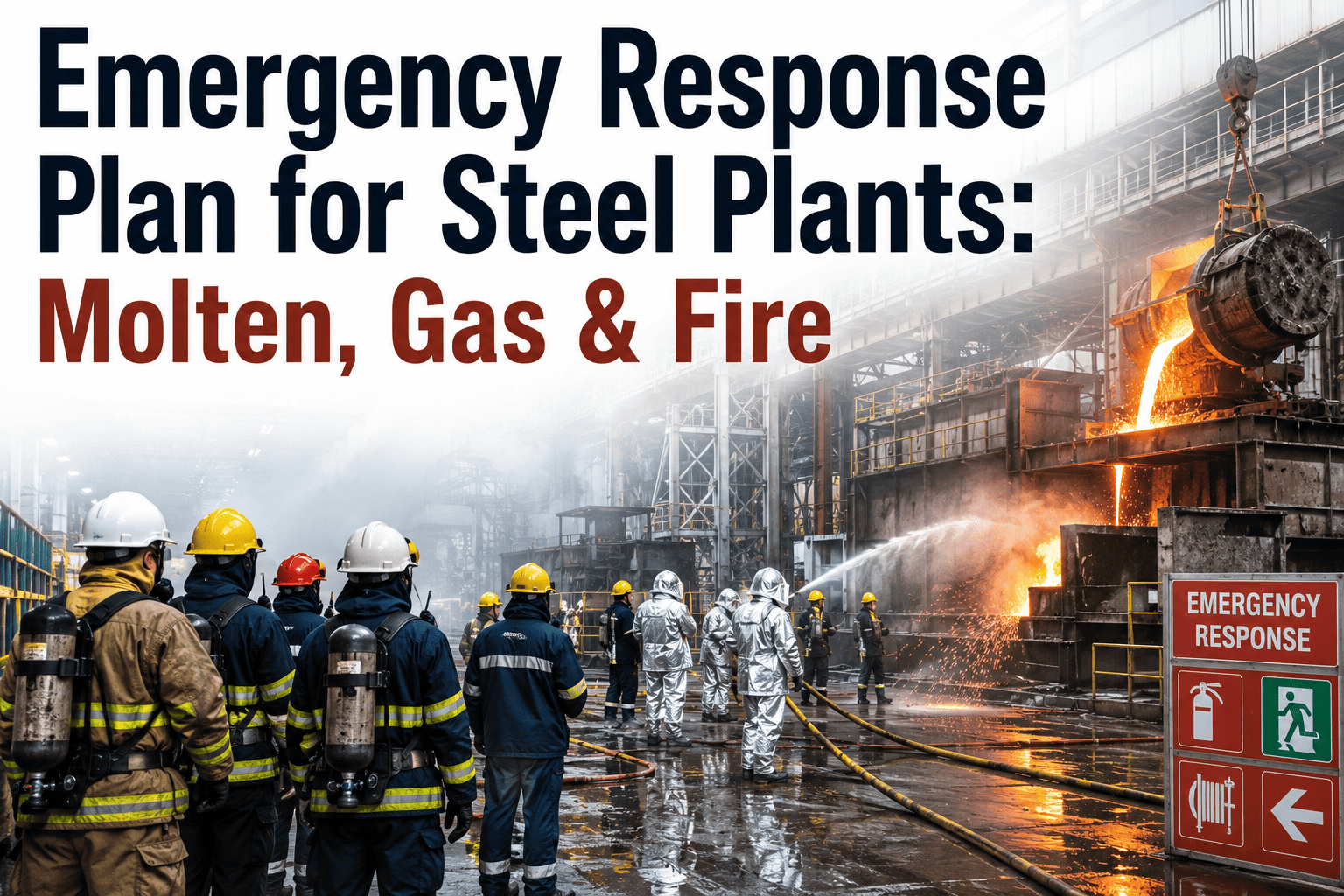
A steel plant does not have one emergency profile, it has four, and each one unfolds on a different timescale with different first actions. A molten metal spill demands an immediate exclusion radius and zero water contact. A gas leak from a BFG or COG line demands evacuation before it is even visually obvious, since the gas is colorless and silently displaces oxygen. A fire near hydraulic oil or cable runs demands fuel-specific suppression, not a generic sprinkler response. A structural failure under a crane or furnace platform demands a load-path assessment before anyone re-enters. This guide breaks down what each scenario actually requires, and how iFactory keeps procedures and asset data tied together instead of scattered in a binder nobody opens under pressure, with a demo available to see it firsthand.
Four Emergencies, Four Different Clocks — Know Which One You're In Before You Act
Molten metal, gas, fire, and structural failure each demand a different first move within a different window of time, and mistaking one scenario's response for another is how a contained incident becomes a fatality.
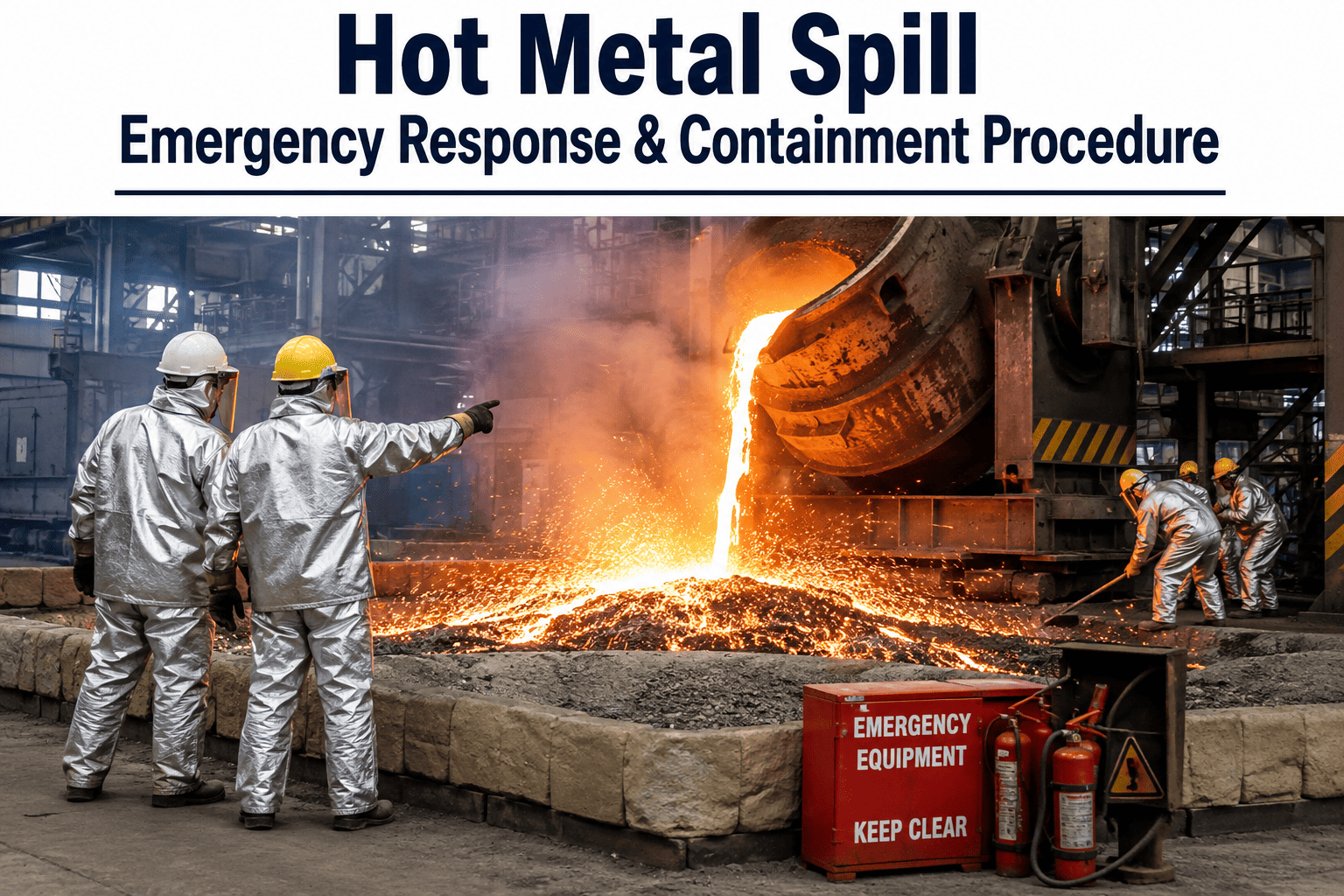
Molten Metal Spill: The First Fifteen Seconds Decide the Outcome
A molten metal release, whether from a ladle failure, a tundish breakout, or a torpedo car derailment, is unforgiving of hesitation. The single most dangerous secondary event is water contact, since even a small amount of moisture converts instantly to steam at roughly 1,600 times its original volume, producing an explosive scatter of molten metal and equipment fragments across a wide radius.
Post-incident investigations of fatal molten metal events repeatedly point to the same root cause: a pre-task check for moisture or a barricade requirement that existed on paper but was not verified digitally at the point of work. This is precisely the gap iFactory closes by geo-stamping and time-locking pre-task confirmations against the specific ladle, tundish, or casting operation in progress.
Gas Leak: Responding to a Hazard You Cannot See or Smell
Blast furnace gas contains roughly 20 to 33 percent carbon monoxide, a concentration capable of causing loss of consciousness within minutes, and it is colorless and nearly odorless. Coke oven gas adds hydrogen and toxic components of its own. This combination is why gas leak response cannot depend on human senses, and why a fixed detection network paired with an unambiguous evacuation trigger matters more here than in almost any other steel plant emergency scenario.
The practical failure mode in most gas incidents is not a missing procedure, it is the time gap between a developing leak and the moment a fixed sensor grid or patrol actually catches it. iFactory's IoT sensor integration ties anomaly patterns from CO and LEL sensors directly into a safety work order and supervisor alert within roughly ninety seconds of detection, closing that response gap before concentration reaches dangerous levels.
Find out if your emergency plan would hold up under real conditions
iFactory connects your emergency procedures, gas and fire detection data, and incident response confirmation into one system your team can actually use during an event, not just review afterward.
Fire: Why a Generic Sprinkler Response Fails in a Steel Plant
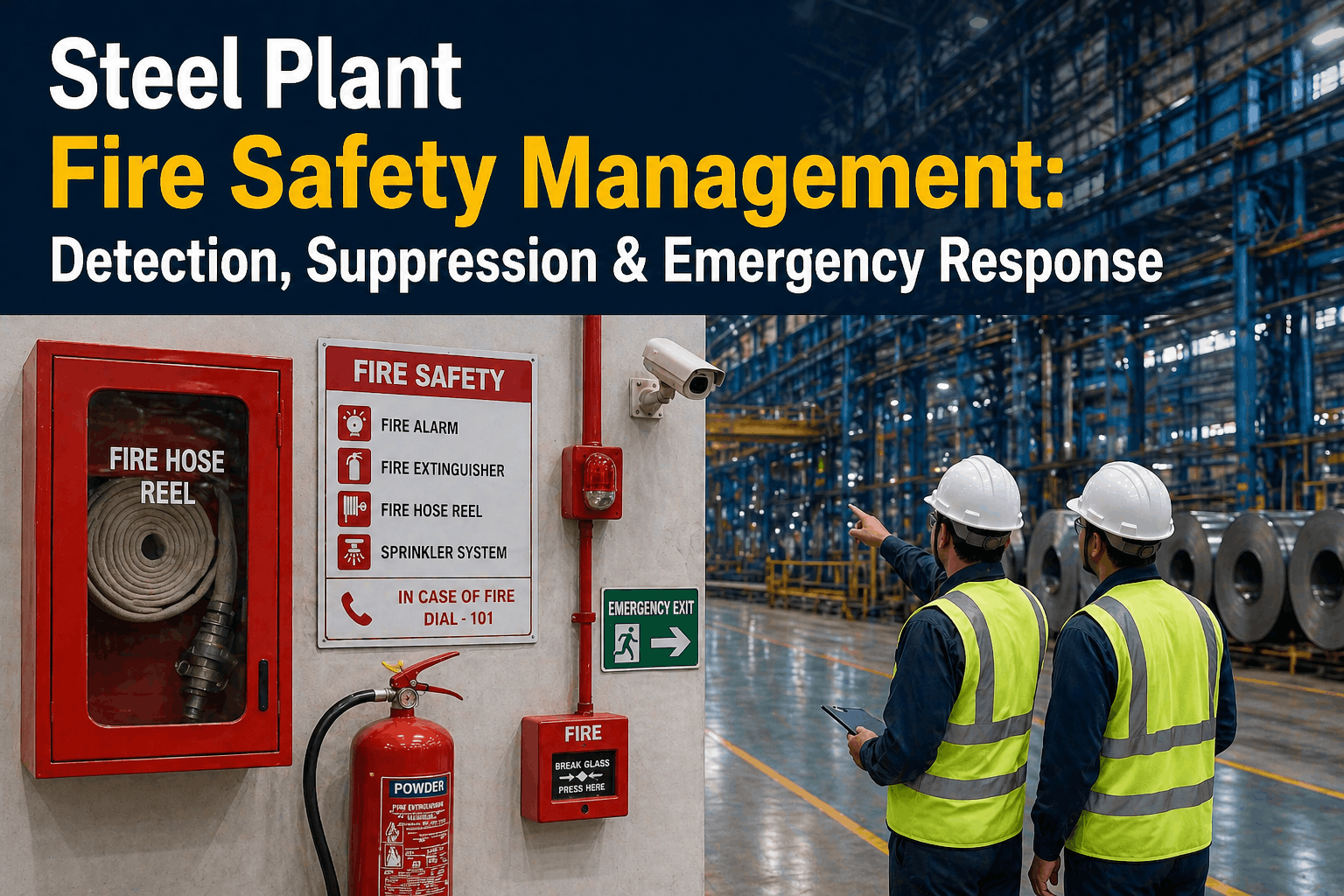
Steel plants concentrate several distinct fire fuel sources in close proximity: hydraulic oils under pressure near hot mill tables, fuel gas networks running through enclosed galleries, cable tunnels carrying high-current runs, and coal or coke on rubber conveyor belts. Each fuel type demands a different suppression response, and applying the wrong one can make an incident worse rather than better.
Fire detection systems tuned to each of these zones — catalytic gas detectors in enclosed gas areas, heat-sensitive cable in conveyor galleries, break-glass points along every escape route — only deliver value if the suppression response staged behind them actually matches the fuel type they detect. A fire safety program that treats every zone identically is a program that has not accounted for what actually burns in each part of the plant.
Structural Failure: Confirming It's Safe Before Anyone Goes Back In
A structural failure in a steel plant, whether a crane runway beam, a furnace platform, or a support column compromised by heat or corrosion, carries a specific danger beyond the initial event: the temptation to resume operations quickly because the immediate incident looked contained. A compromised load path that has not been formally assessed remains dangerous even when nothing looks visibly wrong.
Crane-related incidents alone account for 15 to 20 percent of steel plant fatalities, with wire rope and brake failures as the leading mechanical causes, which is exactly why crane inspection intervals tied to cycle count rather than a calendar date, with automatic lockout on any overdue inspection, closes one of the most common paths to a structural emergency before it starts.
The Common Thread Across All Four Scenarios
Every one of the four scenarios above shares the same underlying failure pattern when a response plan does not work under real pressure: the specific first action was either not defined precisely enough, or it existed on paper but was never verified as actually happening at the point of work.
| Scenario | Most Common Plan Gap | What Closes It |
|---|---|---|
| Molten Metal Spill | Moisture pre-task check completed on paper, not verified at the equipment | Geo-stamped, time-locked digital pre-task confirmation |
| Gas Leak | Manual patrol frequency cannot match how fast BFG/COG concentration develops | Fixed sensor network wired directly into an automatic safety work order |
| Fire | Suppression response not matched to the specific fuel type in that zone | Zone-specific detection and suppression staging reviewed against actual fuel sources |
| Structural Failure | Inspection overdue on a calendar basis while equipment kept running | Cycle-count-based inspection triggers with automatic lockout on overdue status |
The pattern across all four rows is the same: a plan that lives only in a document has no way to confirm the critical action actually happened before the incident occurred, and no way to prove it during a post-incident investigation. A plan connected to the maintenance and asset systems that generated the hazard in the first place closes both gaps at once.
See Whether Your Emergency Plan Would Actually Hold Under Pressure
iFactory connects your emergency procedures, asset data, sensor alerts, and incident documentation into one system your team can rely on the moment an alarm sounds.