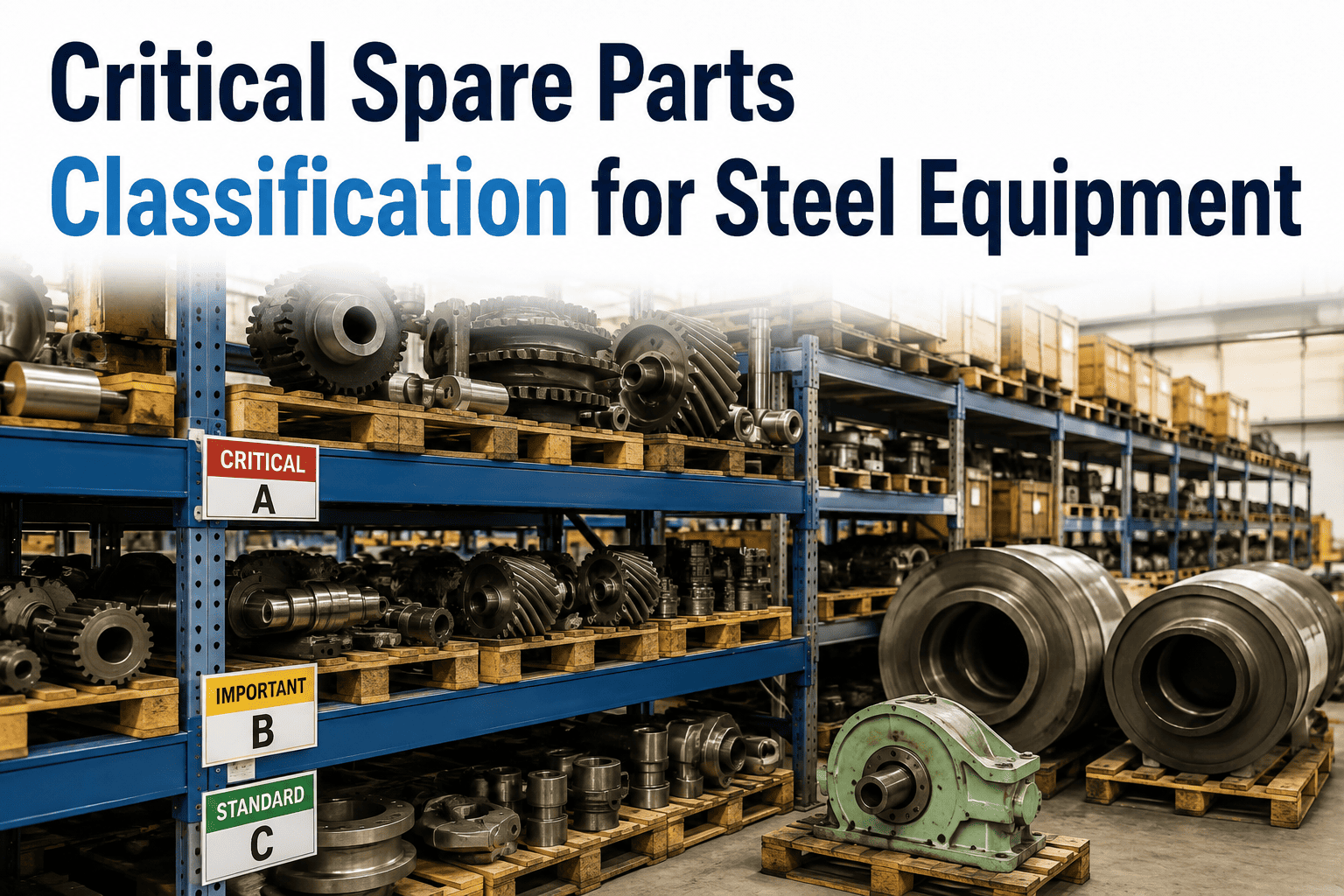
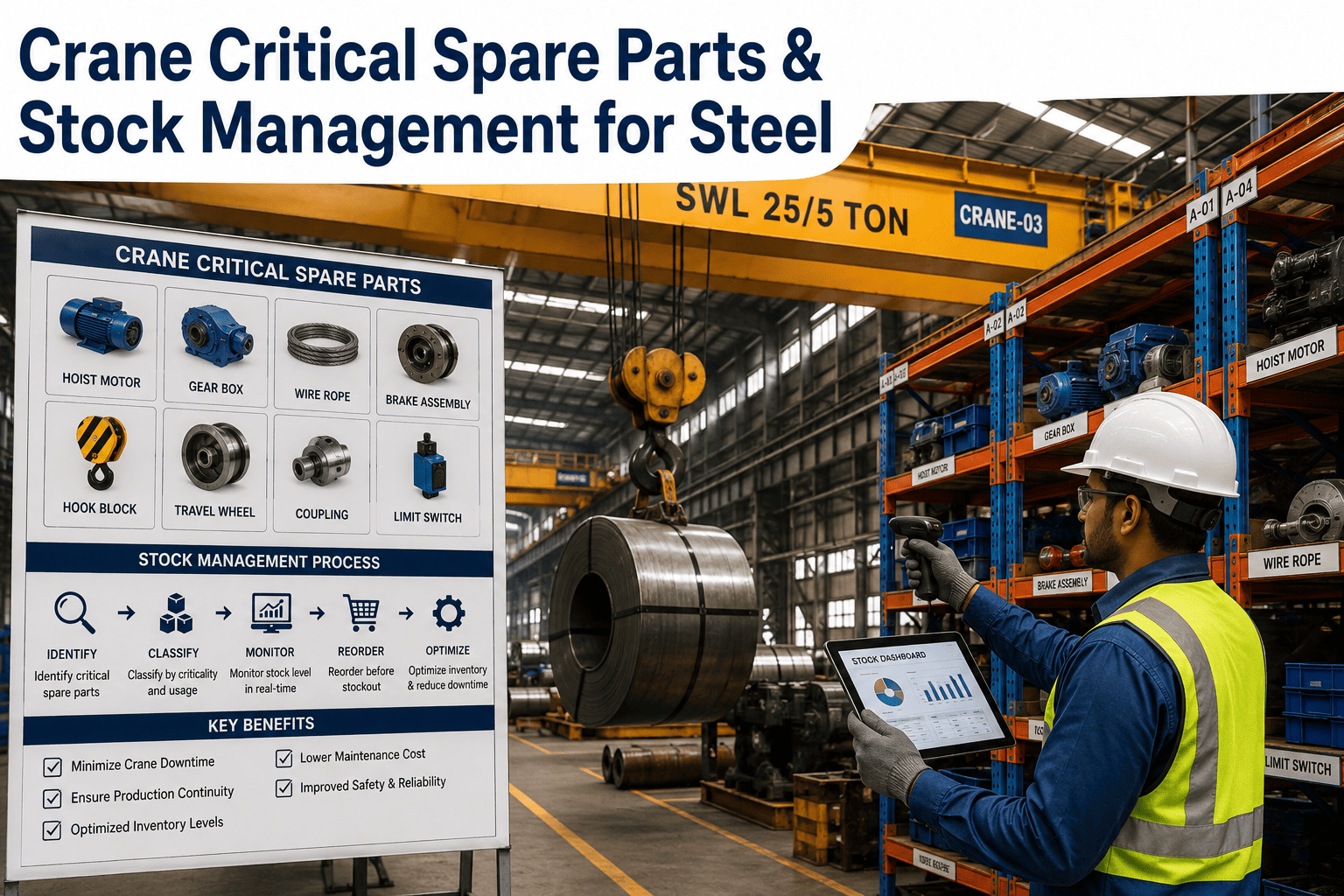
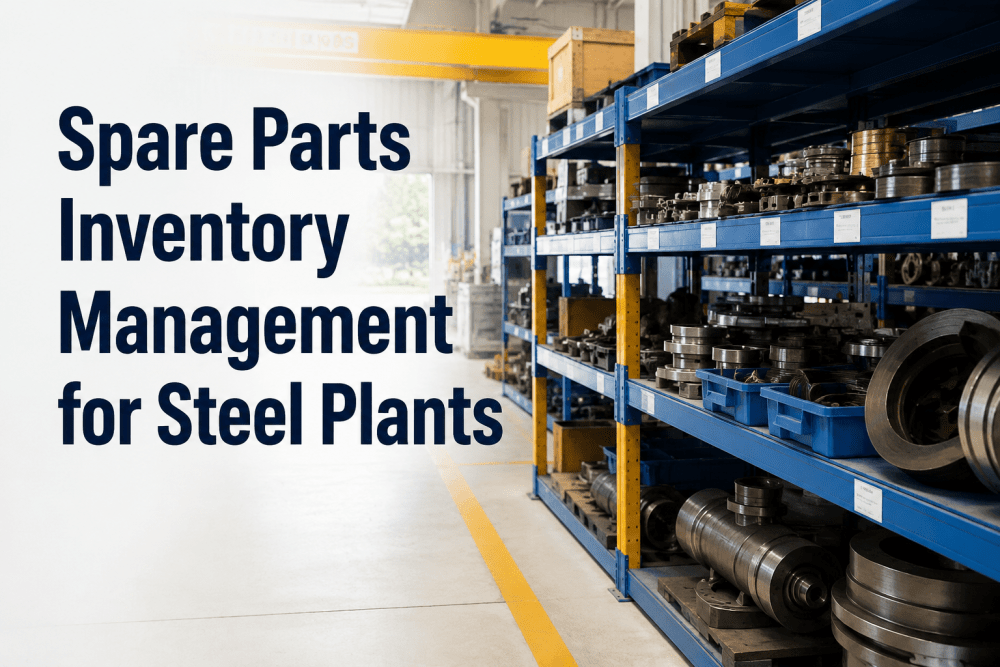
Spare parts inventory is the silent cost centre in every steel plant maintenance budget — consuming 30–40% of total maintenance spend while simultaneously causing 20–25% of unplanned equipment stoppages when critical spares are not available when needed. A 3 MTPA integrated steel plant typically carries ₹80–150 crore of spare parts inventory, of which analysis consistently reveals that 15–25% is obsolete, 30–40% is overstocked, and 5–8% of genuinely critical spares are either understocked or absent entirely. iFactory's Spare Parts and Inventory Module addresses this paradox — too much of the wrong stock and not enough of the right stock — using ABC/VED analysis, AI-driven reorder point optimization, critical spare classification, and vendor performance tracking to systematically reduce inventory cost while eliminating stockout risk for critical equipment.
Steel Plant Spare Parts Inventory Management: Critical Spares, Reorder & Vendor Tracking
ABC/VED analysis, AI reorder point optimisation, critical spare classification, and vendor performance tracking — reducing inventory cost while eliminating critical stockouts.
The Steel Plant Inventory Problem: Too Much Stock, Too Many Stockouts
Steel plant spare parts inventories typically contain three types of waste simultaneously — obsolete parts that will never be used, overstocked common parts bought in bulk discounts, and dangerously understocked critical spares for high-risk equipment. Schedule a spare parts audit to reveal the hidden cost and risk in your current inventory.
Parts for decommissioned equipment, superseded items, duplicates — costing capital and storage space.
Common parts bought in excess quantities — tying up ₹30–40Cr in unnecessary capital.
Parts within optimal quantity bands — available when needed without excess holding cost.
High-criticality spares with zero or dangerously low stock — the 6% that causes most unplanned stoppages.
ABC/VED Analysis — How iFactory Classifies Every Spare Part
iFactory applies a combined ABC (value-based) and VED (criticality-based) classification to every item in your spare parts inventory — placing each part in the optimal inventory management category and automating reorder decisions accordingly.
| V — Vital Plant stops without it |
E — Essential Significant impact if absent |
D — Desirable Minor impact if absent |
|
|---|---|---|---|
| A — High Value Top 10% cost, 70% spend |
AV
Maintain minimum 1 unit. Insurance contract with OEM. Lead time monitored weekly.
|
AE
Safety stock = 2× lead time demand. Monthly reorder review.
|
AD
Low priority. Procure on order-to-order basis only.
|
| B — Medium Value Next 20%, 20% spend |
BV
2-3 units always stocked. Reorder at 50% consumption. AI-triggered.
|
BE
EOQ-based ordering. Safety stock = 1.5× average demand. Auto-reorder.
|
BD
Standard reorder point. No safety stock above minimum.
|
| C — Low Value Bottom 70%, 10% spend |
CV
Bulk stock maintained. High quantity, low cost. Never let run to zero.
|
CE
Standard kanban or min-max system. Auto-replenishment.
|
CD
Annual or biannual bulk purchase. Minimal monitoring needed.
|
What iFactory's Spare Parts Module Does — Five Core Capabilities
iFactory connects spare parts data to equipment criticality, maintenance history, and procurement systems — automating the decisions that manual inventory management consistently gets wrong. Schedule a spare parts module demo configured around your equipment and current inventory system.
Automated ABC/VED Classification
iFactory classifies every part using consumption history, unit cost, equipment criticality, and lead time — automatically assigning the correct inventory policy and triggering reclassification when conditions change.
AI Reorder Point Optimization
Reorder points calculated dynamically — using actual lead time variability, consumption rate trends, and equipment maintenance schedules from iFactory's CMMS. No more fixed reorder points set years ago and forgotten.
Critical Spare Register
Every Vital (V) and high-criticality spare is registered with minimum stock level, approved vendor, lead time, and alternative part number. iFactory blocks maintenance work orders for critical equipment if required spares are unavailable.
Vendor Performance Tracking
Delivery lead time, on-time delivery rate, quality rejection rate, and price trend tracked per vendor per part category. iFactory scores vendors monthly and flags underperforming suppliers before they cause a critical stockout.
Obsolete Stock Identification & Disposal
iFactory analyses zero-consumption items against active equipment lists — flagging obsolete parts for disposal, return, or redeployment. Surplus stock alerts generated when quantities exceed 3-year projected consumption.
Before vs. After — Spare Parts at a 3.5 MTPA Integrated Steel Plant
Results verified by plant finance and supply chain leadership after 12 months on iFactory Spare Parts and Inventory Module. Plant had ₹124 crore of spare parts inventory at deployment start.
What a Supply Chain Manager Said
We had ₹124 crore in spare parts and still had 18 critical stockouts last year. iFactory's ABC/VED analysis showed us exactly why — we had 25% of our inventory in completely obsolete parts and practically nothing stocked for our most critical bearings and gearbox components. Within 12 months, inventory was down to ₹82 crore and stockouts dropped to 2. The finance director called it the best ₹42 crore we ever freed up.
Frequently Asked Questions
How does iFactory determine the ABC/VED classification for each spare part?
ABC classification uses actual consumption value from iFactory's inventory transaction history. VED classification is set by maintenance engineers based on equipment criticality — cross-referenced against the plant's critical equipment register. Both are reviewed and updated automatically as patterns change.
How does the AI reorder point differ from a fixed reorder point?
Fixed reorder points ignore demand variability, seasonal patterns, and lead time changes. iFactory's AI recalculates reorder points monthly using actual consumption trends, vendor lead time history, and upcoming planned maintenance requirements from the CMMS schedule.
Can iFactory integrate with SAP MM for purchase order automation?
Yes. iFactory integrates bidirectionally with SAP MM — creating purchase requisitions automatically when reorder points are breached, and receiving GRN data back from SAP to update stock levels in real time.
How does iFactory identify obsolete spare parts?
iFactory flags parts with zero consumption for 24+ months and cross-references them against the active equipment list. If the equipment the part was purchased for has been decommissioned or modified, the part is flagged as a disposal candidate with estimated recovery value.
How quickly does iFactory go live for spare parts management?
Inventory data import and ABC/VED classification analysis is complete within 3–4 weeks. AI reorder points and critical spare register go live by Week 8. SAP MM integration completes by Week 10–12.
See Spare Parts Intelligence Live on Your Plant
Demo built around your current inventory, equipment criticality, and SAP setup.