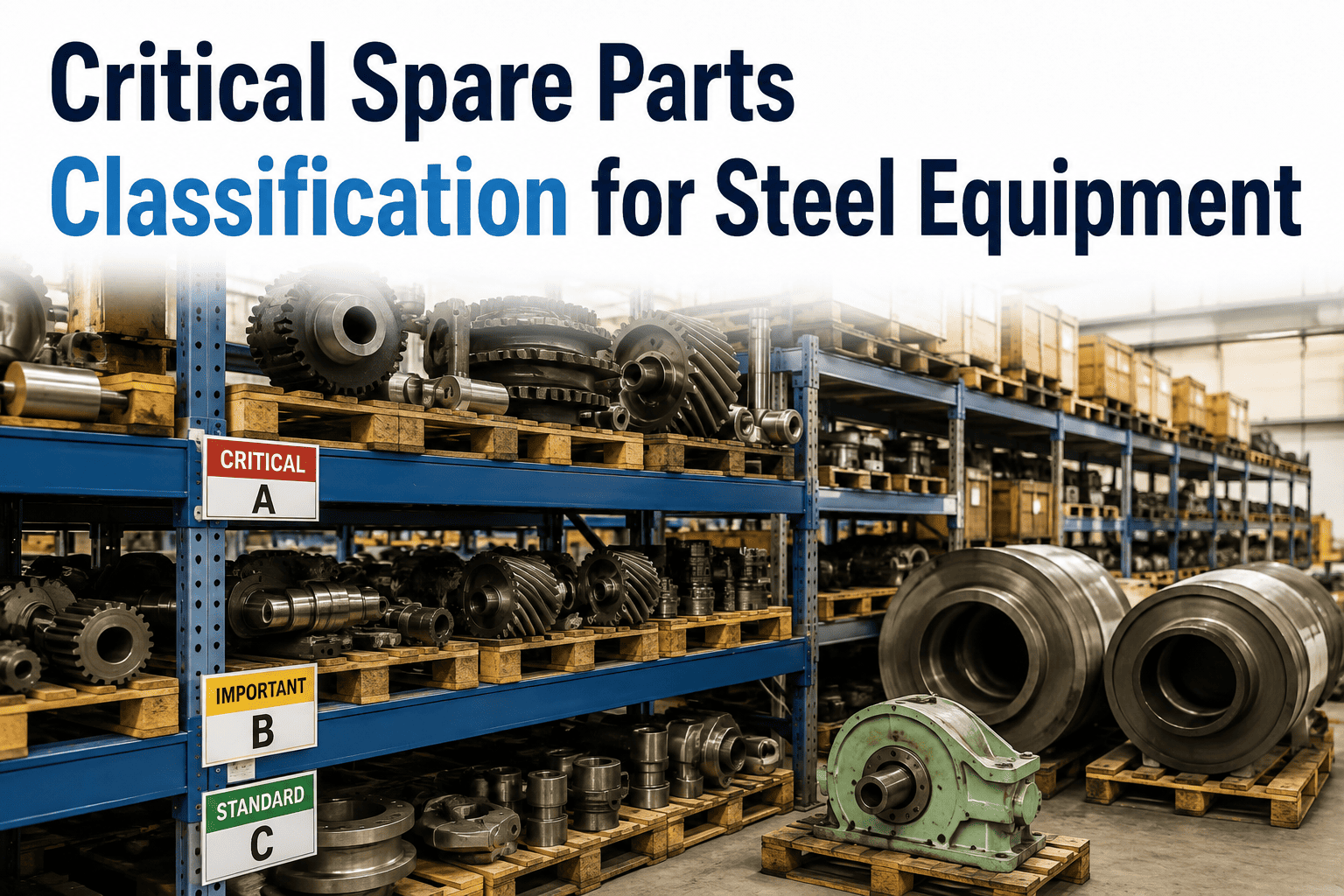
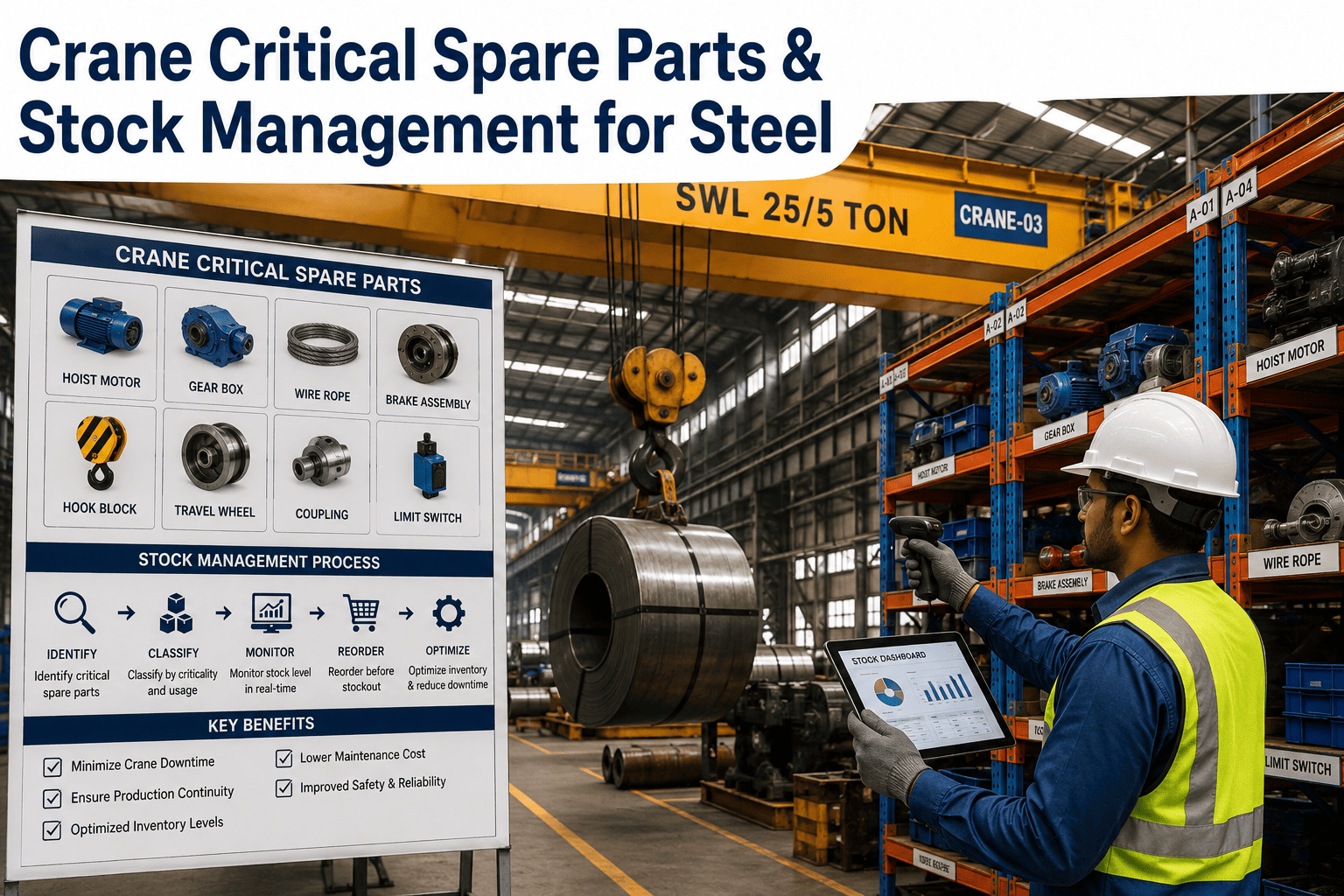
In the high-pressure ecosystem of an integrated steel mill, a missing $500 bearing is just as catastrophic as a furnace breakout—both can paralyze production for days. Traditional inventory systems are reactive, relying on static "Min/Max" levels that fail to account for the volatile lead times and predictive failure cycles of heavy metallurgical equipment. **Steel plant inventory and critical spare parts management** is undergoing a fundamental shift from manual stockroom tracking to AI-driven "Predictive Sourcing." By linking your inventory directly to the live health signatures of your assets, iFactory ensures that critical spares—from refractory bricks to hydraulic manifolds—are on-site exactly when the predictive model forecasts a failure, and never a day before. Organizations that schedule an inventory audit with iFactory are reducing their capital tie-up by 22% while simultaneously eliminating stock-out risks for their most mission-critical components.
Eliminate Stock-Outs with Predictive Inventory AI
iFactory's intelligent inventory platform synchronizes your MRO stockroom with live asset health, ensuring critical parts are available before a failure occurs.
The Financial Trap of Traditional Steel Plant MRO
Most steel mills suffer from "The Inventory Paradox": they have $50 million in capital tied up in spare parts, yet they still experience unplanned downtime because the *one specific part* needed for a repair is out of stock. This happens because traditional ERP systems don't "Talk" to the machines. iFactory solves this by creating a closed-loop intelligence layer between the shop floor and the stockroom. When our **Key Data Elements (KDEs)** detect a thermal drift in a caster segment, the system instantly cross-references the current stock of mold plates and hydraulic actuators. If a shortage is detected, an autonomous "Predictive Order" is triggered to the vendor, taking current global lead times into account. Supply chain leaders looking to break the cycle of "Panic Sourcing" often book a platform demo to see this causal logic in action.
Predictive Reorder Triggers
Move beyond static reorder points. iFactory triggers purchase requisitions based on the actual *Remaining Useful Life (RUL)* of your assets, ensuring parts arrive "Just-in-Time."
Refractory & Lining Lifecycle
Track the exact usage hours and heat-cycles of refractory bricks and ladle linings. Optimize relining schedules and ensure zero-defect brick quality through digital lineage tracking.
QR-Driven "Smart Bin" Tracking
Digitize your physical stockroom with ruggedized QR tags. Technicians can scan a bin to instantly view technical specs, compatibility matrices, and real-time stock levels globally.
Vendor Lifecycle Analytics
Rank your spare parts vendors based on actual component performance in the mill. iFactory links part serial numbers to failure data, identifying the highest-ROI suppliers.
"We used to carry three sets of roll bearings for the finishing mill just to be safe—that's nearly $2 million in idle capital. With iFactory's predictive inventory, we've safely reduced that to a single 'working set' because we now have 180-day visibility into when a changeout is actually required. The system even alerted us that a specific vendor's bearings were failing 20% faster than the OEM, allowing us to renegotiate our supply contract. It's transformed the stockroom from a cost center into a strategic asset."
The Strategic Pillars of Intelligent Steel Inventory
iFactory doesn't just "Track" parts; it optimizes the entire lifecycle of industrial capital. By focusing on the unique metallurgical and mechanical requirements of steel manufacturing, we provide the granularity needed to manage complex MRO environments. Procurement teams looking to modernize their MRO strategy often book a technical review to align their stores with these pillars.
Pillar 1 — Predictive Sourcing & Lead-Time Resilience
In the post-pandemic era, lead times for critical steel components like high-precision gearboxes or specialized electronics can exceed 12 months. iFactory's "Lead-Time Resilience" module uses AI to forecast when you need to place an order to ensure the part arrives before the asset reaches its 10% RUL threshold. This eliminates the need for expensive air-freight and prevents "Emergency Sourcing" at inflated prices.
Pillar 2 — The Refractory & Heat-Asset Digital Lineage
Refractories are a major OpEx driver. iFactory provides "Digital Lineage" tracking for every brick and lining. We correlate the refractory's chemical composition and vendor data with the actual performance data (taps, temperatures, chemical erosion) from the furnace digital twin. This allows you to identify the "Sweet Spot" for relining, maximizing the life of the material without risking a breakout.
Pillar 3 — Autonomous Inter-Plant Virtual Warehousing
For groups with multiple steel plants, iFactory creates a "Virtual Warehouse." If Plant A needs a critical hydraulic valve that is out of stock, the system automatically checks the inventory at Plant B and Plant C. It calculates the fastest transfer route and updates the local work orders, effectively turning your entire enterprise into a single, optimized spare parts pool.
Reactive Stockroom vs. iFactory Intelligent Inventory
The shift from "Counting Parts" to "Managing Assets" is the key to industrial profitability. This comparison table highlights the major operational shifts that occur when a steel mill integrates iFactory's inventory intelligence. Stakeholders looking to build a financial business case for MRO modernization often schedule a ROI consultation to quantify these shifts.
| Inventory Metric | Reactive Approach (ERP Only) | iFactory Intelligent Inventory | Business Impact |
|---|---|---|---|
| Reorder Logic | Static Min/Max (Fixed levels) | Predictive (Based on Asset RUL) | -22% Capital tie-up |
| Asset Linkage | Disconnected / Manual entry | Live Digital Twin Sync | Zero "Wrong Part" errors |
| Refractory Tracking | Bulk estimation / Manual logs | Digital Heat-Cycle Lineage | +12% Refractory life extension |
| Visibility | Local stockroom only | Global Virtual Warehouse | -15% Emergency freight costs |
| Vendor Selection | Based on unit price | Based on Failure Mode ROI | Lowest Total Cost of Ownership |
| QR Workflow | None / Manual ID | Point-and-Predict Field Scan | +25% Technician wrench-time |
MRO Modernization: The 3-Phase Inventory Roadmap
Successfully modernizing a steel plant's inventory system requires a phased approach that ensures data integrity and vendor cooperation. iFactory's implementation team specializes in the rugged reality of steel mill stores. If you are ready to optimize your supply chain, book a Tier-1 inventory audit to evaluate your current stockroom maturity.
Data Sanitization & QR Digitization
Identify and categorize all critical spares (Refractory, Chocks, Valves). Deploy rugged QR tags to bins and high-value components. Sync the physical stockroom with the iFactory digital twin. Timeline: 4–6 weeks.
Predictive Logic & Auto-Reorder Config
Link inventory levels to live asset health KDEs. Establish "Predictive Reorder" triggers that account for dynamic vendor lead times. Activate the virtual warehouse across all plant sites. Timeline: 8–12 weeks.
Vendor ROI & Full Closed-Loop Sourcing
Activate failure-mode-driven vendor ranking. Fully automate the procurement pipeline from "Anomaly Detected" to "PO Issued." Achieve 100% critical spare parts availability with zero waste. Timeline: Ongoing.
The ROI of Intelligence: KPI Gains from iFactory Inventory
When your stockroom is as smart as your machines, the financial impact is visible on every layer of the balance sheet. The benchmark chart below shows the average gains achieved by steel manufacturers within 12 months of adopting iFactory's intelligent inventory platform. This is the ROI of "Total Visibility." Procurement executives who book a demo today are securing these bottom-line improvements.
Steel Plant Inventory & Spares — Frequently Asked Questions
How does "Predictive Reordering" differ from standard Min/Max levels?
Standard Min/Max is static; it triggers an order whenever stock hits a number, regardless of if the machine actually needs the part. **Predictive Reordering** is dynamic; it triggers an order based on the actual health of the machine. If the AI sees a motor is healthy, it won't reorder the spare bearing even if stock is low—saving you capital tie-up until the part is truly needed.
Can we track the "Life History" of refurbished roll chocks in iFactory?
Yes. iFactory provides "Digital Birth-to-Death" tracking for high-value components like roll chocks and mold plates. You can track every refurbishment cycle, the specific vendor who performed the work, and the actual performance of the component back in the mill—identifying which refurb cycles yield the longest asset life.
How does the system handle "Refractory Bricks" with variable heat-cycles?
iFactory uses "Refractory Digital Lineage." We track each batch of bricks from the vendor to the specific furnace lining. We then correlate the number of taps, the chemistry of the slag, and the peak temperatures to provide a precise relining forecast—ensuring you get every possible heat out of the lining before replacement.
Does iFactory integrate with our existing SAP or Oracle ERP?
Yes. iFactory features bidirectional API connectors for SAP, Oracle, and Microsoft Dynamics. We act as the "Intelligence Layer" that calculates the reorder trigger, which then automatically generates a Purchase Requisition (PR) in your ERP for financial approval and vendor processing.
How do we manage "Virtual Warehousing" across multiple sites?
iFactory provides a single enterprise view of all MRO inventory. If Plant A is facing a stock-out of a critical sensor, the system instantly identifies the closest spare at Plant B. It even handles the logistics of the internal transfer and updates the work orders at both sites, effectively sharing the risk across your entire plant network.
What is the "Total Cost of Ownership" (TCO) vendor ranking?
Traditional systems rank vendors by price. iFactory ranks them by **Asset Performance**. We link the spare part serial number to the failure data in our platform. If a "Cheap" bearing fails 30% faster than a "Premium" one, iFactory calculates the true TCO (Price + Downtime Cost), allowing your procurement team to make data-driven sourcing decisions.
Is this applicable to small stockrooms or only massive central stores?
It is applicable to both. While large central stores see the biggest "Capital Recovery," small stockrooms see the biggest "Reliability Impact." In a small plant, a single missing $50 hydraulic seal can be the difference between meeting a production target and missing it entirely.
How long does it take to see a ROI from the inventory module?
Most mills see a return on investment within **4 to 6 months**. The primary drivers are the immediate reduction in "Emergency Air-Freight" and the ability to safely lower safety-stock levels for high-value components based on our 180-day failure foresight. Request a Strategic ROI Model here.
Stop Guessing. Start Predicting Your Spare Parts Needs.
iFactory's intelligent inventory platform is the only solution built to bridge the gap between asset health and the stockroom floor — purpose-built for the global steel industry.