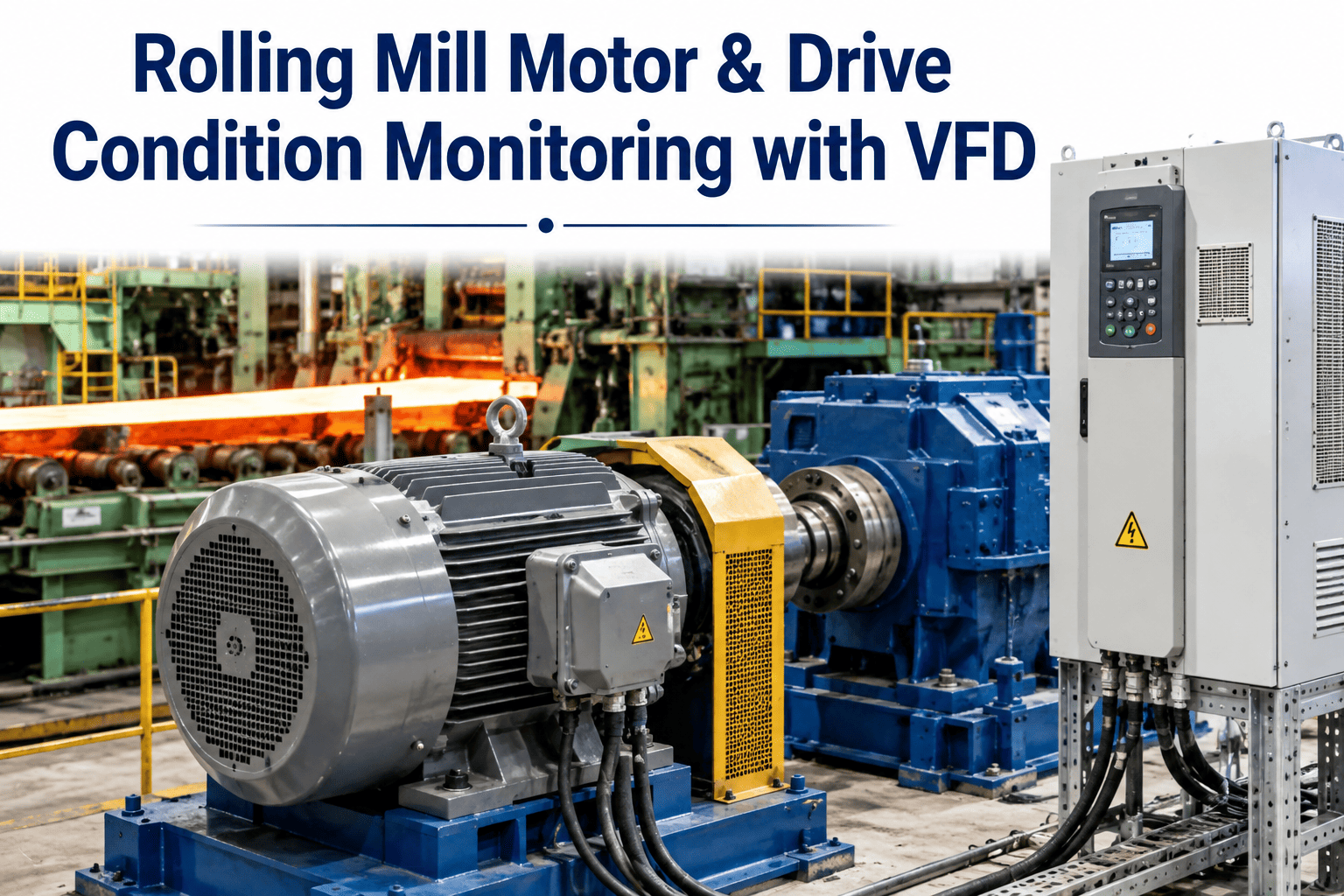
In the massive-scale operation of a hot or cold rolling mill, the Drive System is the primary source of mechanical power and speed synchronization. From the multi-megawatt Main Drive Motors to the high-precision Variable Frequency Drives (VFDs), every component in the drive train—including gearboxes, couplings, and spindles—is subjected to extreme torque fluctuations and thermal stress. Traditionally, drive reliability was managed through calendar-based greasing and periodic vibration surveys. However, in the era of high-speed thin-gauge rolling, these reactive methods are insufficient. Motor & Drive Analytics provides a live virtual model of the drive train, correlating electrical current signatures (MCSA), vibration harmonics, and gearbox oil chemistry to detect the early precursors of gear pitting or motor insulation breakdown. If your drive maintenance still waits for a "Hot Bearing" alarm to trigger action, Schedule a Technical Audit to see how iFactory optimizes your mill's muscle.
See Your Drive Train as a Live Digital Model
iFactory's drive analytics platform delivers real-time VFD current signature analysis, gearbox oil health tracking, and AI-driven vibration diagnostics built for heavy-duty mill environments.
What Is Rolling Mill Drive System Analytics and Why Does It Matter?
At the core of drive system analytics is the convergence of high-speed electrical sampling and multi-axial vibration monitoring. When a 10MW Main Stand Motor shows a 0.2% variance in current harmonics, it doesn't just log the event—it correlates the signature against historical rotor bar degradation models and issues a predictive alert. This is the difference between simple monitoring and Drive Train Intelligence. For mills rolling high-strength low-alloy (HSLA) steel, where torque loads can spike instantaneously, the ability to "see" torsional vibration before it damages the Mill Gearbox is the only way to ensure 99%+ uptime. Manufacturers who book a demo with iFactory find that identifying "Ghost Vibration" in spindles through causal simulation is the moment their CapEx strategy becomes data-driven.
The Strategic Mandate: Why Drive System Analytics is the Core of Mill Profitability
In most rolling mills, the drive system is treated as a "binary" asset—it's either running or it's broken. However, this model ignores the massive "Hidden Cost" of suboptimal drive performance. A VFD that isn't perfectly tuned for the current slab grade consumes 12-18% more energy and subjects the motor windings to unnecessary thermal cycles. A gearbox with undetected gear pitting continues to operate but generates "Micro-Vibrations" that degrade strip surface quality. iFactory's Drive System Analytics reposition the powertrain from a mechanical utility to a strategic performance driver. By moving from reactive maintenance to AI-Driven Thermal and Mechanical Autonomy, mills can capture the lost margin currently hidden in their drive trains.
Beyond immediate uptime, the "pitch" for drive digitalization is centered on Operational Workforce Empowerment. As the "Great Crew Change" accelerates, mills are losing decades of "ear-to-the-ground" experience—the supervisors who could "hear" a bearing failure days in advance. iFactory's platform codifies this tribal knowledge into AI models that provide 24/7 "Expert Oversight." Schedule a high-level briefing to see how we bridge the experience gap in your maintenance team.
VFD Current Signature (MCSA)
Continuous analysis of motor current to detect broken rotor bars, air gap eccentricity, and winding insulation breakdown. Eliminates the need for periodic "Offline" motor testing during shutdowns.
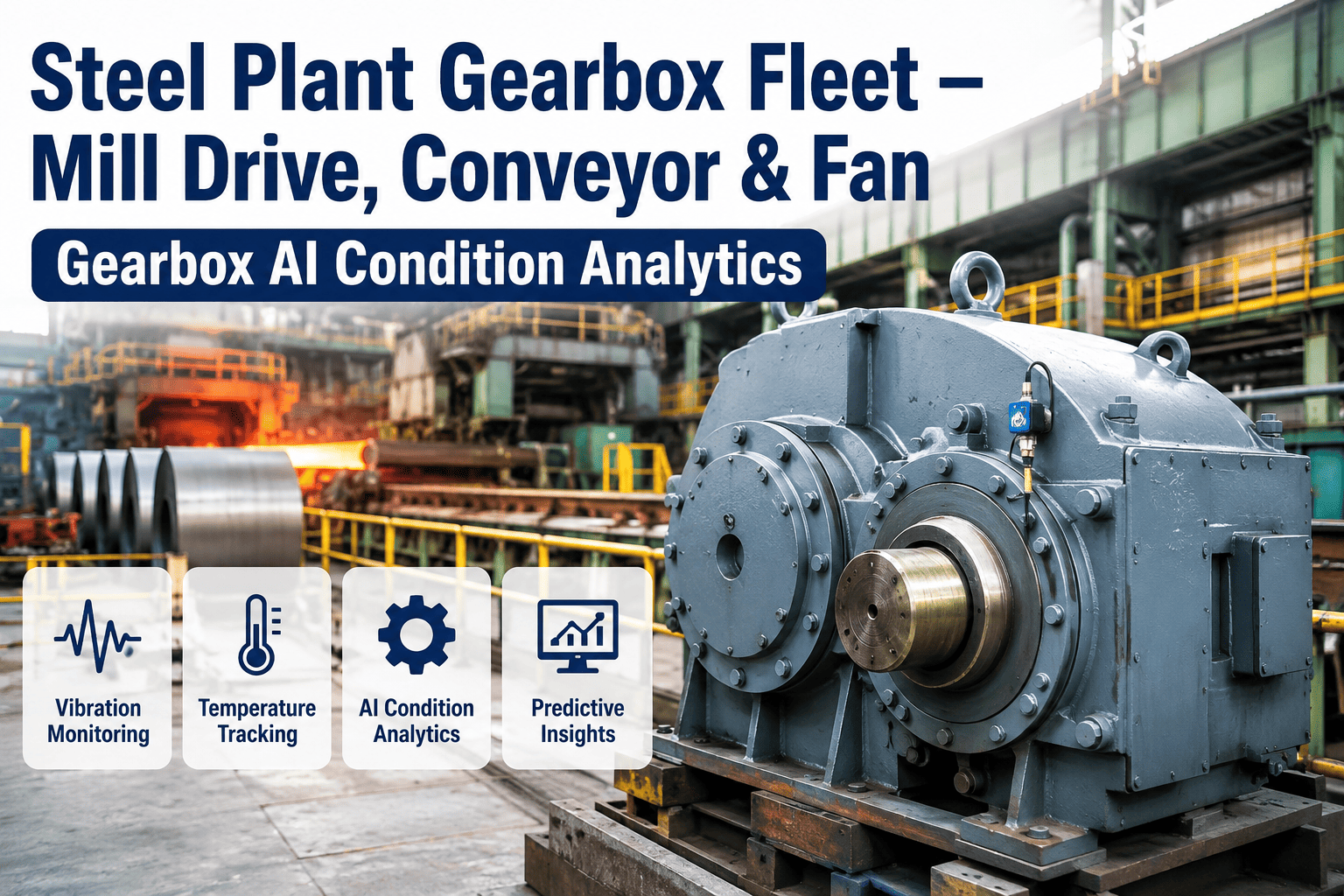
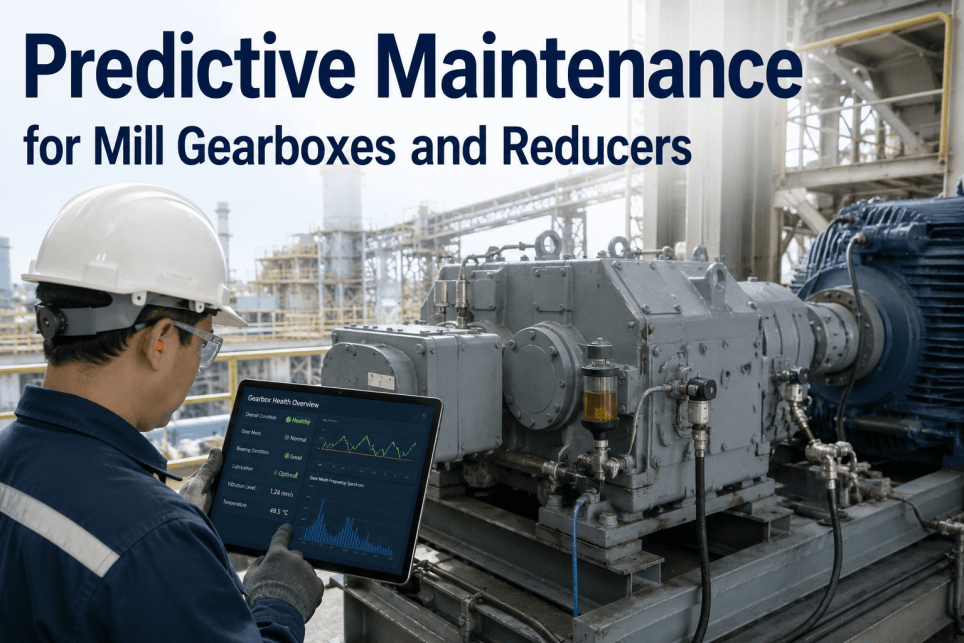
Gearbox Vibration & Oil Health
Integration of multi-axial vibration data with real-time oil particulate and chemical sensors. Detects gear pitting and bearing wear signatures weeks before thermal alarms are triggered.
Coupling & Spindle Alignment
Real-time monitoring of spindle joint vibration and thermal gradients. AI models identify alignment drift caused by mill housing shift or foundation settling, preventing catastrophic coupling failure.
Torque Peak & Load Analytics
High-speed capture of mill "Impact Loads" during slab entry. Correlates torque peaks with motor thermal stress to optimize the Drafting Schedule without overloading the drive train.
Digital Transformation in the Drive House: Scaling Efficiency Across the Enterprise
Sustained digital transformation in the steel industry requires more than just deploying sensors on a single motor. It demands a data architecture that contextualizes drive performance across the full production network. iFactory's platform allows a VP of Operations to compare the Specific Energy Intensity (kWh/Ton) of Drive Stand 4 in Facility A against a comparable unit in Facility B. This "Enterprise Benchmarking" reveals the management practices and maintenance disciplines that produce top-quartile reliability. The transformation becomes strategic only when the data generated by the drive house flows into a Strategic Control Tower that converts it into capital allocation intelligence. Book a Demo to see our Enterprise Drive Dashboard.
Optimizing Drive Train PM: Moving Beyond Calendar Greasing
Rolling mill drive trains are notoriously expensive to maintain. A single Gearbox Relining or a Motor Rewind can cost millions in parts and lost production. iFactory's platform resolves this by moving maintenance from calendar-based to condition-based. Instead of replacing gearbox oil every year, mills move to Precision Lubrication, extending oil life based on actual additive depletion and moisture data. Reliability teams report that requesting a demo allowed them to identify that 55% of their gearbox failures were actually preventable through earlier detection of "Silt Lock" in bearing lubrication channels.
Torsional Resonance & Spindle Health: Managing the Impact Zone
The "Impact Zone"—where the slab first hits the work rolls—is the most violent moment in the rolling process. This impact triggers Torsional Resonance that propagates through the spindles and back into the main gearbox. Without real-time analytics, these resonant frequencies can align with the gearbox's natural frequencies, leading to "Spindle Snap" or gear tooth fatigue. iFactory's platform monitors these torsional transients at the millisecond level, providing the data needed to optimize the Bite Angle and mill speed for every steel grade. This ensures that the drive train is always operating within its safe mechanical envelope, even when pushing for record-breaking throughput.
By correlating torsional data with strip quality measurements, we identify the exact drive parameters that minimize "Mill Chatter"—the periodic surface defects that can render high-value automotive coils scrap. This end-to-end visibility ensures that drive reliability and surface excellence are managed as a single, unified performance metric.
Drive System Asset Performance Management (APM)
The financial impact of a motor failure in a hot strip mill is measured in six-figure hourly losses. A digital twin-driven drive analytics platform provides the "Financial Visibility" that CFOs need to approve multi-million dollar motor replacements. By quantifying the Remaining Useful Life (RUL) of an aging main drive motor based on its insulation resistance trend and thermal history, iFactory eliminates the "guesswork" of CapEx planning. Book a Demo to see how we model your drive train's financial risk profile.
| APM Capability | Traditional Approach | iFactory AI Approach | Financial Impact |
|---|---|---|---|
| Motor Diagnostics | Annual insulation (Megger) tests | Continuous Online MCSA tracking | +12% Extension in Motor Life |
| Gearbox Monitoring | Manual periodic oil sampling | Real-time oil chemistry & vibration | $250k+ saved in reline costs |
| VFD Efficiency | Manufacturer default settings | AI-driven load-loss optimization | 12–18% Energy cost reduction |
| Spindle Reliability | Visual joint inspection | Torsional vibration analytics | Zero "Spindle Snap" events |
| Alignment Audits | Shutdown-period laser checks | Predictive dynamic drift detection | 80% reduction in alignment labor |
Drive Train Impact Across Mill KPIs
Modern rolling mills are pushing the limits of motor torque and speed. iFactory's analytics ensure that these performance gains don't come at the expense of asset integrity. The chart below benchmarks the average improvement achieved by mills within 12 months of deploying our motor and drive analytics suite.
The Strategic Advantage: From Maintenance to Reliability
"iFactory's motor analytics saved us from a main drive burnout that would have cost us 14 days of production. Their current signature analysis picked up a rotor bar crack that our standard vibration sensors missed completely. It's the highest ROI project we've executed in a decade."
Rolling Mill Motor & Drive Analytics — Frequently Asked Questions
What is Motor Current Signature Analysis (MCSA) and how does it work?
MCSA is a non-intrusive diagnostic technique that monitors the motor's supply current. By analyzing the high-frequency harmonics of the current, AI models can detect rotor bar damage, air gap eccentricity, and stator winding faults without needing to stop the motor or attach sensors directly to the rotating shaft.
How does the platform distinguish between gearbox wear and normal process vibration?
iFactory uses "Causal Filtering" which correlates vibration data with the mill's speed, torque, and material grade. By subtracting the "Process Noise" (the vibration caused by the rolling itself), the system isolates the specific mechanical frequencies related to gear mesh and bearing rotation.
Can analytics extend the life of universal joint spindles?
Yes. Spindle joint failure is usually caused by lack of lubrication or misalignment under load. iFactory monitors the thermal signature and torsional vibration of the joints during the rolling cycle, identifying the specific "Spindle Angle" or "Lubrication Failure" signatures that lead to rapid wear.
What is the benefit of real-time oil chemistry sensors in a mill gearbox?
Standard oil analysis happens every 3–6 months. Real-time sensors track moisture, oxidation, and ferrous density every minute. This allows for immediate action if a seal fails or a water cooler leaks, preventing the water-in-oil emulsification that can destroy a large gear set in hours.
How does VFD analytics reduce energy consumption in a rolling mill?
VFDs are often tuned for "Safe" operation, not efficiency. iFactory's AI models analyze the drive's switching frequency and flux control parameters, suggesting real-time adjustments that reduce harmonic losses and improve the motor's power factor by 12–18%.
Does the platform support both AC and DC main drive motors?
Yes. While modern mills are AC-driven, many legacy mills still use massive DC motors. iFactory provides specific diagnostic modules for DC motors, including commutator condition monitoring and carbon brush wear tracking via current signature analysis.
How does the system prevent "Cobbles" caused by drive speed mismatch?
A "Cobble" often occurs when one stand's drive lags behind the others. iFactory monitors the "Inter-stand Speed Sync" at the millisecond level, providing a predictive alarm if a drive's response time begins to deviate from the master speed reference.
What is the typical ROI for a drive train analytics deployment?
Payback is typically achieved in under 12 months. This is driven by a 45% reduction in unplanned downtime and the extension of motor relining intervals. For a 1 million ton per year mill, avoiding just one 24-hour motor failure pays for the entire platform for 5 years.
Deploy a Drive Train Digital Model That Protects Your Mill's Muscle
iFactory's motor and drive analytics platform delivers real-time VFD precision, automated gearbox oil audits, and AI-driven MCSA — purpose-built for the world's most demanding rolling environments.