Steel quality failures are expensive in ways that compound — a single off-grade heat can trigger downstream rework, customer returns, and regulatory non-conformance across multiple product batches. Most quality systems in steel plants still depend on post-process spectrometer results and manual SPC charting, which means problems are discovered after the damage is done. iFactory's Quality Intelligence Hub changes the model entirely: AI predicts chemical composition drift, grade compliance risk, and mechanical property deviations before the heat is tapped — giving metallurgists and quality engineers the lead time to intervene, correct, and confirm rather than react, scrap, and investigate.
Steel Quality Prediction & Control: AI-Powered Chemical Composition Management
Achieve 98%+ grade compliance with AI prediction — covering composition analysis, SPC, grade library management & first-pass yield optimisation.
Why Reactive Quality Control Costs Steel Plants Millions Every Year
The average integrated steel plant produces 50–120 heats per day. At current commodity prices, a single off-grade 300-tonne heat costs $45,000–$180,000 in scrap, rework, and customer penalty costs. Multiplied across 15–40 quality incidents per month — the total reaches $8–20M annually for a mid-sized plant. iFactory's AI Quality Intelligence Hub cuts this by predicting composition drift and triggering corrective actions 4–8 minutes before the heat is tapped — when there is still time to act.
- Spectrometer result arrives after tapping
- SPC chart reviewed in the next shift
- Grade decision made with incomplete data
- Rework, downgrade, or scrap discovered late
- Root cause found weeks after the event
- AI predicts composition 4 min before tapping
- Real-time SPC with automated out-of-control alerts
- Grade compliance scored continuously per heat
- Corrective alloy additions recommended in-process
- Root cause linked automatically to process variables
What iFactory Quality Intelligence Hub Covers
Five interconnected quality intelligence modules — each addressing a specific gap in conventional quality management, all operating from a single unified platform integrated with your SAP QM and PLC systems.
Chemical Composition AI
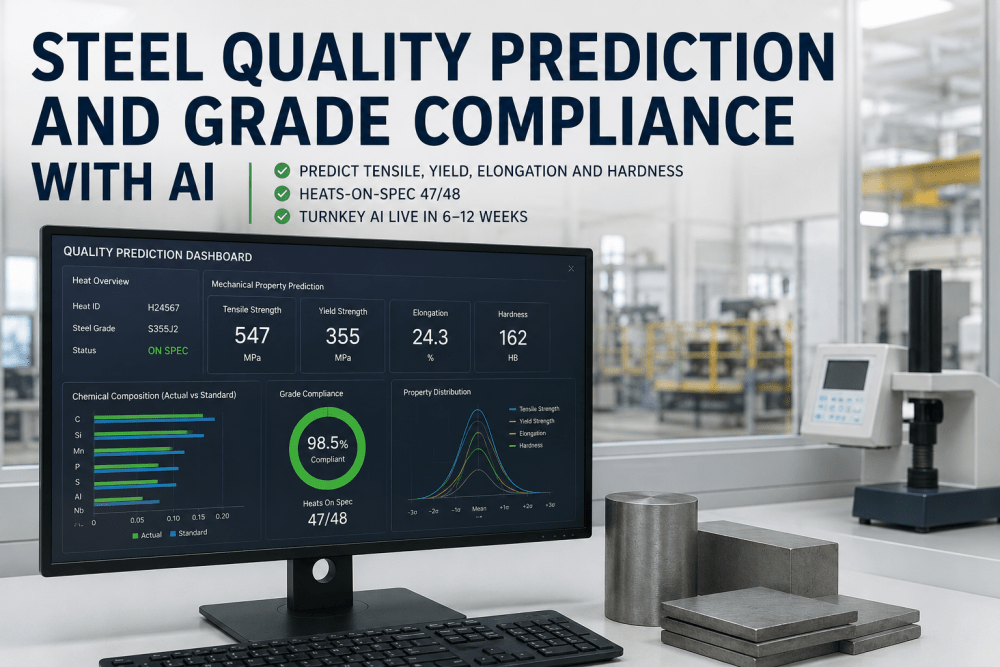
Predicts C, Mn, Si, S, P, Cr, Ni, and 20+ elements at tapping — 4 minutes early — using furnace sensor data, charge weights, and AI models trained on thousands of historical heats.
Real-Time SPC Charting
X-bar, R-chart, and CUSUM control charts update with every heat — automated Western Electric rule violations trigger alerts to metallurgist dashboards and SAP QM non-conformance records.
Grade Library Management
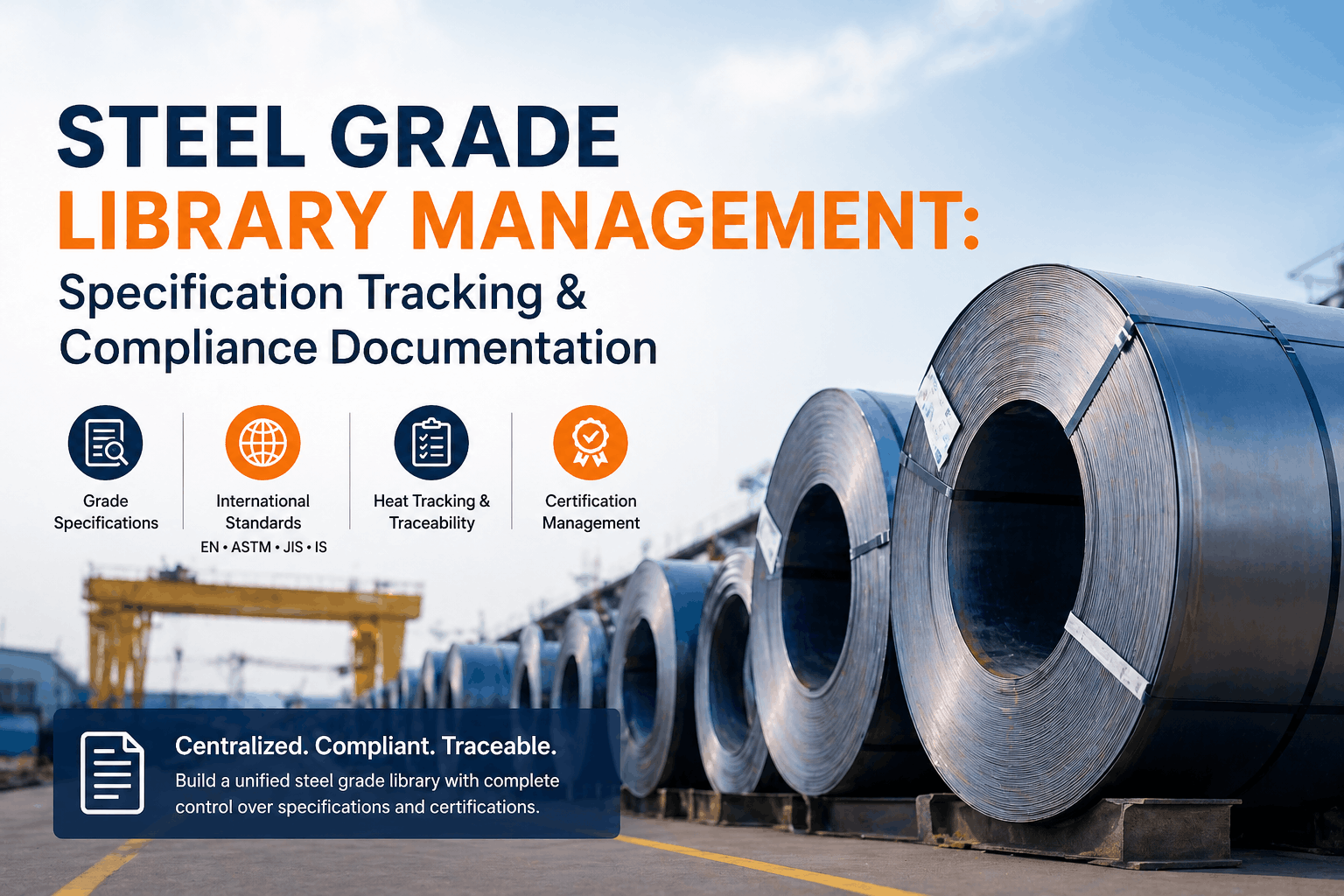
Centralised library of 500+ steel grades with composition limits, mechanical property ranges, and process windows. AI matches every heat to its grade specification and flags any deviation in real time.
First-Pass Yield Optimisation
AI identifies the process variables — charge mix, tap temperature, argon stirring time, ladle additions — that most strongly predict grade compliance, and recommends optimal settings per grade per heat.
AI Digital Twin — Heat Quality
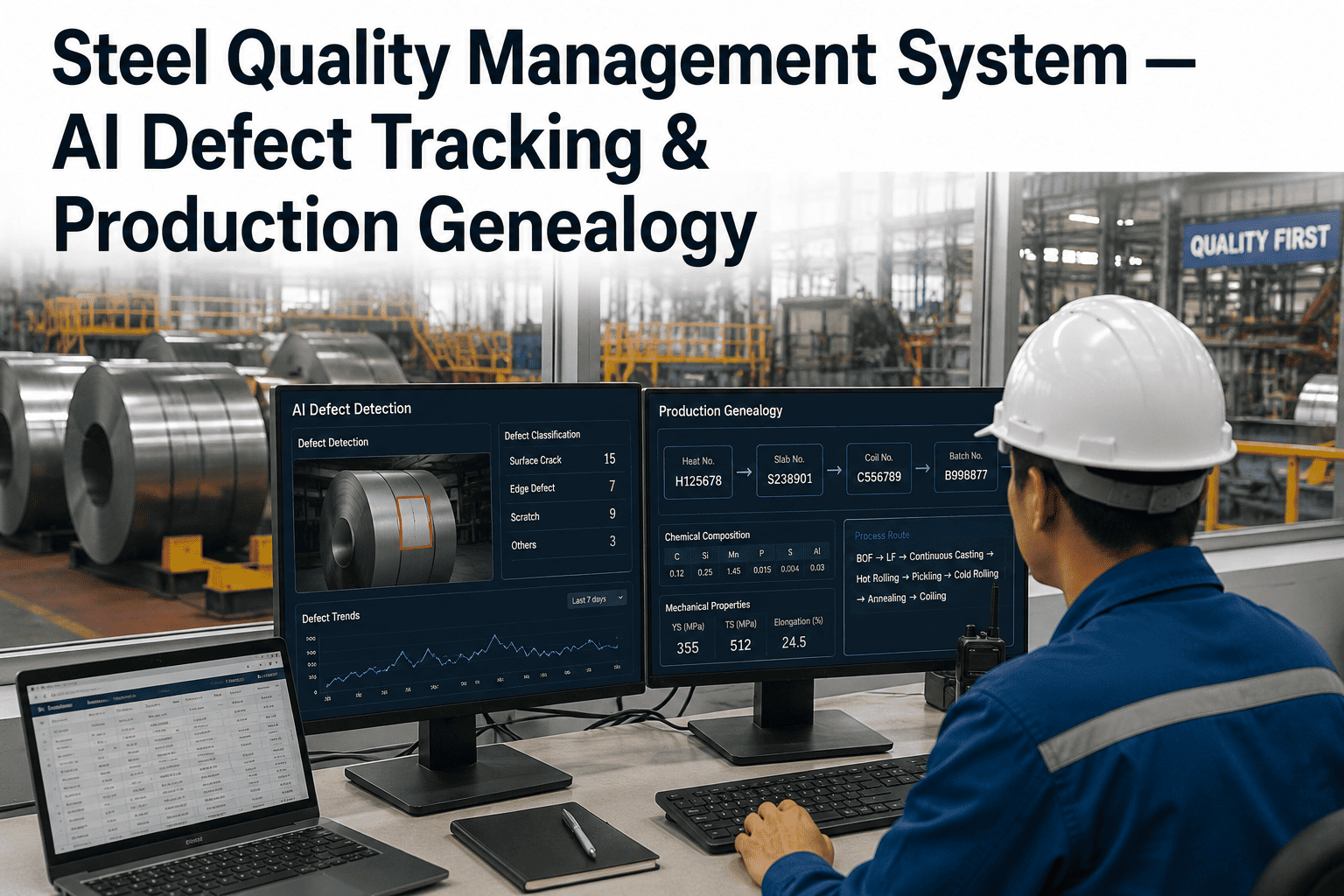
A live virtual model of every heat — tracking ladle temperature, inclusion content, alloy dissolution, and composition evolution second-by-second from charge to casting.
AI-Controlled Chemical Elements — Prediction Accuracy per Element
iFactory's composition prediction model covers all primary, secondary, and trace elements critical to grade compliance — each with published prediction accuracy from production deployments at integrated steel plants.
Quality Intelligence Hub — 12-Month Results at a 3 MTPA Integrated Plant
All figures independently verified by quality management and finance leadership after 12 months of full deployment.
What a Head of Quality Said
We used to find out about a composition problem from the customer. Now iFactory tells us 6 minutes before tapping. We've had one customer quality complaint this quarter versus 19 the same quarter last year. That's not a quality improvement — that's a quality transformation.
Frequently Asked Questions
How does iFactory predict chemical composition before tapping?
AI models trained on thousands of historical heats analyse real-time furnace temperature, charge weights, oxygen content, and alloy additions to predict tap composition 4–8 minutes before tapping.
Does the platform integrate with our existing spectrometer and LIMS?
Yes. iFactory ingests spectrometer results directly and uses them to refine the AI model — LIMS integration ensures every heat result is captured without manual entry.
How many steel grades can the grade library handle?
The grade library supports 500+ grades with full composition limits, mechanical property ranges, and process windows. Custom grades are added in minutes via the management interface.
Can iFactory connect SPC violations directly to SAP QM?
Yes. Western Electric rule violations trigger automatic SAP QM non-conformance records with heat ID, element, deviation, and recommended corrective action — no manual SAP entry needed.
How quickly can quality analytics go live on an operating steelmaking plant?
Most plants are live with composition prediction and SPC charting within 6–8 weeks. Full grade library build and SAP QM integration typically completes by Week 10–12.
See the Quality Intelligence Hub Live
Get a demo configured around your grades, elements, and SAP QM setup.