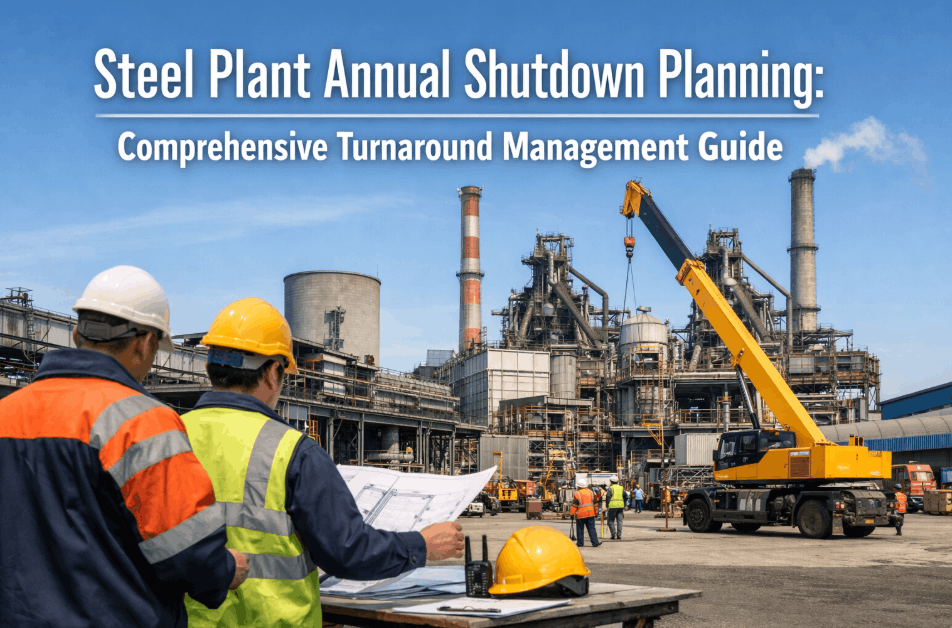
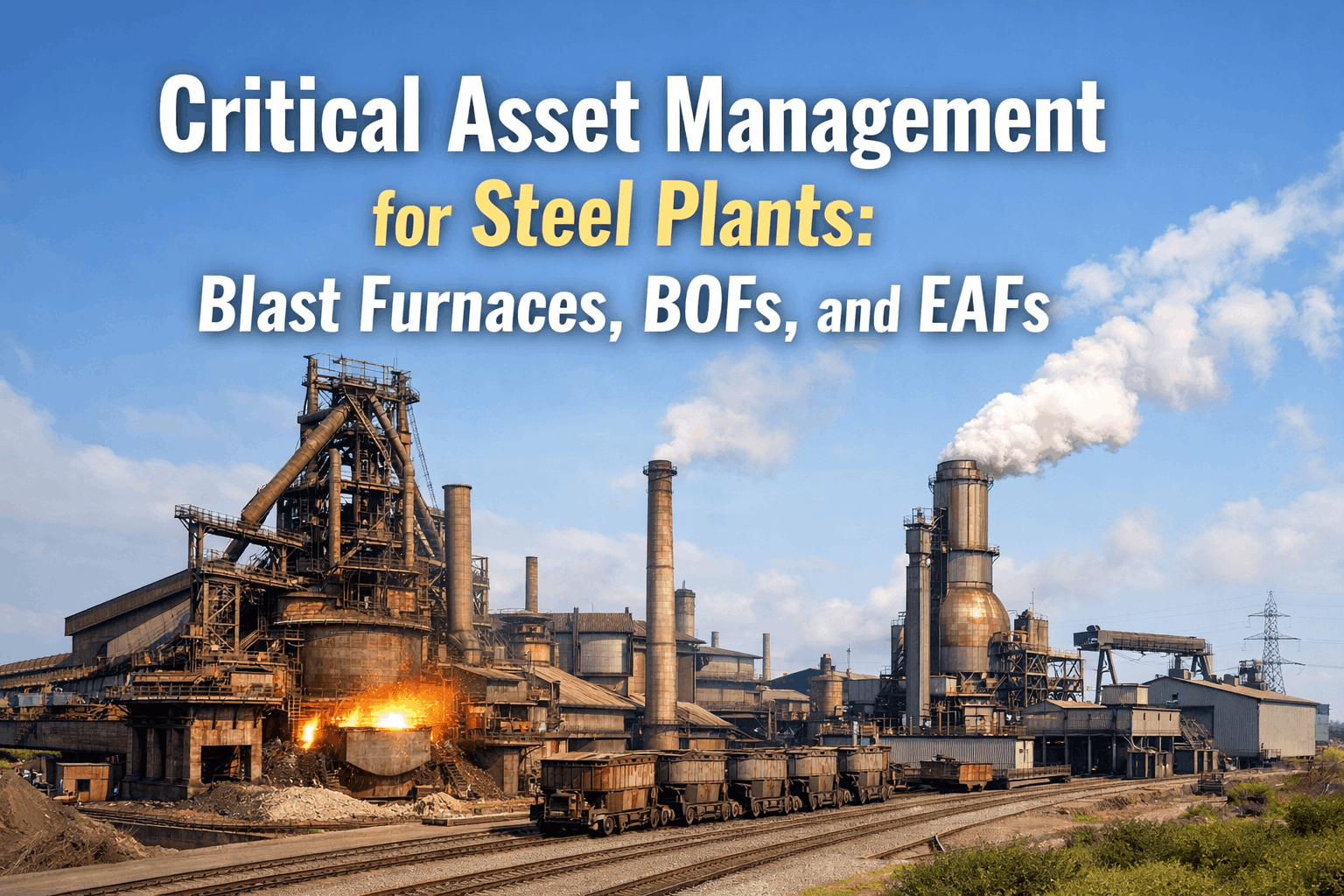
Steel manufacturing is defined by scale and extreme mechanical stress. In a typical integrated mill, over 10,000 distinct components interact daily — from towering blast furnaces and basic oxygen furnaces to high-speed rolling mill gearboxes, hot strip coilers, and heavy-duty shipping cranes. Relying on fragmented spreadsheets or generic enterprise software to track this volume guarantees operational blind spots. True steel asset management requires a dedicated steel plant asset tracking ecosystem that handles everything from initial commissioning and predictive maintenance intervals all the way to end-of-life decommissioning. This complete guide demonstrates how AI-driven steel equipment lifecycle platforms ingest digital twins of your machinery, enforce strict criticality ratings, and unlock massive CapEx savings across your entire heavy asset management registry.
Manage 10,000+ Steel Assets in One AI Platform
Track real-time health, lifecycle valuations, and predictive criticality ratings for every crane, caster, and furnace in your mill.
The Financial Imperative of Steel EAM Systems
Steel machinery management is intrinsically linked to profitability. When a primary roughing mill stand acts unpredictably due to undocumented bearing wear, the entire continuous rolling cycle is jeopardized. Legacy plant systems operate on a break-fix paradigm because their asset registries lack live IoT context. Modern steel EAM (Enterprise Asset Management) systems build a dynamic lifecycle map. As components wear, the database evaluates the replacement cost against the current maintenance expenditure, informing data-driven steel capital planning decisions long before failure. Book a Demo to see live asset lifecycle mapping in action.
Migrating your rigid databases to an AI-driven steel asset lifecycle platform directly cuts emergency part expediting, improves overall mechanical uptime, and dramatically extends the mean time between failures (MTBF). By knowing precisely when to overhaul a ladle heater versus when to replace it entirely, capital expenditure is optimized efficiently.
Lifecycle Management Across Critical Steel Nodes
A generic asset tracking system cannot differentiate between an office HVAC unit and an Electric Arc Furnace transformer. Steel plant equipment demands deep hierarchical mapping based on thermal stress, vibration levels, and production flow criticality.
Melt Shop: Furnaces, Ladles & Transformers
The high-temperature environment of an EAF or BOF aggressively degrades assets. Steel asset management analytics tracks electrode regulator wear, refractory brick degradation mapped to individual heats, and transformer oil temperatures, calculating exact decommissioning horizons for major mechanical shells. See melt shop asset maps.
Continuous Casters & Molds
Caster segments are replaced cyclically. AI-driven registries log the exact tonnage passed through a specific copper mold or oscillator segment. By correlating metallurgical defect data to the specific asset segment, operators can identify and retire malfunctioning segments permanently rather than repeatedly repairing them.
Rolling Mills: Motors, Work Rolls & Drives
Gearboxes and main drives operate at extreme torques. Heavy asset management systems log every vibration anomaly, oil analysis result, and thermal spike against the specific serial number of the drive. This enables precise capital planning for million-dollar gearbox overhauls multiple quarters in advance.
Logistics: Overhead Cranes & Coil Cars
Shipping and material handling cranes carry immense liability. Asset lifecycle software tracks wire rope replacements, hoist brake inspections, and structural fatigue automatically, ensuring strict safety compliance across the entire logistics chain without manual inspector spreadsheets.
Asset Criticality ROI: Value Generated by Machine Priority
Not all 10,000 assets deserve equal analytical weight. The platform introduces a Tiered Criticality Rating that funnels maintenance budgets toward the machines capable of halting entire production runs. The table below highlights savings tied to asset tracking tiers.
| Asset Criticality Tier | Machine Examples | Previous Blind Spot | Analytics Implementation ROI |
|---|---|---|---|
| Tier 1: Plant Bottleneck | BOF Vessel, Main Drive Motors, Casting Molds | Run-to-failure caused millions in cascade shutdowns | 30+ days prediction averts $400K+ emergency losses |
| Tier 2: Co-Dependent Spares | Cooling Water Pumps, Secondary Fans, Cranes | Inaccurate spare inventory created wait times | Live tracking lowers warehouse cap by 18% |
| Tier 3: Auxiliary Logistics | Coil Cars, Scrap Conveyors, Hydraulic Hoses | Neglected inspections led to minor multi-hour delays | Fleet tracking saves 4+ hours per systemic delay |
By deploying steel plant asset tracking tied specifically to risk, steelmakers can intelligently re-allocate manpower. High-risk bottlenecks receive automated AI diagnostics, while low-risk assets are handled via perfectly timed preventative digital tasks.
Four Pillars of the Steel Asset Lifecycle Ecosystem
Moving from static spreadsheets to dynamic steel industry digital twins requires four unified mechanics. Book a platform walk-through to evaluate our real-time database architecture.
1. Birth-to-Death Digital Passports
Every machine is instantiated with a digital ID. From the day of commissioning, every calibration, thermal fault, spare part consumption, and contractor repair is immutably logged into this passport, solving the institutional memory wipe that occurs when senior mechanics retire.
2. Live Depreciative Scrap Models
By constantly factoring repair costs against output efficiency, the system informs operations teams whether a lagging slab-reheating burner should be repaired for $40k or fully swapped for $110k based on long-term efficiency ROI curves mapped natively in the dashboard.
3. Bidirectional ERP & SAP Sync
When an asset is physically altered in the mill, the digital twin updates immediately, pushing the new BOM (Bill of Materials) and serial numbers into SAP. This ensures the financial ledger always perfectly matches the physical reality of the harsh mill floor.
4. Dynamic Spare Parts Rationalization
Understanding exactly which assets sit in the sunset phase of their lifecycle allows the software to freeze automated re-ordering of their spare parts. It prevents tying up necessary capital in expensive components for machines you plan to decommission in six months.
Automating ISO 55001 Compliance for Asset Ownership
Steel manufacturing operations face intense safety and structural audits. Ensuring ISO 55001 compliance manually across 10,000+ distinct assets is an administrative nightmare vulnerable to severe human error. Talk to our experts about streamlining regulatory reporting instantly.
The centralized steel EAM dashboard fundamentally eliminates manual logging. Every scheduled calibration on critical gas valves, ultrasonic test on crane hooks, and vibration audit on blast furnace blowers is time-stamped. Inspectors instantly generate iron-clad digital logs.
Compliance & Fleet Visibility Deliverables
Total operational transparency empowers executives to present flawless reliability metrics directly to the board.
- Audit-Ready PDF Exports: One-click generation of historical equipment histories covering multi-year lifespans.
- Barcode & RFID Ecosystems: Mobile verifications executed physically at the machine terminal.
- Environmental Compliance: Tracking exact hours run on gas scrubber arrays and filtration manifolds.
- Root-Cause Analytics: Detailed MTBF metrics mapped to specific brands, informing smarter procurement bids.
By absorbing all asset data into a fluid AI-driven matrix, supervisors transition from hunting down historical paper logs to making instant, analytically-validated decisions regarding plant modernization budgets.
Execution Strategy: Map 10,000 Assets in 60 Days
Fear of a massive data entry hurdle prevents many plants from modernizing. We eradicate this friction. Our onboarding process ingests existing SAP structures, flat CAD files, and P&ID schematics automatically to populate your asset hierarchy painlessly.
Our algorithms extract existing data lakes (SAP tables, historical Excel logs) to auto-generate the base asset tree. Every sub-component is assigned its respective parent-child relationship within the rolling line or furnace complex.
Working closely with your maintenance veterans, the platform applies criticality tiers (1 to 4) to the hierarchy. Native vibration, thermal, and payload sensors are logically bonded to their corresponding digital twins within the software UI.
The platform goes live across the mobile fleet. Technicians execute dynamic work orders, scanning barcodes to sync data natively. Concurrently, the first batch of AI-driven capital replacement strategies generate immediately for the executive suite.
Frequently Asked Questions
Below are the most common inquiries from steel manufacturing operations leaders evaluating enterprise asset registration.
Does it take years to manually digitize our massive plant?
No. We deploy automated ingestion scripts to convert your existing SAP hierarchies, CAD drafts, and vendor P&ID lists into digital relationships in under two weeks.
How does it integrate with legacy SAP setups?
Our core architecture includes native bi-directional gateways perfectly tuned to SAP and Oracle EAM modules, ensuring the physical twin strictly matches financial ledgers.
Can we track mobile fleet assets like ladles and coil cars?
Absolutely. Mobile units are tracked identically to fixed foundations. Tracking the rotation cycle of casters and scrap cars yields immense logistics throughput efficiency.
How are equipment serial number changes documented remotely?
Field technicians merely scan the new part's QR/Barcode via their heavily armored rugged tablet, instantly overwriting the system's active Bill of Materials universally.
Does this platform factor in energy compliance directives?
Yes. Energy consumption is tied directly to the specific machine twin. When motors drop below efficiency thresholds, an overhaul report alerts the procurement desk.
Synchronize 10,000+ Mill Assets Today
Take total command over your lifecycle management. Track every defect, optimize your CapEx, and radically streamline shift productivity across the plant.