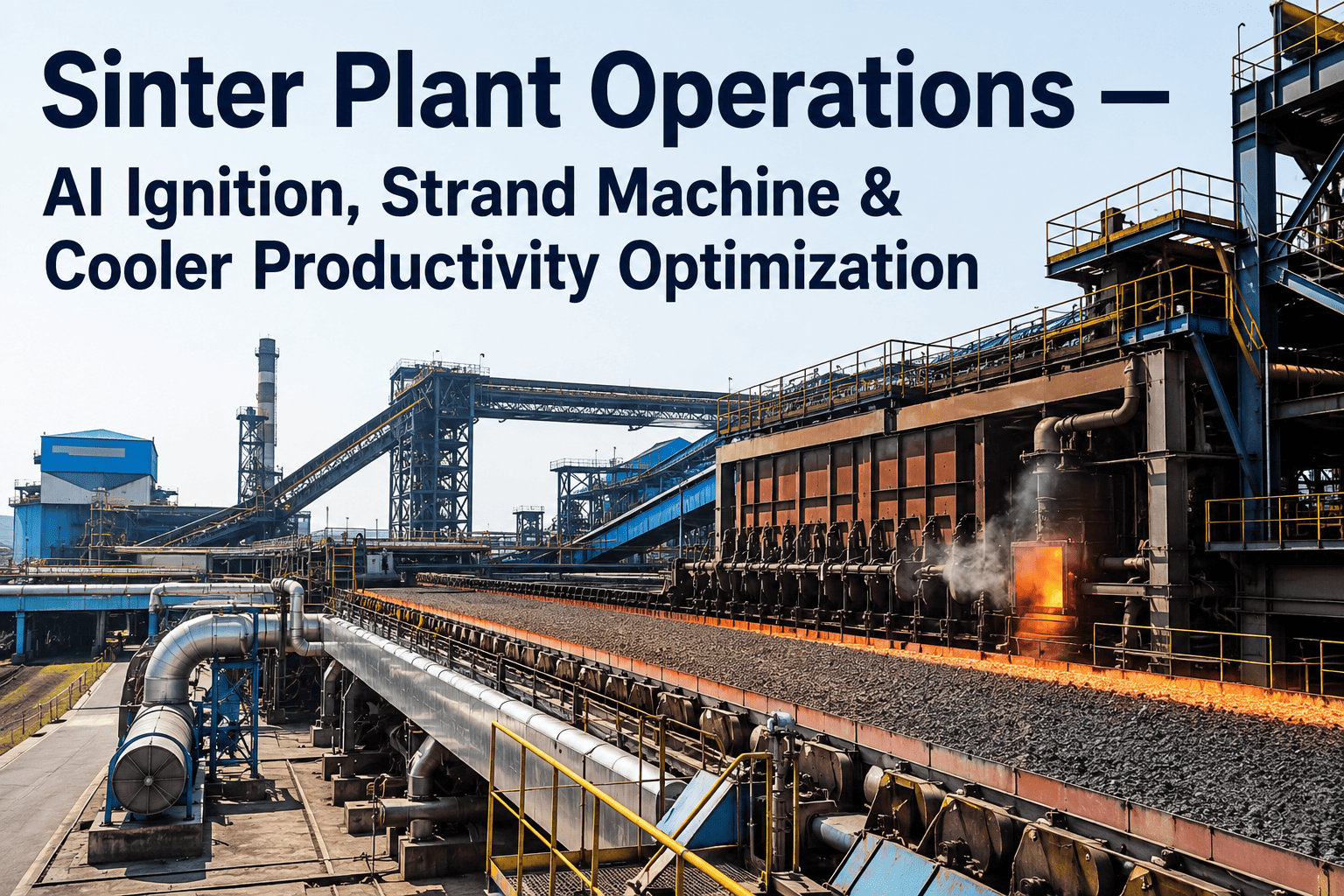
In the harsh, high-heat world of iron ore agglomeration, the stability of your Sinter and Pellet plants dictates the productivity of the entire downstream blast furnace network. These facilities are the "Engine Rooms" of ironmaking, yet they are plagued by extreme mechanical wear, high energy intensity, and volatile process conditions. **Sinter plant and pellet plant analytics with AI-driven intelligence** is transforming these rugged environments by providing real-time visibility into the health of critical components like sinter strands, ignition hoods, and induration furnaces. By moving beyond reactive "Run-to-Failure" maintenance, iFactory allows operators to track grate bar wear, optimize fan power consumption, and maintain the perfect thermal profile for metallurgical quality. Organizations that schedule a plant-readiness audit with iFactory are discovering that the agglomeration zone is the single largest opportunity for immediate OpEx recovery in the modern steel mill.
Is Your Sinter Strand Operating at Peak Reliability?
Unify grate bar wear tracking, fan performance monitoring, and thermal furnace intelligence into one AI-driven platform built for the world's toughest industrial environments.
Why AI-Driven Analytics is Redefining Sinter & Pellet Plant Reliability
The agglomeration process is a delicate balance of thermodynamics and mechanical force. Whether you are managing the traveling grate of a Sinter Strand or the induration furnace of a Pellet Plant, the core challenge remains the same: protecting the asset from extreme thermal shock while maximizing throughput. Traditional maintenance approaches often fail here because they rely on manual inspections during rare shutdowns. iFactory's **agglomeration analytics** platform bridges this gap by using high-frequency sensor data and computer vision to monitor component health *while the plant is running*. When ironmaking directors book a demo, they often find that their sinter fans and grate bars are generating enormous volumes of untapped data that—once connected—can prevent catastrophic strand failures and reduce energy consumption by up to 15%.
Grate Bar Wear Tracking
Monitor the structural integrity and thermal degradation of grate bars across the traveling strand. Predict "Drop-Outs" before they fall into the windbox, causing massive air-leakage and production stops.
Sinter Fan Performance
Track the vibration, temperature, and power consumption of primary waste-gas fans. Optimize speed vs. bed permeability to reduce specific power consumption while ensuring optimal suction.
Induration Thermal Mapping
Create a live digital twin of the pellet induration furnace. Monitor burner efficiency and zone temperatures in real-time to ensure consistent Pellet Cold Crushing Strength (CCS) and quality.
Ignition Hood Reliability
Detect refractory degradation and burner nozzle fouling in sinter ignition hoods. Prevent "Un-Ignited" bed zones that lead to poor sinter strength and increased fines return.
A Unified Intelligence Layer for the Agglomeration Network
iFactory's architecture for sinter and pellet plants addresses four foundational requirements: mechanical wear prediction, thermal profile stability, energy optimization, and environmental compliance documentation. Plants that have already booked a demo consistently report that connecting their fragmented vibration data, burner logs, and fan speeds into a unified analytics layer is the single most impactful step in their ironmaking modernization journey.
| Analytics Module | Primary Function | Sinter/Pellet Application | Reliability Benefit | Priority Level |
|---|---|---|---|---|
| Strand Monitoring | Traveling grate health | Grate bars & rollers | Prevents strand drop-outs | Critical |
| Fan Analytics | Vibration & Power sync | Primary waste-gas fans | Reduces -15% power OpEx | Critical |
| Thermal Twin | Burner & Zone mapping | Induration furnaces | Guarantees Pellet CCS | High |
| Emission Tracking | SOx/NOx correlation | ESP & Baghouse health | Zero compliance breaches | High |
| Roll Sizer AI | Crusher tooth wear | Sinter/Pellet sizers | Optimizes product sizing | Standard |
"The Sinter Plant was always our 'Black Box.' We knew the fans were sucking power and the grate bars were wearing, but we didn't know the exact failure window until something broke. iFactory's predictive strand monitoring changed that. We now have a 12-week foresight into grate bar degradation, allowing us to plan replacements during scheduled maintenance rather than stopping the strand for emergency repairs. It's the first time I've seen a technology actually survive and thrive on our mill floor."
Phased Roadmap: Digitizing the Agglomeration Plant
The transition from reactive firefighting to AI-driven ironmaking starts with visibility. iFactory's implementation team follows a proven 5-step roadmap that aligns with the rugged reality of your plant floor. Facility directors who book a demo early in their modernization cycle achieve faster deployment and more measurable ROI on their sensor investments.
Critical Asset Sensory Foundation
Deploy high-temp vibration sensors on sinter fans, laser scanners for grate bar wear, and thermocouple networks for induration furnaces. This creates the "Nervous System" of the agglomeration plant.
Edge-to-Platform Connectivity
Stream all field data to the iFactory Industrial Edge. Establish real-time dashboards for bed permeability, fan power intensity, and ignition hood thermal stability.
Causal AI Fault Mapping
Activate the iFactory AI engine to map sensor anomalies to specific agglomeration failure modes—such as grate bar "Burn-Through," nozzle fouling, or fan bearing fatigue.
Predictive Maintenance Automation
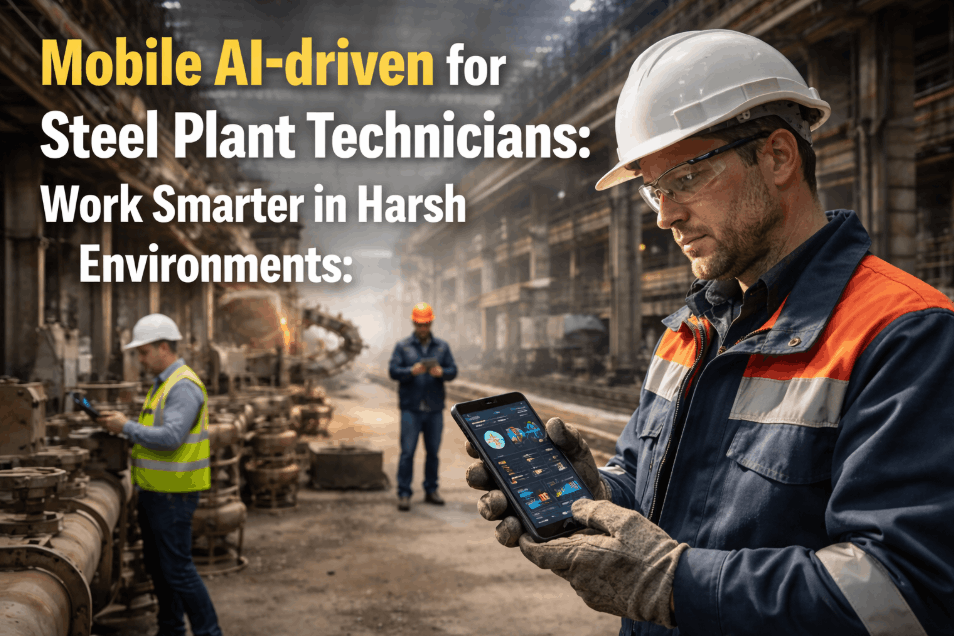
Integrate predictive alerts with your mobile maintenance workflows. Technicians receive early-stage degradation alerts with AI-guided repair instructions before minor wear becomes catastrophic failure.
Energy & Quality Optimization
Leverage the unified data to optimize the fan-speed vs. quality curve. Reduce carbon footprint by minimizing specific fuel consumption in the ignition and induration zones.
Top Failure Points in Sinter & Pellet Plant Management
Most ironmaking departments encounter a predictable set of reliability challenges. Understanding these gaps before a platform deployment dramatically improves implementation success. Reliability managers regularly book a demo to benchmark their current operational gaps against a proven iFactory AI architecture.
Grate bars wear unevenly, leading to "Hot Spots" and strand drop-outs that allow ambient air to bypass the bed—severely reducing sintering efficiency and ignition stability.
Primary waste-gas fans are often run at fixed speeds regardless of bed permeability, wasting millions in energy and causing unnecessary bearing stress on the fan assembly.
Blocked nozzles or refractory damage create cold spots in the ignition hood, resulting in "Green Sinter" and excessive fines that must be re-processed—killing plant throughput.
In pellet plants, un-monitored temperature drifts in the induration zone lead to pellets with low cold crushing strength, causing massive breakages in the blast furnace burden.
Shift logs, vibration reports, and quality lab results are stored in silos—making it impossible to correlate "Asset Health" with "Final Product Quality."
Baghouse and ESP performance is often monitored only for compliance, failing to use the data to predict bag ruptures or plate fouling before a breach occurs.
The "Agglomeration Multiplier": KPI Gains from iFactory AI
When your Sinter and Pellet strands are optimized by iFactory, the impact on downstream blast furnace performance is immediate. The highlight box below summarizes the core capabilities that drive this measurable ROI. Ironmaking executives regularly book a demo to review an ROI calculator customized for their specific plant capacity.
Key AI-Driven Capabilities for Sinter & Pellet Plants
Map the wear profile of every grate bar on the strand using vibration signatures and computer vision—preventing strand drop-outs by 45%.
Synchronize fan speed with bed permeability and gas-flow data to reduce specific power consumption by 12–18% per ton of sinter produced.
Model the induration furnace thermal profile in real-time to guarantee pellet CCS and reduce re-processing of fines by 22%.
Track the thermal fatigue of ignition hood and induration furnace refractories to optimize relining intervals and prevent emergency hot-spot repairs.
Modernize Your Sinter & Pellet Plant Reliability Today
Deploy a unified AI-driven platform that integrates strand health, fan performance, thermal mapping, and emission monitoring into a single, profit-reclaiming engine.
Sinter & Pellet Plant Analytics — Common Questions Answered
How does iFactory track grate bar wear while the strand is moving?
We use a combination of vibration sensors mounted on the strand rollers and high-resolution thermal/computer vision cameras. The AI identifies the "Signature" of a degraded grate bar—such as excessive movement or thermal hot-spots—mapping it to the exact position on the strand for replacement during the next window.
Can the platform really reduce sinter fan power consumption?
Yes. Sinter fans are often the largest single power consumers in the plant. iFactory uses "Dynamic Permeability Sync" to adjust fan VFD speeds in real-time based on the moisture and sizing of the sinter mix. This ensures optimal suction for sintering while avoiding the waste of over-ventilation.
How does the thermal twin help with Pellet Quality (CCS)?
The Cold Crushing Strength (CCS) of a pellet is determined by the "Temperature-Time" profile in the induration furnace. iFactory models this profile and alerts operators if a burner fault or fan imbalance is causing pellets to "Under-Fire" or "Over-Fire," allowing for instant correction and zero-defect quality.
How does the platform survive the high-dust environment of a Sinter Plant?
iFactory uses "Mill-Hardened" sensory infrastructure. Our sensors are rated for extreme IP-67/68 environments, with specialized air-purged housings for cameras and high-temp cabling for thermal monitoring. We design the hardware to be as rugged as the sinter strand itself.
What is the typical ROI for a sinter plant analytics deployment?
Most plants achieve a full ROI within **6–12 months**. The primary drivers are the elimination of emergency strand stops (saving $50k+ per hour), reduced fan energy costs, and a significant reduction in the return of sintering fines. Book a demo to see a case study of a Tier-1 integrated mill rollout.
Can iFactory integrate with our existing PLC/SCADA systems?
Absolutely. iFactory uses a vendor-neutral API architecture to ingest data from your existing SCADA, L2/L3 automation systems, and lab quality databases. We don't replace your control systems; we provide the predictive "Brain" that sits on top of them.
Does the platform handle emission monitoring for compliance?
Yes. iFactory correlates emission data (SOx, NOx, Dust) with actual plant assets. If your SOx levels spike, the AI can trace it back to a specific ignition burner fault or a shift in sinter mix chemistry, allowing you to fix the root cause before a compliance breach occurs.
How long is the implementation for a Pellet Plant?
A typical "Pilot-to-Production" rollout takes **8–14 weeks**. This includes the sensory foundation, edge-platform connectivity, and the activation of the AI fault-mapping layer. We follow a non-disruptive implementation model that does not require plant downtime.