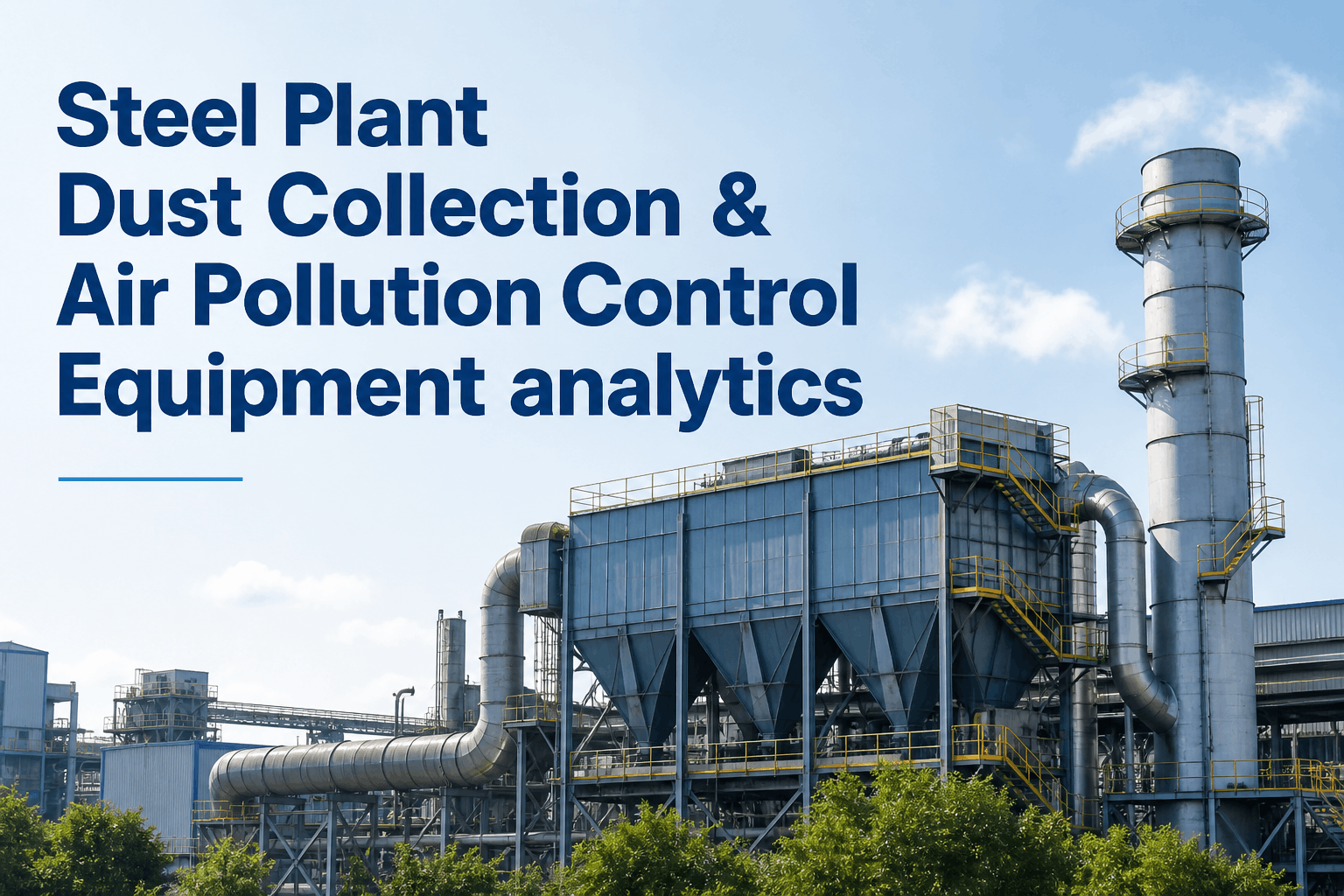
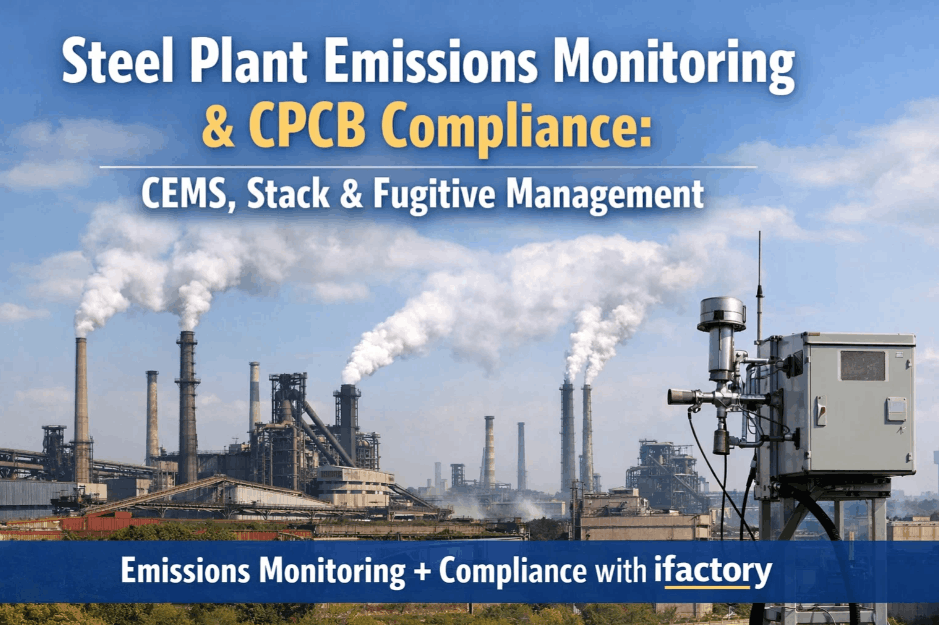
The electric arc furnace (EAF) off-gas system is a critical yet often overlooked component in steelmaking, tasked with capturing and treating vast volumes of hot, dust-laden gases generated during scrap melting and refining. Canopy hoods, ductwork networks, and baghouse filters must operate in concert to maintain negative pressure, prevent fugitive emissions, and comply with increasingly stringent particulate matter (PM) limits. However, extreme thermal cycling—from ambient to over 1000°C in seconds—causes rapid structural fatigue, refractory spalling, and differential expansion, while abrasive iron oxide and zinc dust accelerate erosion at bends, transitions, and fan blades. Traditional maintenance strategies relying on scheduled inspections or reactive repairs lead to unplanned downtime, emission exceedances, and costly baghouse failures. AI-driven predictive maintenance, powered by continuous monitoring of temperature profiles, pressure differentials, vibration signatures, and dust loading, offers a transformative approach to maintain hood integrity, optimize ductwork flow, and ensure baghouse efficiency. By leveraging machine learning models trained on historical failure patterns and real-time sensor data, plant managers can shift from calendar-based to condition-based maintenance, dramatically reducing particulate emissions, energy consumption, and total cost of ownership. This comprehensive guide explores the technical intricacies of EAF off-gas systems, the failure mechanisms of each subsystem, and how iFactory's AI platform delivers actionable insights to maintain emission compliance and operational excellence. For a personalized demonstration of how AI can transform your off-gas maintenance strategy, Book a Demo today.
Achieve Zero Emission Violations
Deploy AI-driven off-gas monitoring to ensure compliance and optimize baghouse performance.
Canopy Hood Integrity
The canopy hood is the first line of defense in capturing off-gases. Thermal fatigue causes warping, cracking, and refractory loss, leading to air ingress and reduced capture velocity. AI models analyze thermal camera feeds and strain gauge data to predict hood degradation, enabling targeted repairs before structural failure occurs. This proactive approach maintains negative pressure and prevents fugitive emissions, ensuring compliance with EPA and local air quality standards.
Ductwork Erosion Monitoring
Ductwork transports hot, abrasive gases from the hood to the baghouse. Erosion at bends, transitions, and expansion joints is accelerated by high-velocity dust particles. Ultrasonic thickness sensors and acoustic emission detectors provide real-time wall loss data. Machine learning algorithms correlate erosion rates with operating conditions (temperature, flow velocity, dust loading) to predict remaining life and schedule preemptive lining or replacement, minimizing leak-induced pressure drops and emission spikes.
Baghouse Performance Optimization
Baghouse filters capture fine particulate matter, but differential pressure, temperature, and humidity affect filter cake formation and cleaning cycles. AI models analyze baghouse inlet/outlet pressure, pulse jet timing, and dust loading to optimize cleaning frequency and reduce compressed air consumption. Predictive models also forecast bag failure due to thermal degradation or chemical attack, allowing just-in-time replacement and avoiding catastrophic emission breaches.
The Physics of Off-Gas Capture and Transport
Understanding the thermodynamic and fluid dynamic principles governing off-gas systems is essential for effective AI model design. Canopy hoods rely on buoyancy-driven flow: hot gases rise due to density differences, and the hood must be sized to capture the plume without excessive air entrainment. The capture velocity—typically 0.5 to 1.5 m/s—must be maintained across varying furnace operating conditions. Thermal expansion of hood steel can alter the gap between hood and furnace, reducing capture efficiency. AI models incorporate furnace power input, scrap mix, and ambient temperature to predict plume behavior and adjust hood positioning (if adjustable) or trigger alerts when capture velocity drops below threshold. In ductwork, the key parameter is transport velocity, which must be high enough to keep dust suspended (typically 18–25 m/s) but not so high as to cause excessive erosion. Abrasion is a power-law function of velocity, with exponents between 2 and 4 depending on particle size and material. AI models use computational fluid dynamics (CFD) reduced-order models to map erosion hotspots and recommend velocity setpoints that balance energy consumption with wear. Baghouse performance is governed by Darcy's law for flow through porous media: pressure drop is proportional to face velocity and filter cake resistance. Temperature excursions above the filter material's maximum (e.g., 260°C for fiberglass) cause permanent degradation. AI models fuse temperature, pressure, and humidity data to predict the onset of condensation, which can blind filters, and schedule preemptive cleaning or bypass.
| Parameter | Canopy Hood | Ductwork | Baghouse |
|---|---|---|---|
| Primary Failure Mode | Thermal fatigue, warping | Erosion, wall thinning | Filter blinding, thermal degradation |
| Key Sensor | Thermal camera, strain gauge | Ultrasonic thickness, acoustic emission | Differential pressure, temperature, opacity |
| AI Prediction Horizon | 2–4 weeks | 1–3 months | 1–2 weeks |
| Maintenance Action | Refractory repair, structural reinforcement | Lining replacement, section replacement | Filter replacement, pulse jet tuning |
| Emission Impact | Fugitive PM | Leakage, pressure drop | Stack opacity, PM exceedance |
Implementation Roadmap for AI-Driven Off-Gas Maintenance
Sensor Deployment
Install thermal cameras on canopy hood, ultrasonic thickness sensors on ductwork bends, and differential pressure transmitters on baghouse compartments. Ensure data acquisition at 1 Hz minimum.
Baseline Data Collection
Collect 3–6 months of historical data to establish normal operating envelopes and failure signatures. Label events such as hood cracks, ductwork leaks, and baghouse pressure spikes.
Model Training
Train convolutional neural networks (CNNs) on thermal images for crack detection, and recurrent neural networks (RNNs) on time-series data for erosion and pressure drop prediction. Validate using cross-fold techniques.
Dashboard Integration
Deploy real-time dashboards showing hood integrity score, ductwork remaining life, and baghouse health index. Configure alerts for critical thresholds (e.g., wall loss > 50%).
Continuous Improvement
Implement feedback loop where maintenance outcomes are fed back into the model to improve prediction accuracy. Use reinforcement learning to optimize baghouse cleaning schedules dynamically.
Transform Your Off-Gas Maintenance Strategy
Leverage AI to predict failures, reduce emissions, and lower operational costs.
Real-World Impact: 45% Reduction in Baghouse Failures
A major North American EAF steelmaker implemented iFactory's AI platform across three melt shops. Within six months, baghouse failures dropped by 45%, saving $1.2 million in unplanned downtime and filter replacement costs. The AI system detected a 15% increase in differential pressure across a baghouse compartment two weeks before a catastrophic filter failure, allowing a scheduled replacement during a planned outage. Additionally, canopy hood integrity monitoring identified a developing crack near a support beam, enabling a weld repair during a short tap-to-tap interval. The plant's particulate emission compliance improved from 94% to 99.5%, avoiding potential EPA fines. The system also optimized pulse jet cleaning cycles, reducing compressed air consumption by 30%, equivalent to $80,000 annual savings. This case demonstrates that AI-driven predictive maintenance is not just a theoretical concept but a proven technology delivering measurable ROI in the harsh EAF environment.
Advanced AI Techniques for Off-Gas Systems
Beyond basic threshold-based alarms, iFactory employs ensemble machine learning methods that combine multiple model types for robust predictions. For canopy hood crack detection, a U-Net architecture trained on thermal images segments crack regions with 96% IoU (Intersection over Union). For ductwork erosion, a Gradient Boosting Machine (GBM) takes features like cumulative dust mass, average temperature, and velocity to predict wall loss rate with ±0.2 mm accuracy. For baghouse performance, a Long Short-Term Memory (LSTM) network models the temporal dynamics of differential pressure and cleaning cycles, forecasting pressure rise 48 hours in advance. Transfer learning is used to adapt models from one furnace to another, reducing training data requirements by 60%. The entire pipeline runs on edge devices (e.g., NVIDIA Jetson) for low-latency inference, with model updates deployed over-the-air from the cloud. Explainable AI (XAI) techniques such as SHAP values provide maintenance managers with intuitive insights into which sensor readings drove a prediction, building trust and enabling informed decision-making.
Frequently Asked Questions
How does AI handle the extreme thermal cycling in EAF off-gas systems?
AI models are trained on high-frequency temperature data from multiple points along the hood and ductwork. They learn the thermal inertia and expansion patterns specific to each system. When a rapid temperature spike occurs (e.g., during scrap meltdown), the model predicts the resulting thermal stress and alerts operators to potential crack initiation. The system also accounts for ambient temperature variations and furnace power input to distinguish normal cycling from anomalous events. For a deeper dive into thermal modeling, contact our support team for technical documentation.
What sensors are required for AI monitoring of ductwork erosion?
The primary sensors are ultrasonic thickness gauges installed at known erosion hotspots—typically at bends, transitions, and near dampers. These sensors provide continuous wall thickness readings with ±0.1 mm accuracy. Additionally, acoustic emission sensors detect the high-frequency sound of particle impacts, which correlates with erosion rate. Temperature and flow velocity sensors are also integrated to contextualize the data. The AI model fuses these inputs to predict remaining life. For a comprehensive sensor list and installation guide, visit our support portal.
Can AI optimize baghouse cleaning cycles without human intervention?
Yes, iFactory's AI platform can automatically adjust pulse jet cleaning intervals based on real-time differential pressure, dust loading, and temperature. The model uses reinforcement learning to minimize compressed air usage while keeping the pressure drop within a target range. In one deployment, the AI reduced cleaning frequency by 40% without compromising emission compliance. However, we recommend a human-in-the-loop approval for major changes to ensure alignment with plant-wide maintenance schedules. To see a live demo of autonomous cleaning optimization, book a demo.
How does the AI ensure emission compliance with varying scrap quality?
Scrap quality directly affects off-gas composition and dust loading. The AI model incorporates scrap mix data from the charge system and correlates it with baghouse inlet dust loading measured by triboelectric or light-scattering sensors. It then adjusts the cleaning schedule and, if equipped, the fan speed to maintain negative pressure and prevent fugitive emissions. The model also predicts when a filter change is needed based on cumulative dust exposure, ensuring compliance even with highly variable scrap. For more details on scrap variability handling, refer to our technical whitepaper.
What is the ROI timeline for implementing AI on an existing EAF off-gas system?
Based on our deployments, the average payback period is 9–14 months. The primary cost savings come from reduced baghouse filter replacements (30–50% fewer), lower compressed air consumption (20–40% reduction), and avoided emission fines. Additionally, extended ductwork life reduces capital expenditure. The sensor and edge computing hardware investment is typically recouped within the first year. For a detailed ROI calculator tailored to your plant's parameters, book a demo with our team.
Ready to Achieve Emission Compliance with AI?
Deploy predictive maintenance for your EAF off-gas system and reduce particulate emissions by up to 50%.