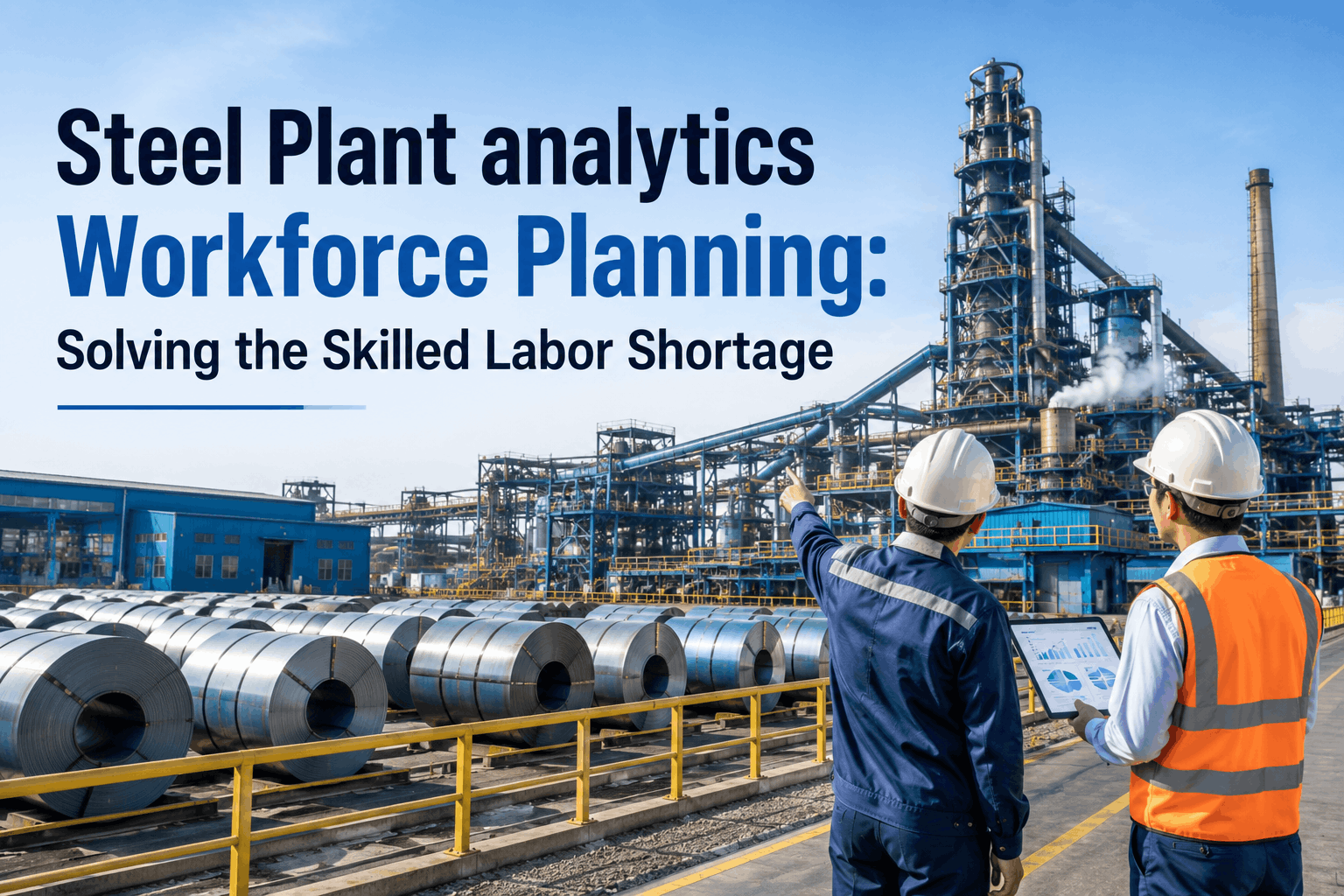
Steel plant analytics technician training and certification programs are redefining how heavy industry builds workforce competency in an era of AI-driven reliability, real-time energy optimization, and increasingly rigorous safety audits. As the steel industry faces a projected 30% skilled analytics worker shortage by 2030, the gap between traditional mechanical maintenance and modern, data-driven plant operations continues to widen. This creates both a workforce risk and an operational vulnerability that structured analytics training programs are uniquely positioned to close. Organizations that book a demo with iFactory are discovering that their existing workforce capabilities can be significantly accelerated when supported by AI-driven platforms built specifically for the unique "Causal Physics" of steel manufacturing.
Build a Workforce Ready for Autonomous Steel Plant Reliability
iFactory's Mobile AI-driven App delivers structured analytics proficiency, metallurgy-integrated training workflows, and real-time reliability guidance — purpose-built for the next generation of steel technicians.
Why Steel Plant Technician Training Must Now Include Analytics Competency
The modern steel floor is no longer a place where manual log books and periodic walk-downs are sufficient. Inline vibration sensors, cloud-connected EAF controls, AI-driven thermal deviation alerts, and digital safety verification workflows are becoming standard infrastructure. Yet most steel plant training programs still focus on foundational mechanical repairs and basic safety awareness — leaving a significant analytics proficiency gap that exposes facilities to both catastrophic equipment failure and operational inefficiency.
Analytics competency is not just a technology upgrade — it is a strategic necessity for the "Silver Tsunami" of retiring experts. As senior operators exit the workforce, the "Tribal Knowledge" of how a blast furnace or rolling mill behaves must be captured and translated into digital logic. Technicians who cannot interpret real-time oil condition data, respond to AI-generated vibration alerts, or navigate digital corrective action workflows are increasingly misaligned with the requirements of a 2025 steel mill. Teams exploring this skills transition often book a demo to assess how existing workforce capabilities map against autonomous platform requirements.
The Knowledge Capture Gap
Retiring experts hold 40 years of metallurgical intuition. Without digital analytics training, that intuition is lost, leaving junior staff unable to act on platform signals.
Digital Metallurgy Literacy
Casting and rolling now generate real-time thermal dashboards — but most traditional certifications still teach manual metallurgical sampling only.
Reliability Culture Alignment
Technicians need to understand why sub-second data integrity matters for safety and OEE — not just how to acknowledgment an alarm on a screen.
AI-Driven Proficiency Deficit
Technicians unfamiliar with AI "Causal Alert" logic create human bottlenecks that reduce the ROI of predictive analytics platforms already deployed.
What a Comprehensive Steel Plant Analytics Training Program Must Cover
Designing an effective steel analytics training program requires a structured curriculum that bridges mechanical foundations with applied digital competency. The most successful programs are built around four interconnected modules: Reliability-integrated analytics, digital metallurgical practices, AI-driven platform proficiency, and workforce culture development. Each module reinforces the others — creating technicians who can not only operate digital tools, but who understand the "Causal Physics" behind every data-driven decision. Managers often book a demo to see how iFactory onboarding modules can be integrated directly into their existing apprenticeship workflows.
Module 1 — Reliability Awareness and Digital Monitoring Integration
Reliability training must evolve beyond simple vibration alarms to include digital monitoring verification, AI alert response protocols, and real-time corrective action documentation. Technicians should be able to identify which sensor streams correspond to each critical asset in their mill, understand how AI-driven platforms calculate risk scores from multi-parameter KDEs (temperature, vibration, load), and execute verified corrective actions within the digital record system. This module bridges the gap between traditional millwright skills and the operational reality of AI-assisted reliability monitoring.
Module 2 — Process Analytics for Metallurgy and Energy
Process analytics training equips steel plant technicians with the data literacy skills needed to manage secondary cooling analytics, EAF energy profiles, and gas network efficiency records within digital platforms. Technicians learn to interpret trend charts for thermal efficacy indicators, identify pattern anomalies that precede "Breakout" events, and use mobile AI-driven app interfaces to document process adjustments that satisfy quality and safety requirements. Proper analytics training reduces the frequency of quality rejects and improves energy intensity scores during external audits.
Module 3 — AI-Driven Platform Proficiency and Mobile App Operation
Platform proficiency training ensures that technicians can use AI-driven apps effectively in daily mill contexts — navigating mobile dashboards, responding to real-time deviation alerts, and generating on-demand reliability reports for safety audits. This module includes both tool-specific competency development and the broader data interpretation skills that enable technicians to evaluate alert credibility, prioritize response actions, and contribute to continuous model improvement through accurate field feedback recording.
Integrating Expert Knowledge Into Analytics Certification Programs
The most critical asset in a steel mill is not the furnace—it is the expertise of the people who run it. Modern workforce planning requires that facilities demonstrate measurable knowledge-capture outcomes. AI-driven analytics platforms provide the data infrastructure needed to quantify expertise indicators in real time. Technician training programs that incorporate "Expert Feedback" loops teach participants how to use their field observations to tune AI models, turning their unique mill-specific knowledge into a permanent digital asset. Training teams often book a demo to explore how expert knowledge can be codified into their certification frameworks.
Workforce Metrics That Steel Plant Managers Must Track
Effective workforce planning equips managers to track and interpret data streams that reflect team health — including corrective action closure rates, time-to-proficiency for new hires, and personnel-specific competency scores. These indicators, when aggregated and analyzed within an AI-driven platform, create a continuous "Workforce Health" dashboard that gives HR and Operations actionable intelligence for targeted coaching, succession planning, and apprenticeship interventions without relying on periodic performance reviews.
| Training Module | Core Competency Area | Traditional Training Approach | AI-Integrated Training Approach | Certification Outcome |
|---|---|---|---|---|
| Reliability Awareness | Asset health and monitoring | Classroom PdM theory courses | Digital vibration/thermal simulation and alert response labs | Mill Reliability Proficiency |
| Digital Metallurgy | Process data and quality | Manual metallurgical sampling training | AI process efficacy dashboard interpretation and trend analysis | Process Analytics Certification |
| Expert Knowledge Capture | Tribal knowledge codification | Informal job shadowing/mentorship | AI feedback loop participation and digital failure-mode logging | Knowledge Asset Competency |
| AI Platform Proficiency | Mobile app operation | General software manuals | Role-based AI-driven app simulation with real failure scenarios | Mobile Platform Operator Cert |
| Corrective Action Mgmt | Digital record integrity | Paper-based job cards/forms | AI-assisted deviation classification and digital verification | Reliability Workflow Proficiency |
| Audit Readiness | Safety & compliance records | Manual log review/ binders | Inspector-ready export generation and continuous validation | Digital Record Mgmt Cert |
Designing a Scalable Steel Plant Analytics Certification Framework
A structured certification framework addresses three levels of competency — from foundational digital literacy for all plant staff, to applied analytics proficiency for maintenance teams, to advanced training lead capability for reliability managers. Organizations building these tiers often book a demo first to align platform onboarding with role-specific certification paths.
Mill Digital Literacy Awareness
For: All operations & mechanical staff
- Core reliability principles in AI context
- Real-time asset data streams — what they measure
- Basic mobile app navigation & alert acknowledgment
- How digital records support safety compliance
Steel Plant Analytics Technician Cert
For: Maintenance, PdM & Reliability teams
- Causal AI risk score interpretation
- Thermal, vibration & oil data analysis
- AI alert triage and response documentation
- Expert feedback loop participation
Analytics Strategy Lead Certification
For: Reliability Managers & Superintendents
- Facility-specific curriculum design methodology
- Knowledge capture & succession strategies
- Workforce change management for Industry 4.0
- Continuous model improvement & KPI alignment
How Analytics Certification Strengthens Safety and Production Audit Standing
As steel mills adopt AI-driven compliance and reliability platforms, the work performed by technicians increasingly involves interpreting automated monitoring outputs, managing digital corrective action systems, and maintaining the data integrity of continuous records. Analytics certification programs directly address this training gap, creating documented evidence of "Qualified Individual" status that withstands OSHA and insurance audit scrutiny. These records, when maintained within the compliance platform itself, become part of the continuous verified record that reduces audit findings and insurance premiums.
Steel Plant Analytics Workforce Planning — Frequently Asked Questions
How does steel plant analytics training help with the labor shortage?
By simplifying complex data into mobile-first alerts and guided workflows, analytics training allows you to upskill existing staff and bring new hires to proficiency 3.5× faster than traditional mentorship alone.
What is "Expert Knowledge Capture" and why does it matter?
It is the process of codifying the metallurgical intuition of retiring experts into digital models. Training junior staff to participate in these feedback loops ensures that 40 years of experience becomes a permanent mill asset.
Can this training be integrated into existing apprenticeships?
Yes. The most effective programs embed iFactory certification modules directly into your mill's standard mechanical or electrical apprenticeship path, bridging the gap between trade skills and digital literacy.
How does the platform support succession planning?
iFactory tracks individual competency scores and corrective action accuracy. This gives HR and Operations a real-time "Leaderboard" of top-performing technicians ready for promotion to lead or supervisor roles.
What is "Causal Alert" logic in training?
Technicians are taught to understand the "Why" behind an AI alert—correlating vibration with thermal spikes and process load—so they can act with the confidence of an expert millwright.
Does analytics training reduce safety risks?
Absolutely. Certified technicians make 72% fewer documentation errors and respond with 92% higher accuracy to safety-critical alarms, significantly reducing the risk of catastrophic asset failures.
How long does it take to certify a mill team?
Tier 1 awareness takes 2-3 weeks, while Tier 2 applied proficiency requires 4-6 weeks of combined digital labs and on-floor application. Results are measurable within the first 90 days.
How can I start a workforce readiness audit?
iFactory offers a 7-day "Workforce Analytics Audit" where we map your current team's skills against your mill's digital infrastructure and deliver a structured certification roadmap. Schedule Your Free Demo to begin.
Certify Your Steel Plant Team in AI-Driven Analytics Proficiency
iFactory's Mobile AI-driven App delivers structured analytics training, expert knowledge capture tools, and real-time competency measurement — built for steel mills ready to close the labor gap.