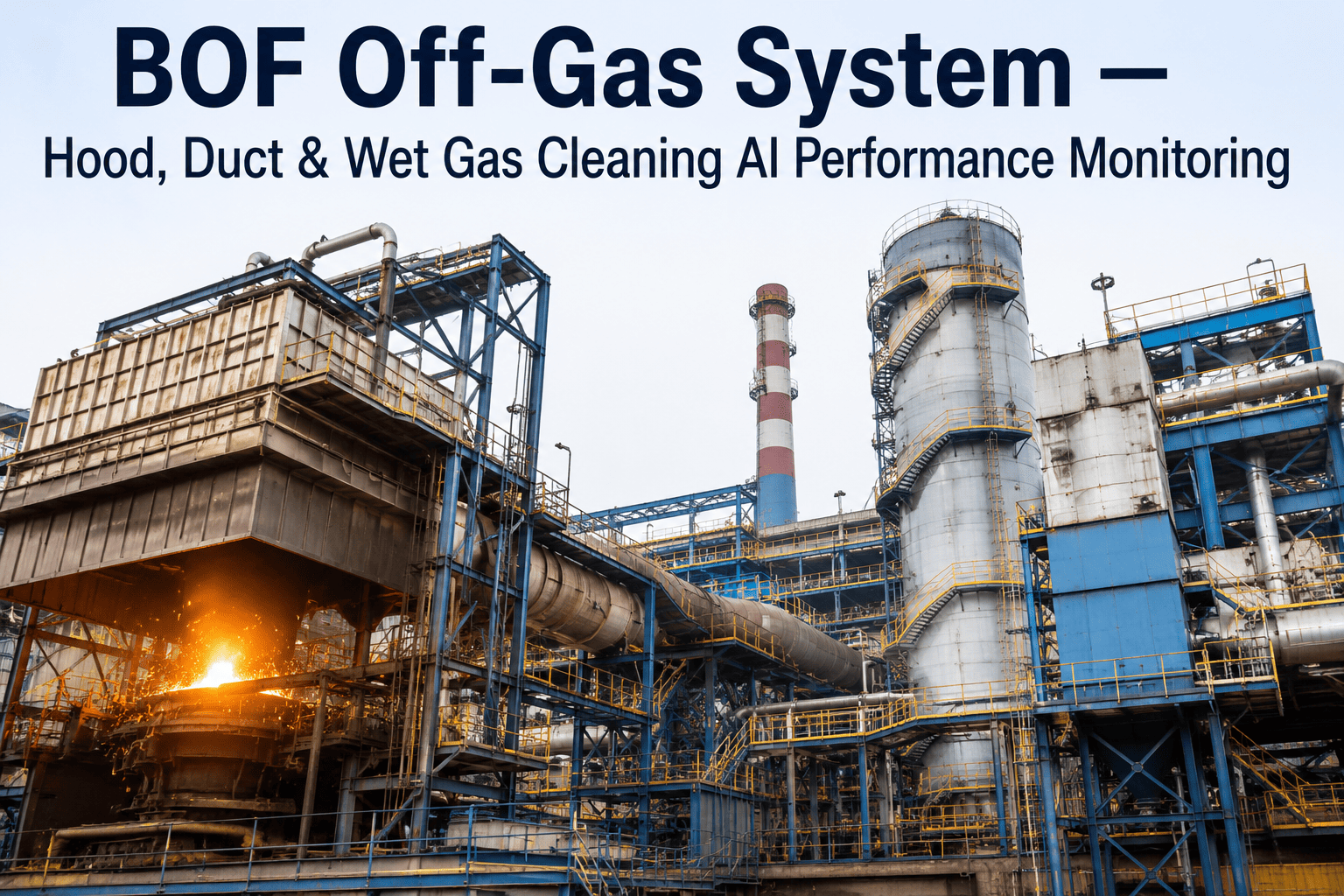
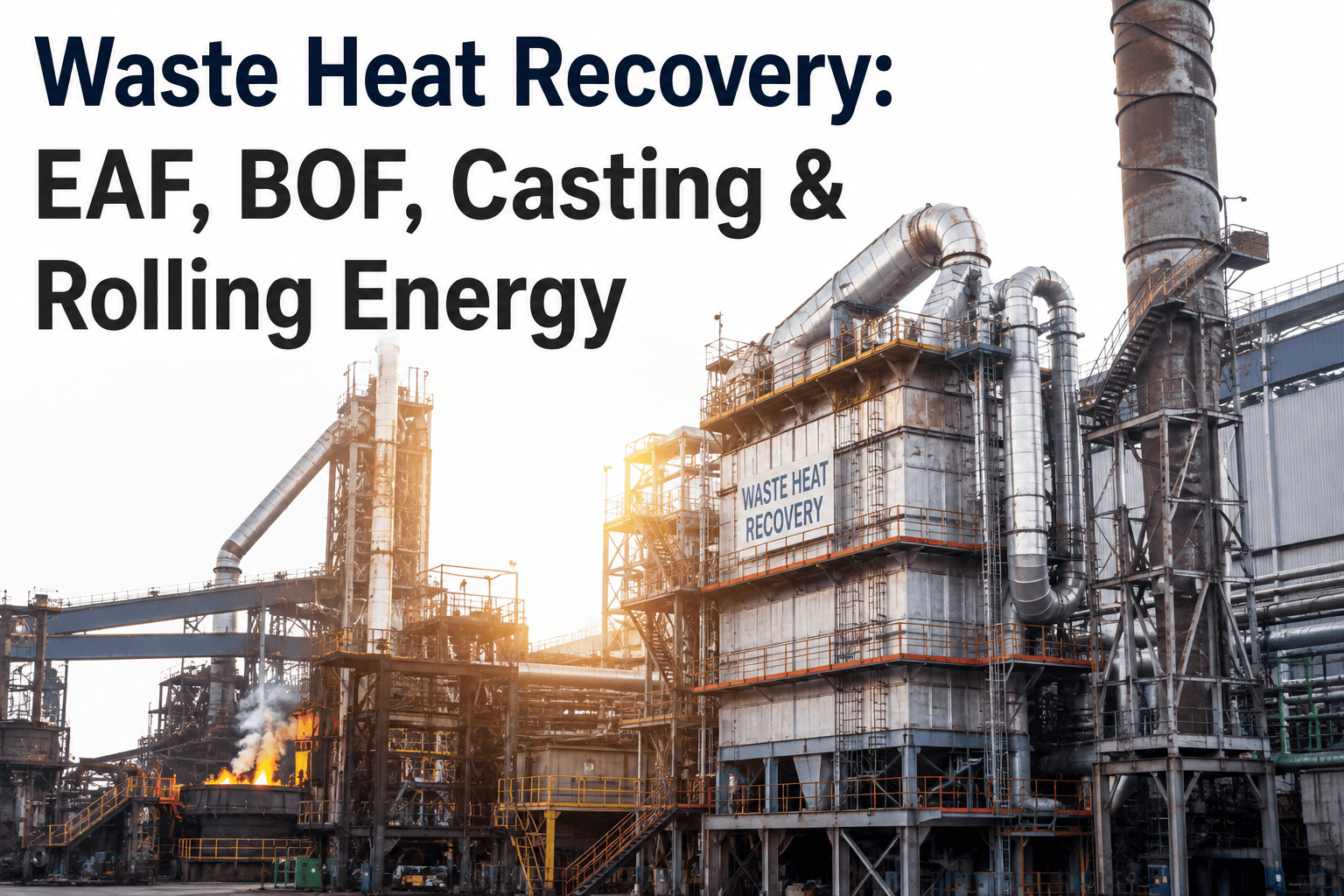
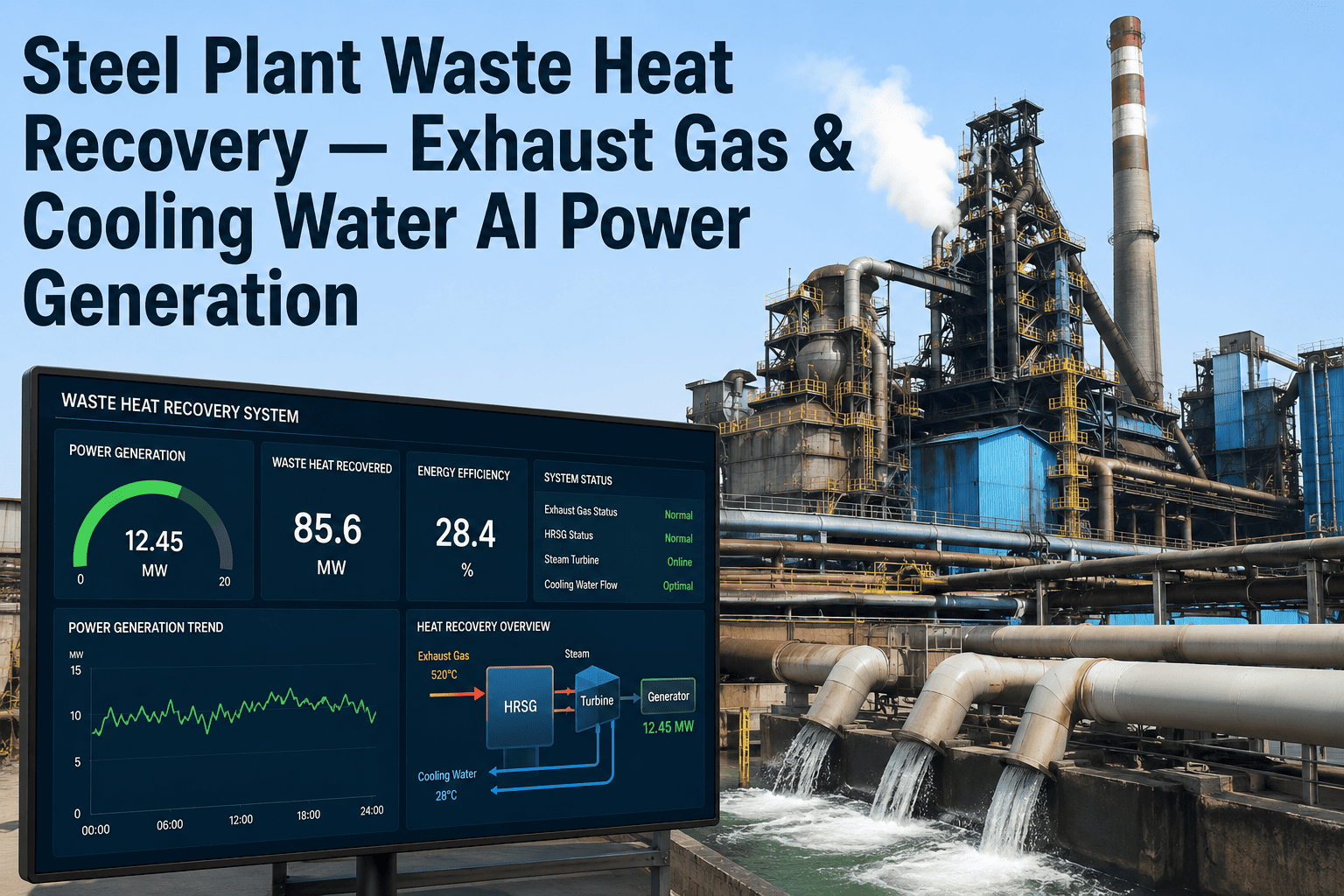
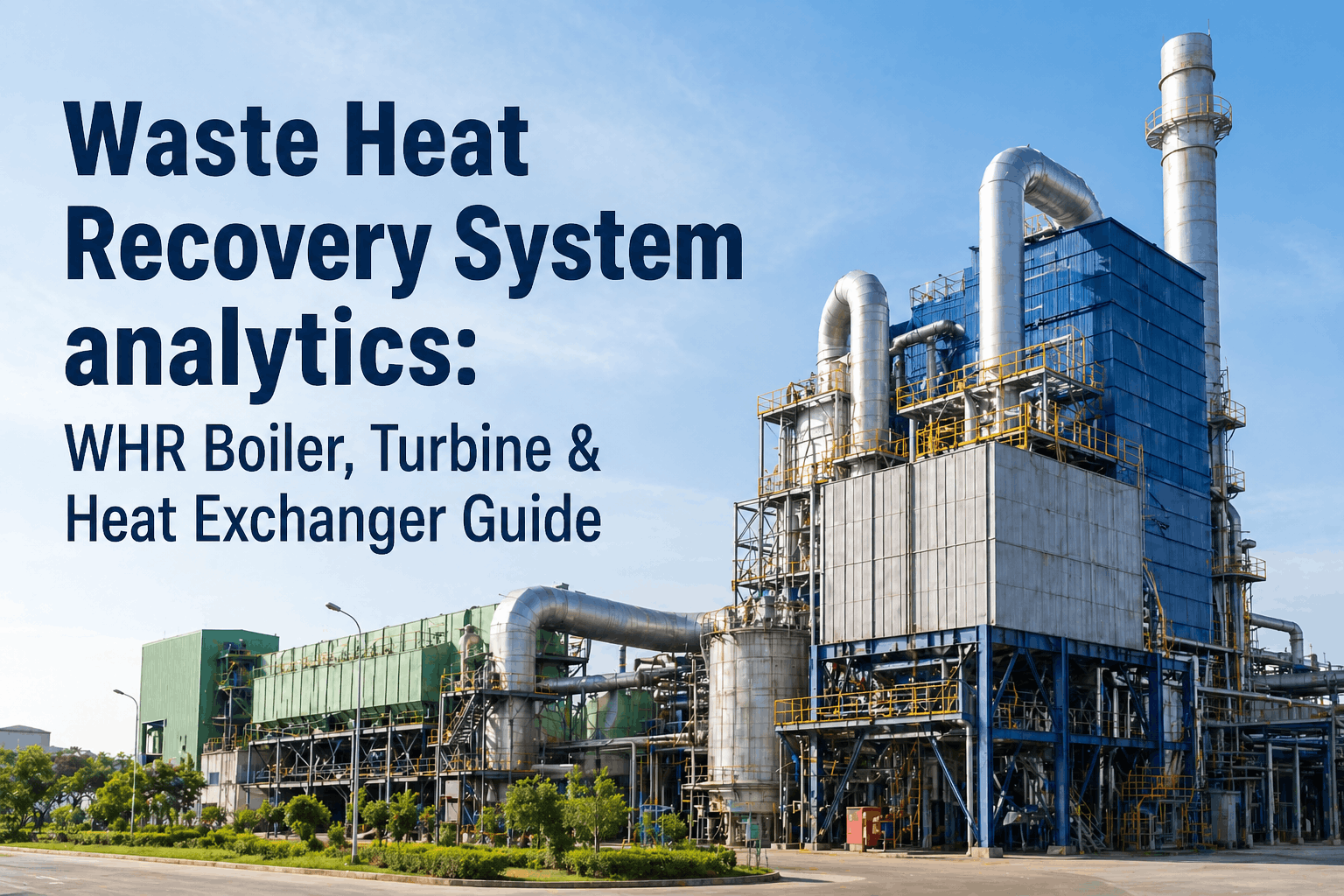
Maintenance managers running a BOF shop are sitting on top of one of the largest recoverable energy streams in the entire steel plant, yet most facilities still let a meaningful share of that value slip away through underperforming hood integrity, duct buildup, and gas cleaning inefficiency. The converter gas leaving the vessel carries both sensible heat and CO-rich chemical energy that suppressed combustion systems are built to capture, but a hood water leak, a partially clogged duct, or a fouled heat exchanger surface can quietly erode recovery rates for weeks before anyone notices the trend on an energy bill. AI-driven monitoring of heat transfer coefficients now flags exactly when cleaning cycles deliver more value than they cost, instead of running fixed schedules that either over-maintain or under-recover. Maintenance managers who want to see this modeled against their own off-gas system can book a demo and review live recovery performance data.
BOF OFF-GAS SYSTEMS · GAS RECOVERY · 2026
Stop Losing Recoverable Energy Through the Hood
Continuous monitoring of hood integrity, duct condition, and wet gas cleaning efficiency turns a fixed maintenance calendar into a precision recovery program.
The Off-Gas Path, Stage by Stage
Every stage of the off-gas journey from converter to recovery boiler is a point where fouling, leaks, or poor control quietly cut into the energy your plant should be capturing.
Stage 1
Converter Hood
Cools gas from 1,600-1,700°C to roughly 900°C, controlling hood pressure to prevent puffing
→
Stage 2
Cooling Stack
Transfers sensible heat to cooling water, generating steam stored for the plant's steam network
→
Stage 3
Duct System
Carries CO-rich gas onward, vulnerable to dust buildup that reduces flow and heat transfer
→
Stage 4
Wet Gas Cleaning
Removes dust for compliance while preserving gas quality for downstream recovery use
15-20%
Of wasted converter gas energy recoverable through better lance profile and gas capture timing
3-6%
Specific energy consumption reduction from AI models trained on blast and off-gas recovery timing
25%
Extended asset lifecycle on waste heat boiler components from reduced thermal stress cycling
MAINTENANCE MANAGEMENT · BOF OFF-GAS
Find Your Plant's Recoverable Energy Gap
Get a walkthrough of how continuous hood, duct, and gas cleaning monitoring would perform against your current recovery numbers.
What Fixed-Schedule Maintenance Misses
1
Hood Water Leak Detection
Gradual leaks in the hood cooling circuit go unnoticed between scheduled inspections, wasting energy and risking safety.
2
Duct Fouling Rate
Dust accumulation reduces flow and heat transfer at a pace fixed cleaning schedules rarely match to actual conditions.
3
Heat Transfer Efficiency Drift
Exchanger surfaces fouled by dust-laden gas lose efficiency days before it shows up in energy accounting reports.
4
Gas Capture Timing
Recovery timing relative to the blowing cycle is frequently mistimed, leaving usable CO-rich gas uncaptured.
Reactive vs Condition-Based Off-Gas Maintenance
| Practice | How Cleaning Gets Scheduled | Energy & Cost Outcome |
| Fixed Calendar Cleaning |
Cleaning happens on a set interval regardless of actual fouling level |
Over-cleans healthy systems, under-recovers fouled ones |
| Reactive Response |
Action taken only after energy loss becomes visible on the bill |
Weeks of lost recovery before detection |
| Condition-Based AI Monitoring |
Cleaning triggered at the exact economic fouling threshold |
Recovery maximized without unnecessary downtime |
Suppressed vs Open Combustion: Why It Matters for Recovery
Open Combustion System
Ambient air enters the duct, fully combusting the process gas
Large exhaust volume of 1,000-2,000 Ncum per tonne of liquid steel
Only sensible heat recovered via waste heat boiler, chemical energy lost
Suppressed Combustion System
A skirt lowers over the BOF mouth during oxygen blowing to limit air entry
CO-rich gas preserved for downstream fuel or power generation use
Best opportunity for combined heat and fuel recovery
Dry vs Wet Dedusting: Choosing the Right Cleaning Path
The choice between dry and wet gas cleaning systems affects both dust control performance and how much maintenance attention the system needs to sustain its recovery rate over time.
Dry Dedusting System
Electrostatic precipitation or bag filtration captures dust with high efficiency and lower water consumption, but filter condition needs continuous monitoring to avoid recovery loss.
Wet Dedusting System
Scrubber-based cleaning handles high dust loads reliably and supports gas quality for downstream recovery, though water chemistry and nozzle condition require ongoing tracking.
Frequently Asked Questions
What is the economic fouling threshold and why does it matter?
The economic fouling threshold is the exact point where the cost of a cleaning cycle is offset by the energy recovery gain it produces, and it is different for every plant depending on gas composition, dust loading, and equipment condition. Fixed-schedule cleaning either intervenes too early, wasting maintenance labor and unnecessary downtime, or too late, letting recoverable energy slip away for weeks. AI monitoring of heat transfer coefficients identifies this threshold continuously so cleaning only happens when it is actually worth the intervention.
How much recoverable energy are most BOF shops actually losing?
Industry benchmarks show that AI-driven capture of BOF gas for power generation combined with optimized oxygen lance profiles can recover 15 to 20 percent of wasted energy that would otherwise be flared or lost to poor recovery timing. Continuous optimization of off-gas recovery timing relative to the blowing cycle also contributes to a broader 3 to 6 percent reduction in specific energy consumption per tonne of hot metal across the plant. Maintenance managers can
book a demo to see where their own recovery numbers sit against these benchmarks.
Does this require replacing our existing hood, duct, or gas cleaning equipment?
No, the platform is designed to layer analytics on top of existing hood pressure sensors, gas analysis systems, and heat transfer instrumentation rather than requiring equipment replacement. It reads the data your suppression combustion system, dry or wet dedusting plant, and waste heat boiler already generate, and turns it into actionable cleaning and maintenance timing recommendations. Teams can confirm compatibility with their specific gas cleaning configuration through
support.
How does this protect turbine and boiler assets during furnace load swings?
Fluctuating furnace loads can produce wet steam that damages turbine blades and creates thermal stress on waste heat boiler tube bundles, a problem AI addresses by predicting tapping cycles and adjusting feed-water flow and pressure setpoints autonomously. This keeps the steam cycle in its high-efficiency zone even during process transients, preventing what operators call boiler hunting. Plants using this approach report up to 25 percent longer asset lifecycle on the affected components.
What kind of reporting does this provide for ESG and compliance purposes?
The platform maintains an automated, auditable record of megawatt-hours recovered against carbon dioxide avoided, formatted for regulatory submission and ESG reporting requirements. This is particularly valuable as steel plants pursue green steel certification, since demonstrating consistent waste heat recovery performance is increasingly part of that qualification process. Maintenance managers preparing for an upcoming compliance review can bring their current data to a session for a gap assessment.
BOF OFF-GAS · HOOD · DUCT · WET GAS CLEANING
Turn Your Off-Gas System Into a Revenue Stream
Join maintenance teams already capturing more recoverable energy with AI-monitored hood, duct, and gas cleaning performance.