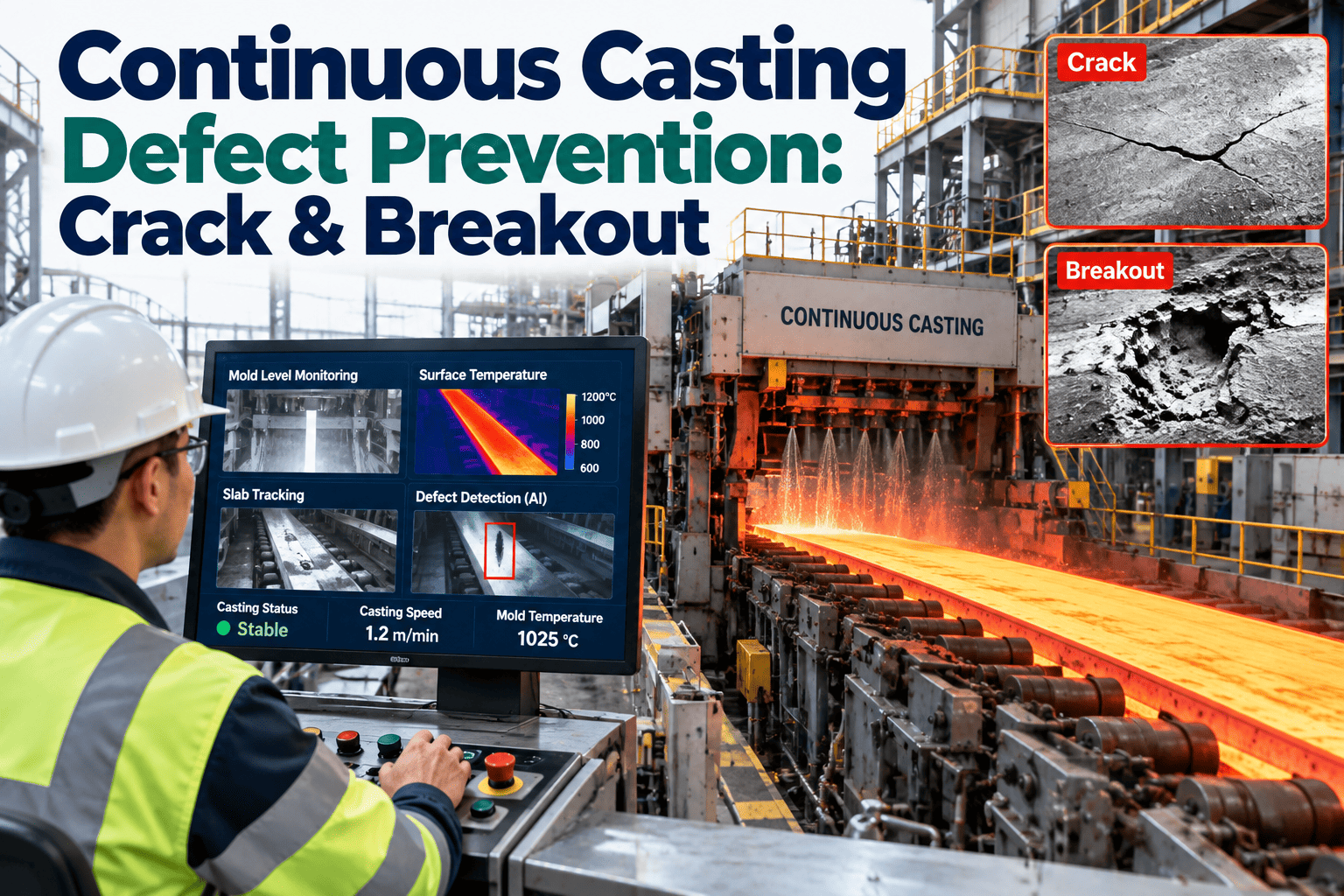
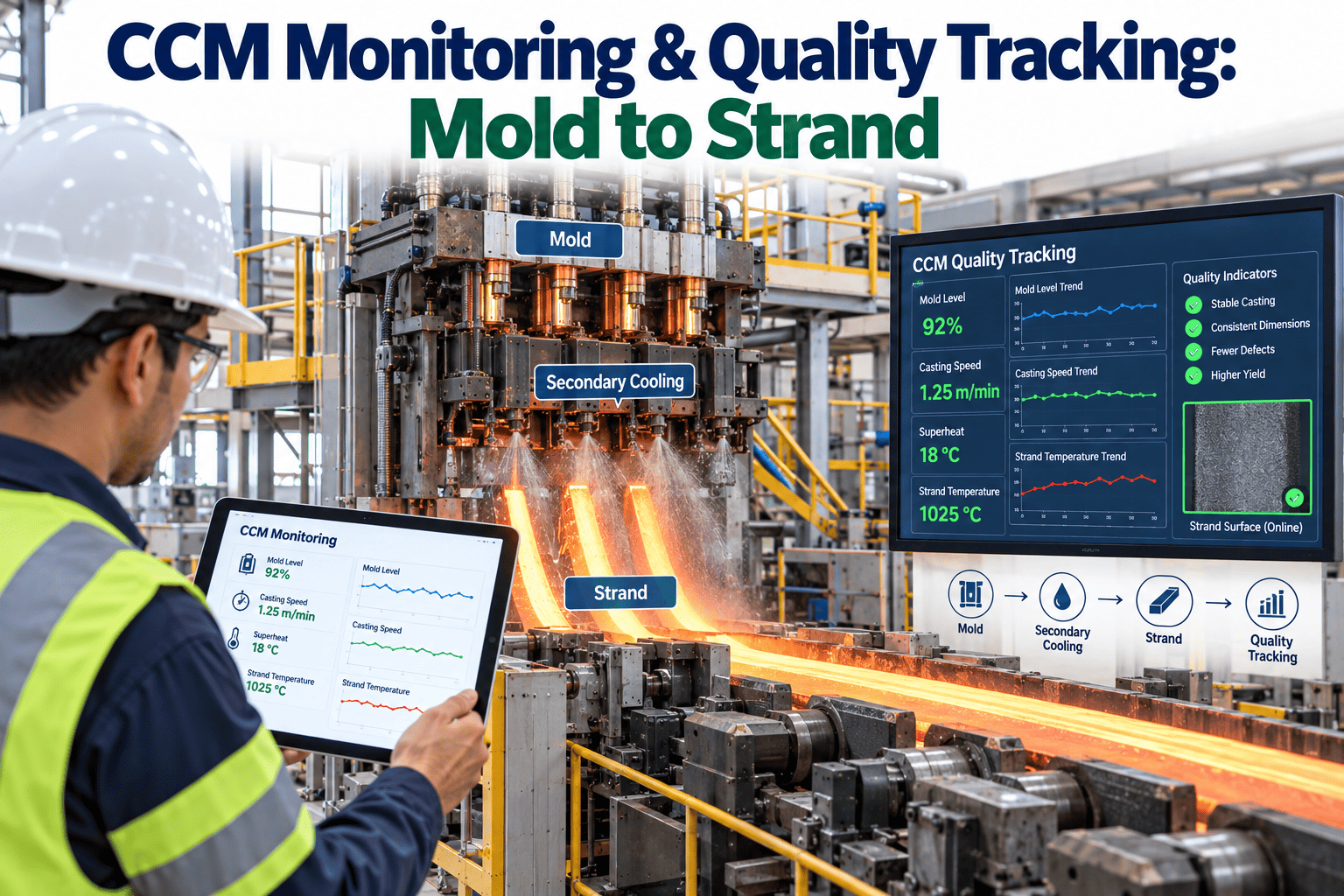
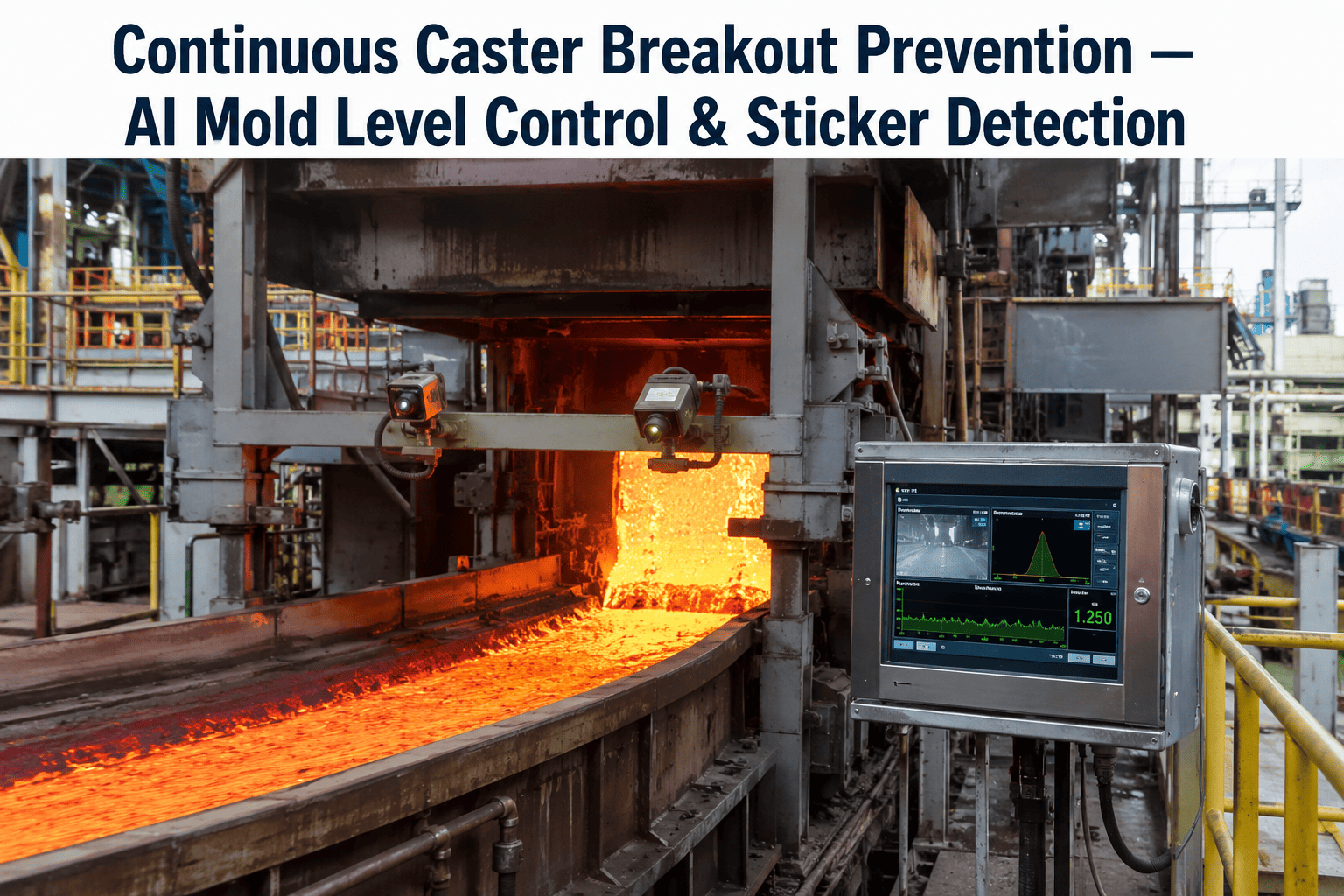
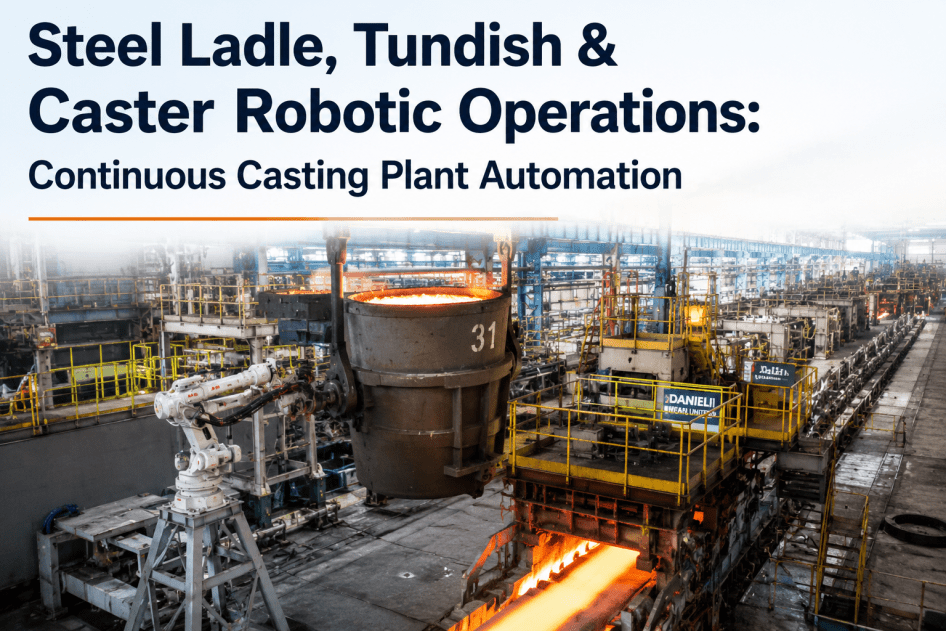
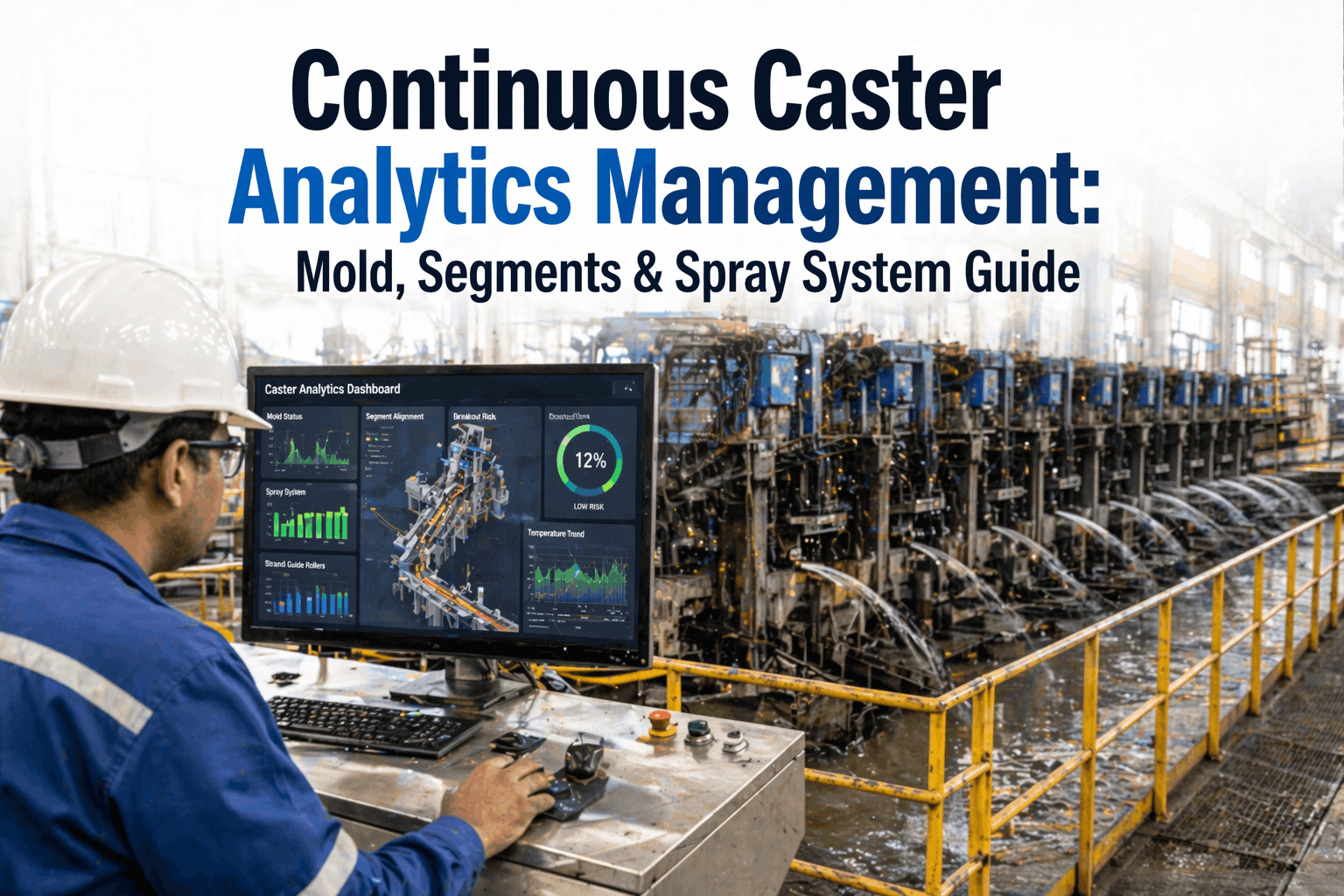
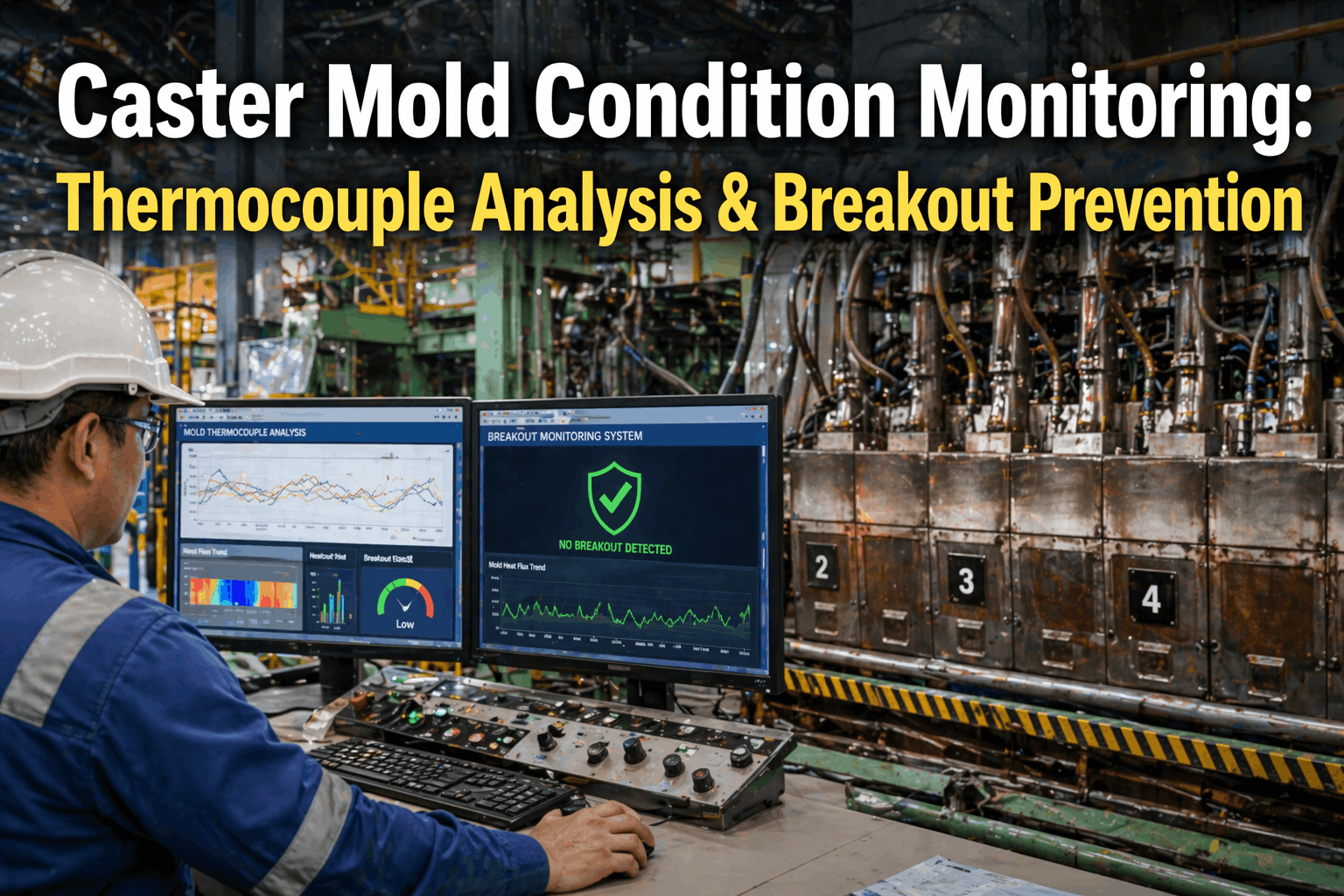
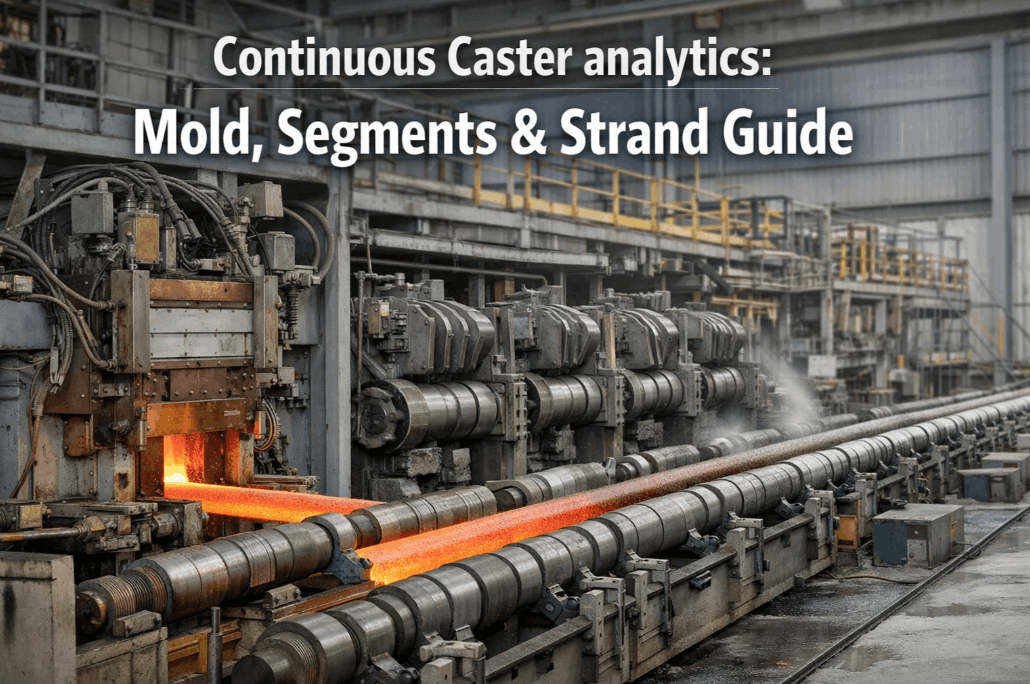
A 3 MTPA integrated steel plant running twin-strand slab casters was losing an average of $180,000 per breakout event — with 2–3 incidents every month. Manual thermocouple checks, paper-based segment logs, and reactive spray calibration meant failures were discovered only after the damage was done. After deploying iFactory's AI Mold Monitoring and Full AI suite, the plant achieved zero caster breakouts across an entire 12-month production cycle — the longest clean run in the plant's operating history, verified independently by operations and finance teams.
How iFactory Eliminated Caster Breakouts at a 3 MTPA Steel Plant
Zero breakouts. 12 months. Twin-strand slab caster. Here's the full story.
Before iFactory: Running Blind on a Live Caster
The plant's casters were producing at full capacity — but the monitoring infrastructure hadn't kept pace. Operators were making critical decisions on hours-old data. The result was a predictable cycle of reactive maintenance that no amount of experience could fully compensate for.
Thermocouple data reviewed every 2–4 hrs, not in real time
No predictive alerts — segments failed mid-campaign
Maintenance records and process data in separate systems
Nozzle wear invisible until surface defects appeared
$180,000+ per event in lost output & emergency repair
Five AI Layers — One Unified Caster Intelligence System
iFactory deployed across the full caster ecosystem: from mold to segment to secondary cooling. Each layer eliminates a specific blind spot that previously led to breakout events.
Breakout Frequency: Before vs. After iFactory
Deployment began in January. By Month 4 the pattern was undeniable. The plant went on to complete the year with zero breakout events — a first in its 14-year operating history.
The AI mold monitoring system flagged 17 high-risk thermal events during the year — all resolved by operator action before any shell failure occurred.
The iFactory Detection-to-Action Loop
Not a single sensor — a closed-loop system. Every layer feeds the next. Detection triggers prediction. Prediction triggers action. Action is logged and the AI model improves.
Where the $2.1M Annual Saving Came From
Four distinct value streams — each independently verified by the plant's finance and operations leadership. The breakout prevention alone paid back the full deployment cost within the first quarter.
| Value Stream | Annual Saving | Share | Driver |
|---|---|---|---|
| Breakout prevention | $1,080,000 | 40% | 2.5 events/mo × $180K avoided |
| Unplanned downtime | $630,000 | 30% | 84% fewer emergency stops |
| Copper plate lifespan | $315,000 | 15% | Fewer thermal shock cycles |
| Yield & quality | $315,000 | 15% | Surface defects down 67% |
| Total Annual ROI | $2,100,000 | 100% | Verified by finance & ops teams |
Deployed in 10 Weeks — Three Clean Phases
- Mold thermocouple array connected to iFactory
- AI cameras installed above both mold platforms
- PLC bridge configured for speed & spray flow data
- Historical breakout data ingested to train AI model
- SAP PM integration live — auto work orders enabled
- Digital twin calibrated to actual strand geometry
- Segment condition scoring — 24 segments per strand
- Spray nozzle health tracking — 96 nozzles live
- Breakout model validated against historical events
- Alert thresholds tuned — zero false-positive tolerance
- Control room dashboards deployed on both strands
- Full production handover — AI-monitored 24/7
We went from dreading the morning handover — wondering if a breakout had happened overnight — to complete confidence. Twelve months, zero breakouts. Our copper plate costs dropped by a third. That's not an improvement. That's a transformation.
Frequently Asked Questions
How early does AI mold monitoring detect a breakout?
iFactory detects thermal pattern deviations 8–12 minutes before shell failure — enough time to reduce casting speed and prevent the event entirely.
Does iFactory integrate with existing SAP and PLC systems?
Yes. Bidirectional SAP PM integration auto-generates work orders. PLC integration enables automatic casting speed reduction on high-risk alerts.
How long before we see measurable results?
Most plants see breakout reduction within the first 60 days. Full AI model maturity — and zero false positives — is typically reached by Month 4.
Does this work on billet and bloom casters too?
Yes. iFactory deploys across all caster types — billet, bloom, and slab — with the AI model calibrated to your specific plant geometry and steel grades.
What stops false alarms from interrupting production?
Alert thresholds are tuned with your operations team before go-live. The plant in this study recorded zero unwarranted speed reductions after Week 8.
See iFactory Live on Your Caster Configuration
Billet, bloom, or slab — get a demo built around your plant's actual setup.