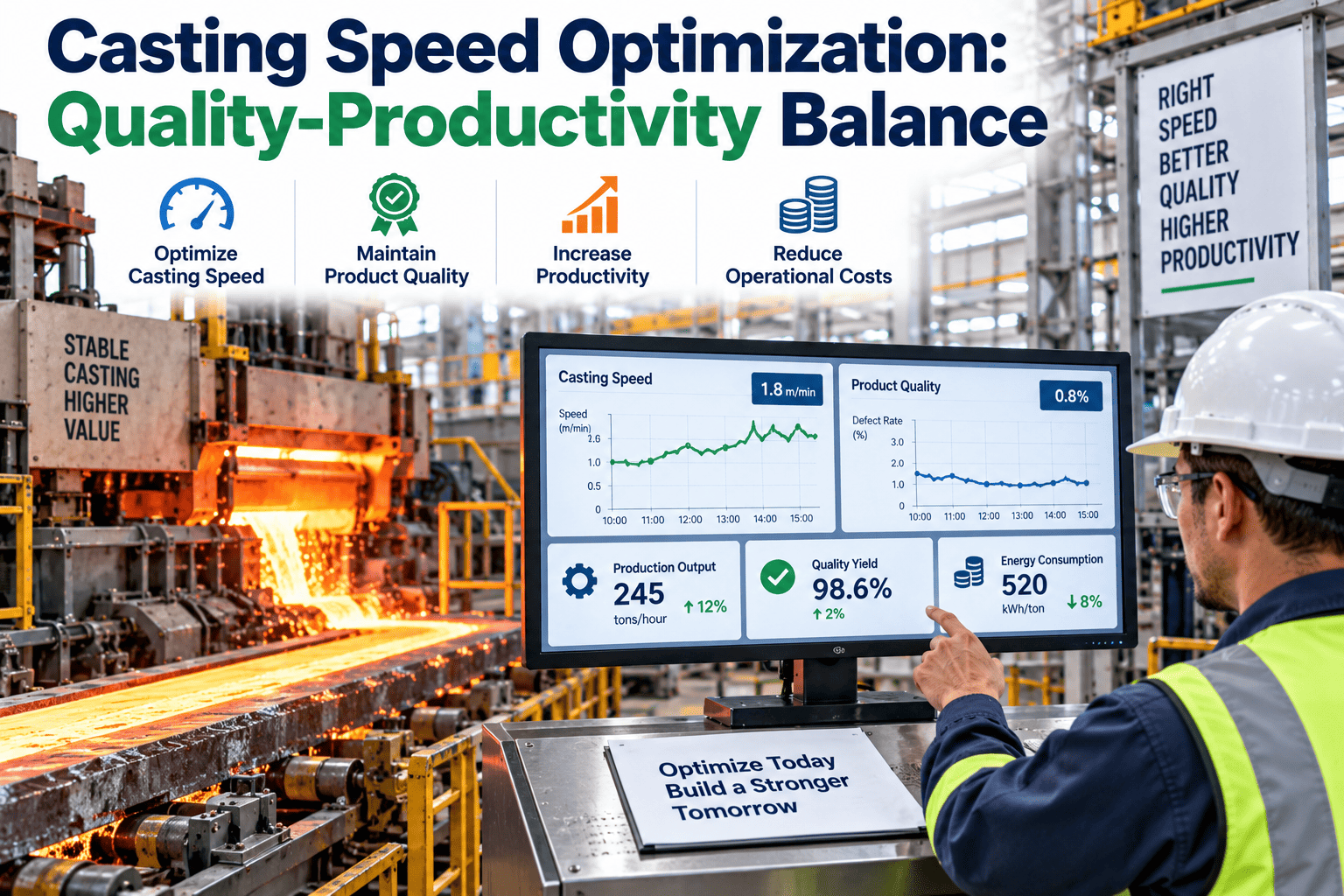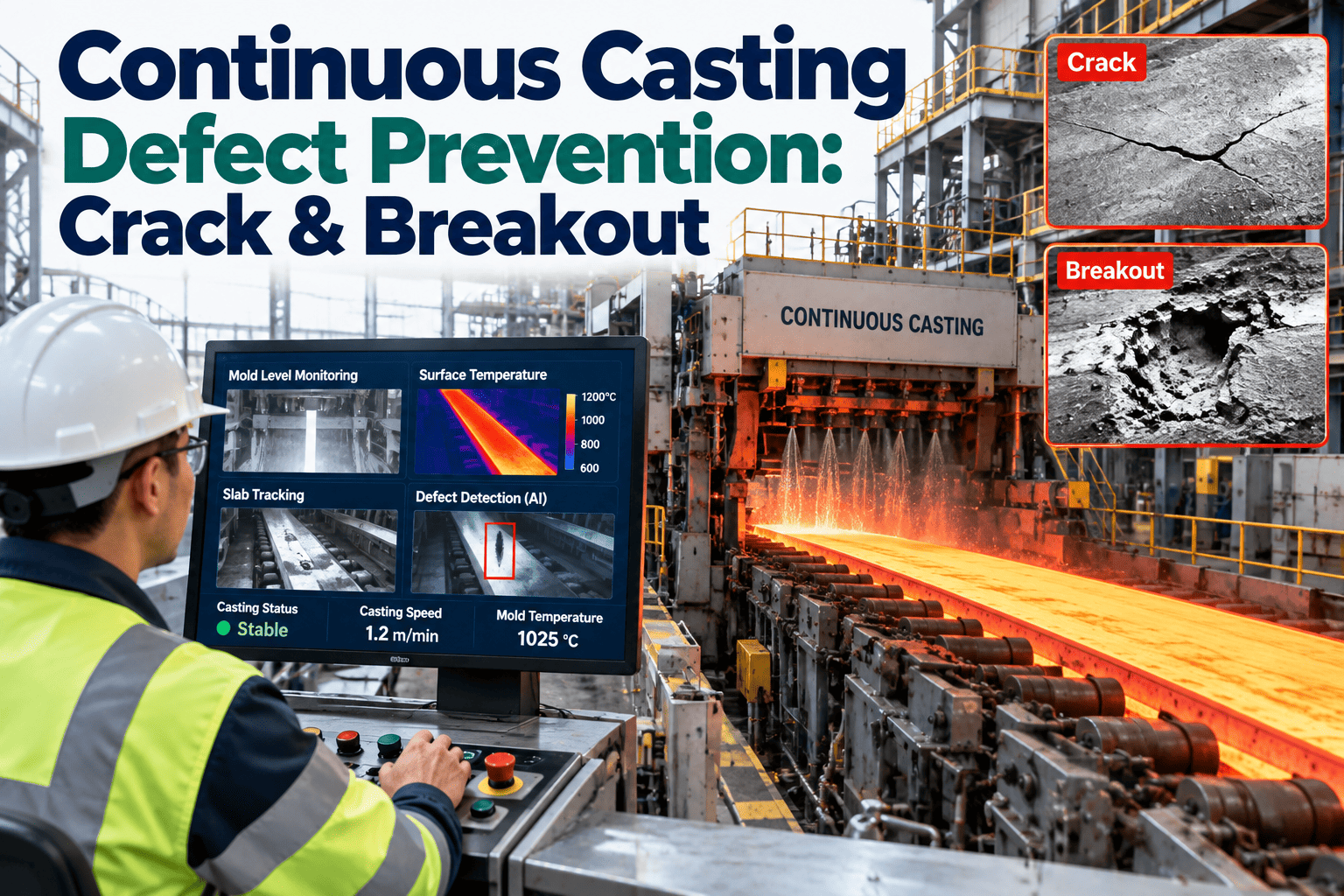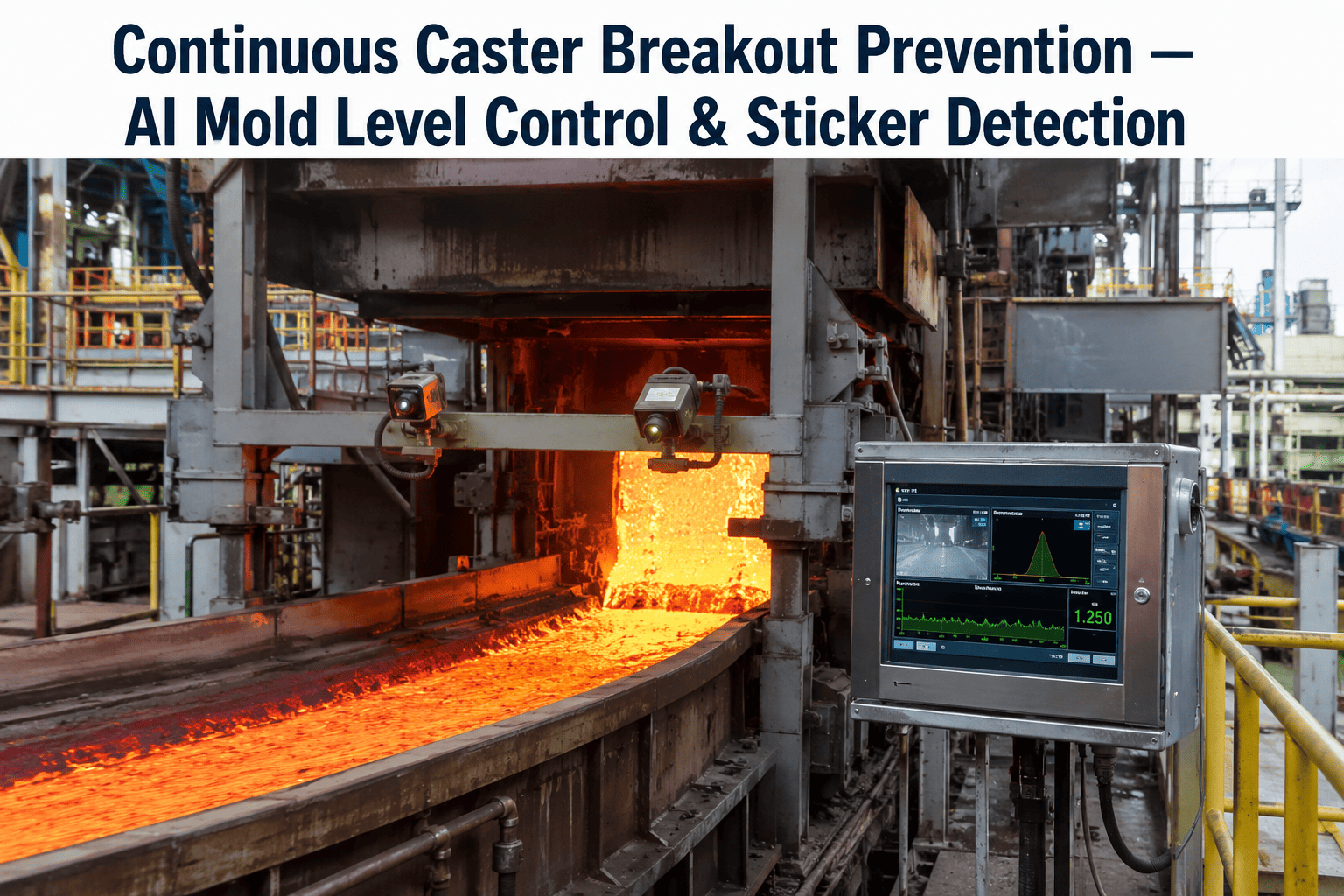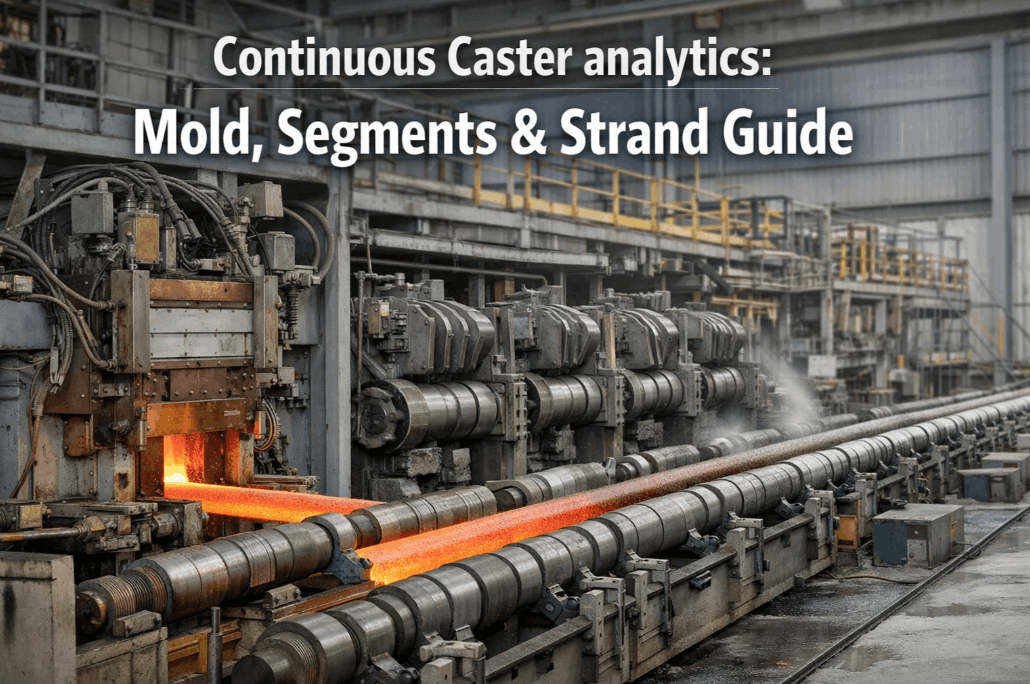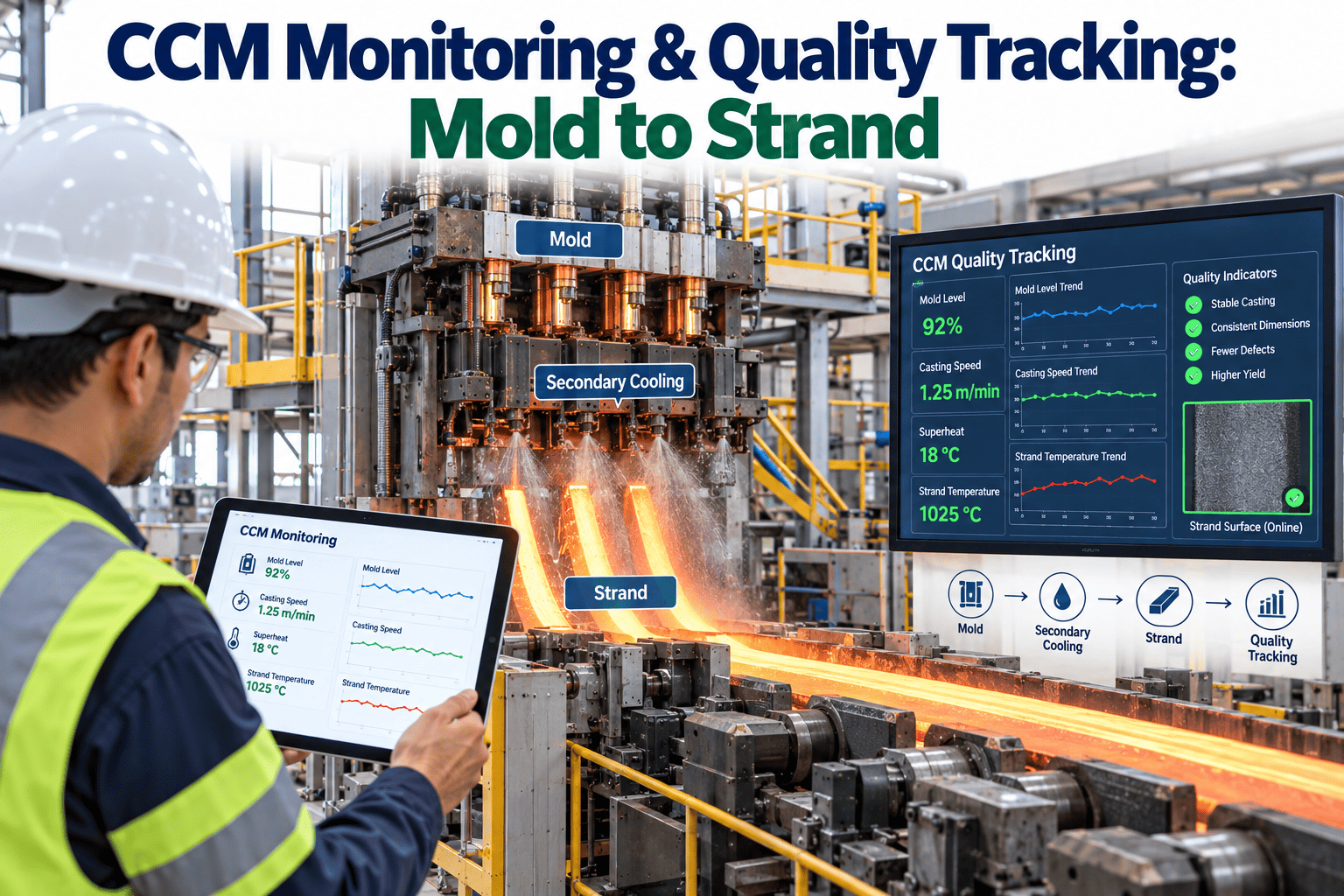
Every casting defect traces back to a moment in the continuous casting machine where a parameter drifted outside its window and nobody caught it in time. Mold level fluctuating by a few millimeters during a grade change, casting speed pushed slightly ahead of what the strand's solidification profile can handle, secondary cooling water flow drifting on one spray zone — any of these can show up hours later as a surface crack or an internal defect discovered only after rolling, by which point the affected material has already moved through several more process steps. Correlating casting parameters against final quality data after the fact tells you what went wrong, but by then the heat is already cast. AI-based CCM monitoring closes that gap by watching mold level, casting speed, and strand temperature continuously against known defect signatures in real time. See how real-time CCM monitoring changes your defect rate.
Casting Defects Start as a Parameter Drift, Not a Sudden Failure
Mold level, casting speed, and strand temperature all have narrow windows where quality holds. AI monitoring watches all three continuously and flags drift before it becomes a defect.
the typical acceptable mold level fluctuation window before surface defect risk rises meaningfully
of internal casting defects can be traced back to a parameter deviation during the cast, not a material issue
the typical delay between a casting defect forming and it being discovered downstream at rolling or final inspection
Three Parameters, One Quality Outcome
Each of these parameters has a documented relationship to specific defect types, which is exactly why continuous tracking against their target windows matters more than a single end-of-cast average.
Mold Level
Casting Speed
Strand Surface Temperature
Correlate Your Defect History Against Real Casting Data
iFactory analyzes your casting parameter history against downstream quality data to show exactly which drift patterns are producing your most common defects.
Quality Checkpoints From Mold to Strand
Each stage of the casting process is a distinct opportunity to catch a developing quality issue before the strand moves on to the next step.
Tundish & Flow Control
Steel flow rate from tundish to mold is monitored for consistency, since fluctuation here is often the earliest signal of a downstream mold level problem.
Mold Level Stability
Continuous mold level tracking against target window catches oscillation that correlates directly with surface defect formation in the solidifying shell.
Secondary Cooling Zones
Spray water flow and strand surface temperature across each cooling zone are tracked against the designed cooling curve for the grade being cast.
Strand Straightening & Cutting
Straightening temperature and cutting length data close the loop, linking final billet or slab identity back to every upstream parameter reading.
Parameter Drift and Resulting Defect Type
The relationship between a specific parameter deviation and the defect it tends to produce is well documented, which is exactly what makes real-time correlation valuable.
The Root Causes Behind Most Parameter Drift
Most casting parameter deviations trace back to a small set of recurring mechanical and procedural causes, which is exactly what makes them worth tracking as patterns rather than one-off incidents.
Nozzle Wear and Clogging
Submerged entry nozzles gradually erode or accumulate alumina buildup over the course of a sequence, changing flow characteristics in a way that shows up first as mold level instability before it becomes visible on a physical inspection.
Ladle Changeover Timing
The transition between ladles during a sequence cast is one of the highest-risk windows for a casting speed or superheat deviation, since flow conditions change abruptly right as an operator is managing multiple tasks at once.
Secondary Cooling Water Calibration Drift
Spray nozzle flow rates drift out of calibration gradually as nozzles wear or partially clog with scale, producing a cooling curve that no longer matches the grade's designed profile even though nothing has visibly failed.
Why the Same Deviation Doesn't Mean the Same Risk for Every Grade
A casting speed variation that a low-carbon structural grade tolerates without issue can produce a serious internal defect on a higher-carbon or micro-alloyed grade with a narrower solidification window. Crack-sensitive grades typically need tighter mold level and cooling curve tolerances than more forgiving commodity grades, which means a single fixed alarm threshold across all products either misses real problems on sensitive grades or generates excessive false alarms on tolerant ones. Matching each grade's monitoring thresholds to its actual metallurgical sensitivity, rather than applying one generic window across the whole product mix, is what separates a monitoring system that genuinely predicts defects from one that just logs data nobody trusts enough to act on.
What Changes When Casting Parameters Are Watched Continuously
Figures reflect typical outcomes within the first two quarters after deploying continuous CCM parameter monitoring with defect correlation.
A Process Engineer's View on CCM Monitoring
We had a recurring surface crack issue on one grade that took months to trace back to a specific mold level oscillation pattern that only showed up during ladle changes. Once we had continuous parameter data correlated against defect location, the pattern was obvious within the first week of watching it, and adjusting the flow control sequence during changeover cut that defect almost entirely.
The Bottom Line on CCM Monitoring and Quality Tracking
A casting defect is almost always the downstream result of a parameter that drifted outside its window during the cast, and the longer that connection stays hidden, the more material moves through the plant before the root cause gets found. Continuous monitoring of mold level, casting speed, and strand temperature against known defect signatures turns that after-the-fact investigation into a real-time catch, closing the gap between when a problem starts and when someone actually sees it.
Frequently Asked Questions
How is mold level actually measured and monitored continuously?
Radioactive or eddy-current mold level sensors provide continuous readings that feed directly into the casting machine's automatic flow control system, and the same data stream can be tracked against a defined target window in real time to flag oscillation patterns before they produce a visible surface defect. Book a review to see how this applies to your specific CCM configuration.
Can this correlate a specific defect back to the exact moment it was cast?
Yes — by tying continuous parameter data to strand position and cutting length, a defect found later in the process can be traced back to the specific point in the cast where the parameter deviation occurred, which is far more precise than correlating against an entire heat's average casting conditions.
Does this require new sensors, or can it use data already available on the CCM?
Most continuous casting machines already generate mold level, casting speed, and cooling water flow data through their existing control system, so a monitoring layer typically connects to that existing data rather than requiring new instrumentation, with new sensors added only where a genuine gap exists.
How quickly can an operator respond to a flagged parameter deviation?
Alerts are designed to reach the caster operator in near real time so a developing deviation, such as a mold level oscillation trending outside its window, can be addressed through an operational adjustment during the cast rather than being discovered only after the strand has fully solidified and moved downstream.
Does this integrate with existing quality and MES systems?
Continuous casting parameter data is typically fed into the same quality tracking and MES systems used for downstream inspection results, allowing defect correlation to happen automatically rather than requiring a manual data pull across separate systems each time an investigation is needed. Talk to a specialist about connecting this to your existing plant systems.
Catch the Drift Before It Becomes a Defect
Book a 30-minute assessment. iFactory reviews your casting parameter data and shows exactly where continuous monitoring would catch your most common defects earliest.