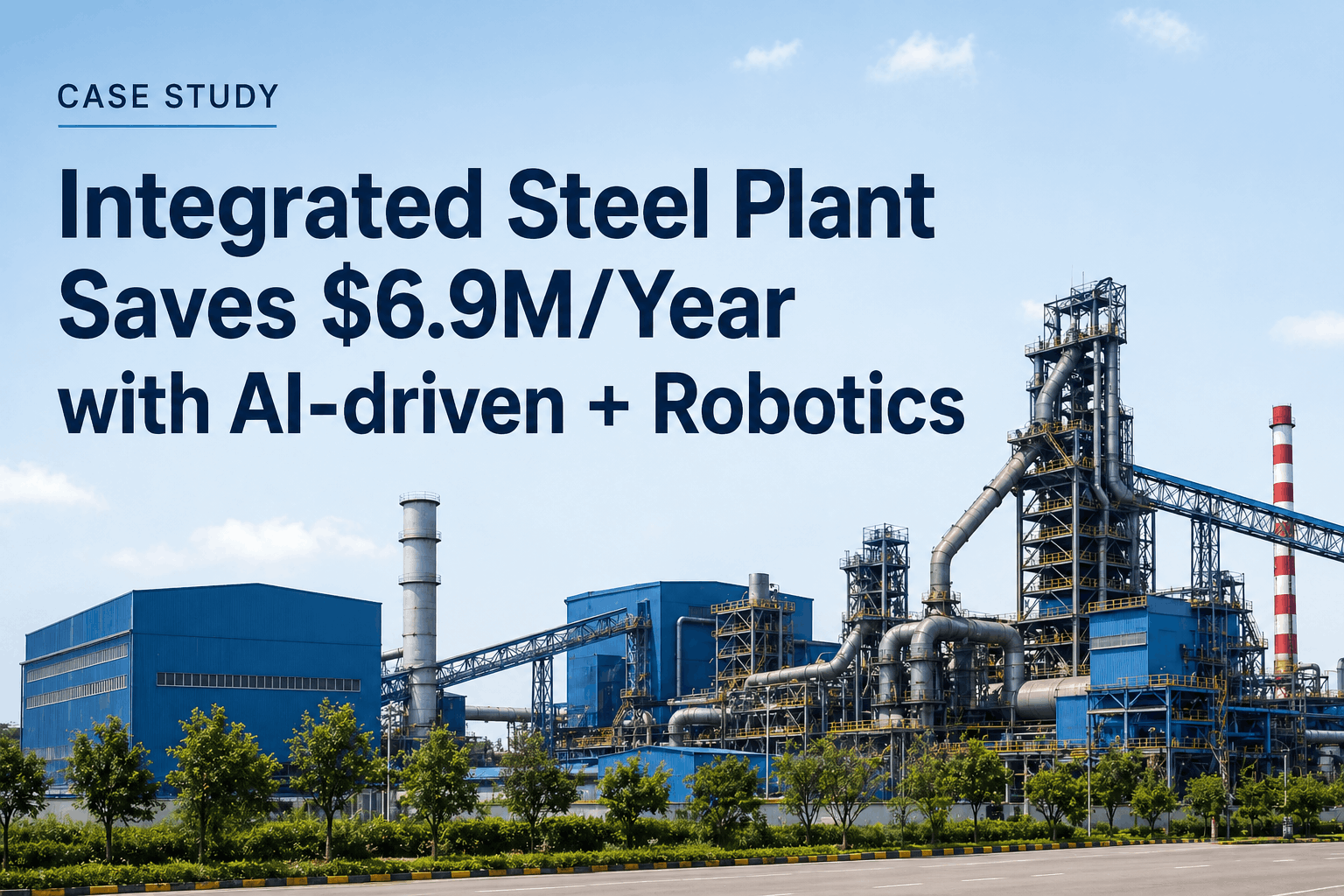
For a Tier-1 integrated steel plant operating two blast furnaces and a high-speed hot strip mill, unplanned downtime was costing an estimated $52,000 per hour. Legacy manual inspection protocols were failing to catch subsurface bearing fatigue and hydraulic micro-leaks in high-heat zones because humans could not safely approach active machinery. By deploying a fleet of 7 autonomous robots integrated with iFactory's AI-driven predictive engine, the facility transformed its maintenance profile from reactive to autonomous. Within the first 90 days, the system identified 43 critical developing failures—including a near-catastrophic hydraulic failure in the BOF tilt mechanism—resulting in a verified annual saving of $6.9M. Schedule a technical walkthrough to see the ROI breakdown for your facility.
1. The Client Dossier & Operational Scope
The facility is a massive 4.2 MTPA (Million Tons Per Annum) integrated site. Managing such scale requires coordination between extreme environments—ranging from the 1500°C heat of the blast furnace to the high-speed precision of the finishing mill. Previous maintenance relied on "window-based" inspections during shutdowns, leaving 95% of the operating cycle unmonitored. iFactory's integration provides the missing link between physical asset health and digital monitoring.
2. The Challenge: Why Manual Inspection Failed
The facility faced three structural challenges that threatened its production targets. First, Extreme Heat Hazards meant furnace shells could only be inspected visually from a distance, missing internal refractory thinning. Second, Data Silos meant process data (temperatures/pressures) lived in SCADA while vibration data lived on paper logs. Finally, Caster Roll Failures were occurring every 4 months, each causing a $700k loss in lost production time. Schedule a call to discuss similar challenges in your plant.
— Chief Technical Officer, Global Steel Corp.
3. The Solution: Fusing Physical Robotics with AI Intelligence
iFactory deployed a unified architecture that bridged the gap between physical robotic sensing and digital intelligence. This wasn't just about "putting cameras on robots"—it was about creating a closed-loop autonomous inspection system that works without human supervision, providing continuous coverage in hazardous high-heat zones.
Magnetic crawlers equipped with high-dynamic-range (HDR) thermal sensors navigate the blast furnace shell. They detect "hot spots" that indicate refractory brick thinning long before a shell breach occurs, preventing catastrophic molten metal breakouts.
Drones fly autonomous paths above the hot strip mill, using acoustic beamforming to "listen" to gearbox meshing. They identify bearing pitting and gear-tooth wear through frequency analysis that the human ear simply cannot resolve over plant noise.
The central analytics "brain." It ingests robotic feeds and correlates them with motor currents, lubricant pressures, and mill speeds to predict the Remaining Useful Life (RUL) of every critical asset across the entire production chain.
4. Verification of Results: A $6.9M Annual Impact
The ROI was validated through an independent 12-month audit following full deployment. By shifting from reactive "firefighting" to planned predictive maintenance, the plant saved millions on avoided downtime while significantly improving safety ratings and operational yield.
| Savings Category | Legacy Baseline | iFactory AI Output | Annual Gain |
|---|---|---|---|
| Unplanned Downtime Reduction | 142 Hours/Year | 22 Hours/Year | $6,240,000 |
| Maintenance Labor Efficiency | Reactive Overtime | 85% Planned Work | $420,000 |
| Scrap & Yield Improvement | 1.4% Loss Rate | 0.8% Loss Rate | $240,000 |
5. Strategic Business & Safety Impact
Zero safety incidents during inspections since deployment. Robots now handle all inspections in high-heat and confined spaces, removing workers from harm's way.
By proving continuous monitoring of high-value assets, the plant negotiated a 7% reduction in annual equipment breakdown insurance premiums, adding $92k to the bottom line.
Inventory carrying costs dropped by 12% because the plant now orders long-lead-time bearings only when the AI predicts a specific 30-day failure window.