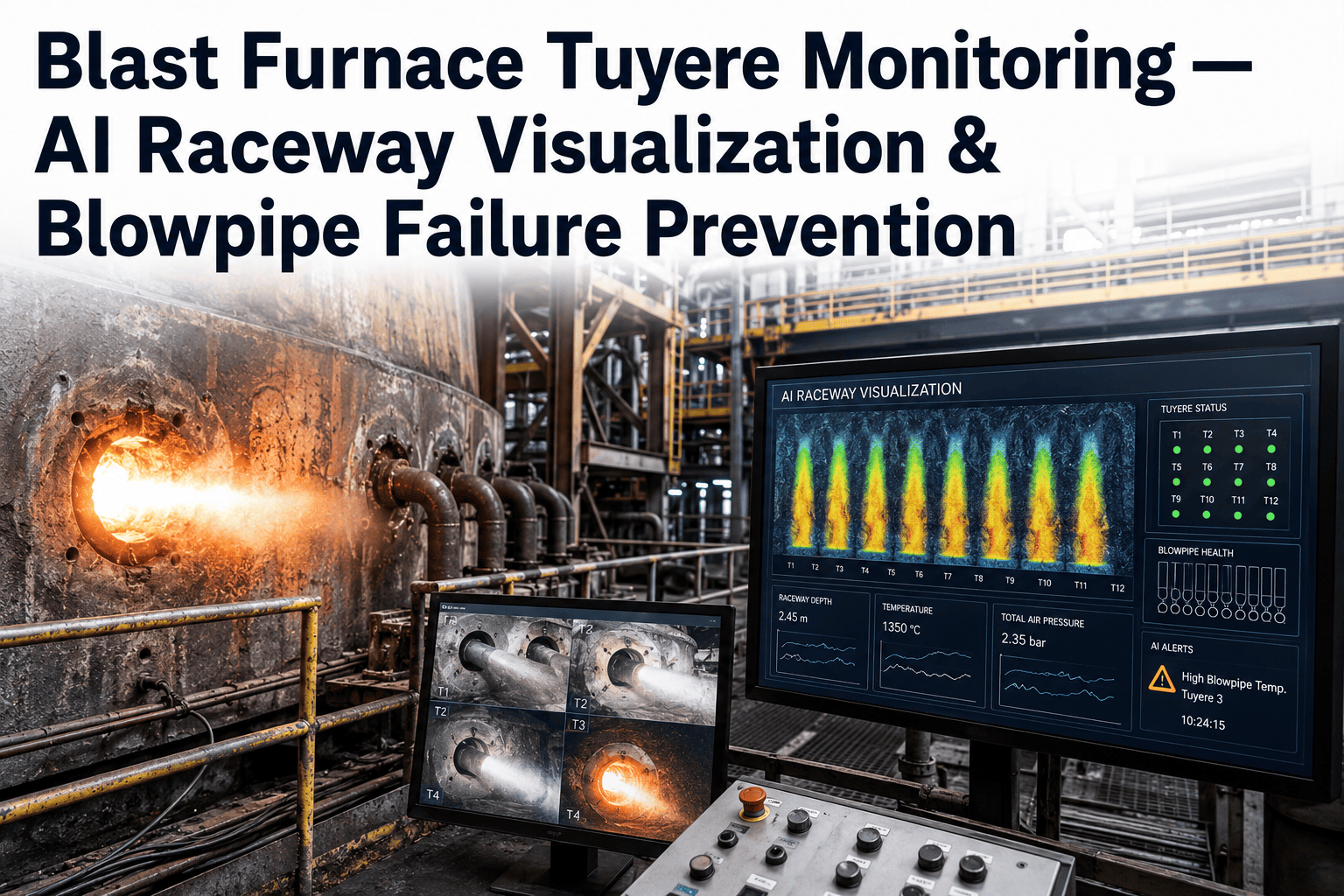
A blast furnace is the highest-capital, highest-risk, and most thermally demanding unit in any integrated steelmaking operation. A single missed parameter during daily operator rounds — an undetected stave ΔT deviation, a slow tuyere losing blast pressure, a hearth thermocouple trending above its alarm band — can cascade into a campaign-threatening event within hours. The blast furnace daily monitoring checklist in this template covers every critical parameter that shift operators, BF process engineers, and casthouse supervisors must verify during each round: cooling water circuits, hot blast system, burden distribution, top gas composition, cast house safety, and hearth health indicators. Each section is structured to the actual inspection sequence of a shift operator walking the BF from the casthouse level to the furnace top. Book a Demo to see how iFactory replaces paper BF round sheets with mobile digital checklists that auto-escalate deviations to the shift engineer in real time.
Why Blast Furnace Daily Rounds Need a Structured Digital Checklist
Paper Round Sheets Miss the Trend — Digital Checklists Catch It
A paper round sheet records a single point-in-time reading. A digital BF monitoring checklist records the same parameter shift-over-shift, building a time-series that reveals slow-developing trends invisible to any single reading — a stave ΔT rising 0.5°C per shift for two weeks, a tuyere pressure dropping 2 kPa per day, a CO utilisation declining 0.3% per shift. These trends are the early warning of developing BF abnormalities, and they only become visible when every shift logs its data in the same structured format. Book a Demo to see iFactory's BF trend analytics in action.
Campaign Cost vs. Monitoring Investment: The BF Economics
A blast furnace campaign lasts 15–25 years. An unplanned blowdown caused by a missed hearth thermocouple deviation or a stave failure costs $50M–$200M in lost production, emergency repair, and early reline execution. The monitoring investment required to prevent that event — digital rounds, automated trend analytics, real-time deviation alerting — is measured in hundreds of thousands. Every BF operator team in a world-class ironmaking facility runs structured, documented daily rounds. The question is whether those rounds are captured on paper — or on a platform that actually generates actionable intelligence from the data.
Blast Furnace Daily Monitoring Checklist — Shift Round Parameters
"We had three unplanned blowdowns in the six years before iFactory — each one traced back, in the post-incident analysis, to a parameter that had been trending for 10 to 14 days before the event but was invisible in our paper round sheets. The stave ΔT was rising 0.4°C per shift. The CO utilisation was declining 0.2% per shift. The hearth thermocouple at the 10 o'clock position was up 8°C over two weeks. None of those trends would trigger alarm in a single shift's reading. All three were visible as clear early warnings in iFactory's trend charts after we digitised. In the 28 months since go-live, we have had zero unplanned blowdowns. That number speaks for itself."
Benefits of Digital BF Daily Monitoring vs. Paper Round Sheets
Shift-Over-Shift Trend Visibility
Every parameter logged in iFactory's digital BF checklist is automatically plotted on a time-series trend chart visible to the process engineer in real time. Slow-developing abnormalities — the most dangerous BF failure mode — become visible 5–15 days before they would be detectable from a single round sheet reading.
Automatic Out-of-Band Escalation
When any BF parameter is logged outside its defined normal band — a stave ΔT above the Yellow threshold, a tuyere pressure deviation, a hearth thermocouple reading above campaign limit — iFactory immediately notifies the BF process engineer by app notification, eliminating the shift handover gap where critical deviations are missed.
Cross-Shift Parameter Correlation
iFactory's BF analytics engine correlates parameters across shifts — identifying relationships between stave ΔT trends, CO utilisation changes, and burden descent irregularities that no single operator would recognise from one shift's data. These correlations provide early warning of cohesive zone disruption and hearth erosion development weeks before they become campaign risks.
Mobile Execution at Equipment Level
BF operators complete rounds on a smartphone or tablet at each physical inspection point — eliminating the paper-then-data-entry delay that means readings are often 30–60 minutes old by the time they reach the control room log. GPS-tagged round completion confirms the operator physically visited each inspection point, not just filled in a desk estimate.
Shift Handover Intelligence Report
iFactory auto-generates a shift handover summary from the completed BF monitoring checklist — listing all out-of-band readings, open items from the previous shift, and current trend direction for key parameters — replacing the verbal handover where critical BF status details are routinely lost between teams.
Regulatory & Insurance Audit Documentation
Every BF monitoring round completed in iFactory is stored with tamper-evident timestamps and technician digital signatures — providing a complete, searchable operational history for environmental permit compliance, insurance inspection requirements, and post-incident root cause investigations requiring round record evidence.