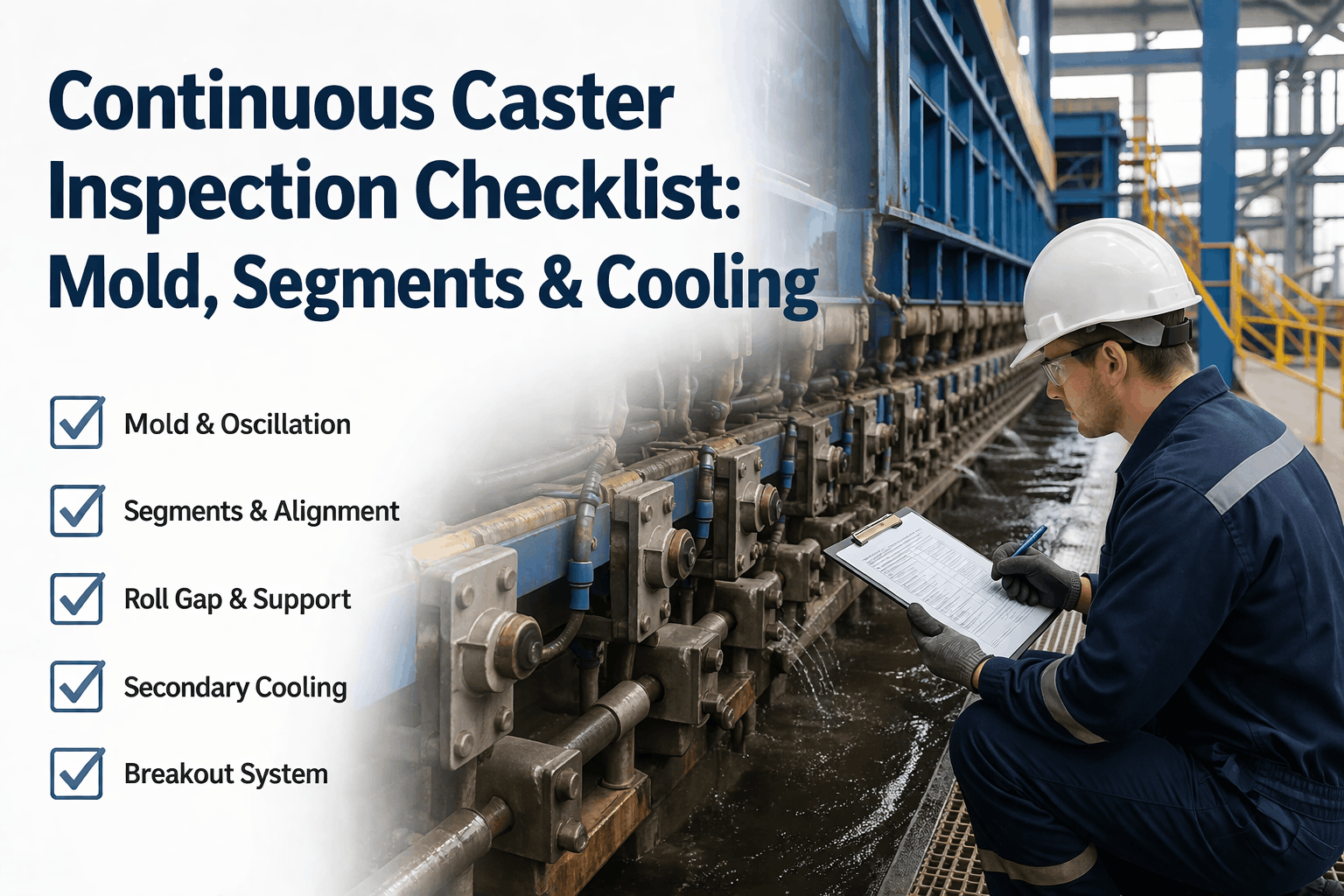
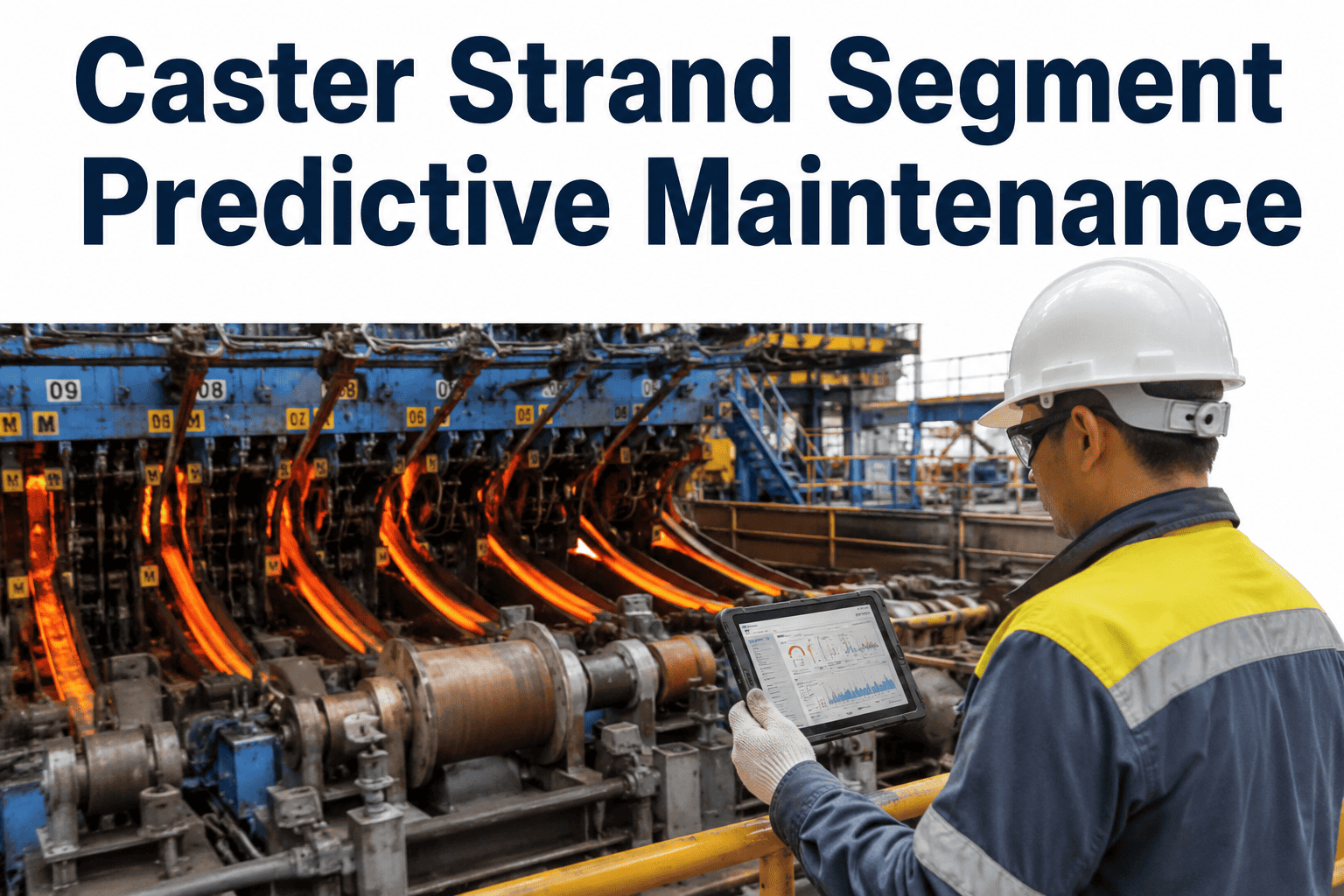
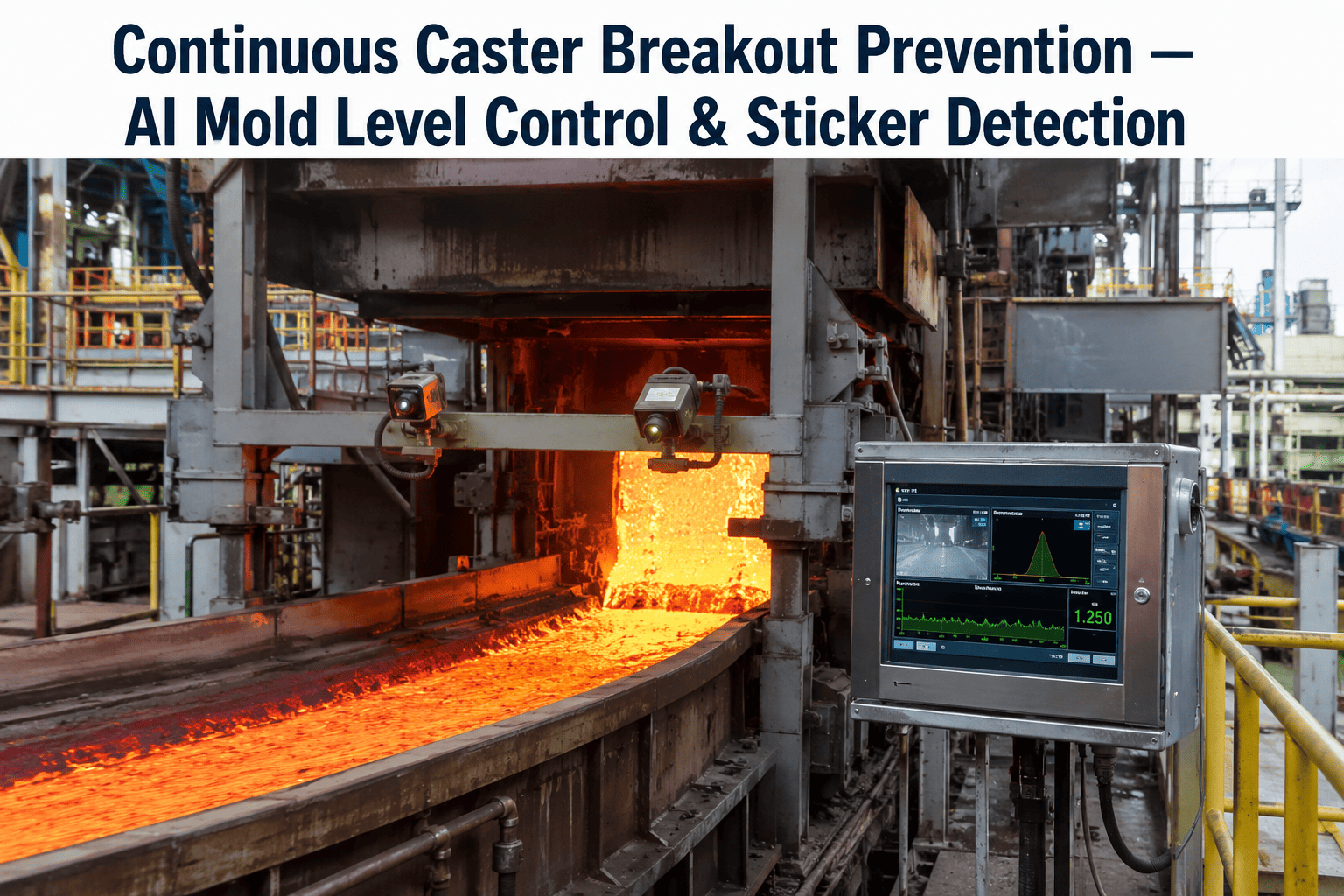
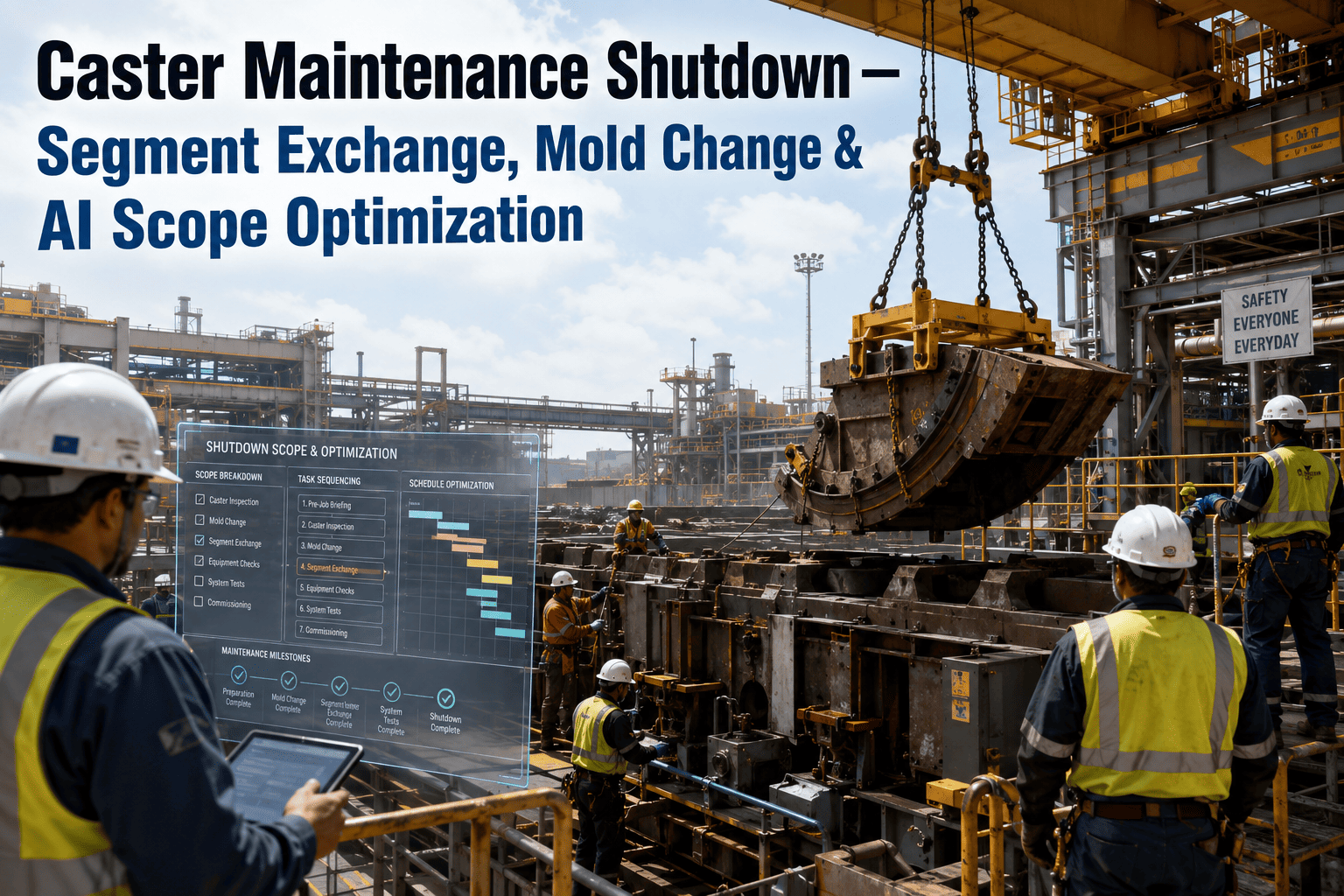
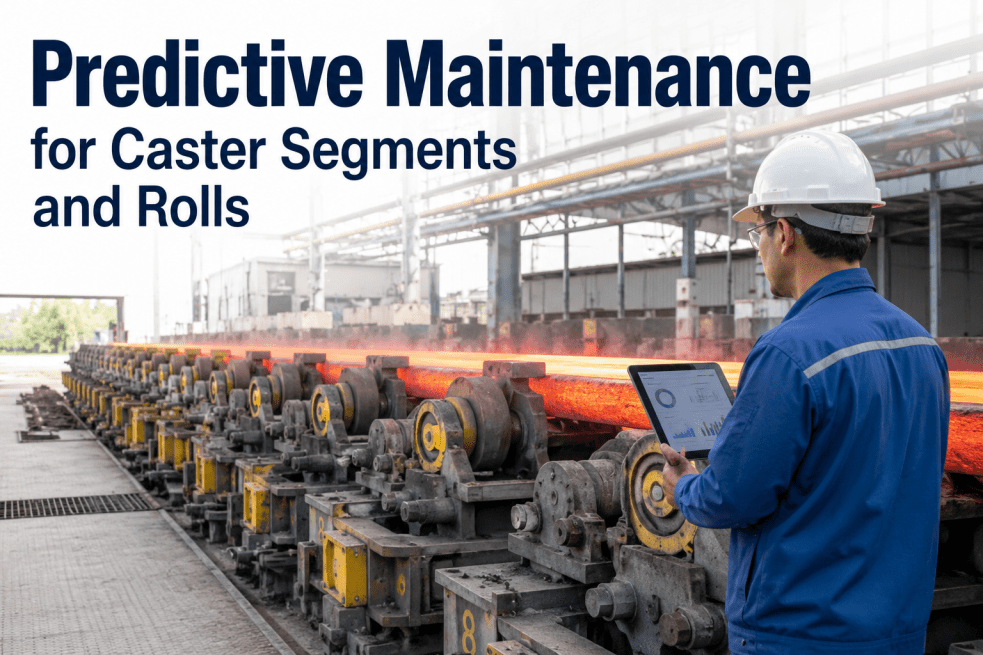
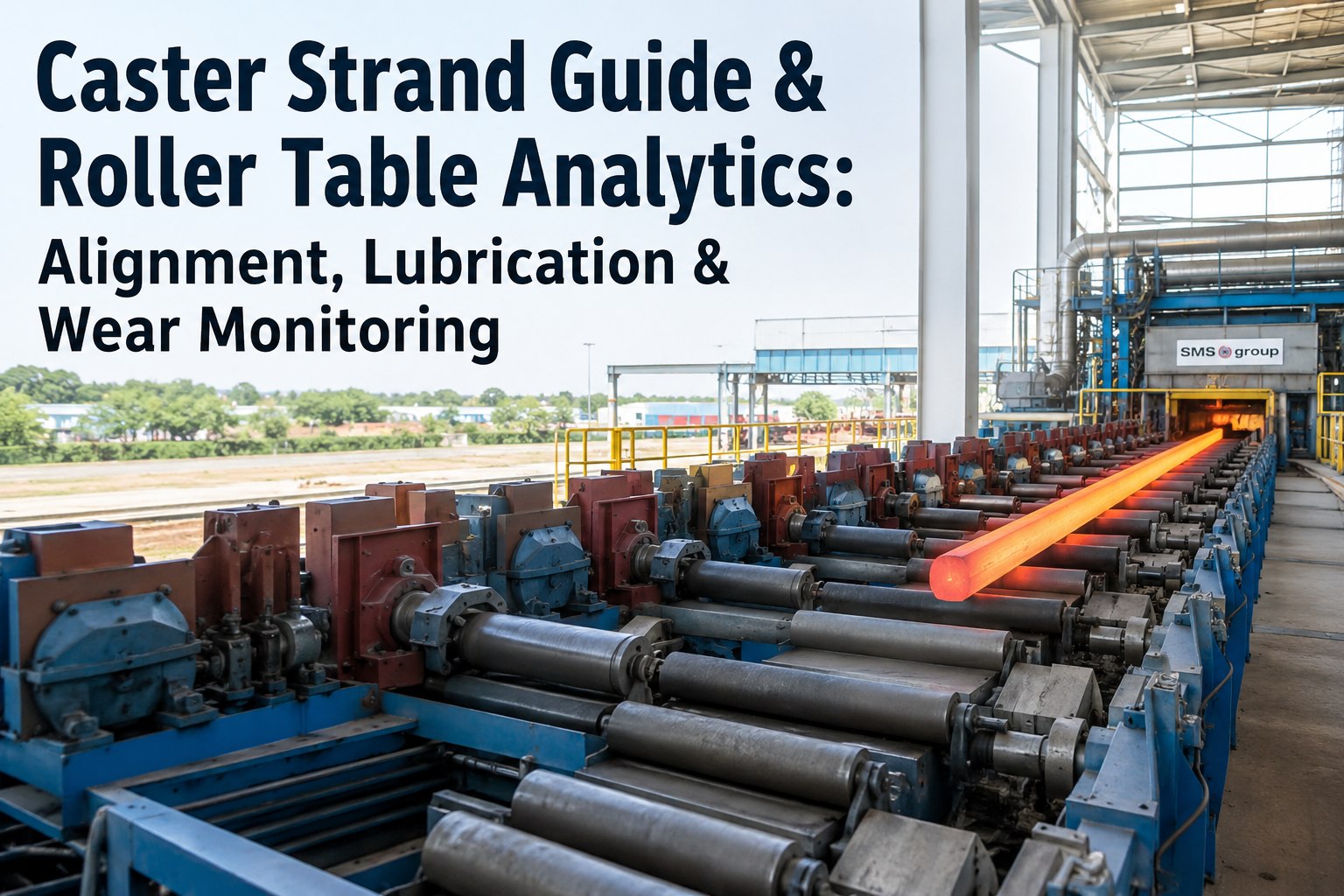
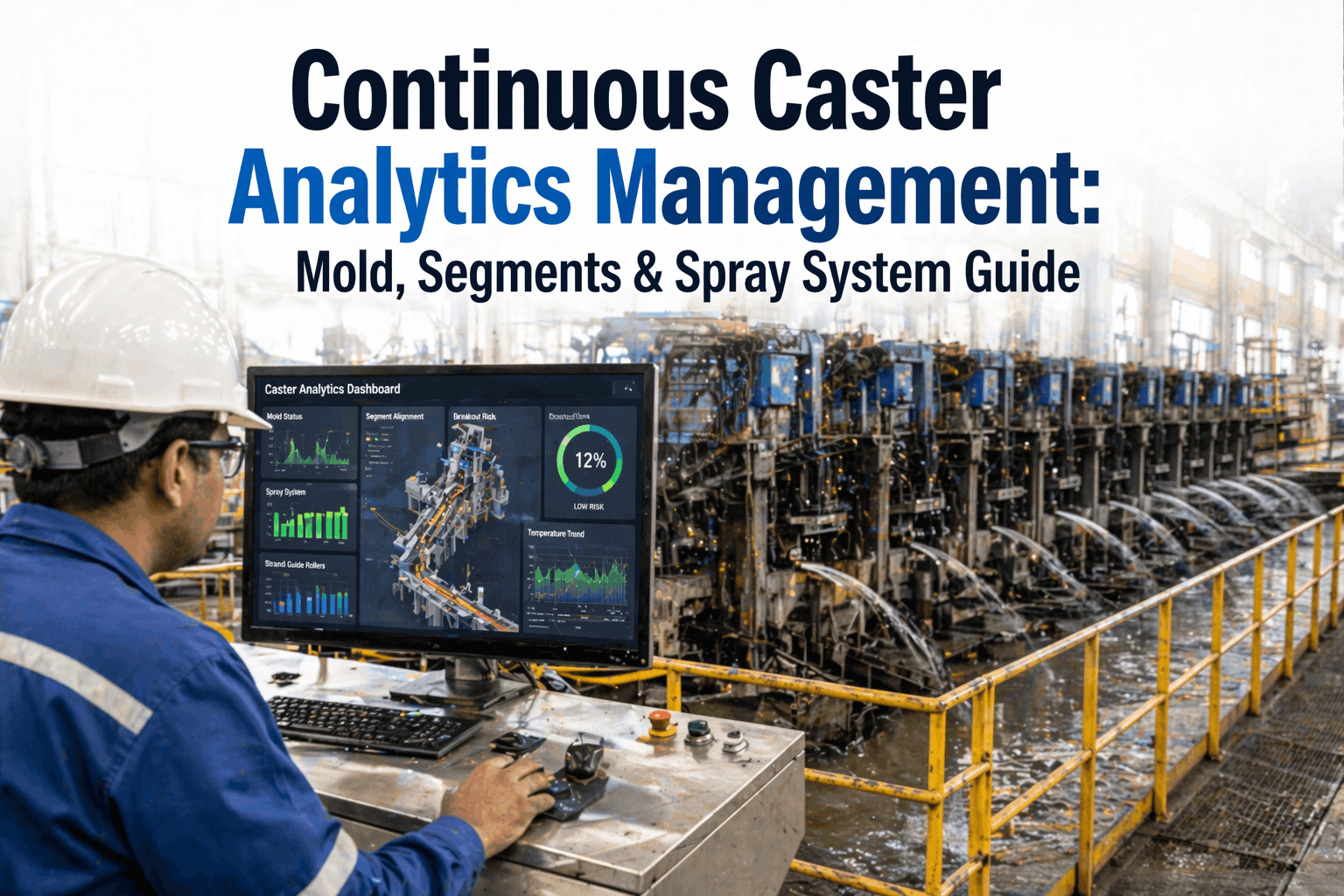
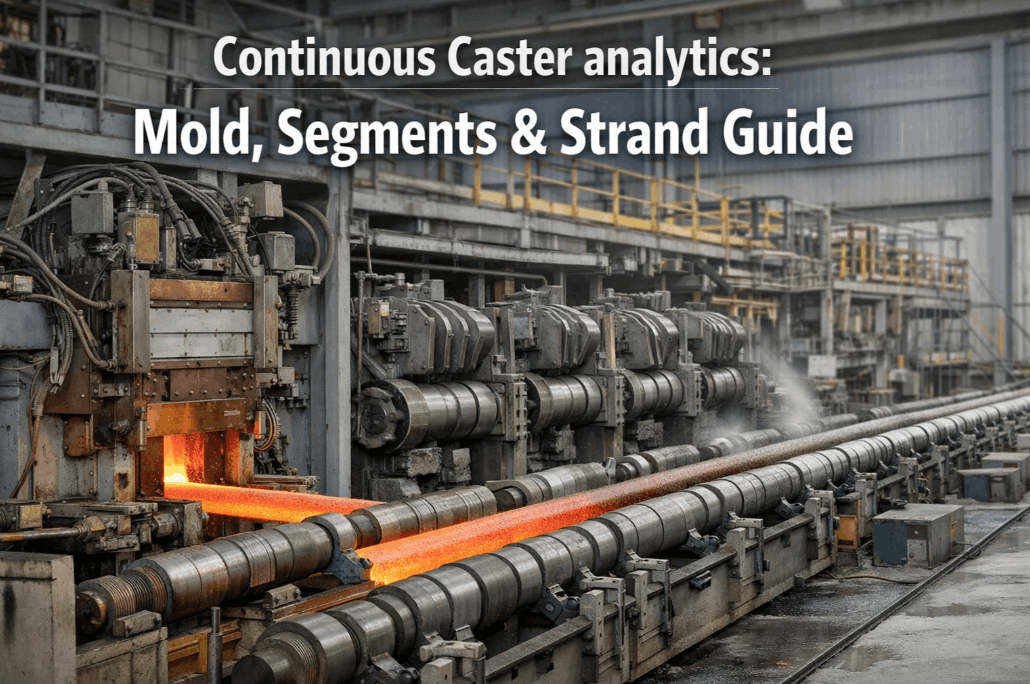
A continuous caster sticker breakout costs between $500,000 and $3,000,000 in a single event — molten steel penetrating the solidifying strand shell, flooding the caster segments, and requiring a complete strand evacuation, segment rebuild, and downtime that can extend from 8 hours to several days. Every one of those events is preceded by a detectable condition that a structured inspection programme would have identified: a mold oscillation stroke deviation triggering abnormal mark spacing, a stave ΔT rise in the mold cooling circuit, a misaligned spray nozzle creating a hot spot in the secondary cooling zone, or a breakout detection thermocouple that had drifted out of calibration. This continuous caster inspection checklist provides a zone-by-zone inspection template covering every critical system from the tundish to the torch cut-off — mold condition, oscillation parameters, segment roll gap, secondary cooling, breakout detection, and strand guide alignment — structured to the actual inspection sequence that caster operators and process engineers use on world-class casting operations. Book a Demo to see how iFactory digitises your caster inspection programme with photo documentation, parameter trending, and real-time deviation escalation that keeps your casting operation breakout-free.
Prevent Caster Breakouts With Zone-Verified Digital Inspection & Real-Time Parameter Trending
iFactory's continuous caster inspection platform captures mold condition, oscillation parameters, segment roll gaps, and cooling nozzle status with photo evidence and measured values — automatically escalating any deviation from normal operating bands to the caster process engineer before it becomes a breakout event.
Why Continuous Caster Inspection Requires a Zone-by-Zone Structured Checklist
Breakout Root Causes Are Always Detectable Before the Event
Post-breakout investigations consistently identify the precursor condition in caster data recorded 10–30 minutes before the event — a mold thermocouple pattern deviation, an oscillation mark pitch change, a secondary cooling flow imbalance. The gap is not in the data availability; it is in the structured inspection discipline that would have identified the deviation before it progressed to a breakout initiation. Continuous caster inspection checklists transform data that exists into decisions that prevent. Schedule a demo to see iFactory's caster breakout precursor analytics in action.
Zone-by-Zone Inspection Matches the Caster's Physical Architecture
A continuous caster is not a single piece of equipment — it is a sequence of distinct process zones, each with its own failure modes, inspection parameters, and consequences. Mold inspection requirements are entirely different from segment inspection requirements, which differ again from secondary cooling inspection. A generic checklist that does not follow the physical zone structure of the caster will miss zone-specific failure modes that are obvious to any experienced process engineer inspecting their section of the machine. This template is structured zone-by-zone to match how casters are actually built and operated.
$3MMaximum cost of a single continuous caster sticker breakout event
85%Of breakouts preceded by detectable mold thermocouple pattern deviation
8 zonesCritical inspection zones covered in this template from tundish to torch cut-off
50–80K tCaster segment inspection interval (tonnes/campaign) — tracked by iFactory
Continuous Caster Inspection Checklist — Zone by Zone
1. Tundish & Ladle System — Pre-Sequence Inspection
2. Mold Condition & Copper Wall Inspection
3. Mold Oscillation System — Stroke, Frequency & Lubrication
4. Breakout Detection System — Thermocouple & Alarm Validation
5. Strand Guide Segments — Roll Gap & Alignment Inspection
6. Secondary Cooling System — Spray Zones & Water Quality
7. Torch Cutting, Roller Table & Slab Handling
8. Caster Utilities, Safety & Maintenance Record Checks
iFactory captures every check in this template with GPS-tagged sign-off, photo documentation from the inspection point, and measured parameter values that are automatically trended and compared against previous sequences — giving your process engineer the real-time situational awareness to prevent breakouts, not just investigate them.
"We had four sticker breakouts in one calendar year — each one cost us between 800,000 and 1.2 million dollars when you count the segment rebuild, the lost sequence, and the quality rejects from the sequences either side of the event. The post-mortems were frustrating because in three of the four cases, the data showed the thermocouple pattern deviation was there 14 to 20 minutes before the breakout — but nobody was watching the trend because we had no structured process for reviewing those readings during the sequence. After deploying iFactory's digital caster inspection platform, the process engineer now gets an alert the moment any thermocouple pattern deviation appears. We just completed our twelfth consecutive breakout-free month. That track record has changed our entire conversation about caster maintenance investment."
— Caster Process Manager, Major Slab Caster Operation
Operating a 2-strand slab caster at 1.5 million tonnes per year production rate
Benefits of Digital Zone-by-Zone Caster Inspection vs. Paper Round Sheets
Photo Documentation at Every Inspection Point
iFactory's mobile inspection platform allows operators to attach photos directly to checklist items — mold copper wall condition at change, spray nozzle pattern at the pre-sequence test, segment roll surface at removal. Photos are stored with GPS coordinates and timestamps, providing the visual evidence that verbal round sheets cannot capture and that confirms inspection quality to process engineers reviewing the record remotely.
Sequence-on-Sequence Parameter Trending
Every numerical parameter captured in the digital checklist — mold ΔT, segment drive current, secondary zone flow rate, oscillation stroke — is automatically plotted sequence-on-sequence. The slow drift from a healthy baseline that precedes the majority of breakout events is immediately visible as a trend, not a single alarming reading, giving the process engineer days of lead time rather than minutes.
Segment & Mold Campaign Milestone Tracking
iFactory tracks cumulative sequence count and tonnes per segment and mold against their configured campaign limits — automatically notifying the caster maintenance engineer when a maintenance milestone approaches. The most common cause of unplanned segment failure is a single sequence too many beyond the campaign limit. Automated milestone tracking eliminates this failure mode entirely.
Real-Time Deviation Escalation to Process Engineers
Any measured value entered outside its normal operating band — a mold ΔT above a threshold, a segment drive current deviation, a spray zone flow deficit — triggers an immediate notification to the caster process engineer's mobile device. The gap between "operator notices deviation" and "engineer aware and responding" is reduced from 30–60 minutes (paper systems) to under 2 minutes (iFactory).
Breakout Event Investigation Support
When a breakout does occur, iFactory's complete digital inspection record provides the process engineering team with a structured timeline of every parameter logged in the minutes and hours before the event — including which checks were completed, by whom, and what values were recorded. This replaces the post-incident period of reconstructing paper records with an immediate, structured root-cause analysis foundation.
Customer & Quality Audit Documentation
Automotive and high-specification steel customers increasingly require documented evidence of caster inspection discipline — mold condition records, breakout detection system calibration logs, and secondary cooling verification records — as part of their quality management system audits. iFactory provides these records in searchable, exportable format on demand, eliminating the weeks of file retrieval that paper-based caster inspection programmes require for major customer audits.
1. How often should mold copper walls be inspected and replaced on a continuous caster?
Mold copper walls should be visually inspected at every sequence change and measured (groove depth, thickness loss) at scheduled intervals — typically every 200–500 sequences depending on the grade mix, casting speed, and mold lubrication system. Meniscus groove depth exceeding 1.5mm requires copper replacement before casting to prevent breakout initiation at the groove during the next sequence.
2. What is mold flux and why does its feed rate matter for breakout prevention?
Mold flux (casting powder or liquid) provides lubrication between the solidifying strand shell and the copper mold wall during oscillation — without it, the shell sticks to the copper and tears during the upstroke, initiating a sticker breakout. Feed rate must match the consumption rate for the grade, casting speed, and viscosity class — any interruption to flux delivery requires immediate casting speed reduction until the supply is restored.
3. How does incorrect mold taper cause off-corner cracks in continuously cast slabs?
Mold taper compensates for strand shell shrinkage as the steel solidifies and cools inside the mold. If taper is insufficient for the grade's solidification contraction rate, the strand shell pulls away from the narrow face copper — creating a gap where the strand shell is unsupported and thinned, which results in a longitudinal off-corner crack that propagates through the slab thickness and becomes visible on the rolled product surface.
4. How often should continuous caster segments be removed for inspection?
Withdrawal and straightening segments are typically removed every 50,000–80,000 tonnes cast for roll gap verification, bearing lubrication, and roll surface inspection. Critical foot roll segments — which operate closest to the mold exit under the highest thermal load — are often removed at half that interval. iFactory tracks cumulative tonnage per segment and auto-triggers removal schedules at the configured threshold.
5. What does a mold thermocouple pattern deviation indicate during casting?
A sticker breakout pattern shows as a thermocouple reading significantly below its neighbours at the same mold elevation — caused by a thin spot in the strand shell sticking to the copper wall and being dragged upward during the mold upstroke, creating a cold zone above the sticker and a hot zone below. Most breakout detection systems identify this V-shaped temperature inversion pattern and reduce casting speed automatically to allow the shell to re-solidify before exiting the mold.
6. Why is secondary cooling inspection critical for internal slab quality?
Secondary cooling controls the rate at which the strand solidifies after leaving the mold — directly determining the position of the solidification front, the degree of centreline segregation, and the formation of internal cracks. A zone with insufficient cooling (blocked nozzles, low flow) creates a hot spot where the strand shell is too thin to resist the ferrostatic pressure from the liquid steel core, causing bulging, internal cracking, and — in severe cases — a below-mold breakout.
7. What causes SEN (Submerged Entry Nozzle) failures during casting sequences?
The three main SEN failure modes are: thermal shock cracking on the initial ladle open when the cold SEN contacts liquid steel (prevented by adequate preheat), clogging from alumina inclusions for aluminium-killed steels (prevented by argon shroud flow), and erosion from steel flow at high casting speeds (managed by SEN material specification and replacement interval). Each failure mode creates a distinct steel flow pattern in the mold — asymmetric level fluctuation, inclusion bursts, or sudden level rise — visible to the operator team.
8. How does iFactory support continuous caster inspection and breakout prevention?
iFactory provides mobile zone-by-zone checklist execution with photo documentation, numerical parameter capture that is auto-trended sequence-on-sequence, deviation alerts to the process engineer in real time, segment campaign milestone tracking, and a complete searchable inspection record for every sequence cast. Book a Demo to see the caster inspection and breakout analytics platform in action.
START TODAYBREAKOUT-FREE SEQUENCES
Deploy Zone-by-Zone Digital Caster Inspection Across All Your Sequences — Starting Today
iFactory's continuous caster inspection platform covers every zone from tundish to torch cut-off — with photo documentation, sequence-on-sequence parameter trending, breakout precursor alerting, and audit-ready records that satisfy automotive customer QMS requirements and internal safety audits.