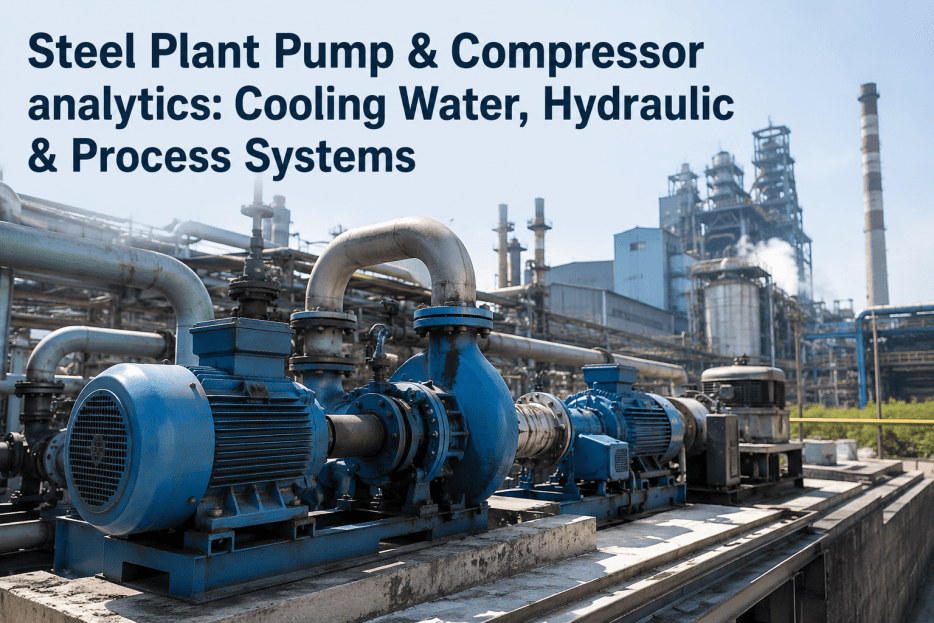
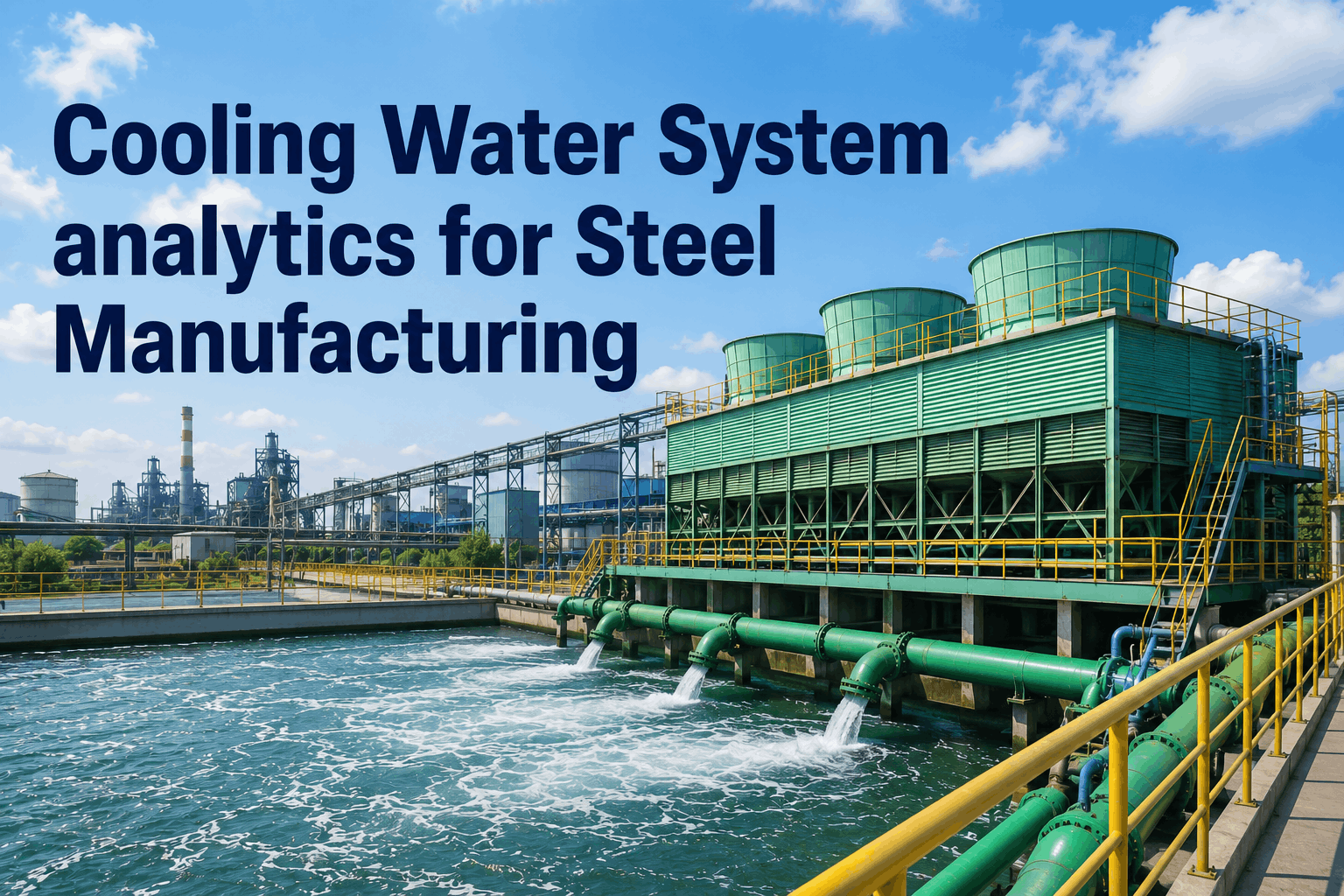
A single steel plant can run several hundred pumps at once — cooling water circuits keeping furnaces and casters from overheating, hydraulic pumps driving rolling mill actuation, and process pumps moving descaling and pickling fluids. Reliability teams rarely have the headcount to walk every one of them on a fixed schedule, so most fleets are monitored by exception: someone notices a leak, a bearing screams, or a pump trips and takes a line down with it. AI fleet monitoring flips that model by watching vibration, temperature, and flow signatures across the entire pump population continuously, catching cavitation, bearing wear, and seal degradation while a pump is still running and still fixable on a planned basis. Reliability teams evaluating this can Book a Demo to see a live fleet dashboard populated with real degradation signatures.
Watch Every Pump in the Plant, Not Just the Ones That Complain.
iFactory monitors cooling water, hydraulic, and process pumps across the whole fleet, flagging cavitation, bearing wear, and seal issues before they cause an outage.
Why Manual Rounds Can't Keep Pace With Hundreds of Pumps
A route-based inspection program is built around a fixed walk schedule, and a fixed schedule inevitably misses the pumps that are degrading fastest between visits. A bearing that develops a defect on day two of a fourteen-day route is running unmonitored for nearly two weeks, which is often enough time for a minor defect to become a seized shaft or a ruptured seal.
Steel plants make this worse by running pumps in some of the harshest conditions a rotating asset sees anywhere in industry — high ambient heat near furnaces, abrasive descale water, and continuous duty cycles with no planned downtime window. Continuous AI monitoring removes the scheduling gap entirely, watching every pump in the fleet at the same resolution regardless of how many assets are in the population.
The Pump Types That Make Up a Typical Fleet
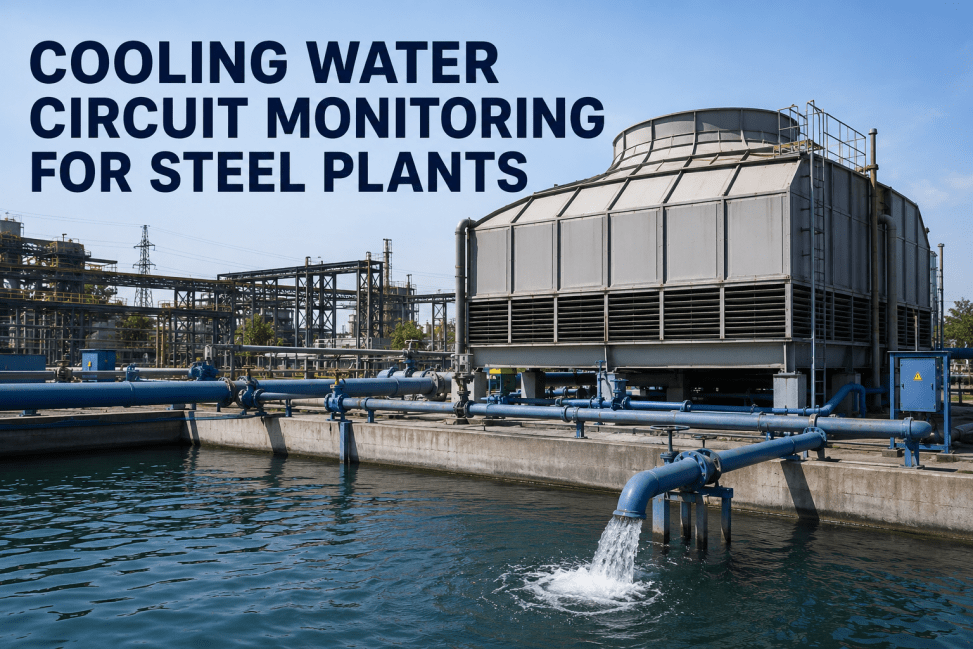
Cooling Water Pumps
Circulate water through furnace jackets, caster segments, and roll cooling headers. Failure risk directly threatens equipment protection, not just production rate.
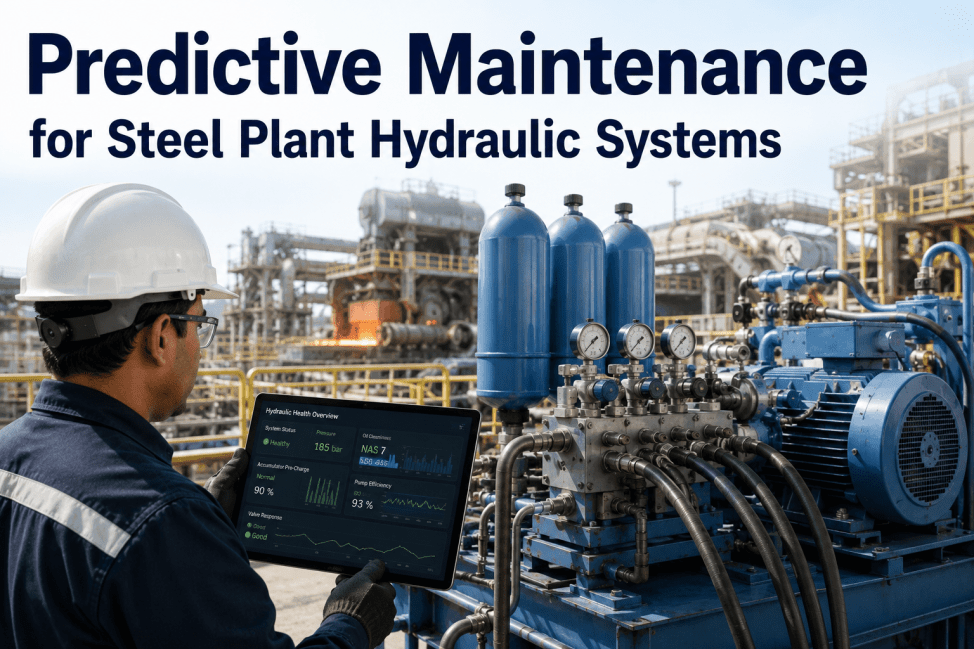
Hydraulic Pumps
Drive rolling mill screwdown, shears, and coilers. Wear here shows up first as position accuracy loss before a full failure occurs.
Process Pumps
Move descaling, pickling, and acid recovery fluids. Abrasive and corrosive media accelerate seal and impeller wear compared with clean-service pumps.
What the Model Is Actually Watching For
Each failure mode leaves a distinct signature in vibration, temperature, or flow data well before it becomes audible or visible on the floor. The model is trained to separate these signatures from normal operating noise.
Cavitation Onset
Detected through high-frequency vibration bands and flow noise before it erodes the impeller or causes suction-side damage.
Bearing Wear Progression
Tracked across defined vibration frequency bands corresponding to inner race, outer race, and rolling element defects.
Seal Degradation
Identified through a combination of leak-off trend, temperature rise at the seal chamber, and subtle flow efficiency loss.
Misalignment & Imbalance
Flagged through characteristic vibration at running speed and its harmonics, distinguishing coupling issues from bearing faults.
Route-Based Inspection vs. Continuous AI Monitoring
| Factor | Route-Based Rounds | Continuous AI Monitoring |
|---|---|---|
| Monitoring frequency | Every 7–14 days | Continuous, every pump |
| Cavitation detection | Usually after audible onset | Early-stage, before impeller damage |
| Fleet coverage | Limited by technician hours | Scales to hundreds of pumps |
| Data trail | Point-in-time reading | Continuous trend history |
Results Reliability Teams Track After Rollout
Reduction in unplanned pump failures within the first year of continuous monitoring across a full fleet.
Typical advance warning between an early degradation signature and the point a pump would otherwise fail.
Of monitored pumps tracked at the same resolution, regardless of fleet size or technician headcount.
Bringing a Fleet Online Without Disrupting Production
Fleet rollout typically starts with the pump population considered highest risk — cooling water pumps protecting furnace and caster equipment — before expanding to hydraulic and process pumps. Sensors are installed without requiring a full outage, baseline signatures are established over the first few weeks of normal operation, and alert thresholds are tuned against each pump's actual duty cycle rather than a generic default. Most plants have the highest-priority pump group fully monitored within four to eight weeks, with the remaining fleet phased in over the following quarter.
Pump Fleet AI Monitoring — Common Questions
Does every pump in the fleet need a new sensor installed?
Most pumps need a vibration and temperature sensor added if one isn't already present, but many plants already have some instrumentation on critical pumps that can be integrated directly. The rollout typically prioritizes ungauged pumps in the highest-risk categories first rather than instrumenting the entire fleet on day one.
How does the model tell cavitation apart from normal flow noise?
Cavitation produces a distinct high-frequency vibration signature and characteristic broadband noise pattern that differs from the steady-state signature of normal flow through the impeller. The model is trained on labeled examples of both conditions so it can separate genuine cavitation onset from routine operating noise across varying flow rates.
Can the system distinguish a hydraulic pump issue from a downstream actuator problem?
Yes, the model correlates pump-side vibration and pressure signatures against the actuator's response, which helps separate a genuine pump-side defect from a downstream valve or cylinder issue that might otherwise look similar on a single pressure trend. Teams can review the exact correlation logic with iFactory Support during onboarding.
How are alerts prioritized across a fleet this large?
Alerts are ranked by both severity and the criticality of the pump's role, so a moderate signature on a furnace cooling pump can outrank a more severe reading on a redundant process pump. This keeps maintenance teams focused on the pumps where a failure would have the largest production or safety impact.
What does a typical pilot deployment look like before a full fleet rollout?
A pilot usually covers twenty to thirty pumps from the highest-risk category, running for six to eight weeks to establish baselines and validate at least one real degradation catch against maintenance records. Teams ready to scope a pilot can Book a Demo to walk through the fleet prioritization approach.
Bring Your Pump Fleet Under Continuous Watch.
Talk to iFactory about monitoring your cooling water, hydraulic, and process pump population from a single dashboard.