The landscape of steel plant analytics software in 2026 demands more than just basic dashboards and standalone SCADA screens. For true iron and steel analytics to drive rapid ROI, modern steel analytics systems must offer comprehensive asset management, AI-driven work order management, and predictive capabilities tailored to exact plant configurations. Whether you are operating a full-scale integrated mill with blast furnaces, a fast-paced mini-mill, an EAF shop, or a dedicated rolling and finishing operation, your steel mill software must integrate seamlessly across equipment types to predict failures before they force unplanned downtime. This complete buyer's guide breaks down the essential features to look for in steel manufacturing AI-driven platforms, comparing deployment models, ROI timelines, and specific software capabilities needed for different steelmaking operations. If your current steel plant digital strategy relies on 2021-era rules engines or fragmented CMMS platforms, you are leaving an estimated $12–$18 per tonne in operational savings on the table. Schedule a plant-specific analytics software assessment to evaluate your current setup against 2026 industry benchmarks.
Steel Plant Analytics Software: Complete Buyer's Guide 2026
Choose the right steel industry software. Compare features, integration depth, and predictive capabilities tailored for integrated mills, mini-mills, EAF shops, and rolling operations.
Analytics Software Architecture by Steel Plant Type
Not all steel analytics platforms are built equally. A platform designed for a discrete manufacturing line will catastrophically fail to handle the thermal models required for a basic oxygen furnace. Your software choice must align with your specific plant archetype to generate valid predictive alerts. Discuss your plant configuration with our specialists.
Integrated Mills (BF-BOF)
Integrated mills require "heavy iron" analytics capable of cross-correlating massive continuous datasets. The software must ingest topological models of the blast furnace hearth, calculate burden distribution physics, and model BOF endpoint chemistries. Look for software with proven 10+ terabyte/month throughput capacity and edge-deployed models that alert within milliseconds of tuyère anomalies.
Mini-Mills & Scrap Processors
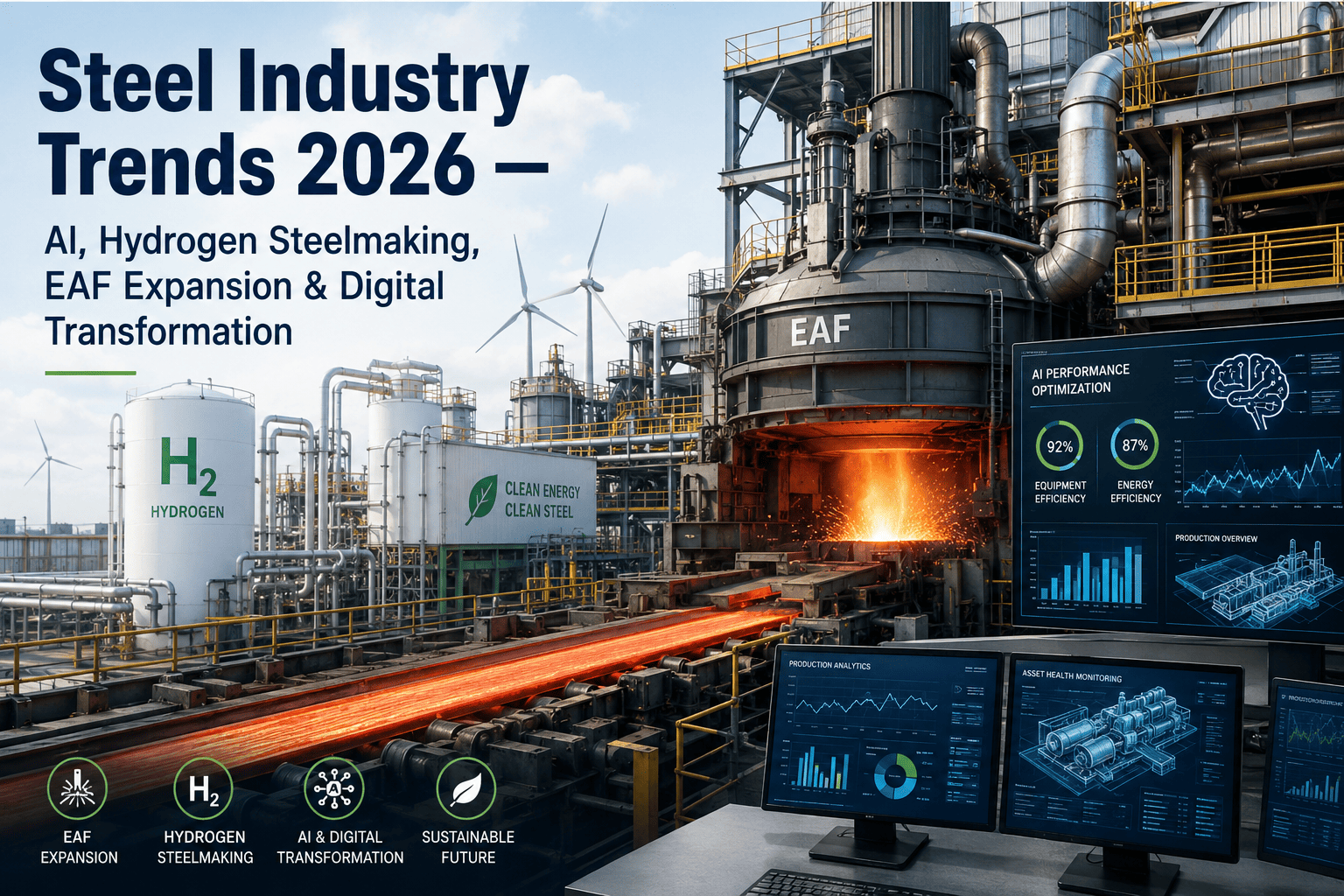
Mini-mill software is fundamentally an energy and yield optimization problem. The core capability required is tap-to-tap time compression and scrap mix cost evaluation. The right analytics software will monitor EAF electrical demand, predict optimal power-off times, and continuously adjust burner gas/oxygen ratios based on real-time charge densities.
Dedicated EAF / Specialty Steel Shops
Specialty production is driven by strict quality metallurgy. Software for these shops must deeply integrate with the Laboratory Information Management System (LIMS) and automate alloy addition prescriptive modeling. Secondary metallurgy (Ladle Furnace/VD) requires precision temperature drop forecasting to minimize argon stirring time and hold periods.
Rolling & Finishing Lines
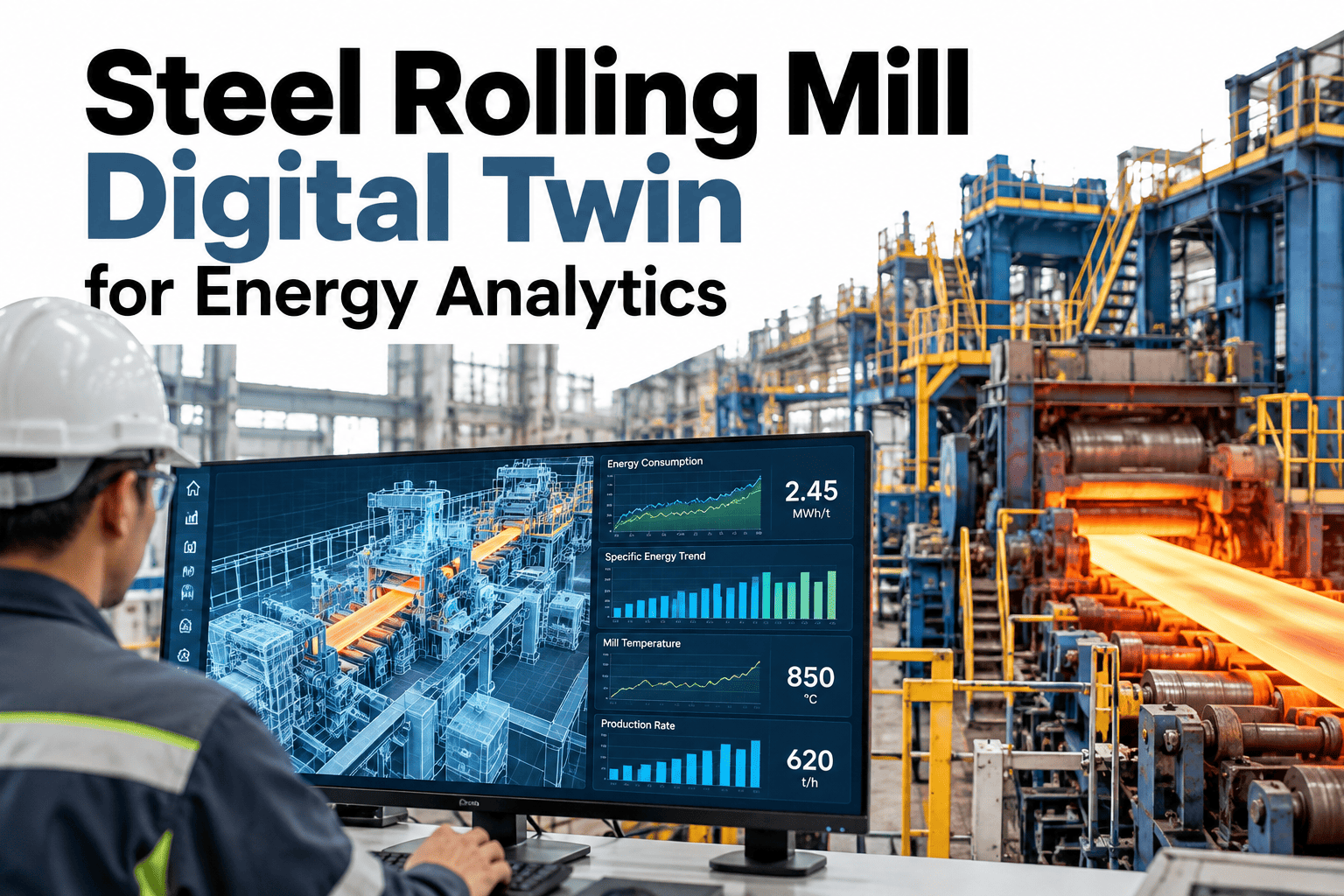
Rolling operations demand high-speed frequency diagnostics. The analytics system must provide 20,000Hz+ vibration data processing for main drive gearboxes, looper arms, and coiler mandrels. It must also feature AI vision inspection pipelines to classify scratches, spalls, and stains at line speeds exceeding 1,200m/min.
Essential Features: Basic CMMS vs. Steel Analytics AI
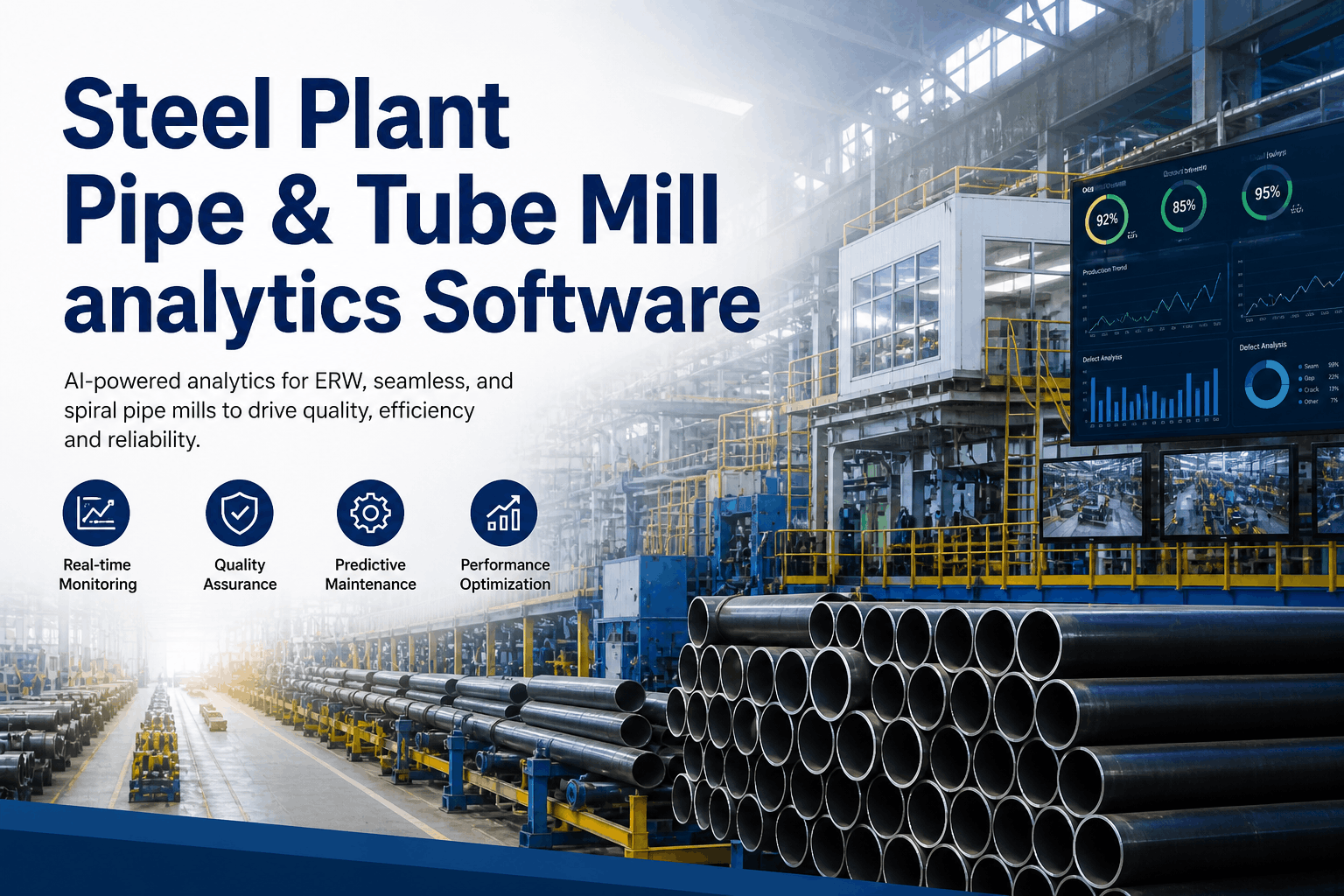
Legacy software logs when a machine breaks. AI-driven steel analytics software acts to prevent the breakdown from occurring, while automating the field worker's permit execution. Before purchasing, verify your vendor provides these multi-layered capabilities designed strictly for iron and steel analytics frameworks. Request a deep-dive demonstration.
| Capability Cluster | Legacy CMMS Systems | AI-Driven Steel Analytics (2026) | iFactory Status |
|---|---|---|---|
| Asset Management | Time-based preventative schedules & manual logs | Real-time Remaining Useful Life (RUL) limits based on sensor data streams | ✓ Enterprise Included |
| Work Orders | Manual entry by shift supervisor, often 24hr delayed | Alerts auto-convert to SAP work orders entirely bidirectionally; 10ms latency | ✓ Enterprise Included |
| Vibration Analysis | External contractor takes monthly handheld reading | Live 24/7 wireless FFT extraction for bearings, gearboxes & motors | ✓ Enterprise Included |
| Mobile Executability | Web page wrapper relying on solid 4G connection | Native offline-mode app handling steel mill deadzones & underground substations | ✓ Enterprise Included |
| Permit Automation | Paper-based carbon copy forms signed at the office | Digital geofenced LOTO, Hot Work, and Height Permits triggered by work type | ✓ Enterprise Included |
Steel Sector ROI & Payback Profiles
The primary justification for upgrading your steel plant software strategy is the rapid payback derived from avoiding catastrophic un-planned events. Steel analytics software scales heavily with plant complexity—giving larger integrated mills compounding savings while protecting the narrow margins of mini-mills. Get a custom business case formulated for your board.
The "Zero Downtime" Software Deployment Plan
Migrating to a 2026-grade steel AI-driven platform does not mean halting your roughing mill for weeks. iFactory implements a parallel deployment model, listening passively to your data networks before taking over CMMS duties seamlessly. Review our zero-risk deployment topology.
Data Pipeline Discovery & Mirroring
Our edge servers tie directly into the plant Ethernet layer (OPC-UA / historian API). We map your existing asset hierarchy and begin ingesting historical time-series data without interrupting current operations.
Model Shadowing & Calibration
The AI models begin generating predictive alerts in the background ("Shadow Mode"). Maintenance experts validate these findings against actual machine behavior to baseline accuracy and fine-tune exact alarm thresholds.
Mobile App Rollout & Work Order Activation
Field supervisors install the iFactory app. Safety permit geofences are enabled. Background alerts automatically shift into active PM generation pushed directly to the maintenance crew queues.
SAP Bi-Directional Handshake
Post-adoption, the software initiates stable integration with ERP/SAP. Spare parts consumed in the field via the mobile interface instantaneously reflect inventory drops in the central materials ledger.
Perspectives on Steel Analytics System Success
Our transition from legacy CMMS forms to a unified steel industry software system fundamentally re-architected how we handle mill maintenance. Our crews don't walk back to the control room for permits—they scan asset barcodes on their phones right at the rolling stands. The AI triggered an alarm on our crop shear vibration a full 20 days out; we mitigated a 36-hour unplanned shutdown by prepping parts for scheduled maintenance.
Frequently Asked Questions — Steel Plant Software
Does replacing our software disrupt current steel production?
No. iFactory is deployed as a transparent analytics layer over your existing infrastructure. We consume data through standard protocols like OPC-UA without introducing latency to your Level 1 PLC controls. You test and confirm the UI before retiring older manual dashboards. Chat with our integration team about this transition.
Our plant uses SAP completely for EAM properties. Does this replace SAP?
No, this radically empowers it. iFactory's steel analytics software sits above the machine layer, acting as the intelligent "brain" processing vibration and thermal states, which then securely funnels verified predictive work orders bidirectionally into your SAP system. SAP remains your global ledger, but iFactory is your on-the-ground machine operator toolkit.
Is it mobile responsive and capable of handling mill blind spots?
Yes. Field accessibility is our core differential. The app provides a fully functional offline mode. When technicians sync work orders in Wi-Fi zones, they can descend into heavily shielded EAF substations to do their work, sign off digitally, and the app will synchronize the results back to the server once connectivity is restored.
Test the Best Steel Analytics System Live on Your Mill Data
We orchestrate seamless transitions from rudimentary spreadsheets to elite predictive intelligence—securing your uptime and empowering your maintenance force.