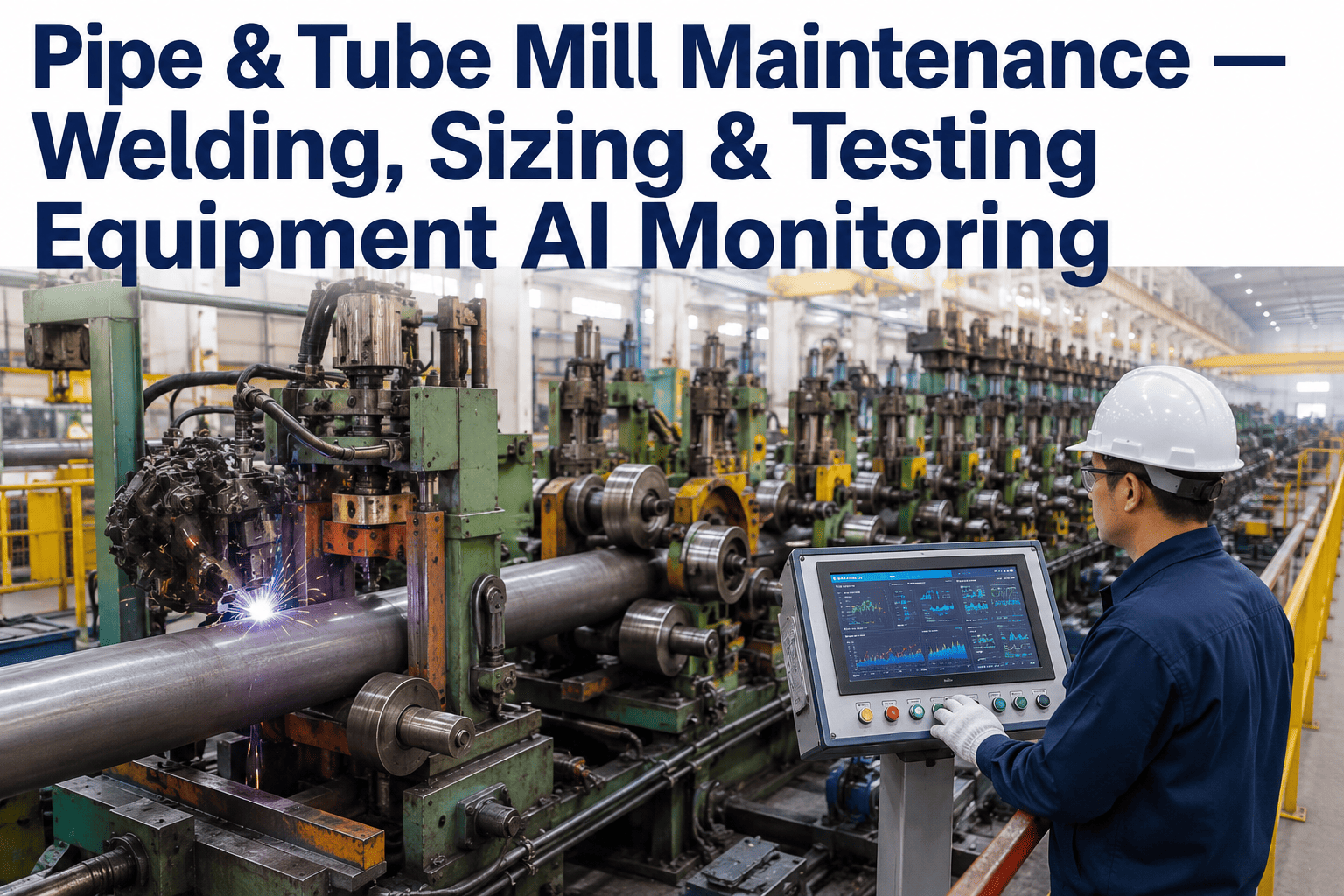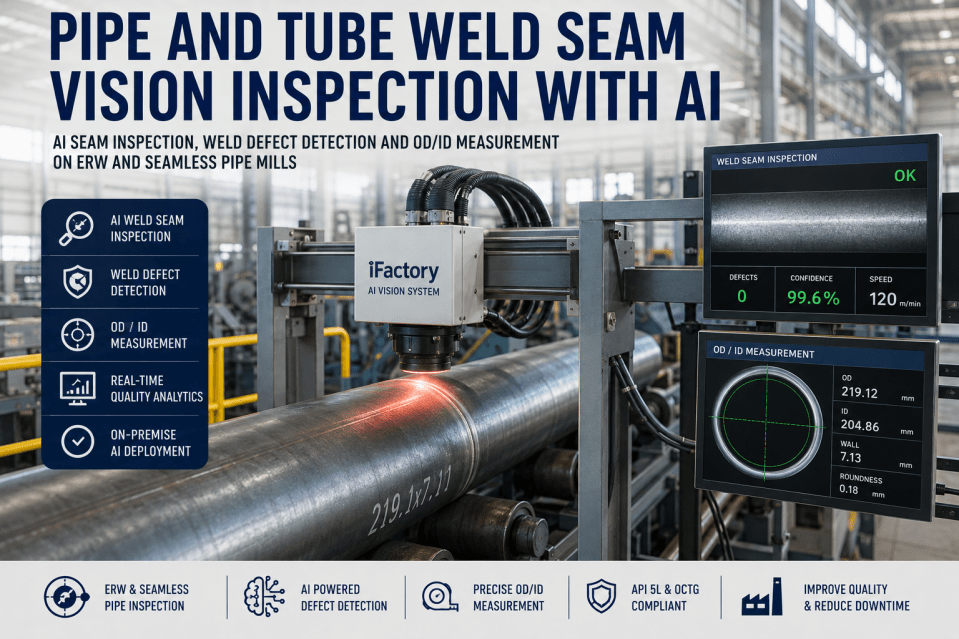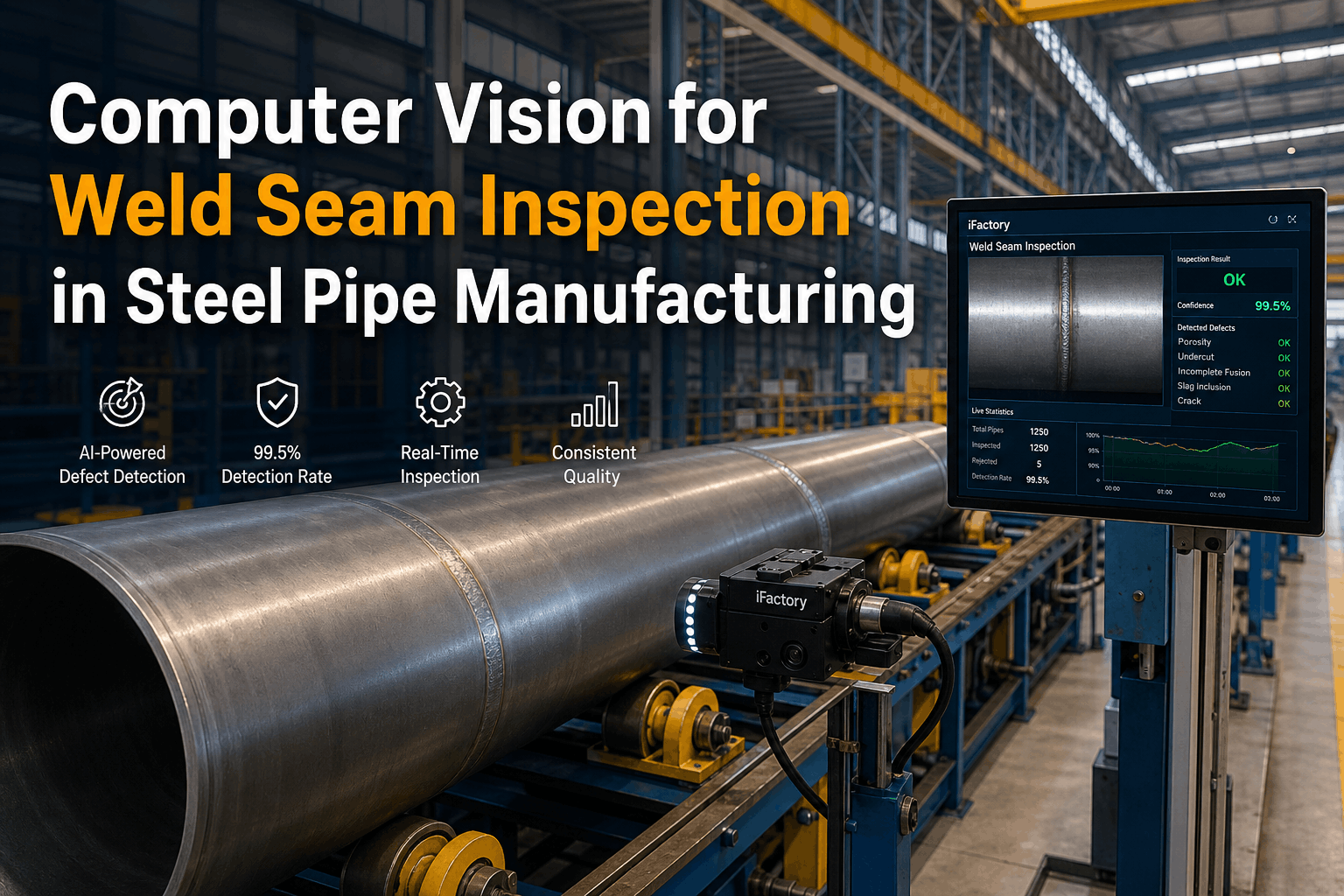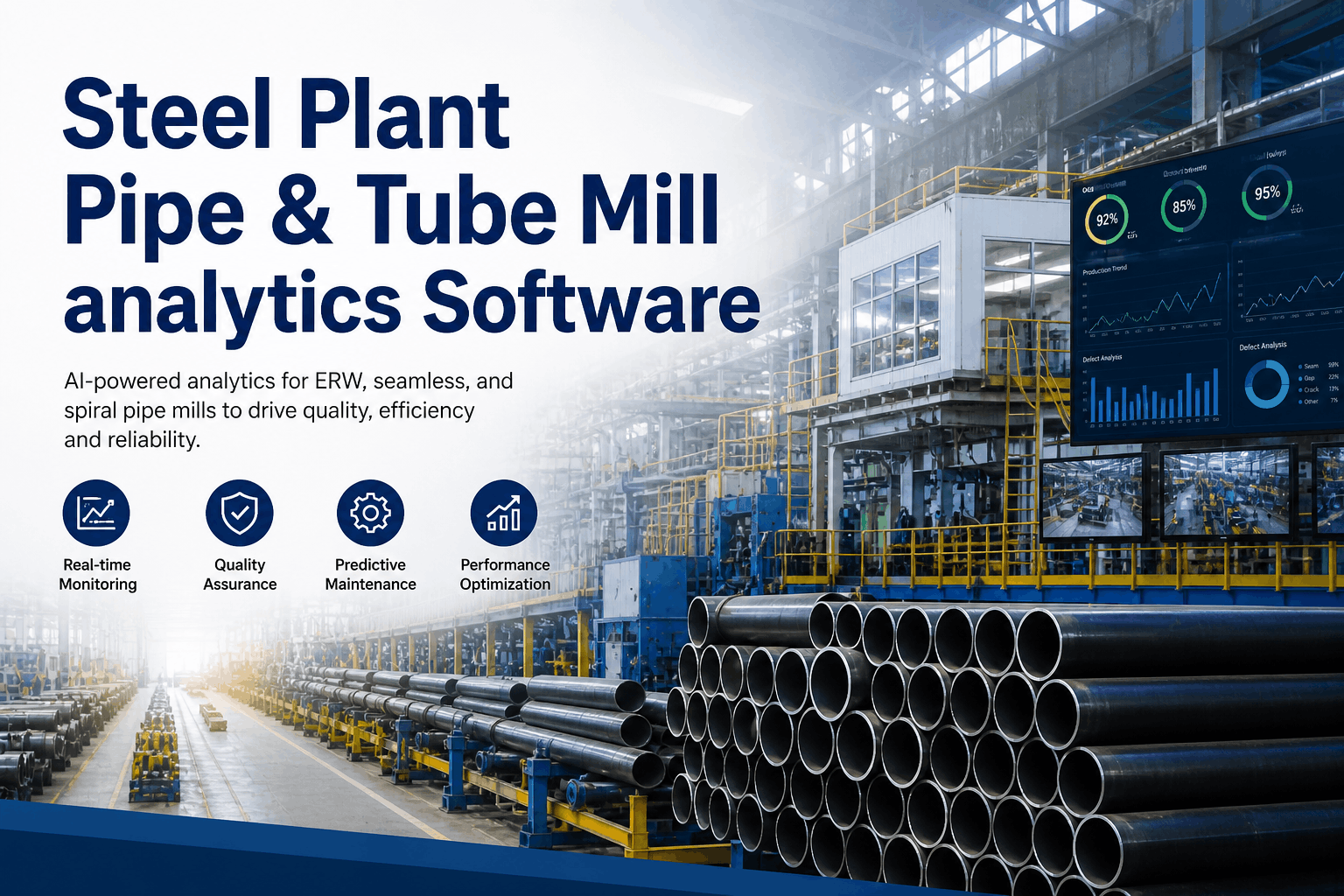
Pipe and Tube manufacturing represents one of the most technically demanding sectors of the steel industry, where the margin for error is measured in millimeters and weld integrity is non-negotiable. Whether operating a high-speed ERW mill, a complex seamless piercing line, or a large-diameter spiral mill, the challenge remains the same: synchronizing mechanical rolling with high-precision welding and real-time NDT (Non-Destructive Testing). Legacy pipe mills often suffer from "Late-Detection Defect" cycles, where weld anomalies are only identified at the final inspection stage, leading to massive scrap and rework costs. Implementing iFactory AI-driven pipe mill analytics creates a live digital twin of the entire production line—from weld-head heat input and roll stand pressures to hydrostatic test stability. By identifying rolling deviations and ultrasonic flaw signatures before the pipe leaves the mill, producers can achieve near-zero defect rates and ensure 100% compliance with API 5L and OCTG standards. This granular visibility allows mill managers to shift from reactive inspection to predictive prevention, where the weld-head frequency and squeeze-roll pressures are adjusted in milliseconds to maintain perfect seam fusion. Book a Pipe Mill Strategy Session to learn how modern tube mill analytics can eliminate weld-line rework and maximize your prime-grade yield across every meter produced.
Advance Your Pipe & Tube Mill Yield with AI-Driven Quality Analytics
Weld-line heat tracking, seamless stand diagnostics, and real-time NDT synchronization — iFactory ensures every pipe meets the world's strictest structural standards.
The Anatomy of Tube Mill Yield Loss: Where Margin is Eroded
Yield loss in a pipe mill isn't just about total rejects; it's about the "Hidden Scrap" generated by conservative cropping and inefficient process control. iFactory identifies the four primary yield-loss zones: Run a Yield Audit.
Ultrasonic "Blind Zone" Over-Cropping
Legacy NDT systems often have blind spots at the pipe ends, forcing operators to crop an extra 300-500mm of perfectly good material. iFactory's edge-AI reduces this blind zone to <50mm, saving thousands of tonnes of prime steel annually.
ERW Weld-Line "Overshoot" Penalty
To avoid "Cold Weld," induction power is often set 5-10% higher than necessary. This leads to excessive inner-bead flash and increased energy consumption. AI maintains the "Golden Window" for perfect fusion without wasting power.
Seamless Wall-Thickness "Give-Away"
Operating with high wall-thickness tolerance (eccentricity) forces mills to aim for the high-end of the spec to avoid failures. AI-driven piercer control allows for a tighter "Aim-Point," reducing total material weight-per-meter by 2-3%.
Hydrostatic "False-Fail" Events
Faulty seal-leaks or air-entrapment during hydrostatic testing can be misdiagnosed as pipe failures. iFactory's pressure-decay analytics isolate external seal issues from structural pipe failures, reducing unnecessary re-testing.
The 6 Strategic Pillars of Modern Pipe & Tube Mill Management
Mastering pipe quality requires a multi-sensor approach that monitors the interaction between thermal welding, mechanical sizing, and non-destructive testing. iFactory provides the high-fidelity telemetry needed to turn these strategic pillars into measurable prime-yield recovery.
ERW Weld-Line Heat Analytics
Monitors induction welding power, frequency, and squeeze-roll pressure. AI detects "Cold Weld" or "Over-Heat" signatures in real-time at speeds up to 150m/min, preventing longitudinal seam failures before they enter the sizing mill.
Seamless Piercer & Stand Diagnostics
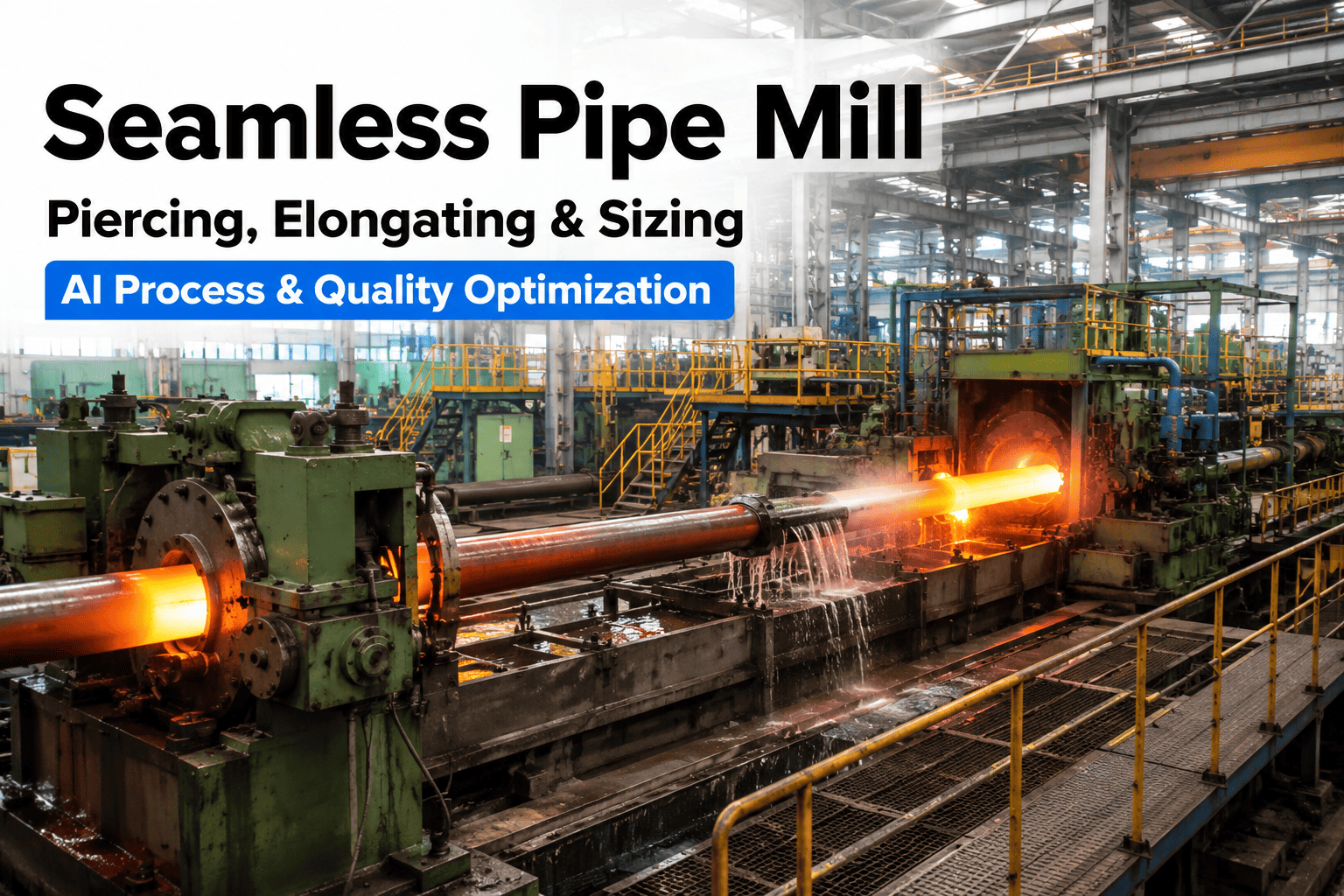
Tracks vibrations and hydraulic pressures across piercing stands and sizing mill rolls. Identifies roll eccentricity, mandrel lubricant failure, or roll-wear that causes wall-thickness variation (eccentricity) in seamless tubes.
NDT & Ultrasonic Sync
Integrates ultrasonic (UT) and eddy current (EC) testing data directly into the mill dashboard. Automatically flags defect coordinates for precision cropping, reducing "Safety Margin" waste by up to 15% across the finishing line.
Spiral Mill Geometric Control
Analyzes forming roll angles and strip entry tension for large-diameter spiral pipes. AI prevents "Helix Drift" and ensures perfect seam-gap for the submerged arc welding (SAW) process, maintaining perfect helix-angle precision.
Hydrostatic Test Reliability
Captures pressure decay and volumetric expansion data during high-pressure tests. Identifies subtle seal leaks vs. actual pipe failure, ensuring structural integrity reports are accurate and eliminating "False-Fail" re-runs.
Coating & Finishing Intelligence
Tracks epoxy/FBE coating thickness and curing oven thermal profiles at every meter. Ensures corrosion protection meets customer specification and identifies coater roll wear before application defects occur in the pipe exterior.
The Pipe Mill Digital Transformation Roadmap
Transforming a legacy mill into an AI-driven production center follows a structured 4-phase deployment, delivering value at every stage of the quality cycle.
Connection to weld-head PLC, roll-stand hydraulics, and NDT time-series data. Establishment of the foundational mill digital twin and live performance dashboard.
AI models begin identifying thermal and electrical signatures associated with weld-line defects. Early warning alerts for "Cold Weld" and "Scarfing" issues live.
Integration with sizing mill hydraulic gap control. AI-driven roll adjustments based on real-time wall thickness and diameter measurements from NDT nodes.
Automated generation of Pipe Quality Reports (PQR) for customer compliance. Full end-to-end traceability from raw coil to coated pipe achieved.
Mill Yield Performance Matrix — Impact of iFactory AI
The transition from manual sampling to AI-driven monitoring results in a measurable reduction in scrap and energy-per-tonne across all pipe manufacturing processes.
| Mill Type | Target Yield | iFactory AI Yield | Legacy Manual Yield | Verdict |
|---|---|---|---|---|
| ERW (Electric Resistance) | 96% | 98.4% | 94.2% | +4.2% Yield |
| Seamless (Piercer/MPM) | 92% | 95.1% | 89.8% | +5.3% Yield |
| Spiral (SAW/Large Dia) | 95% | 97.8% | 93.1% | +4.7% Yield |
What a Pipe Mill Operations Manager Said
Our ERW mill used to struggle with 'Intermittent Weld Decay' that would pass hydrostatic tests but fail in the field. iFactory's weld analytics synchronized our induction power with actual seam temperature at 10ms intervals. We haven't had a single weld-line rejection in 9 months, and our NDT crop-loss has dropped by 18%. This is the highest level of quality control we've ever had.
Frequently Asked Questions
Can iFactory analytics track weld defects in real-time at high mill speeds?
Yes. Our edge-AI processing handles data from induction weld-heads and NDT arrays at speeds up to 150m/min, identifying flaw signatures with sub-20ms latency for instant marking.
How does the software handle wall-thickness variation in seamless pipe production?
iFactory monitors piercer stand vibrations and roll force. By correlating these with NDT thickness data, the system predicts roll wear and mandrell eccentricity before they breach tolerance limits.
Does the platform integrate with ultrasonic (UT) and eddy current (EC) equipment?
Yes. We support direct data integration with GE, Olympus, and Zumbach NDT systems, synchronizing defect signals with mill length-encoders for perfect spatial traceability. Schedule an NDT integration review.
Can iFactory help in achieving API 5L or OCTG certification?
Absolutely. The platform provides a complete digital genealogy for every pipe, including weld heat logs, NDT results, and hydrostatic test charts required for high-grade certification audits.
What happens to the quality data if the plant network goes down?
All quality data is buffered locally on edge servers for 72 hours. Real-time weld monitoring and NDT synchronization continue without interruption even during WAN outages.
Does the system predict roll wear in the sizing and forming mills?
Yes. By analyzing motor load and roll force signatures across sizing stands, the AI identifies gradual wear patterns, allowing maintenance to plan roll-changes during scheduled outages.
How long does a typical tube mill analytics deployment take?
Initial connectivity and dashboards are live in 3 weeks. Predictive weld anomaly models and NDT synchronization are usually fully calibrated and operational by Week 10–12.
How does iFactory handle multi-plant quality benchmarking?
Our cloud-sync layer allows group-level directors to compare yield and defect rates across multiple mills, identifying best-practice induction settings for specific API grades.
Can the platform automate the creation of API 5L Material Test Reports (MTR)?
Yes. iFactory automatically aggregates raw chemistry, mechanical test, NDT, and hydrostatic data into a 1-click MTR, reducing office processing time by 80% per batch.
Does the AI monitor the scarfing tool performance in ERW mills?
Yes. By monitoring vibration and heat signatures at the scarfing station, the AI detects tool wear or breakage, preventing surface defects on the outer seam of the pipe.
Can we set customized quality thresholds for high-pressure OCTG pipes?
Absolutely. Users can define strict NDT and geometric limits for oil-grade products, ensuring the mill autonomously slows down or alerts if these premium thresholds are breached.
Eliminate Weld Defects & Maximize Pipe Mill Prime Yield
Mobilize AI across your ERW, Seamless, or Spiral mill to ensure 100% compliance with global API standards and eradicate expensive crop-loss.