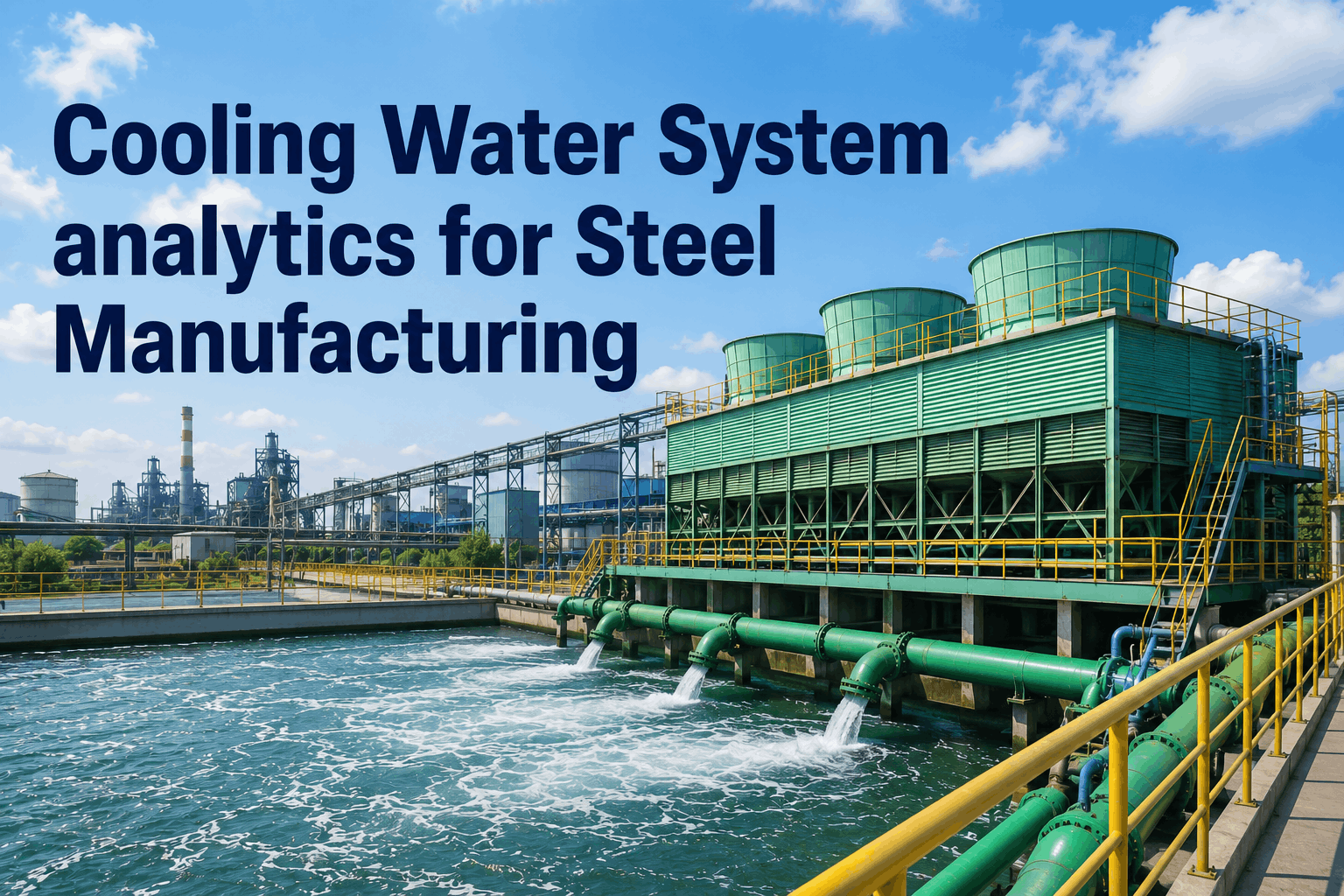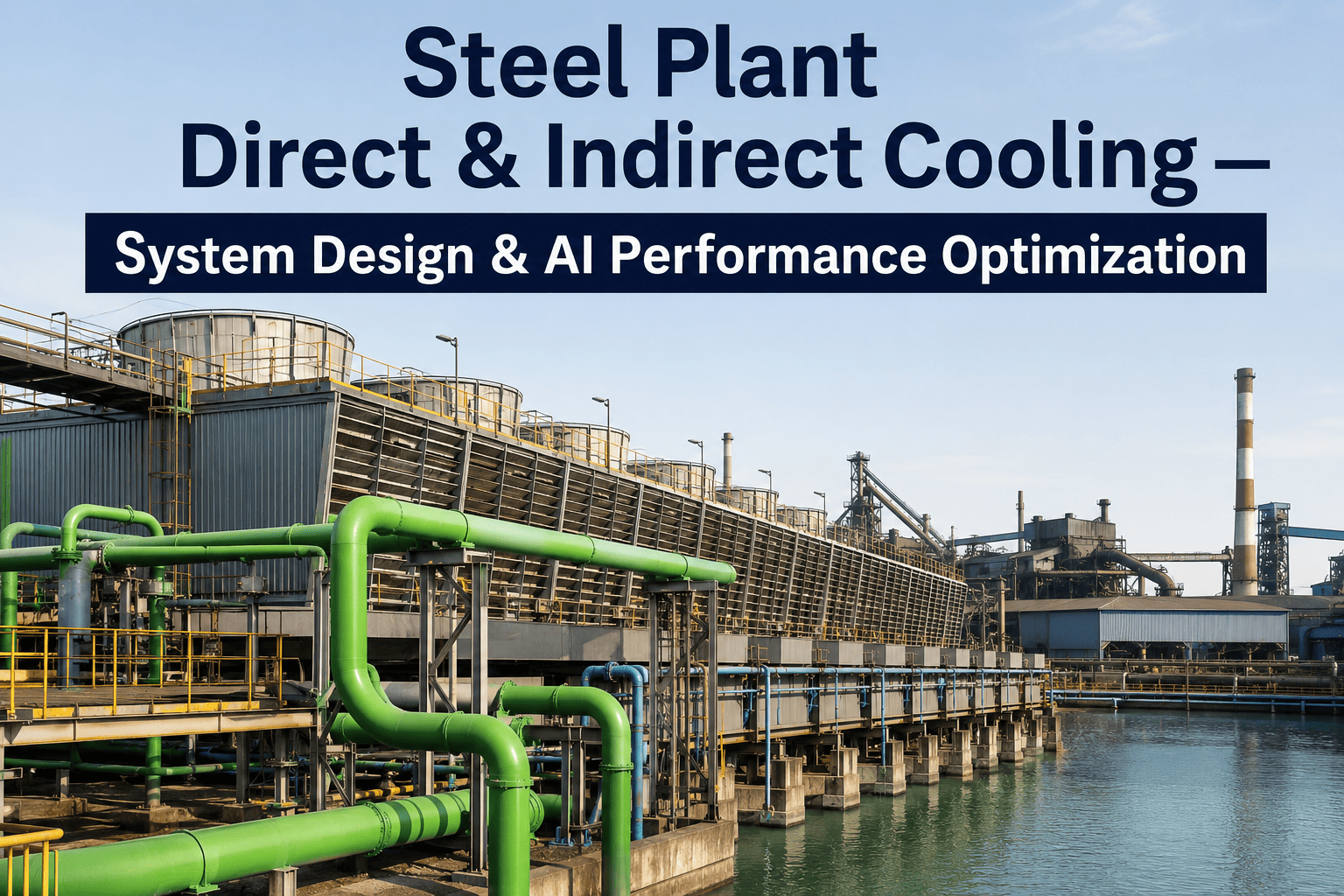
Every steel plant runs two fundamentally different cooling philosophies at once, often without anyone framing it that way. Blast furnace staves and caster segments depend on direct water contact for aggressive heat removal, while mill roll cooling and closed equipment loops rely on indirect exchange to protect components from water quality issues. Balancing both against environmental discharge limits and water availability is a constant trade-off, and most plants tune it manually, zone by zone. AI performance management brings both systems under one optimization model, and a short conversation can show you what that looks like in practice.
Two Cooling Philosophies. One Plant. One Optimization Model.
Direct cooling removes heat fast but stresses water quality and discharge limits. Indirect cooling protects equipment but moves heat more slowly. AI balances both across every zone in real time.
Direct vs. Indirect Cooling — Where Each Applies
The choice between direct and indirect isn't philosophical — it's dictated by what the equipment and water quality can tolerate.
Water-to-Metal Contact
Water contacts hot metal or equipment surfaces directly, removing heat fast. Used on BF staves, caster spray cooling, and rolling mill descaling where aggressive heat transfer matters most.
- Highest heat removal rate
- Requires strict water quality control
- Direct exposure to discharge regulation
Closed-Loop Exchange
Heat transfers through a barrier, such as a heat exchanger or jacketed system, protecting equipment from raw water contact. Used on mill roll cooling and sensitive electrical or hydraulic systems.
- Protects equipment from fouling
- Slower but more controllable heat transfer
- Lower discharge and treatment burden
Cooling Zones Across the Plant
A single facility typically runs both systems simultaneously across different zones, each with its own performance target.
Blast Furnace Staves
Direct water cooling protects refractory and shell integrity against extreme internal temperatures.
Caster Segments
Direct spray cooling controls solidification rate and shell thickness as strand moves through the machine.
Mill Roll Cooling
Indirect or controlled direct cooling manages roll surface temperature to protect against thermal cracking.
Electrical & Hydraulic Systems
Indirect closed-loop cooling isolates sensitive components from raw water contamination risk.
Stop Tuning Cooling Zones in Isolation
iFactory's AI performance management balances direct and indirect cooling systems across the plant together, optimizing for heat removal, water quality, and discharge compliance at the same time.
What AI Is Actually Balancing
Cooling performance is never optimized against a single variable — it's a constant negotiation between four competing pressures.
| Variable | Direct Cooling Pressure | Indirect Cooling Pressure |
|---|---|---|
| Heat removal speed | High, needed for aggressive zones | Lower, but steadier |
| Water quality risk | High, direct contact exposure | Low, barrier protects equipment |
| Discharge compliance | Directly regulated volume | Minimal discharge impact |
| Equipment fouling risk | Higher without treatment | Lower, protected exchange |
A Four-Step Path to Unified Cooling Optimization
Deployment starts by mapping which zones run direct, which run indirect, and where the two interact.
Map Cooling Zones
Catalog every direct and indirect cooling loop across the plant, including current flow rates and temperature targets.
Instrument Flow and Quality Sensors
Deploy temperature, flow, and water quality sensors across critical zones to establish a real-time performance baseline.
Model Cross-Zone Trade-Offs
Build an AI model that balances heat removal, water quality, and discharge limits across all zones simultaneously.
Deploy Optimization Recommendations
Route real-time adjustment recommendations to process engineers to keep cooling performance balanced across shifts.
Cooling System Optimization — Questions Answered
What process engineers ask most often when evaluating a unified cooling optimization approach.
Q: Does AI optimization change our existing direct or indirect cooling equipment?
No, the optimization layer works with your existing cooling infrastructure rather than requiring equipment replacement. It analyzes flow, temperature, and water quality data from current direct and indirect systems and recommends adjustments within the operating range your equipment already supports. Physical upgrades are sometimes recommended as a follow-on step if a specific zone is under-instrumented, but the initial optimization works with what's already installed. You can book a demo to see this against your specific cooling configuration.
Q: How does the system handle the trade-off between discharge compliance and heat removal during peak production?
The model weighs discharge limits and heat removal needs together rather than treating them as separate constraints, so a recommendation during peak production accounts for both the equipment's cooling requirement and how close the plant is running to its discharge threshold. This prevents a scenario where maximizing heat removal in one zone inadvertently pushes discharge volume past a permitted limit. The specific weighting is configured based on your plant's permit conditions during setup.
Q: Can this system flag water quality issues before they cause equipment fouling?
Yes, water quality sensors feeding into the optimization model can identify trends toward conditions that typically precede fouling, such as rising conductivity or particulate levels in a direct cooling loop. Flagging this early allows treatment adjustments before fouling affects heat transfer efficiency on caster segments or mill rolls. The specific thresholds that trigger a flag are calibrated to your water source and treatment process during initial deployment.
Q: What's a realistic timeline to see cooling performance improvements after deployment?
Most plants see initial optimization recommendations within the first few weeks of sensor deployment, once flow and temperature baselines are established across the mapped zones. Measurable improvements in balanced heat removal and reduced fouling incidents typically become clear over the following production cycles as the model refines its cross-zone recommendations. Facilities with more cooling zones or more complex water treatment setups naturally take longer to fully optimize. Our support team can outline a realistic sequence for your plant.
Q: Does the optimization account for seasonal water availability changes?
Yes, seasonal variation in water source temperature and availability is factored into the model where it affects cooling capacity, particularly for plants relying on surface water sources that fluctuate through the year. Recommendations adjust to reflect current water conditions rather than assuming static supply. This is especially relevant for direct cooling zones with the highest volume dependency, where seasonal shifts have the most operational impact.
Balance Every Cooling Zone From One System
Direct and indirect cooling don't have to be tuned in isolation. iFactory brings both under one AI performance model, keeping heat removal, water quality, and discharge compliance aligned across your entire plant.